 Blaine Roofing
 Windows Built for the Grandview Climate, Not Just the Grandview Look
Homes in the Grandview area of Blaine sit close enough to the Salish Sea that the weather here plays by different rules than it does further inland. Salt-laden air off the water works on metal hardware and lesser frame materials year-round. Wind-driven rain doesn't just fall straight down — it gets pushed sideways into every gap, seam, and joint a window has. And Whatcom County's long wet season, stretching from fall through spring, keeps north- and west-facing surfaces damp long enough for moss and mildew to take hold. A window that was installed correctly for a drier, calmer climate can still fail here years ahead of schedule.
Window installation in Grandview isn't just about picking a style and swapping out old frames. It's about understanding how salt exposure, sustained moisture, and coastal wind loads act on a window assembly over time, and building in the details that keep water and air where they belong — outside.
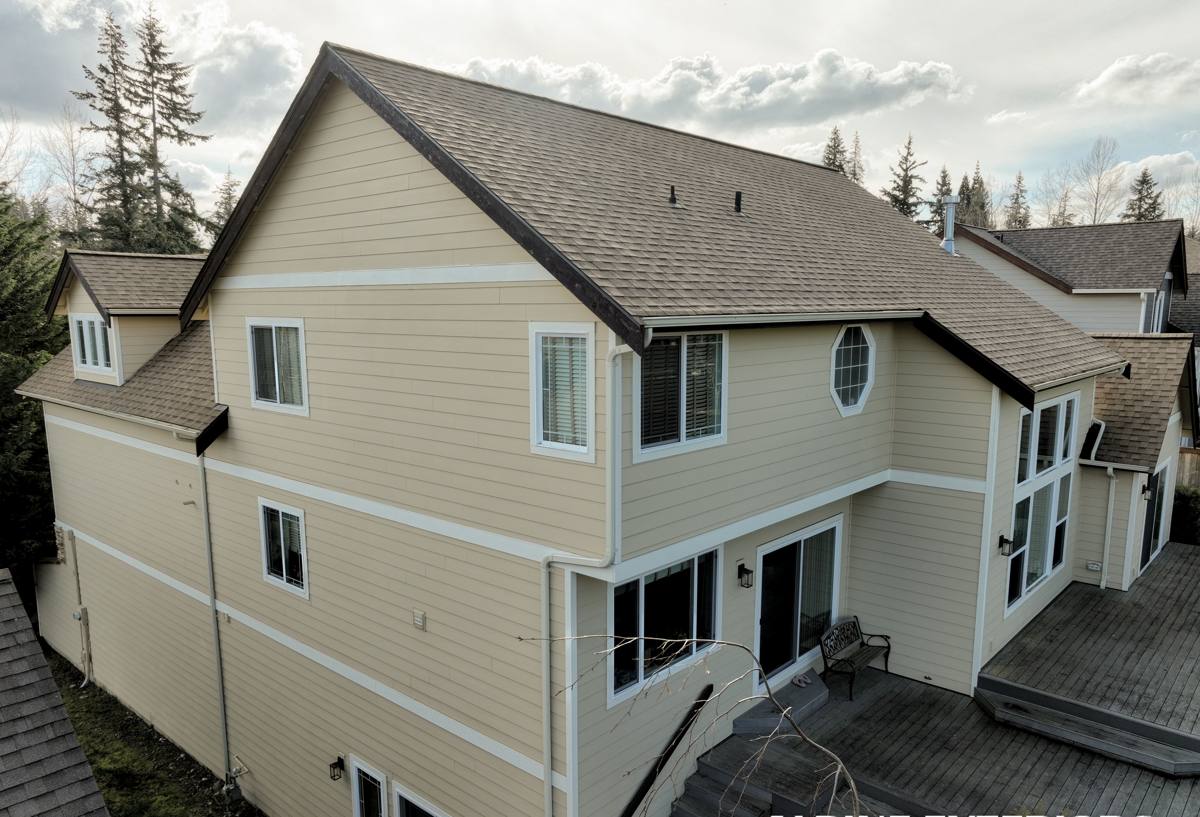
How This Climate Wears Down Windows Over Time
Most window problems we see in this part of Blaine trace back to one of three things: salt air, moisture intrusion, or UV and temperature cycling. None of them show up overnight, which is part of the problem — by the time a homeowner notices a soft sill or a foggy pane, the damage has usually been developing for a while.
Salt Air and Hardware
Cheaper hinges, cranks, locks, and screws corrode faster this close to the water. Once hardware starts to seize or pit, sashes stop closing tightly, which lets in more moisture — a cycle that accelerates itself.
Driving Rain and Flashing Failure
Wind off the water pushes rain into places gravity alone never would. If flashing wasn't integrated properly with the siding and weather barrier during the original installation, water finds its way behind the frame and into the wall cavity long before it ever shows up as a visible stain indoors.
Moss, Mildew, and the Long Wet Season
Whatcom County's extended damp stretch keeps horizontal surfaces — sills, sashes, exterior trim — wet for days at a time. That's exactly the environment moss and mildew need to establish themselves, and once they're growing in a seam or joint, they hold moisture against the wood or frame material even longer.
Signs a Grandview Home's Windows Are Past Their Prime
Not every aging window needs to be replaced immediately, but a few warning signs mean it's worth having someone take a real look rather than waiting:
- Fogging or condensation trapped between panes — a sign the seal has failed
- Drafts you can feel near the frame even with the window fully latched
- Sashes that stick, bind, or won't stay open on their own
- Soft, spongy, or discolored wood at the sill or lower frame corners
- Persistent moss or dark staining on sills and trim that returns after cleaning
- Noticeably higher heating costs during Blaine's cooler, wetter months
- Visible gaps between the frame and siding, or cracked and shrunken caulk lines
What a Correct Installation Actually Involves
A window installation is only as good as what happens before the new glass ever goes in. In a climate that drives rain sideways into wall assemblies, cutting corners at this stage is how a brand-new window ends up with rot behind it within a few years.
Removal and Inspection
Old windows should be removed, not just covered over with an insert, whenever there's any reason to suspect hidden moisture damage. That means checking the sheathing and framing underneath for soft spots or rot before a new unit ever goes in — a problem that's invisible from the outside but common on homes that have taken years of driving rain.
Flashing and Drainage
The window needs to be properly integrated with the house's weather-resistive barrier, with flashing installed in the correct sequence — head flashing overlapping the barrier above, sill pan flashing directing any incidental water back outside rather than into the wall. This is the single detail that matters most for long-term performance this close to the water.
Sealants Rated for the Job
Not all caulks and sealants are built to handle sustained salt air and moisture exposure. Using products rated for exterior, coastal-adjacent use — and applying them correctly rather than just running a bead around the visible trim — is what keeps a seal intact for its full service life instead of cracking and shrinking within a couple of seasons.
Level, Square, and Properly Shimmed
A window that isn't shimmed and leveled correctly puts uneven stress on the frame and hardware, which shows up later as sticking sashes or failing seals — problems that get blamed on the window itself when the real cause was the installation.
Choosing Materials That Hold Up Near the Water
Material choice matters more here than it would in a drier, inland climate. The table below reflects how common window frame materials generally perform under sustained salt air and moisture exposure — the conditions Grandview homes deal with for much of the year.
| Frame Material | Coastal / Salt Air Performance | Maintenance Needs |
|---|---|---|
| Vinyl | Good — won't corrode or rot, handles moisture well | Low; occasional cleaning |
| Fiberglass | Very good — dimensionally stable, resists moisture and salt exposure | Low |
| Aluminum | Fair — can corrode over time without quality coatings; conducts cold | Moderate; watch for pitting near hardware |
| Wood / Wood-Clad | Good when properly finished and maintained, but vulnerable if seals or finish fail | Higher; periodic refinishing and inspection |
There's no single "right" material for every home — architectural style, budget, and how much upkeep an owner wants to take on all factor in. What we won't do is install a product in a way that hides a mismatch between the material and this climate, or use a lower-grade sealant just because it's cheaper up front. On a home exposed to this much salt air and driving rain, that trade-off tends to show up again within a few years.
Our Installation Process
Every home is a little different, but the process we follow for Grandview window installations generally looks like this:
- On-site assessment — we look at existing windows, framing condition, and how the home is oriented to prevailing wind and rain
- Measurement and product selection — sizing each opening precisely and matching frame material and glazing to the home's exposure
- Careful removal — taking out old units without damaging surrounding siding or trim, and inspecting the framing underneath
- Repair of any hidden damage — addressing rot or moisture issues found during removal before anything new goes in
- Installation with proper flashing and sealing — following correct sequencing so water sheds outward, not into the wall
- Insulation and interior/exterior trim work — sealing the gap around the frame and finishing the opening cleanly
- Final walkthrough — testing operation, checking seals, and cleaning up the work area
Why a Crew That Already Works Grandview Makes a Difference
Window installation isn't a one-size-fits-all trade. A crew that regularly works this specific stretch of Blaine and Whatcom County already knows how wind and rain tend to hit homes in this area, which orientations take the worst weather, and which installation details actually matter here versus what's fine for a milder climate. That local familiarity shows up in fewer surprises during the job — knowing what to expect when a wall is opened up, understanding local permitting requirements, and having established relationships with suppliers so materials arrive on schedule rather than delaying the project.
It also matters for accountability. A contractor who works in your neighborhood regularly has a reputation to maintain there, which is a different incentive than a crew passing through for a single job.
Protecting Your Investment After Installation
A correctly installed window with the right materials will hold up well in this climate, but a little regular attention extends its life even further. A simple seasonal routine goes a long way:
- Rinse salt residue and grime off frames and glass periodically, especially after storms
- Check and clear weep holes so water can drain out rather than pool at the sill
- Inspect exterior caulking annually and re-seal any cracked or shrunken sections
- Remove moss or algae buildup on sills and trim before it holds moisture against the surface
- Lubricate hardware — hinges, cranks, locks — to keep it working smoothly and resist corrosion
- Watch for any new drafts, sticking, or condensation between panes, and address it early
What Influences the Cost of a Window Installation
Every home and project is different, and we'd rather give you an accurate number after seeing the actual windows than a rough figure that doesn't hold up. In general, the biggest cost drivers are:
| Factor | Why It Matters |
|---|---|
| Full-frame replacement vs. insert | Full-frame allows inspection and repair of hidden damage but involves more labor |
| Frame material chosen | Vinyl, fiberglass, aluminum, and wood-clad differ in material and installation cost |
| Number and size of windows | Larger openings and higher window counts increase material and labor |
| Condition of existing framing | Hidden rot or moisture damage found during removal adds repair work |
| Glazing and performance options | Double- vs. triple-pane and coatings affect unit price and long-term energy costs |
| Access and site conditions | Upper-story or hard-to-reach windows can add time and equipment needs |
As a general guide, straightforward single-window replacements tend to fall in the low hundreds of dollars per window on the low end, with full-frame replacements, larger units, or higher-performance glazing running well beyond that. We'll always walk you through exactly what's driving the number for your specific home before any work begins.
Get a Straight Answer About Your Windows
If your windows are drafty, fogging, sticking, or just showing their age, it's worth having them looked at before another wet season adds to the damage. We offer free, no-pressure estimates for Grandview homeowners — we'll tell you honestly whether you need full replacement, repair, or nothing at all right now. Fill out the form below to get started.