 Blaine Roofing
 New Roof Installation Built for Grandview's Conditions
Grandview homes sit close enough to the water and to open farmland that the roof takes a different kind of beating than a roof twenty miles inland. Salt-laden air off the bay corrodes exposed metal faster than most homeowners expect. Driving rain, pushed sideways by wind off the strait, finds every weak lap and nail pattern. And the shaded, damp stretches of fall through spring feed a moss season that runs longer here than it does in drier parts of Whatcom County. A new roof installed for Grandview needs to be specified and installed with all three of those factors in mind, not treated as a generic reroof.
This page is about one job: installing a new roof on a Grandview home, done the way this climate actually requires. It's not a general roofing overview — it's what we've learned matters specifically here.
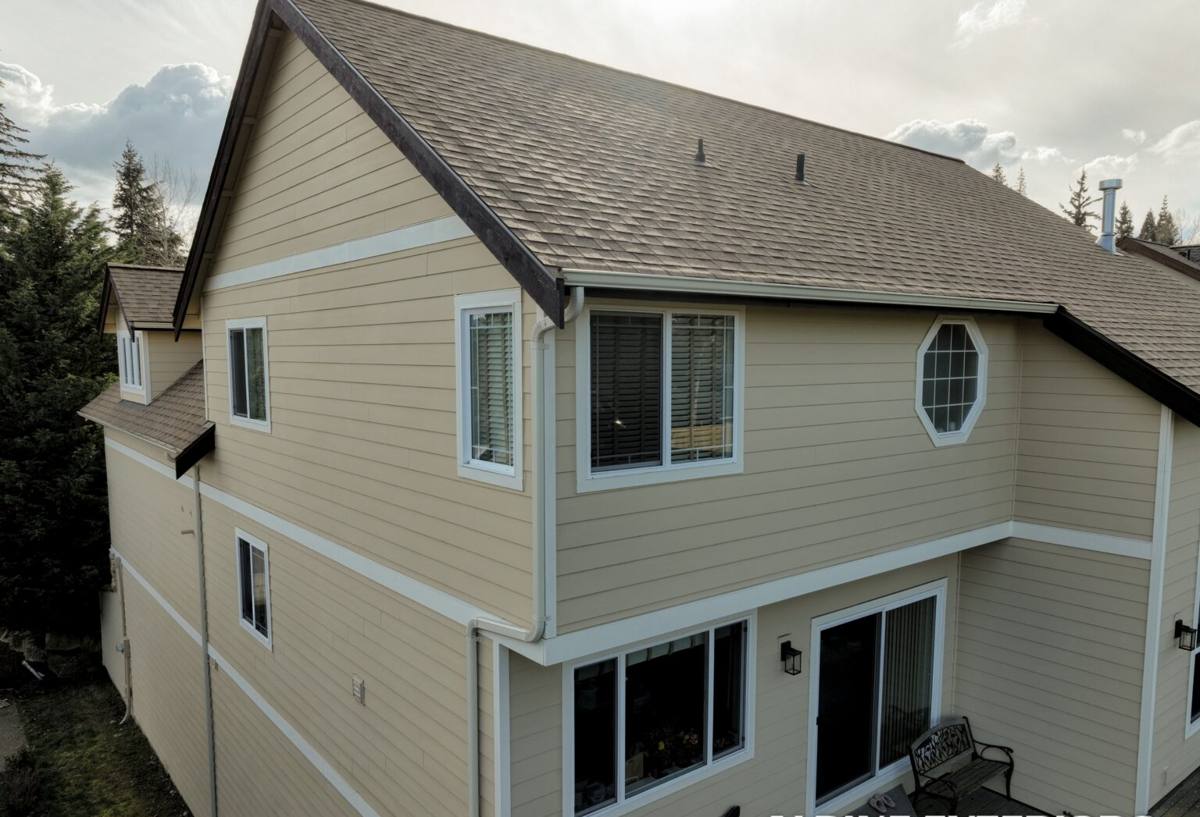
What Grandview's Climate Actually Does to a Roof
Salt air and corrosion
Proximity to Semiahmoo Bay and the Strait of Georgia means airborne salt reaches roofs well inland from the shoreline itself, carried on the prevailing wind. Bare or lightly coated steel fasteners, flashing, and vent components corrode faster under that exposure. Over years, corroded fasteners back out or lose holding strength, and corroded flashing thins until it fails at a seam instead of a body panel.
Wind-driven rain
Blaine gets weather systems that come in off the water with real horizontal force behind the rain. That matters more than total rainfall totals suggest, because wind-driven rain doesn't just fall onto a roof — it's pushed up and under laps, around vent boots, and into any gap in flashing that a calm-weather rain would never reach. A roof detailed for average conditions in a drier region will show leaks here that never show up on the same product installed somewhere sheltered.
A long moss season
Cool, damp, and often shaded conditions from fall through spring give moss and algae a long window to establish on north-facing slopes and anywhere debris collects. Moss isn't just cosmetic — as it grows it lifts shingle tabs, holds moisture against the roof deck, and accelerates granule loss on asphalt products. A roof that isn't designed and installed with drainage and ventilation in mind will show moss and premature wear years before its expected lifespan is up.
What a Correct New Roof Installation Actually Involves
A new roof is more than laying down new shingles or panels over the same deck. Done right, it's a system, and every layer has a job to do against this specific climate.
Deck inspection and repair
Before anything new goes down, the old roofing comes off and the deck gets inspected for soft spots, delamination, or rot — especially around old flashing points and valleys where wind-driven rain has had the most opportunity to get underneath over the years. Any compromised sheathing gets replaced, not covered over.
Ice-and-water and underlayment strategy
Self-adhering ice-and-water membrane belongs at eaves, valleys, and around penetrations — the exact places wind-driven rain targets. The rest of the deck gets a synthetic underlayment rated for the exposure. This is one of the layers homeowners never see again once the roof is finished, and it's also one of the layers that determines whether a driving rainstorm five years from now stays outside or gets into the attic.
Flashing that matches the exposure
Step flashing, counter-flashing, valley metal, and pipe boots all need to be specified in materials that hold up to salt air, not just materials that meet a basic code minimum. Where we use metal flashing, we favor corrosion-resistant options and correct fastener types over anything that will pit or rust out well before the roofing above it wears out.
Ventilation for moisture control
A roof that can't breathe traps moisture in the attic, which shows up as premature deck rot, mold, and shortened shingle life from the underside. Balanced intake and exhaust ventilation is part of a correct new roof installation here, not an upsell — it directly fights the moisture load this climate creates.
Material selection for moss and algae resistance
Where the budget and roof design allow, algae-resistant shingle products (with copper or zinc granules built in) and metal roofing profiles both hold up better against the long moss season than a basic economy shingle. We'll walk through the honest trade-offs for a given roof rather than defaulting to the cheapest option.
Comparing Roofing Materials for a Grandview Home
| Material | Performance in salt air | Moss/algae resistance | Typical lifespan |
|---|---|---|---|
| Standard asphalt shingle | Fair — fasteners and flashing are the weak point | Low unless algae-resistant granules specified | 20-25 years |
| Algae-resistant asphalt shingle | Fair to good with correct flashing package | Good — built-in resistance slows growth | 25-30 years |
| Standing seam metal | Good with proper coating and fastener spec | Very good — smooth surface sheds moss | 40-50+ years |
| Cedar shake | Requires diligent maintenance in damp climates | Poor without regular treatment | 20-30 years with upkeep |
This isn't a ranking of "best" to "worst" — it's a starting point for a conversation about what a specific roof, budget, and household priorities call for. A steep, shaded, north-facing roof in Grandview has different pressures than a sunnier, more exposed one, even within the same neighborhood.
How Our New Roof Installation Process Works
- On-site inspection and estimate — we look at the existing roof, deck condition, ventilation, and exposure before recommending anything.
- Material selection — we walk through options and trade-offs based on your roof's specific exposure to wind, rain, and shade.
- Tear-off and deck assessment — old roofing comes off, the deck is inspected, and any damaged sheathing is replaced.
- Underlayment and flashing installation — ice-and-water membrane at vulnerable points, synthetic underlayment elsewhere, and flashing sized and placed for wind-driven rain.
- Ventilation check and correction — intake and exhaust are balanced to the attic space, not just left as-is.
- Roofing installation — installed to manufacturer specification, with attention to fastener placement and lap exposure for wind resistance.
- Final walkthrough — we review the finished roof and cleanup with the homeowner before calling the job done.
What Drives the Cost of a New Roof
| Factor | Why it matters here |
|---|---|
| Roof size and complexity | More valleys, dormers, and penetrations mean more flashing work and labor time |
| Deck condition | Rot or soft sheathing found during tear-off adds material and labor to replace it properly |
| Material choice | Algae-resistant shingles and metal roofing cost more upfront but reduce moss-related maintenance and reroofing frequency |
| Ventilation upgrades | Correcting inadequate intake/exhaust adds cost but protects the new roof and attic long-term |
| Access and pitch | Steep or hard-to-access roofs take longer and require more safety equipment |
We give straightforward, itemized estimates so you can see where the money is going rather than a single lump number.
Why a Crew That Already Works in Grandview Matters
A roofing crew that works Grandview regularly already knows which slopes hold moss longest, which older homes in the area were built with ventilation that doesn't meet current standards, and which flashing details tend to fail first under this specific wind and rain pattern. That local pattern recognition shortens the inspection, sharpens the estimate, and reduces the chance of a callback for something the climate should have flagged from day one. It also means a crew that's still around and easy to reach if a question comes up after the job is done — not a name from an out-of-town lead-generation ad.
We're a Blaine-based crew working throughout Whatcom County, and Grandview is part of our regular service area, not a one-off trip.
After Installation: What Keeps a New Roof Performing
A correct installation is the foundation, but a little regular attention keeps it performing for its full expected lifespan in this climate.
- Clear debris from valleys and gutters at least twice a year, more often under overhanging trees
- Have moss growth treated or removed before it lifts shingle tabs, rather than after
- Check attic ventilation isn't blocked by insulation or storage that's crept over vents
- Look at flashing around chimneys, skylights, and vents after major windstorms
- Schedule a roof inspection every few years, even with no visible problems, to catch small issues early
None of this is complicated, but skipping it is how a well-installed roof loses years off its lifespan in a climate like this one.
Permits and Local Considerations
A full reroof in Blaine typically requires a building permit, and we handle that process as part of the job rather than leaving it to the homeowner. If your home is part of an HOA or falls under any neighborhood design guidelines, we'll also account for that when discussing material and color options so there are no surprises after the work is scheduled.
Get a Straightforward Estimate
If you're weighing a new roof for a Grandview home, we're glad to come take a look, walk the roof, and give you a clear, no-pressure estimate that accounts for your home's specific exposure — not a generic quote. Use the form below to get started.