 Blaine Roofing
 Why Ferndale Homes Need a Different Approach to Siding
Ferndale sits close enough to the Salish Sea and the Nooksack River lowlands that its homes take on a specific mix of weather stress most siding products were never designed to handle. Salt-laden air drifts in off the water, driving rain arrives sideways more often than straight down, and the long gray stretch from fall through spring keeps north-facing walls damp for weeks at a time. Add in the shade from mature evergreens that lines so many Whatcom County lots, and you get a near-perfect environment for moss, algae, and slow moisture intrusion to take hold on the wrong exterior material.
Siding installation here isn't just a cosmetic upgrade. It's the first line of defense against a climate that punishes shortcuts. We install James Hardie fiber cement siding exclusively, and on a job like this the product choice matters as much as the workmanship — a well-installed siding system on the wrong material still fails early in this environment.
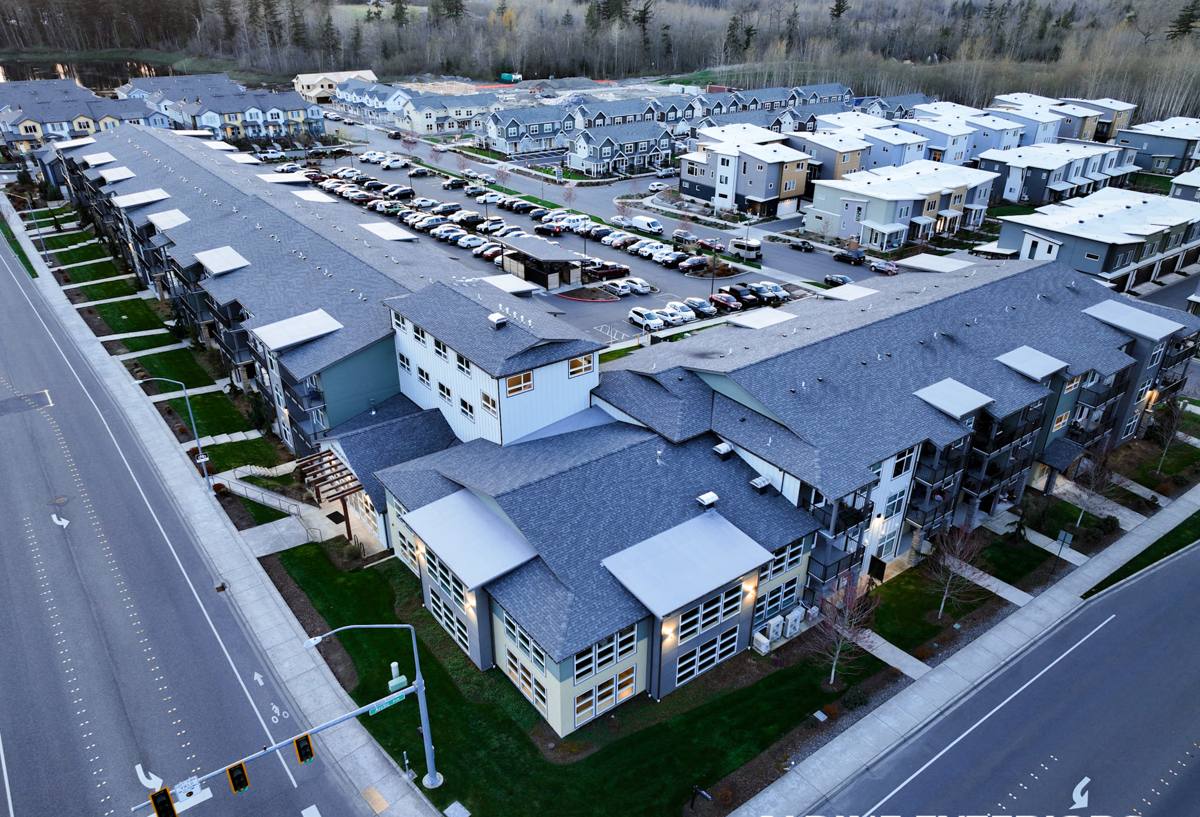
What Ferndale's Climate Actually Does to Siding
Salt Air and Corrosion
Homes within a few miles of Puget Sound and Bellingham Bay are exposed to airborne salt that accelerates corrosion on fasteners, flashing, and any metal trim components. Over years, this can undermine even a sound-looking wall assembly from the inside out if the wrong hardware or flashing details were used.
Driving Rain
Wind off the water pushes rain horizontally against west- and south-facing walls far more than in inland parts of the county. That means water is being forced at seams, laps, and penetrations — not just falling and running off. Siding that depends on paint film alone to stay watertight, rather than a manufactured moisture-resistant core, is working at a disadvantage here from day one.
Moss and Algae Season
Whatcom County's wet season runs long, and shaded, north-facing elevations can stay damp for much of the year. Moss and algae don't just look bad — they hold moisture against the siding surface, which shortens the life of any product with an absorbent substrate or a coating that isn't formulated to resist biological growth.
Why We Only Install James Hardie in This Area
We've standardized on James Hardie fiber cement for every siding job we take on, including here in Ferndale, because it's engineered for exactly this kind of exposure. It's non-combustible, dimensionally stable in wet-dry cycling, and finished with the ColorPlus factory coating system, which resists fading and holds up to moisture far better than field-applied paint on wood-based or composite products. James Hardie also builds climate-specific HZ5 product lines designed for regions with significant moisture exposure — the Pacific Northwest is squarely in that category.
We don't install vinyl, LP SmartSide, Cemplank, Allura, or primed wood siding, and we're upfront about why: in a climate like this one, the maintenance burden, moisture sensitivity, or long-term durability trade-offs of those products don't hold up the way fiber cement does when it's installed correctly. That's not a knock on every use case for those materials — it's why we built our business around one product system we can stand behind on every job.
What a Correct Siding Installation Involves
Fiber cement siding is only as good as the assembly behind it. A rushed or generic installation can undercut even the best material. On every Ferndale job, our process covers the same fundamentals:
- Removal of old siding and inspection of the sheathing underneath for rot, soft spots, or prior water damage
- Repair or replacement of any compromised sheathing before new material goes up
- Installation of a weather-resistant barrier (house wrap) with correctly lapped and taped seams
- Rainscreen or furring strip installation where wall assemblies benefit from a drainage gap, common on the wetter, shaded elevations typical in this area
- Proper flashing at every window, door, roofline, and penetration — the details that matter most in driving rain
- Correct fastener spacing, type, and depth per James Hardie's installation specifications
- Caulking and sealing only where the manufacturer calls for it, not as a substitute for proper flashing
- Final inspection of laps, corners, and trim for consistent reveal lines and tight seams
Skipping or rushing any one of these steps is how siding fails early in a climate like Ferndale's — usually starting at a poorly flashed window or an unvented wall cavity that traps moisture behind the cladding.
Matching the Product Line to Your Home's Exposure
Not every wall on a Ferndale home faces the same conditions, and part of a correct siding plan is accounting for that. A home with an open, west-facing elevation exposed to wind off the water has different needs than a shaded north wall tucked under trees.
| Exposure Type | Common in Ferndale | Key Consideration |
|---|---|---|
| Open, wind-facing walls | West and south elevations near open lots or water views | Driving rain resistance, robust flashing at all penetrations |
| Shaded, damp walls | North-facing walls under evergreen cover | Moss and algae resistance, adequate drainage plane |
| Ground-level and low-clearance siding | Homes with minimal foundation clearance | Splash-back protection, starter strip detailing |
| High-visibility street-facing elevations | Most primary facades | ColorPlus finish consistency and trim detailing |
We walk every home before quoting and factor in these differences rather than treating all four walls the same. It's a big part of why the same product line can perform differently from one house to the next depending on how it's specified and installed.
Signs Your Current Siding Is Already Struggling
Whatcom County's wet season tends to expose siding problems slowly, so homeowners often live with early warning signs longer than they should. Worth checking for before they become bigger repairs:
- Persistent moss or algae streaking that returns quickly after cleaning
- Soft or spongy spots when pressed, especially near the bottom courses or below windows
- Visible warping, cupping, or separation at seams and laps
- Peeling or bubbling paint that keeps recurring in the same spots
- Staining or discoloration around window and door trim, which often points to a flashing failure rather than a surface issue
Any of these are worth a look before another wet season sets in, since moisture problems behind siding rarely stay small on their own.
Our Process for a Ferndale Siding Project
Every project follows the same sequence, adjusted for the specific home:
- On-site assessment — we look at existing siding condition, sheathing, exposure per elevation, and any moisture history
- Product and color plan — matching the right James Hardie plank or panel profile and ColorPlus finish to the home and its exposure
- Written estimate — a clear scope covering removal, repair work, materials, and installation, with no vague allowances
- Sheathing and barrier work — repairing what's underneath before anything new goes up
- Installation — following manufacturer specifications on fastening, flashing, and clearances
- Final walkthrough — checking reveals, seams, trim, and cleanup before we consider the job done
We don't skip the sheathing and barrier step to save time, even when it means a slightly longer project. In this climate, that's usually the step that determines whether siding lasts fifteen years or fifty.
Why a Crew That Already Works Ferndale Matters
Siding installation isn't a one-size-fits-all trade, and Whatcom County's microclimates make that especially true. A crew that regularly works Ferndale and the surrounding Blaine area already knows which elevations tend to hold moisture, how far the salt air reach typically extends inland from the water, and how the moss season here differs from a drier part of the state. That familiarity shows up in the details — where a rainscreen gap is worth the extra step, how flashing needs to be handled around a shaded north wall, and which product profile holds its finish best under this specific mix of sun, rain, and shade.
It also means we're not learning the local building department's expectations or the region's typical wall assemblies on your project. That translates into fewer surprises during installation and a finished job that's built for the conditions it will actually face, not generic conditions from a manufacturer's spec sheet.
Cost Factors to Expect
Every home is different, and we don't quote a project without seeing it, but a few factors consistently move the price on a Ferndale siding job:
| Factor | Why It Matters |
|---|---|
| Extent of sheathing repair needed | Rot or moisture damage found during tear-off adds labor and material before new siding can go up |
| Home size and wall complexity | More corners, dormers, and trim details increase labor time |
| Product profile chosen | Lap siding, panel systems, and shingle-style products carry different material and labor costs |
| Rainscreen or furring installation | Adds a step but improves drainage on damp, shaded elevations |
| Access and site conditions | Tight lots, steep grades, or limited staging area affect labor time |
We provide a written, itemized estimate before any work starts, so there's no guessing at what's included.
If your Ferndale home's siding is showing wear, or you're planning ahead of another wet Whatcom County winter, we're happy to take a look and walk you through your options. Reach out for a free, no-pressure estimate — someone from our crew will come assess your home in person and give you a straightforward plan, not a sales pitch.