 Blaine Roofing
 Building Decks for Ferndale-Area Homes Near Blaine
Ferndale sits close enough to the water and to Blaine that homes here deal with the same coastal weather pattern the whole northern Whatcom County coastline gets: salt-laden air blowing in off the Strait, long stretches of driving rain from fall through spring, and short, damp winter days that never quite dry a deck out before the next system rolls through. A deck built to a generic national spec — the kind you'd see in a big-box how-to guide written for a dry inland climate — will often look fine for the first year or two and then start showing problems the builder never had to think about: fastener corrosion, soft spots around posts, moss creeping across the boards, and gaps opening up where the ledger meets the house.
A deck built for Ferndale needs to be built for this exact climate, not decks in general. That means paying attention to a handful of details that don't matter much in a dry climate but matter a great deal here: how water is shed away from the house, what hardware is used and how it's protected, how much airflow the structure gets underneath, and how the walking surface handles years of standing moisture and moss growth without becoming slick or rotting from beneath.
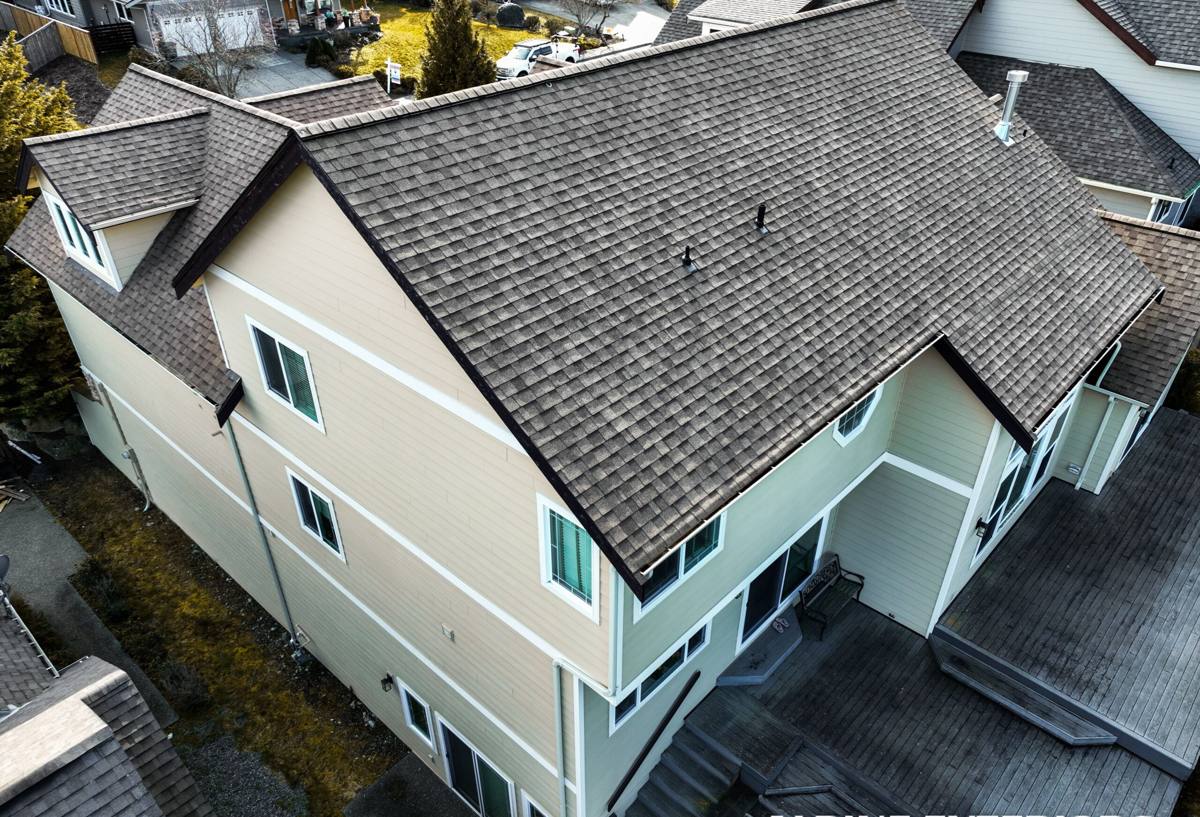
What Salt Air, Rain, and Moss Actually Do to a Deck
These three factors don't act alone — they compound each other, which is why decks in this part of Whatcom County age differently than decks built even fifty miles inland.
Salt Air and Metal Hardware
Salt in the air accelerates corrosion on any exposed metal — screws, joist hangers, bolts, post bases. Standard electro-galvanized fasteners can start rusting within a few seasons this close to the water. Once a fastener corrodes, it loses holding strength long before it looks obviously bad, which is a real safety issue in a structural connection like a ledger bolt or a joist hanger.
Driving Rain and Water Intrusion
Rain here doesn't just fall straight down — wind-driven rain gets pushed sideways into ledger boards, post connections, and any spot where two building materials meet. Without proper flashing and drainage detailing, water works its way behind the ledger board and into the house framing, which is one of the most common and most expensive deck failures we see.
Moss Season
Whatcom County's moss season effectively runs most of the year on any shaded or north-facing deck surface. Moss holds moisture against the decking material, blocks the wood or composite from drying between rain events, and creates a genuinely slippery walking surface — a real fall hazard on stairs and ramps, not just a cosmetic issue.
Choosing the Right Decking Material for This Climate
There's no single "best" decking material — the right choice depends on how much maintenance a homeowner wants to do, the budget, and how much sun versus shade the deck actually gets. Here's how the common options hold up specifically against salt air, rain, and moss:
| Material | Moisture Behavior | Moss Resistance | Maintenance |
|---|---|---|---|
| Pressure-treated wood | Absorbs and releases moisture; prone to cupping/checking if not sealed | Needs regular cleaning to prevent buildup | Annual cleaning and re-sealing recommended |
| Cedar | Naturally moisture- and rot-resistant, but still absorbs water over time | Better than untreated wood, still needs cleaning | Periodic cleaning and oiling to hold color |
| Capped composite | Water-resistant cap layer; core is protected but end cuts need sealing | Textured surfaces can hold moss if not cleaned | Occasional washing, no sealing or staining |
| PVC/cellular decking | Fully water-resistant, doesn't absorb moisture | Smooth surface options resist moss buildup better | Lowest maintenance of the group |
For a lot of Ferndale-area homeowners, capped composite hits the right balance of upfront cost and long-term maintenance. Wood is a legitimate choice too, especially for homeowners who like the natural look and don't mind a yearly cleaning-and-sealing routine — the key is being honest about that commitment before installation, not after the first moss season.
Framing, Footings, and Flashing: Where Decks Actually Fail
The decking surface is the part everyone sees, but the framing underneath is what determines whether a deck lasts fifteen years or thirty-plus. In this climate, three details matter more than anything else:
Ledger Flashing
Where the deck attaches to the house, proper flashing has to direct water away from the ledger board and the house's sheathing, not just sit there decoratively. This is the single most common point of hidden rot on older decks we're asked to repair or replace.
Footings and Post Bases
Footings need to be sized and set below frost depth per local code, and post bases should hold the post above the concrete or deck surface — wood sitting directly in standing water or buried in soil is asking for early rot, regardless of what species or treatment is used.
Joist Protection and Airflow
Joist tape or a comparable protective barrier on top of framing lumber keeps fasteners from sitting in a wet pocket where the decking meets the joist. Just as important is making sure there's enough clearance and airflow underneath the whole structure — a deck built too close to the ground, or with landscaping crowding the underside, stays damp far longer after every rain and gives moss and rot a head start.
Railings, Stairs, and Code Requirements
Any deck more than a modest height off the ground needs a code-compliant railing system, and stairs need consistent rise and run along with a graspable handrail. These aren't optional design choices — they're safety requirements, and they're inspected. Beyond meeting code, a few climate-specific choices matter:
- Stainless or coated hardware on railing posts, since these connections see constant weather exposure and carry real structural load
- Textured or grooved stair treads rather than smooth boards, since stairs are the first place moss-related slipping becomes dangerous
- Baluster spacing and post attachment done to current code, not whatever the previous deck happened to have
- Drainage gaps between boards sized so water doesn't pool on landings and stair treads
Our Process, Start to Finish
A custom deck project for a Ferndale-area home generally moves through the same stages, though the specifics get tailored to the site:
- On-site assessment — we look at the house's ledger attachment point, grade and drainage, sun/shade exposure, and any existing deck that's being replaced.
- Design and material selection — sizing, layout, and material choice based on the homeowner's maintenance preferences and how the space will actually be used.
- Permitting — decks typically require a permit through the appropriate county or city office; we handle that paperwork so the project is inspected and legal, not something that creates problems at resale.
- Framing and structural work — footings, posts, ledger flashing, and joists, built to withstand the wind and moisture load this area actually sees.
- Decking, railings, and stairs — installed with fastener systems and flashing details matched to the material chosen.
- Final walkthrough — we go over maintenance expectations specific to the material installed, so there are no surprises the first moss season.
Deck Maintenance Checklist for This Climate
Whatever material is chosen, a little seasonal attention goes a long way toward avoiding early repairs:
- Sweep debris off the deck regularly in fall so wet leaves don't sit against the boards
- Wash the surface at least once or twice a year to remove moss and algae before it takes hold, more often on shaded sections
- Check railing posts and stair connections annually for any looseness or corrosion at the hardware
- Keep gutters and downspouts near the deck clear so runoff isn't dumping directly onto or under the structure
- Inspect the ledger flashing line periodically for any sign of water staining on the siding above it
- Trim back vegetation that's shading the deck or blocking airflow underneath
Why a Crew That Already Works Ferndale Matters
Deck-building knowledge that works in a dry climate doesn't automatically transfer here. A crew that regularly builds and repairs decks around Ferndale and the greater Blaine area already knows which flashing details actually hold up against wind-driven rain off the Strait, which fastener grades are worth the extra cost given how fast salt air corrodes standard hardware, and how much airflow a deck really needs underneath to keep moss from taking over a shaded corner. That's knowledge earned from seeing what fails on older decks in this specific area, not from a general contracting manual.
Local experience also means a straighter path through permitting — knowing what the local building department expects on setbacks, footing depth, and inspection sequencing before the project starts, rather than learning it mid-build. For a homeowner, that translates into fewer surprises, a deck that's built right the first time, and a structure that's still solid well past the point a lower-bid, out-of-area job would be showing problems.
Get a Free, No-Pressure Estimate
If you're planning a new deck or replacing one that's showing its age, we're happy to come take a look, talk through material options for your specific site, and give you a straightforward estimate — no pressure, no sales script. Use the form below to get started.