 Blaine Roofing
 Why Board & Batten Suits Everson Homes
Board and batten has a long history in Whatcom County — you'll see it on farmhouses, barns, and newer builds throughout the Nooksack Valley and the smaller communities around Blaine, including Everson. The style works because it's honest: wide vertical boards with narrow battens covering the seams, giving a home strong shadow lines and a clean, tall profile that reads well against the region's evergreen tree lines and open farmland. It also happens to be a smart technical choice for this climate, which matters more than the look.
For homeowners in and around Everson considering a re-side or a new build, the question isn't just "do I like this style" — it's whether the materials and installation underneath it can actually hold up to what Whatcom County weather does to a house, year after year.
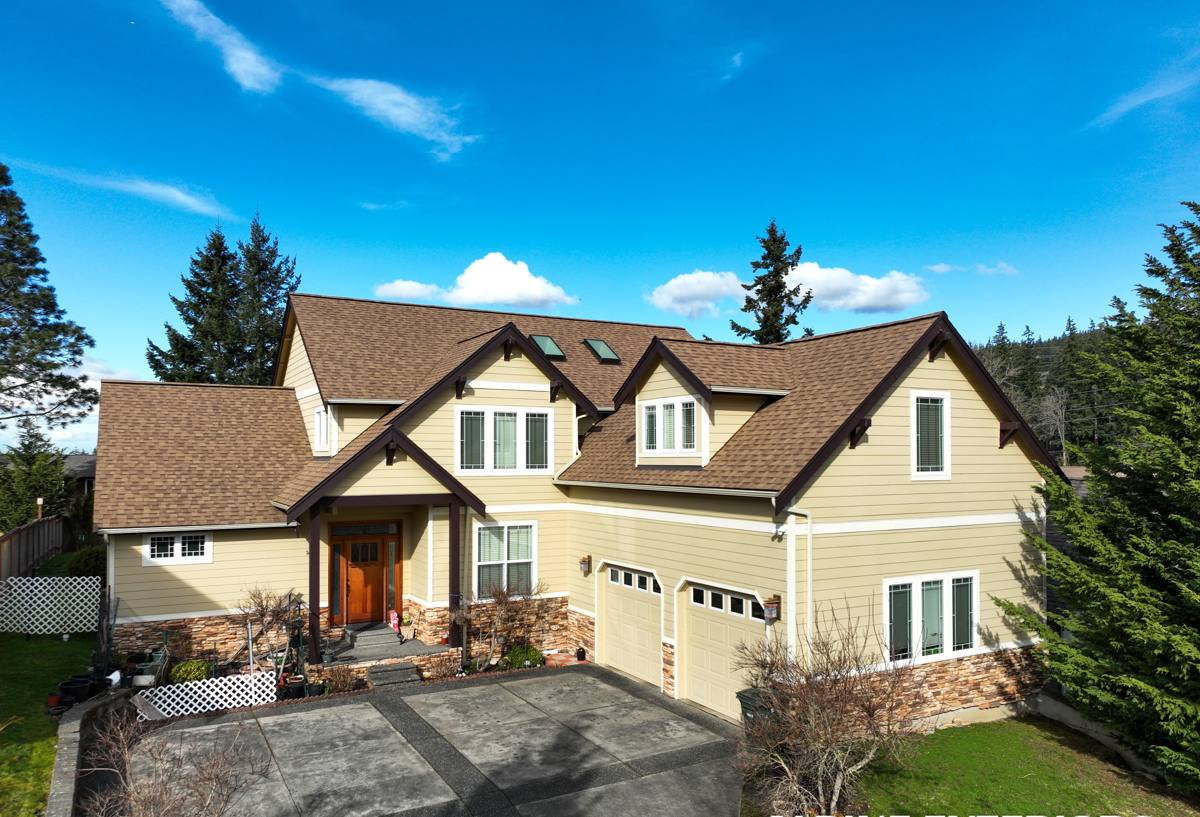
What This Siding Style Has to Handle Here
Everson sits inland from the coast but still gets the full package of western Whatcom County weather: long stretches of driving rain, heavy fall and winter dampness, and a moss and algae season that can run eight months or more on north-facing walls and anything shaded by trees. Add in salt-tinged air that moves inland off the Strait of Georgia and Bellingham Bay on windy days, and you've got a combination that's hard on siding that isn't built for it.
The three things that break board & batten siding here
- Moisture behind the boards — vertical siding channels water downward along the wall, and if there's no drainage gap or the flashing details are wrong, that water gets trapped instead of shedding.
- Batten and board swelling — wood-based products absorb moisture through end grain and cut edges, then swell, cup, and eventually crack or pull fasteners loose.
- Moss and algae staining — battens create horizontal ledges and shadowed strips that hold moisture longer than flat siding, which is exactly where moss gets a foothold if the material and finish aren't resistant to it.
None of these are hypothetical concerns — they're the predictable result of installing the wrong material, or installing the right material incorrectly, in a climate like this one.
Why We Only Install James Hardie Fiber Cement Board & Batten
We don't install vinyl board & batten, LP SmartSide, primed spruce, or cedar board & batten. That's a deliberate standard, not a lack of options. Each of those products has real strengths, but none of them holds up as reliably as James Hardie fiber cement in a climate that combines salt air, near-constant fall rain, and a long moss season.
What we've weighed against each alternative
Cedar and primed spruce board & batten look beautiful when new, but they're organic material — they absorb water at cut ends and fastener penetrations, and once moisture gets in, rot and moss growth follow. Keeping wood siding sound in this climate means a repainting and caulking schedule that most homeowners underestimate going in. LP SmartSide is an engineered wood product with a factory treatment that helps, but it's still wood-based at its core, which means the same moisture-sensitivity applies at cut edges and seams if installation isn't precise. Vinyl board & batten sidesteps rot entirely, but it's a thin, flexible material that can warp in temperature swings, fade over time, and it simply doesn't hold the crisp, substantial shadow line that makes board & batten look right in the first place.
James Hardie fiber cement is cement, sand, and cellulose fiber — non-combustible, dimensionally stable, and engineered specifically for wet Pacific Northwest climates through its HZ5 product line. It doesn't swell with moisture, it doesn't feed moss the way bare wood can, and the factory-applied ColorPlus finish is baked on and warrantied against peeling and cracking, which means it isn't relying on a field-painted coat to keep water out. That's the difference between siding that needs a maintenance plan and siding that mostly needs to be left alone.
What a Correct Installation Actually Involves
Board & batten looks simple from the street, but it's one of the less forgiving siding styles to install correctly — because every vertical seam is a potential water path, and there are more of them than with lap siding.
The details that matter most
- Drainage plane and rainscreen gap — furring strips or a purpose-built drainage mat behind the boards so water that gets past the surface has somewhere to go besides sitting against the wall sheathing.
- Weather-resistive barrier and flashing sequencing — house wrap installed and lapped correctly, with flashing at every window, door, and horizontal transition installed in the right shingle-style order before the siding goes on.
- Fastener placement per manufacturer spec — Hardie panels and battens have specific nailing patterns and edge clearances; get them wrong and you create stress points that crack the board over time.
- Batten spacing and board expansion gaps — proper gaps at butt joints so the material can move slightly with temperature and humidity without buckling.
- Bottom clearance and kickout flashing — siding held above grade, decks, and roof lines with the gap manufacturers require, so it never wicks standing water.
Skip any one of these and the siding might look fine for a year or two before the problems show up — usually as staining, soft spots, or fastener pops that are expensive to trace back to the actual cause.
Fiber Cement vs. Other Board & Batten Options
| Material | Moisture Behavior | Moss/Algae Resistance | Finish Durability | Typical Maintenance |
|---|---|---|---|---|
| James Hardie fiber cement | Dimensionally stable, doesn't swell | High — engineered surface resists growth | Factory ColorPlus finish, warrantied | Occasional gentle wash |
| Cedar / primed spruce | Absorbs water at cuts and joints | Low — organic material, prone to moss | Field-applied paint, wears with UV and rain | Repaint and recaulk every few years |
| LP SmartSide | Better than raw wood, still wood-based | Moderate | Factory-treated, moisture-sensitive at cuts | Periodic inspection of seams and edges |
| Vinyl board & batten | Doesn't absorb water, can trap it behind panel | Moderate — surface can still stain | Color molded in, can fade and chalk with age | Low, but limited repair options if damaged |
How We Approach a Board & Batten Job in Everson
Assessment and planning
We start by looking at the whole wall system — not just the siding you can see. That means checking for existing moisture damage, evaluating the current drainage plane or lack of one, and identifying every window, door, and roof intersection that needs proper flashing before a single board goes up. Homes around Everson often sit close to tree cover or have shaded north walls, and we plan the moss-resistance strategy around those specific exposures rather than treating every wall the same.
Prep and installation
Old siding and any compromised sheathing comes off, the wall gets a correctly lapped weather-resistive barrier, and we build in the rainscreen gap before the Hardie boards and battens go up to manufacturer spec — fastener pattern, gaps, and flashing sequence included. We don't shortcut the parts nobody sees, because those are the parts that determine whether the siding lasts fifteen years or fifty.
Final inspection and walkthrough
Before we call a job done, we walk the exterior with the homeowner, check every seam and transition, and confirm the finish and caulking meet spec. You get a straight explanation of what was done and why, not just a finished wall.
Cost Factors to Expect
| Factor | Why It Affects Price |
|---|---|
| Existing wall condition | Rot, mold, or missing drainage plane behind old siding adds prep work |
| Home height and complexity | Multi-story walls, gables, and dormers add labor and staging time |
| Trim and batten spacing choice | Tighter batten spacing uses more material and installation time |
| Color and finish selection | Factory ColorPlus finishes vary slightly in cost by color line |
| Access and site conditions | Tree cover, tight lots, or difficult grading around Everson properties can affect setup |
We give exact numbers only after walking the property — anyone quoting a firm price sight unseen is guessing.
Why Hiring a Crew That Already Works This Area Matters
Board & batten installation quality depends on decisions that are specific to the site — how a wall faces prevailing wind-driven rain, how much shade a north elevation gets, how salt air factors into fastener and finish choices near the water. A crew that regularly works Whatcom County homes, including smaller communities like Everson, has already seen how these variables play out on real walls in this climate. That's different from a crew applying the same generic install everywhere they go.
We're also positioned to respond locally if a question comes up after the job — a warranty question, a caulking touch-up, a follow-up inspection. That's part of why we standardize on one product line installed to one consistent standard, rather than juggling multiple material systems with different rules.
Questions worth asking any siding contractor before you hire
- Will you install a proper rainscreen/drainage gap behind the boards, or fasten directly to the wall wrap?
- What's your flashing sequence at windows, doors, and roof-to-wall transitions?
- What fastener pattern and spacing do you follow, and is it to the manufacturer's written spec?
- What warranty covers the material, and what warranty covers your labor?
- Can you explain, in plain terms, why you chose the material you're recommending for this specific home?
If you're weighing board & batten siding for a home in Everson or elsewhere in Whatcom County, we're happy to walk the property, look at your current siding and wall condition, and give you a straight assessment — no pressure, no obligation. Reach out below to schedule a free estimate.