 Blaine Roofing
 Why Grandview Homes Ask About Windows First
Of all the exterior work we do around Blaine, windows are usually the first thing homeowners in Grandview bring up — not the roof, not the siding. That's because window problems show up indoors, where you live: cold drafts by the sash, condensation pooling on the sill, a heating bill that keeps climbing even though the furnace is fine. In a neighborhood this close to the water, those symptoms usually trace back to the same root causes — aging seals, single-pane or early dual-pane glass, and frames that were never built to handle constant marine moisture in the first place.
This page is specifically about energy-efficient window replacement for Grandview properties, not a general "windows are good" pitch. The right window for a home a few miles inland in Whatcom County isn't necessarily the right window for a home exposed to open water and prevailing wind. We'll walk through what the local climate actually does to windows, what a correctly installed unit needs to include, and how our process works from first look to final walkthrough.
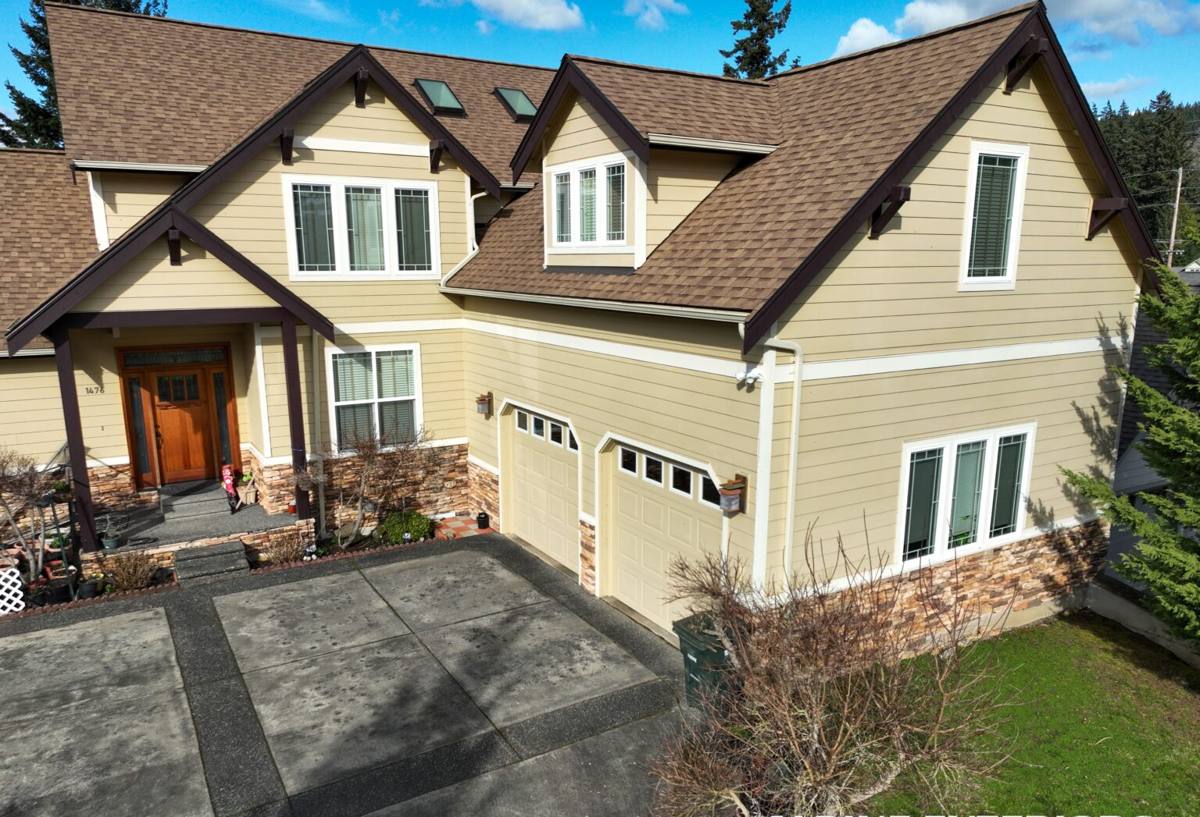
What the Climate Actually Does to a Window
Blaine's location on the water means Grandview homes deal with a specific combination of stressors that inland Whatcom County properties see less of:
- Salt air: Airborne salt accelerates corrosion on window hardware — hinges, locks, balance mechanisms, and screen frames — especially on lower-quality aluminum or unprotected steel components. It also degrades certain sealants and finishes faster than a standard product warranty assumes.
- Driving rain: Wind-driven rain off the water doesn't just fall on a window, it gets pushed sideways and upward into gaps that would stay dry in a calmer climate. This is a flashing and sealing problem as much as a window-quality problem — even a good window fails if it's not integrated correctly into the wall.
- Long moss season: Extended damp, shaded stretches of the year encourage moss and algae growth on horizontal surfaces, including window sills, trim, and the tops of frames. Beyond the cosmetic issue, that moisture retention keeps wood and composite trim wet longer, which shortens its service life if it wasn't properly detailed to shed water.
None of these factors are unique to Grandview, but their combination — constant coastal moisture plus salt exposure plus a shaded, mossy season lasting several months — adds up faster here than it does a few miles inland. Windows installed without that in mind tend to show seal failure, fogging, and frame deterioration years ahead of schedule.
What "Energy-Efficient" Should Mean Here
Glazing and Coatings
For this climate, we generally recommend dual-pane glass with a low-E coating and an argon or krypton gas fill as the baseline, not the upgrade. Low-E coatings reduce heat loss through the glass in winter and cut solar heat gain in summer, which matters for keeping heating costs down through Whatcom County's long, damp, cool season. Triple-pane glass is worth discussing for north- or water-facing rooms where wind exposure and heat loss are greatest, but it isn't automatically the right call for every opening — we'll talk through where it earns its cost and where it doesn't.
Frame Material
Frame choice matters as much as glass in a marine climate, because the frame is what has to survive decades of moisture cycling and salt exposure without warping, corroding, or letting water in around the glass. We steer most Grandview clients toward vinyl or fiberglass frames for exactly this reason — both resist moisture absorption and don't corrode. Wood-frame and wood-clad windows can still look right on certain homes, but we're upfront that they carry a higher maintenance burden this close to the water: finishes need more frequent attention, and any breach in the cladding lets moisture into the wood core where it's hard to catch early.
Air Sealing and U-Factor
A window's energy performance is only partly about the glass — a significant share of heat loss happens around the frame if it isn't air-sealed correctly during install. We look at U-factor (how well the whole unit resists heat transfer) and confirm proper foam backer rod and sealant at the rough opening, not just caulk at the exterior trim.
Frame Material Comparison for Coastal Whatcom County
| Frame Material | Coastal Moisture/Salt Resistance | Maintenance | Typical Cost Position |
|---|---|---|---|
| Vinyl | Good — won't corrode or absorb moisture | Low | Lower |
| Fiberglass | Very good — dimensionally stable, resists warping | Low | Mid to upper |
| Wood-clad | Fair — depends entirely on cladding integrity | Higher — finish and seams need periodic inspection | Upper |
| Aluminum | Poor to fair without marine-grade hardware | Moderate | Lower to mid |
This isn't a ranking of "best" windows in the abstract — it's a ranking of what holds up specifically under salt air and driving rain over many years. A wood-clad window installed and maintained well can absolutely last; it just asks more of the homeowner over time than vinyl or fiberglass does in this particular environment.
What a Correct Installation Actually Involves
Most window failures we get called out to inspect in this area aren't glass failures — they're installation failures. The window itself was fine; the way it was tied into the wall wasn't. A correct job in a driving-rain climate includes:
- A sloped sill pan flashing under the new window, so any water that gets past the sash has somewhere to go besides the wall cavity
- Proper integration with the water-resistive barrier (house wrap) — flashing tape lapped in the correct shingle-style order, not just caulked over the top
- Continuous, correctly sized foam backer rod and sealant at the interior and exterior gaps, not just a bead of caulk at the trim
- A drip cap or head flashing above the unit to break the path of wind-driven rain running down the wall
- Shimming and squaring the unit so the sash operates correctly and seals evenly for its full service life, not just on install day
Skip any one of these steps and you can end up with a window that looks fine and even tests fine on a calm day, but leaks the first time rain comes in sideways off the water — which, in Grandview, happens regularly.
Our Process
1. Assessment
We start by looking at your current windows' condition, orientation, and exposure — a water-facing window takes a different amount of weather than one tucked on a sheltered side of the house, and that affects both product recommendation and detailing.
2. Product Selection
We walk through frame material, glazing package, and cost trade-offs honestly, based on what that specific opening needs — we're not selling one product line for every situation.
3. Installation
Old units are removed, the opening is inspected for any hidden rot or water damage before anything new goes in, and the new window is flashed and sealed to the standard described above.
4. Cleanup and Walkthrough
We clear debris and old materials, and walk the finished openings with you — checking operation, seals, and trim before we consider the job done.
Signs Your Current Windows Are Already Failing
- Fogging or moisture between panes — the seal has failed and the gas fill is gone
- Visible moss, algae, or dark staining building up on the sill or lower frame
- Drafts you can feel near the frame edges, even with the window latched
- Difficulty opening, closing, or locking the sash — often a sign of frame warping or corroded hardware
- Soft or discolored trim or sheetrock below the window, which usually points to water getting past the flashing
Any one of these on its own isn't necessarily an emergency, but a home with several of them is losing energy and, potentially, taking on hidden water damage behind the wall.
Why Local Experience in Grandview Matters
Window replacement done right depends on understanding how a specific house sits relative to wind and water — which sides take the worst of the driving rain, which surfaces stay damp long enough to grow moss, and how the salt air has already treated the existing hardware and finishes. That's knowledge you build by working this neighborhood repeatedly, not by installing windows from a generic spec sheet. It's also why we default to coastal-appropriate detailing — sill pans, proper flashing sequencing, corrosion-resistant hardware — as our standard practice here, rather than treating it as an upsell.
We also handle the practical side of the job: pulling any required permits through the appropriate Whatcom County process and making sure the work is documented for your records and any future resale.
Get a Straight Answer for Your Home
If you're dealing with drafts, fogged glass, or a window that's just never sealed right, we're happy to take a look and give you an honest read on whether repair, partial replacement, or a full window upgrade makes sense for your situation — no pressure, no upsell script. Use the form below to request a free estimate and we'll get back to you to schedule a time that works.