 Blaine Roofing
 Why Dakota Creek Windows Take More Punishment Than You'd Expect
Dakota Creek sits close enough to the water that salt air is part of daily life, whether you notice it or not. That air carries fine salt particles that settle on window frames, hardware, and glass, and over years it accelerates corrosion on anything metal that isn't rated for coastal exposure. Add in Whatcom County's driving rain — the kind that comes in sideways during a winter system off the Strait of Georgia — and you have wind-driven moisture testing every seam in a window assembly, not just the glass.
Then there's the moss season, which in this part of Washington is less a season and more a permanent condition from fall through spring. Moss and algae don't just grow on roofs; they take hold on north-facing window sills, trim, and anywhere shade and moisture linger. That biological growth holds water against wood and composite surfaces far longer than a dry climate ever would, which is exactly the condition that rots sills and swells frames.
None of this means Dakota Creek is a bad place to own a home — it's a beautiful stretch of Blaine. It just means the windows here need to be selected and installed with that specific combination of salt, wind-driven rain, and prolonged dampness in mind, not treated like a generic Pacific Northwest install.
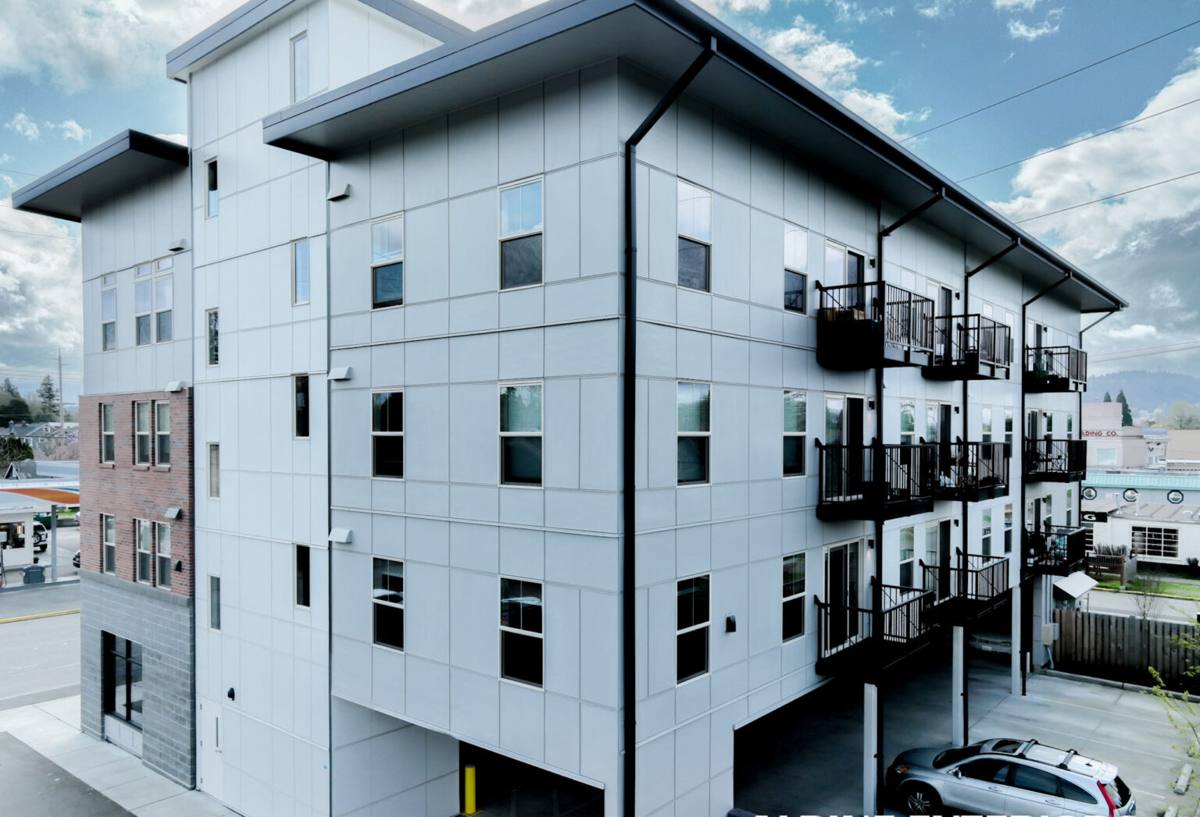
What a Correct Custom Window Job Actually Involves
It Starts With the Rough Opening, Not the Window
A lot of window problems that show up two or three years later trace back to the rough opening, not the window unit itself. Every opening on an older Dakota Creek home is slightly different — settling, past repairs, and original framing tolerances all add up. Custom windows are built to the actual measured opening, not a catalog size, which means less shimming, fewer gaps, and a tighter fit against wind-driven rain.
Removal Without Damage
Old windows, especially original wood units from homes built decades ago, often come out with hidden surprises: soft framing, old caulk that's failed invisibly, or insulation that's compressed and useless. Part of doing this correctly is stopping the moment we see it and dealing with it before a new window goes in — not sealing a problem behind a new frame.
Sealing the Right Way, Not the Fast Way
Foam and caulk alone are not a moisture barrier. A correct install layers self-adhered flashing tape, a properly lapped water-resistive barrier, and backer rod and sealant at the exterior trim — in that order, so water that does get past the outer layer has somewhere to go instead of soaking into framing.
Choosing Windows That Make Sense for This Climate
"Custom" doesn't just mean a non-standard size — it means matching the frame material, glass package, and hardware to how a house actually sits on its lot. A window on the weather-facing side of a Dakota Creek home dealing with direct salt air and prevailing wind needs different hardware and sealant detailing than a sheltered window on the leeward side, even on the same house.
Frame Material
Vinyl, fiberglass, and wood-clad each behave differently in salt air and constant damp. We'll walk through the honest trade-offs of each for your specific exposure rather than push one product line for every wall of the house.
Glass and Air Sealing
Double-pane, low-E glass with argon fill is the practical standard for this climate — it manages heat loss and condenses less on the interior during cold, damp stretches, which matters when a home sees months of high humidity in a row.
Hardware and Fasteners
This is where salt air does the most quiet damage. Standard hardware and fasteners can start showing corrosion within a few years this close to the water. We spec corrosion-resistant hardware for coastal-exposed openings so the operating mechanism doesn't seize or streak the frame with rust before the glass itself needs attention.
Comparing Window Frame Options for Coastal Whatcom County
| Frame Type | Salt Air Behavior | Moisture Behavior | Maintenance |
|---|---|---|---|
| Vinyl | Does not corrode; UV can affect color over many years | Handles constant damp well; no rot risk | Low — occasional cleaning |
| Fiberglass | Very stable in salt exposure; minimal expansion/contraction | Excellent moisture resistance | Low, though the material carries a higher upfront cost |
| Wood-clad | Cladding protects exterior, but any breach exposes wood beneath | Interior wood look requires the cladding seal to stay intact | Moderate — needs the exterior seal inspected periodically |
| Aluminum | Prone to corrosion and pitting in direct salt exposure without marine-grade coating | Conducts cold, more condensation risk | Higher, especially near the water |
We don't install a single "best" material on every job — we match the frame to the exposure, the home's style, and what the homeowner wants to maintain long-term.
Signs Your Current Windows Are Already Losing the Fight
Because moisture damage from driving rain and coastal humidity often happens inside the wall before it's visible on the surface, it helps to know what to check for before a small issue becomes a full frame replacement.
- Fogging or a permanent haze between panes — the seal has failed and the insulating gas is gone
- Soft or spongy trim and sills, especially on north- or west-facing windows
- Visible mildew or dark staining on interior sills that keeps returning after cleaning
- Difficulty opening, closing, or locking — often corrosion or swelling in the frame
- Cold drafts near the frame even with the window fully closed and locked
- Peeling paint or bubbling on interior trim near the window, a sign moisture is already inside the wall
- Visible rust streaks on hardware or fasteners
Any one of these on its own isn't an emergency. Two or three together, especially on the weather side of the house, usually means it's worth having someone look before the next wet season.
Our Process, Start to Finish
1. On-Site Assessment
We look at each opening individually — exposure, current condition, and what's actually happening behind the trim, not just the glass. On a Dakota Creek home this often means paying particular attention to the sides of the house that take the most wind-driven rain.
2. Honest Recommendation
You'll get straight options for frame material and glass package with the real trade-offs of each, not a single upsell path. If a lower-cost option genuinely holds up fine for a sheltered window, we'll say so.
3. Precise Measurement and Ordering
Custom units are measured to the actual opening, accounting for any settling or irregularity in the framing, so the finished install fits tight without excessive shimming.
4. Careful Removal and Opening Inspection
We check the framing and sill for hidden rot or moisture damage before anything new goes in, and address anything we find rather than covering it up.
5. Proper Flashing, Sealing, and Install
Flashing tape, water-resistive barrier integration, and correctly ordered sealant — installed in the sequence that actually sheds water instead of trapping it.
6. Final Walkthrough
We test operation, check the seal from inside and out, and make sure you know how to maintain the hardware given the salt air exposure here.
What Drives the Cost of a Custom Window Job
Every home and opening is different, so we won't quote a number without seeing the job, but a few factors consistently move the price up or down on Dakota Creek homes:
| Factor | Why It Matters |
|---|---|
| Frame material | Vinyl is generally the most affordable; fiberglass and wood-clad cost more upfront but offer different long-term durability |
| Number and size of openings | Larger or custom-shaped windows require more precise fabrication |
| Condition of the existing opening | Rot or framing repair found during removal adds time and material |
| Exposure level | Weather-facing openings often warrant upgraded hardware and flashing detail |
| Glass package | Low-E coatings and gas fills add cost but reduce condensation and heat loss |
Why Local Experience in Dakota Creek Matters
A crew that mainly works inland or in drier parts of Washington won't always think to spec corrosion-resistant hardware, or know which side of a Dakota Creek home usually takes the worst of the wind-driven rain before they've even walked the site. Working this specific stretch of Blaine repeatedly means we've seen how salt air, moisture, and moss actually behave on homes here over time — not in a manual, but on real jobs down the road from the next one.
That local pattern recognition is what keeps a window installation from becoming a callback in three years. It's also why we're upfront when a window doesn't need full replacement yet, or when a repair to flashing and sealant will buy several more years before a full swap makes sense.
Ready When You Are
If your windows are original to the house, fogging, drafty, or just due for an honest look, we're happy to come take a look and give you a straightforward, no-pressure estimate. Use the form below to get started.