 Blaine Roofing
 Building Decks in Everson for Inland Whatcom County Conditions
Everson sits a bit inland from the coast, in the Nooksack Valley, which means it doesn't get the same salt-laden air that homes closer to Blaine and Birch Bay deal with. But it shares almost everything else with the rest of Whatcom County: long stretches of driving rain, heavy morning dew off the valley floor, and a moss season that can run from fall through spring. A deck built here has to handle constant moisture cycling — wet, then damp, then wet again — for months at a time without a real drying-out period in between.
That combination is harder on a deck than a single hard freeze or a few big storms. It's the slow, repeated soaking of framing lumber, fasteners, and decking boards that causes problems years down the road: soft spots, rust streaks, boards that cup or split, and moss that takes hold in shaded corners and never lets go. A deck designed with that reality in mind from day one holds up. One that isn't starts showing its age within a few winters.
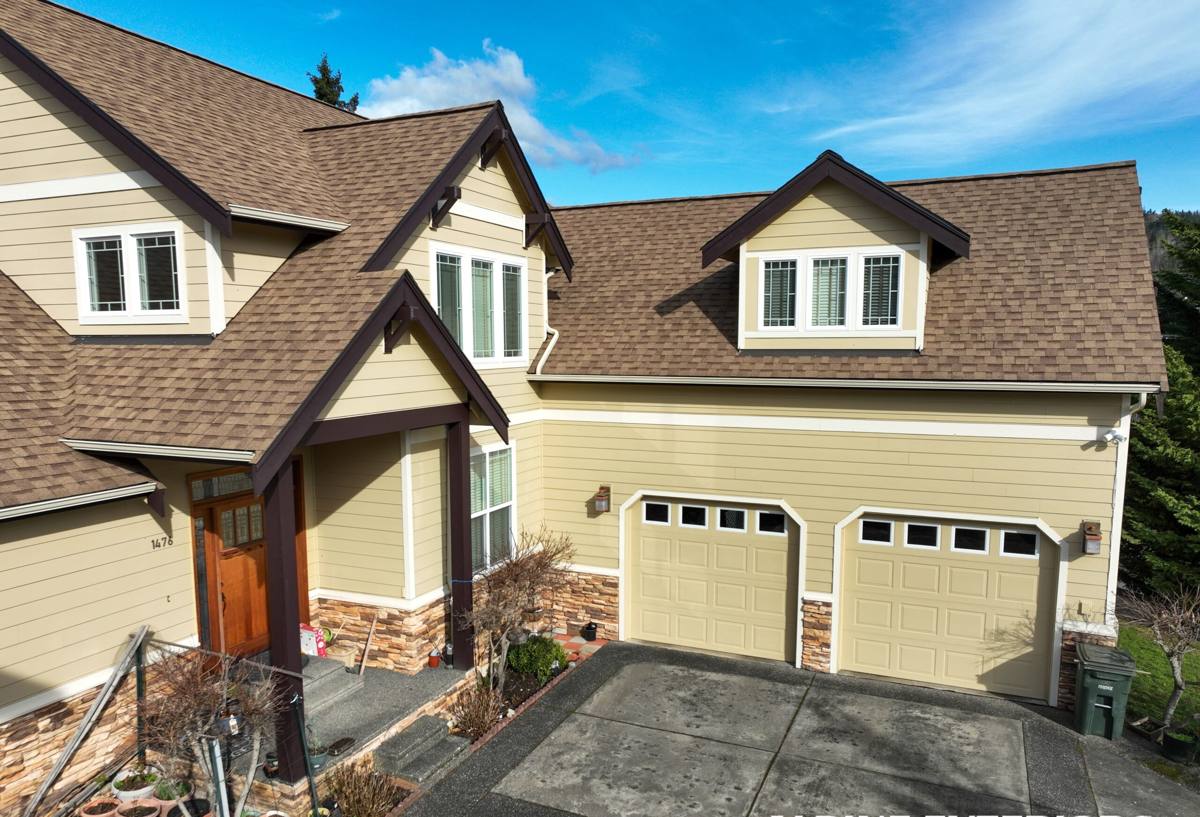
What Everson Homes Actually Need From a Deck
Most of the decks we build or rebuild in this area need to address the same handful of issues, regardless of size or style:
- Real drainage — water needs a clear path off the deck surface and away from the house, not a place to pool against framing or siding.
- Decay-resistant framing — pressure-treated lumber rated for ground contact where it's close to grade, and proper flashing everywhere the deck meets the house.
- Airflow underneath — decks built too low to the ground or too tight to a foundation wall trap moisture and never fully dry between rains.
- Fastener and hardware choice — coated or stainless fasteners and connectors that won't corrode and streak the decking within a few seasons.
- Shade and moss management — many Everson lots have mature trees or sit close to tree lines, which means more debris, more shade, and faster moss growth on the deck surface.
None of this is exotic. It's standard good practice — the problem is that it's easy to skip on a rushed or budget build, and those shortcuts don't show up as a problem until the second or third wet season.
Choosing the Right Decking Material for This Climate
There's no single "best" decking material — there's a best material for how you use the deck, how much upkeep you want to do, and what you're willing to spend. Here's how the common options actually perform in a climate like this one:
| Material | Moisture & Moss Behavior | Maintenance | Typical Lifespan |
|---|---|---|---|
| Pressure-treated wood | Absorbs water, needs sealing to resist moss and graying | Annual cleaning, re-sealing every 1-2 years | 10-15 years with upkeep |
| Cedar | Naturally decay-resistant, still needs sealing against moss in shaded areas | Regular cleaning and periodic finish | 15-20 years with upkeep |
| Composite decking | Won't rot, but can trap surface moisture and grow moss if not cleaned | Periodic washing, no sealing needed | 25-30 years |
| Capped composite / PVC | Best moisture and moss resistance of the group | Occasional washing | 25-30+ years |
We'll walk you through the real trade-offs for your specific lot and budget rather than pushing one product line. A shaded, tree-lined yard in Everson is a different conversation than an open, sunny lot — the shaded one needs a material and maintenance plan built around moss and slow drying, not just looks.
A Note on Wood Species and Sealants
If you go with wood, the sealant matters as much as the wood itself. A film-forming sealer that isn't reapplied on schedule can trap moisture under the surface once it starts to fail, which is worse than no sealer at all. We'll tell you honestly what maintenance schedule a wood deck actually needs in this climate before you commit to it — it's more than most people expect.
What a Correctly Built Deck Involves
A deck is a structure, not just a surface to walk on, and most of what determines its lifespan is invisible once it's finished. The parts that matter most:
Footings and Framing
Footings need to be sized and set to local frost and soil conditions, not guessed at. Undersized or shallow footings lead to settling, which shows up later as a deck that's no longer level or a railing that's started to rack.
Ledger Attachment
Where the deck attaches to the house is the single most common point of failure on older decks. Proper flashing and a correctly fastened ledger board keep water from working its way behind siding and into the house framing — a problem that's expensive to fix once it's been happening unnoticed for a few seasons.
Joist Spacing and Hardware
Joist spacing has to match the decking material's span rating, and every connector — joist hangers, post bases, hold-downs — should be corrosion-resistant hardware, not standard fasteners that will rust and stain in a wet climate.
Permitting
Decks above a certain height or attached to the house typically require a permit and inspection. We handle that process as part of the build, which also means the structure is verified by someone other than us before it's covered up.
Design Considerations for Everson Properties
Lots in and around Everson tend to run larger than in-town properties closer to Blaine, with more room for multi-level decks, larger footprints, or decks that step down toward a yard rather than sitting flush against the house. A few things worth thinking through at the design stage:
- Where does afternoon and morning shade fall across the deck, and how does that affect drying time and moss risk in different zones of the same structure?
- Do stairs and railings need to meet code for height and spacing, especially on multi-level designs?
- Will the deck be exposed to falling debris from nearby trees — needles, leaves, seed pods — that accelerates moss growth and clogs drainage gaps?
- Is there a covered portion planned, and if so, how does that change the framing and drainage requirements underneath it?
Good design solves problems before they exist. A deck laid out without accounting for shade patterns or debris fall will need more maintenance for its entire life than one that was planned around those realities from the start.
Our Process for a Custom Deck Build
We keep the process straightforward and don't ask you to make decisions you don't have enough information for:
- On-site consultation. We look at the lot, the grade, tree cover, and how the deck will connect to the house before talking materials or layout.
- Design and material selection. We lay out options with honest cost and maintenance trade-offs for your specific site — not a one-size answer.
- Permitting. We handle the paperwork and inspections required for the build.
- Construction. Footings, framing, ledger flashing, and decking installed to spec, with attention to the drainage and airflow details that matter in this climate.
- Final walkthrough. We go over the finished deck with you, including what maintenance schedule will actually keep it looking and performing well.
Maintenance in a Moss-Prone Climate
Every deck material benefits from some seasonal attention here — the difference is how much and how often. A basic checklist that applies to most decks in this area:
- Clear leaves, needles, and debris from between boards before they trap moisture underneath.
- Wash the surface at least once a year to remove early moss and algae growth before it takes hold.
- Check and clear any gaps or drains along the deck edge so water has somewhere to go.
- Inspect ledger flashing and the house connection point annually for signs of water intrusion.
- Reseal wood decking on the schedule the sealant manufacturer recommends — don't wait until it visibly needs it.
- Look underneath the deck once a year for standing water, soft framing, or rust on hardware.
Why a Crew That Already Works in Everson Matters
Deck-building advice that works for a dry inland climate or a suburban lot with full sun doesn't hold up here. A crew that already builds and repairs decks around Everson and the rest of Whatcom County knows how local soil drains, how footing depth needs to account for the ground conditions in this valley, and which parts of a build tend to fail first when the moisture cycle we get here goes to work on them. That's not something you get from a general contractor working from a national playbook — it comes from having already fixed the mistakes that show up in this specific climate.
Typical Cost Factors
Every deck project is different, but the main variables that move the price are consistent:
| Factor | Why It Affects Cost |
|---|---|
| Size and footprint | More square footage means more material, framing, and labor |
| Decking material | Composite and capped composite cost more upfront than wood but less in long-term maintenance |
| Height and levels | Multi-level decks need more framing, stairs, and railing than a single-level platform |
| Site access and grade | Sloped or hard-to-access lots take more time to set footings and move material |
| Railing and finish details | Custom railing, built-in seating, or lighting add labor and material cost |
We'll give you a clear, itemized estimate before any work starts, so you know exactly what you're paying for and why — no vague allowances that turn into surprises later.
If you're planning a new deck or need to replace one that's showing its age, we're happy to come take a look and talk through honest options for your property. Estimates are free, there's no pressure, and you'll get straight answers about what your Everson lot actually needs — just fill out the form below to get started.