 Blaine Roofing
 Siding Replacement in Custer: Doing the Tear-Off Right the First Time
Custer sits in the open agricultural flatland north of Ferndale, close enough to the Salish Sea to catch marine air on a regular basis even though most properties here aren't waterfront. That inland setting doesn't spare a house from the county's tougher weather patterns. Flat, unbroken terrain around Custer means storms coming off the water push rain sideways into walls rather than straight down, salt-laden air still finds its way inland on winter systems, and a long moss season keeps shaded and north-facing walls damp for much of the year. Siding here works harder than siding on a similar house set back in more sheltered, tree-covered terrain further inland.
Siding replacement is different work than a repair or a spot patch. It's the point where a house's entire exterior wall system — sheathing, house wrap, flashing, and the siding itself — gets opened up and, ideally, corrected. We treat every full replacement in Custer as a chance to fix whatever the old siding was hiding, not just a swap of old boards for new ones.
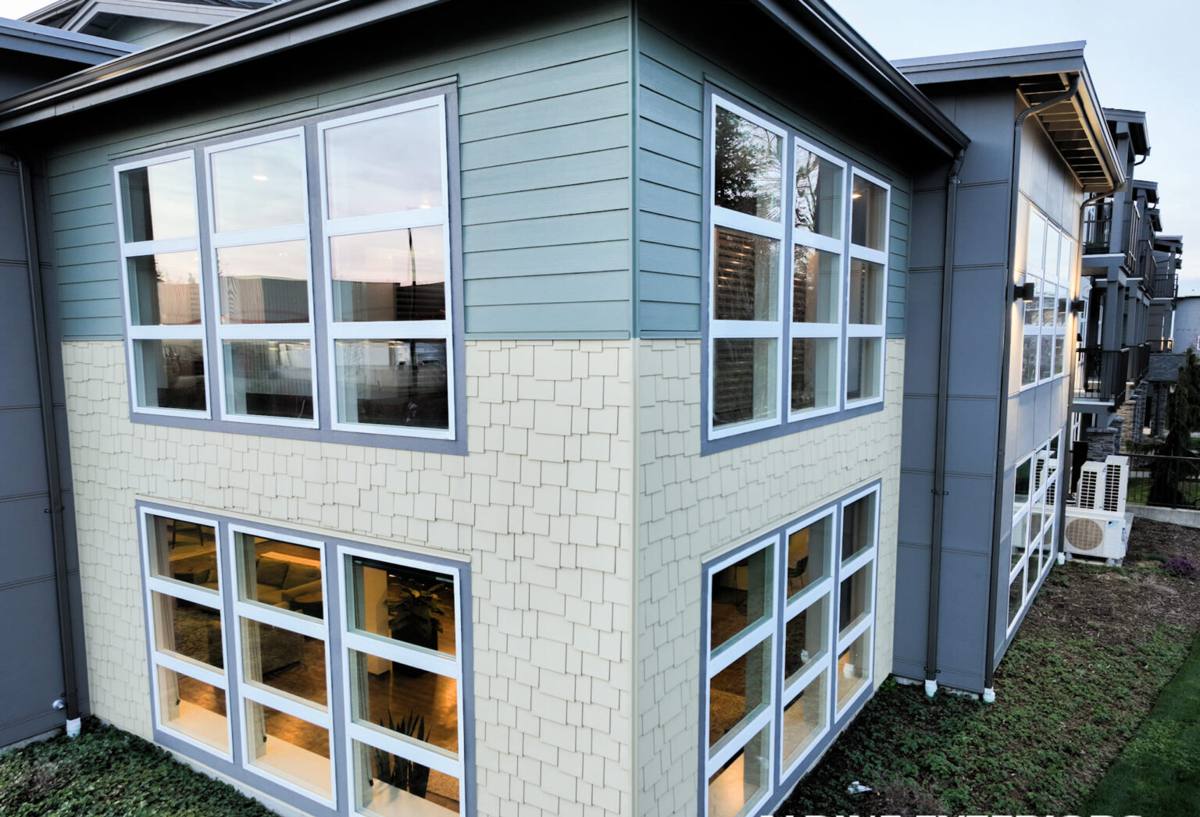
How to Tell a Custer Home Needs Full Replacement, Not Repair
Not every siding problem calls for tearing the whole wall down to the studs. Isolated damage — a cracked board, a section that took an impact, a small area of trim rot — can often be repaired or replaced in place if the rest of the wall assembly is sound. Full replacement becomes the right call once the problems are widespread or the wall assembly itself is compromised.
- Soft or spongy siding in multiple areas, not just one isolated spot, especially low on walls or around window and door trim
- Persistent moss or dark staining that comes back within weeks of cleaning, across more than one wall
- Visible warping, cupping, or separation at seams and butt joints on more than one section
- Paint or finish failure across large areas rather than a single weathered section
- Known or suspected moisture behind the siding, evidenced by interior staining, musty smells, or soft sheathing found during a smaller repair
- Siding material at or near the end of its service life, where patch repairs are becoming frequent and cosmetically obvious
When we walk a Custer property for an estimate, we look at all of these together rather than reacting to whatever prompted the call. A homeowner who called about one soft board sometimes finds out the actual problem is a wall assembly that's been trapping moisture for years, and the visible symptom was just the first one that became obvious.
What a Correct Siding Replacement Involves
Tear-Off and Inspection
The old siding comes off first, and that's the point where the real condition of the wall gets revealed. We check the sheathing for soft spots, rot, or delamination; check the house wrap for gaps, tears, or improper lapping; and look closely at flashing around every window, door, and penetration. In a flat, wind-exposed area like Custer, it's common to find that wind-driven rain has been working its way in around window flashing or unsealed trim joints for years before any damage became visible from outside.
Sheathing and Structural Repair
Any damaged sheathing gets replaced before new siding goes on — installing new siding over compromised sheathing just hides the problem again and shortens the life of the whole job. This is often the step that determines whether a replacement project stays on budget or needs a change order, because the extent of hidden damage isn't fully known until the old siding is off.
House Wrap and Flashing
New house wrap goes on correctly lapped, shingle-style, so every seam sheds water downward rather than catching it. Flashing at windows, doors, and any wall penetration gets integrated into that house wrap system rather than treated as an afterthought. In a location like Custer, where wind pushes rain sideways into these seams more often than in sheltered inland terrain, this step matters more than the visible siding material itself.
Rain Screen Gap
We install a drainage gap behind the new siding so that any moisture that does get past the exterior surface has somewhere to go — down and out, rather than sitting against the wall sheathing. This detail is part of what separates a siding job built for a wet, wind-exposed climate from one built to a minimum-code standard.
Correct Fastening and Sealed Joints
James Hardie specifies fastener type, spacing, and placement for a reason, and we follow that spec rather than treating it as optional. Butt joints and trim transitions get properly sealed, since open or poorly sealed joints are one of the more common places moisture finds its way behind siding on tear-offs we've seen around Custer.
Why We Only Replace Siding With James Hardie Fiber Cement
Full replacement is exactly the moment where material choice matters most, because it's the version of the job a homeowner isn't doing again in five or ten years if it's done right. We install James Hardie fiber cement siding exclusively — we don't offer vinyl, LP SmartSide, Cemplank, Allura, primed spruce, or cedar as replacement options. That's a professional standard built from what we've found on tear-offs in this climate, not a supplier arrangement.
- Non-combustible core: fiber cement doesn't feed a fire the way wood-based siding products can
- Factory-applied ColorPlus finish: baked on under controlled conditions, holding color and finish longer against fading and moisture than field-applied paint
- Climate-engineered HZ5 formulation: built specifically for regions with sustained moisture and freeze-thaw cycling, which describes this part of Whatcom County
- Dimensional stability: doesn't swell, cup, or warp the way engineered wood products can after repeated wet-weather exposure
- Strong transferable warranty: backed by Hardie provided the installation follows their spec, which is exactly why we don't cut corners on the details above
Other siding products have real strengths and homeowners who are happy with them. Our decision isn't a claim that those products are worthless — it's that for a full replacement, meant to last decades on a Custer wall exposed to marine air and wind-driven rain, we'd rather install one system we fully stand behind than offer something cheaper that quietly shifts maintenance risk onto the homeowner.
Our Replacement Process, Start to Finish
- On-site walk and estimate: we look at the whole exterior, not just the visible problem area, and give an honest read on repair versus full replacement
- Tear-off: old siding comes off and the wall assembly gets inspected before anything new goes up
- Repair as needed: any damaged sheathing or framing gets addressed and documented before covering it back up
- House wrap and flashing: installed and lapped correctly at every seam and penetration
- Rain screen and siding install: Hardie fiber cement installed to manufacturer spec, including fastener type, spacing, and joint sealing
- Trim and finish work: corner boards, trim, and caulking completed to a consistent, weather-tight standard
- Final walkthrough: we go over the finished job with the homeowner before calling it done
Cost Factors for a Custer Siding Replacement
| Factor | Why It Matters | Custer-Specific Consideration |
|---|---|---|
| Home size and wall complexity | More square footage and more corners, gables, and trim detail mean more labor | Larger flat-lot homes are common, which can mean more total wall area to cover |
| Sheathing condition | Hidden rot or moisture damage found at tear-off adds repair scope | Long-standing wind-driven rain intrusion is a common hidden find here |
| Siding profile and trim style | Lap siding, panels, and shingle-style products vary in material and labor cost | Homeowner preference generally drives this more than climate |
| Window and penetration count | Each one needs individual flashing integration during the tear-off | Flat, wind-exposed walls make correct flashing at every opening non-negotiable |
| Access and site conditions | Landscaping, outbuildings, and lot layout affect setup and staging time | Rural and semi-rural Custer properties sometimes need extra staging planning |
These are general drivers, not a quote. Every home's actual scope depends on what's found once the old siding comes off, which is why we walk the property in person before putting a firm number on the work.
Timing a Replacement Around Custer's Weather
Whatcom County's wettest, windiest stretch generally runs from late fall through winter, and Custer's exposed, unsheltered terrain makes that stretch harder on both the crew and the exposed wall assembly than more tree-covered inland areas see. Spring and summer tend to offer the driest, most stable conditions for a full tear-off and reinstall, since house wrap, flashing, and fiber cement all perform better when they can be installed and allowed to set up without fighting active storms. That said, a wall with confirmed moisture intrusion is worth addressing on its own timeline rather than waiting out the season, since the damage doesn't pause for better weather.
Why a Crew That Already Works Custer Matters
A siding replacement is only as good as the details nobody sees again once the new boards go up — how the house wrap was lapped, whether flashing was properly integrated at every window, whether fastener spacing followed spec. A crew that works this stretch of Whatcom County regularly has seen what wind-driven rain and marine air actually do to a wall over years, not just what a product data sheet claims. That experience shapes real decisions on tear-off day: which walls have historically taken the worst of the weather, where extra flashing attention is worth the time, and which shortcuts other crews sometimes take that don't hold up out here. Custer's flat, exposed layout isn't identical to more sheltered parts of the county, and a replacement built with that in mind holds up longer than one built to a generic standard.
If your Custer home needs a full siding replacement, or you're not sure whether what you're seeing calls for a repair or a full tear-off, we're glad to take a look and give you a straightforward, honest read on the work. Reach out using the form below to schedule a free, no-pressure estimate.