 Blaine Roofing
 Building New in Cherry Point Means Building for the Water
Cherry Point sits close enough to the Strait of Georgia that every new home built here is, in some sense, being built for marine exposure — not just for looks. Salt-laden air, wind-driven rain, and a long stretch of gray, damp months every year put real stress on a house's window openings before the drywall is even hung. If those openings aren't flashed, sealed, and fitted correctly during construction, the problems don't show up right away. They show up two or three winters later, as stains under sills, soft trim, or a musty smell in a wall cavity that should have stayed dry.
We install new-construction windows for builders and homeowners in and around Blaine and greater Whatcom County, and Cherry Point's combination of coastal wind and near-constant winter moisture is exactly the kind of site condition that separates a correct install from a technically-finished one. This page covers what that distinction actually means, what we do differently here, and what to expect if you're planning a new build or a from-the-studs addition in this part of the county.
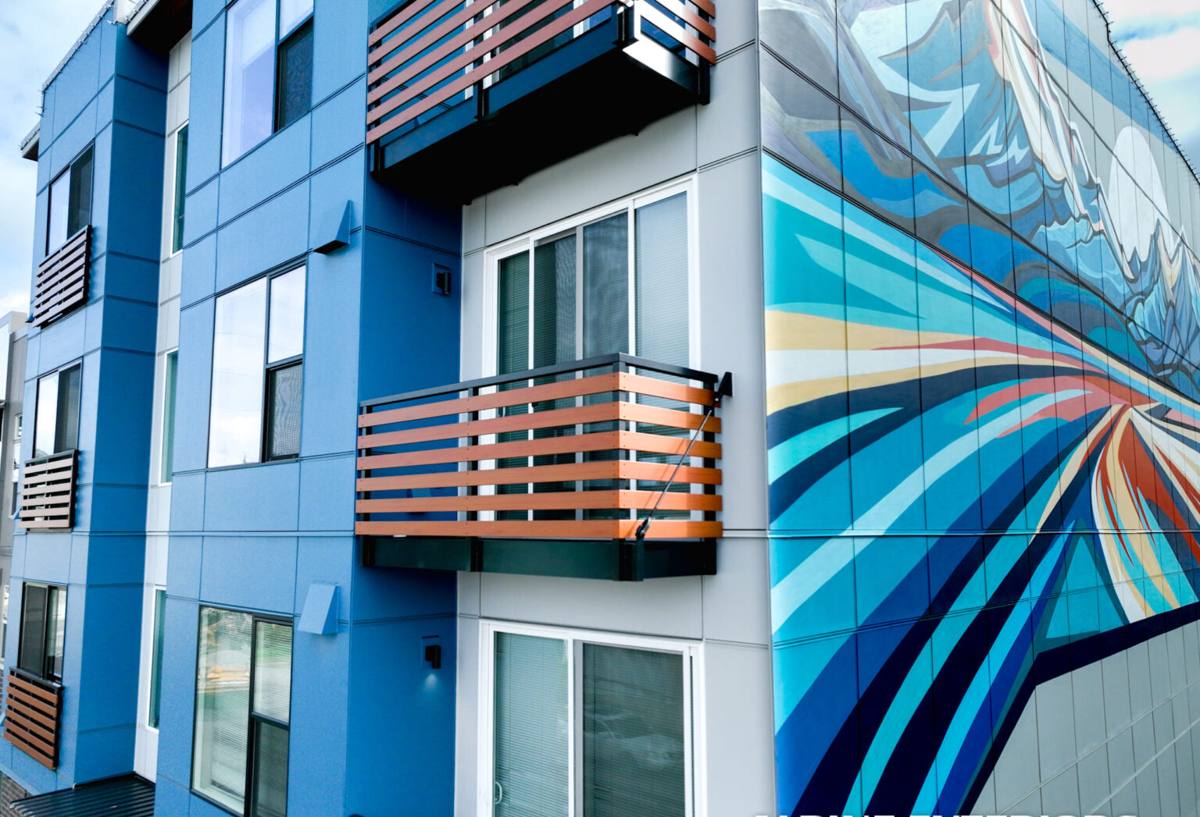
What Cherry Point's Climate Actually Does to a Window Opening
New-construction windows aren't just glass and frame — they're one part of a larger water-management system built into your walls. In a marine environment like this, three things work against that system constantly:
- Salt air accelerates corrosion on unprotected metal fasteners, hinges, and cheaper cladding finishes, and it degrades some sealants faster than manufacturers' standard warranty testing accounts for.
- Driving rain off the water doesn't just fall — it gets pushed sideways into siding and window flanges by wind, which means a flashing detail that would be fine in a sheltered inland yard can fail here.
- A long moss and moisture season keeps siding, trim, and sills damp for extended stretches, which means any gap or shortcut in the water-resistive barrier around a window stays wet longer and does more damage before it's noticed.
None of this means Cherry Point needs exotic materials or unusual window styles. It means the installation details — the ones nobody sees once the trim is on — have to be done right the first time, because this climate doesn't give sloppy work much time to hide.
New-Construction Windows vs. Replacement Windows: Why the Method Matters
People sometimes use "new windows" and "replacement windows" interchangeably, but they're different jobs with different failure points. New-construction windows are installed into open stud framing before siding and interior finishes go on, using a nailing flange that ties directly into the wall's water-resistive barrier. That gives us full access to build a proper flashing sequence from the ground up. Replacement (or "pocket") windows go into an existing, finished opening and rely on the original flashing already being sound.
| Factor | New-Construction Windows | Replacement Windows |
|---|---|---|
| Access to framing | Full access — flashing and WRB integration done from scratch | Limited — works within the existing opening |
| Flashing control | Installer controls the entire water path | Depends on condition of original flashing |
| Best suited for | New builds, additions, gut remodels to the studs | Swapping failed or outdated windows in a finished wall |
| Coastal risk if done wrong | Whole-opening leak path if flashing sequence is skipped | Leak risk concentrated at frame perimeter |
For a new build in Cherry Point, this is the good news: because you're starting with open framing, there's no excuse for a compromised flashing detail. The opening can be built correctly from day one, which is the cheapest and most reliable time to get it right.
What a Correct New-Construction Install Actually Involves
A window that "looks installed" and a window that's actually protected against this climate aren't always the same thing. A correct sequence includes:
- A sloped sill pan flashing at the bottom of the rough opening, so any water that gets past the window has a path back outside instead of into the framing.
- Weather-resistive barrier integrated with the flashing in the correct shingle-lap order — each layer overlapping the one below it, so water always sheds downward and outward.
- Corrosion-resistant fasteners appropriate for a marine environment, set to the frame manufacturer's spacing and torque so the frame stays square and the seal isn't compromised.
- Backer rod and a compatible, movement-tolerant sealant at the perimeter — not just a bead of caulk — sized for the gap and rated for exterior UV and moisture exposure.
- Interior air sealing at the rough opening, which matters as much as the exterior work for preventing condensation inside the wall cavity during our wetter months.
Choosing Frame Materials for a Cherry Point Build
There's no single "best" window material for every home — it depends on your budget, your home's design, and how close you are to direct wind and salt exposure. Here's how the common options generally hold up in this specific climate:
| Frame Material | Salt-Air Behavior | Moisture Handling | Maintenance |
|---|---|---|---|
| Vinyl | Good — won't corrode or rust | Good when properly sealed; doesn't absorb water | Low |
| Fiberglass | Very good — dimensionally stable in temperature swings | Excellent; resists warping | Low |
| Aluminum | Requires marine-grade finish or clad protection to avoid corrosion | Good if thermally broken and properly finished | Moderate |
| Wood (unclad) | Vulnerable without diligent upkeep | Needs consistent sealing/painting to resist our wet season | High |
| Wood-clad | Good — exterior clad layer shields the wood core | Good if cladding and flashing are intact | Low to moderate |
We don't push one brand or one material on every job — we're not tied to a single manufacturer, and honestly, the frame material matters less than the installation quality in a climate like this. What we will say plainly: an unclad wood frame close to the water asks a homeowner to keep up a maintenance schedule most people don't stick to for 20 years straight. If you like the look of wood, a clad option gets you most of that appearance with a lot less long-term risk from the salt air and rain.
Our Process for a New-Construction Window Job in Cherry Point
1. Site and Plan Review
Before anything is ordered, we look at the build plans (or the existing framing on an addition), the home's orientation relative to prevailing wind and rain, and how exposed the walls are. A wall facing open water gets treated differently than a sheltered interior wall, even on the same house.
2. Product Selection
We walk through frame material, glazing options, and performance ratings based on your budget and how exposed the specific elevation is — not a one-size answer for the whole house.
3. Framing and Flashing Prep
Rough openings are checked for square and correct dimension, then flashed and integrated with the WRB before a single window goes in. This is the step that determines whether the house stays dry for the next few decades, and it's the step that's easiest to rush on a busy job site — we don't rush it.
4. Installation
Windows are set, shimmed, and fastened to spec, then sealed at the interior and exterior. We check operation — smooth opening, closing, and locking — before we call a unit finished, not just whether it's sitting in the opening.
5. Final Inspection
We walk every opening again once siding and trim are on, confirming the exterior water management (flashing, weep paths, sealant lines) is complete and undisturbed by the finish trades that worked after us.
Mistakes We See in New Builds Near the Water
Most of the window problems we're called out to fix in coastal Whatcom County aren't the window's fault — they're installation shortcuts that a marine climate exposes faster than an inland one would. The recurring ones:
- Sill pan flashing skipped or improvised with tape alone instead of a proper sloped pan.
- WRB layers lapped in the wrong order, so water gets funneled behind the barrier instead of over it.
- Standard fasteners used instead of corrosion-resistant hardware, leading to rust staining and loosened frames within a few years.
- Caulk used as the only air/water seal instead of backer rod plus a proper sealant joint, which fails faster under constant flexing from wind and temperature swings.
- Interior air sealing skipped, leading to condensation inside the wall cavity during our wet, cool months even though the exterior looks fine.
Every one of these is invisible on install day. They all become visible — as stains, soft wood, or a drafty room — once the marine climate has had a season or two to work on them.
Why a Crew That Already Works Cherry Point Matters
Building science doesn't change from town to town, but exposure does. A crew that mostly works drier, more sheltered inland sites can do a technically fine installation and still under-build for what a shoreline elevation in Whatcom County actually sees over a winter. Working regularly in Blaine and the surrounding coastal areas means we're not guessing at how much wind-driven rain a given wall orientation takes, or which flashing details actually hold up through a full moss season — we're building to what we've already seen perform, and repair, out here.
It also means we're not learning the county's permitting and inspection expectations on your job. New-construction window installs typically fall under the building permit for the structure itself, and getting flashing and rough-opening details right the first time avoids the delays that come from a failed inspection or a redo after siding is already up.
After Move-In: Keeping New Windows Performing
A correct install gets you most of the way to trouble-free windows, but a little seasonal attention extends that performance for years. A simple annual check we recommend to Cherry Point homeowners:
- Inspect exterior caulk lines each spring for cracking, shrinkage, or gaps after winter storms.
- Clear debris and moss buildup from sills and adjacent trim before it holds moisture against the frame.
- Test that weep holes (on frame styles that have them) are clear and draining, not blocked by paint or debris.
- Operate every window through a full open-close-lock cycle once or twice a year — sticking or misaligned sashes are often the first sign of frame movement worth addressing early.
- Watch interior sills and drywall corners near windows for staining, which is the earliest visible sign of a flashing or seal issue.
None of this replaces a correct installation — it just protects the investment once the install is done right.
Get a Straight Answer for Your Project
If you're framing a new build, an addition, or replacing a builder-grade window package in Cherry Point, we're happy to walk the plans or the framing with you and give you an honest read on what the site needs — no pressure, no upsell on materials you don't need. Use the form below to request a free estimate.