 Blaine Roofing
 Windows Take a Different Kind of Beating in Blaine Harbor
Blaine Harbor sits where Drayton Harbor opens onto the Strait of Georgia, and that location shapes how windows age here. Salt-laden air drifts off the water and settles on glass, frames, and hardware year-round, not just during storms. Add Whatcom County's long stretch of driving rain — wind-driven enough to test any seal — and a moss season that can stretch from fall through spring, and you have a climate that finds every weak point in a window assembly faster than it would inland.
None of this means windows in Blaine Harbor need to be exotic or over-built. It means the material choices, the glass package, and — more than either of those — the installation details need to match the environment they're going into. A window that performs fine in a dry inland climate can fail early here if it's installed the same way it would be forty miles from the water.
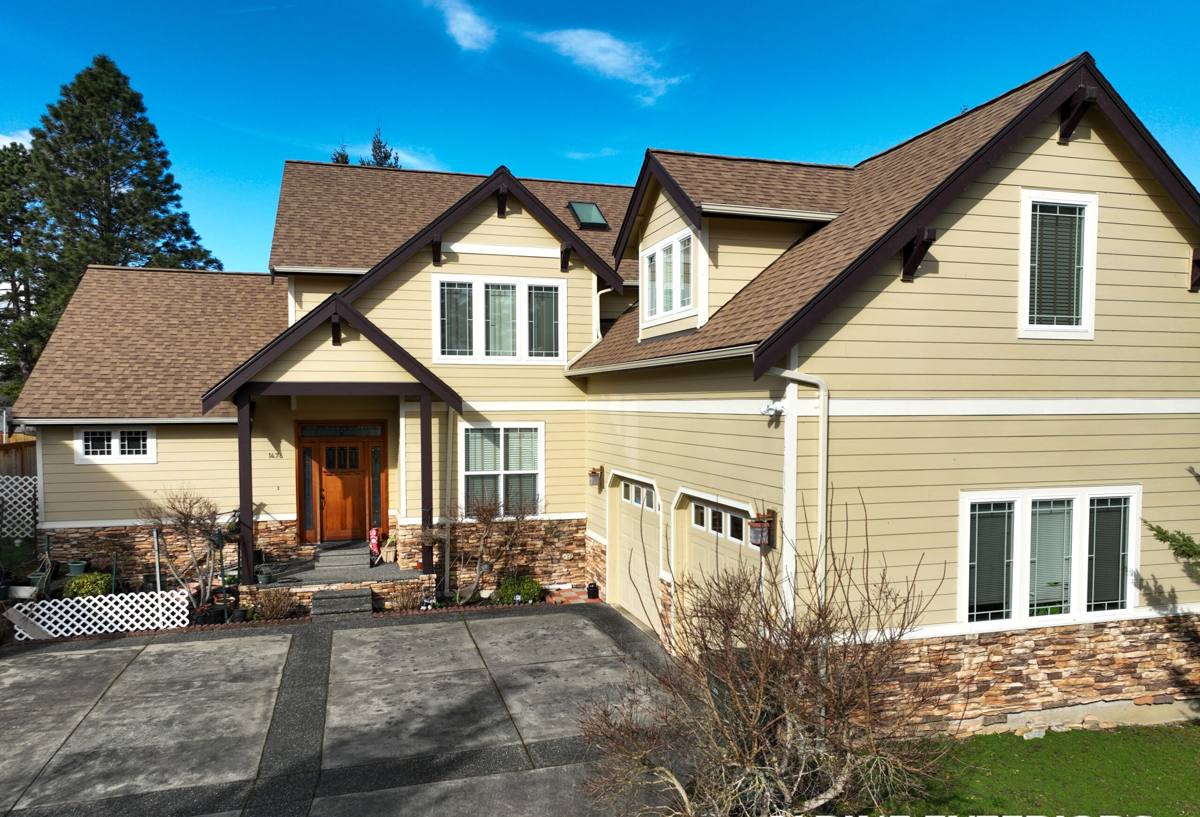
What "Energy-Efficient" Actually Means for This Climate
Energy efficiency in a marine climate isn't only about keeping heat in during winter. It's also about controlling condensation, resisting air infiltration during wind-driven rain, and keeping moisture from working its way into the wall assembly around the window itself. A window can carry a good efficiency rating on paper and still underperform here if it isn't paired with an installation approach that accounts for salt air and sustained dampness.
The Ratings That Matter Most Locally
- U-factor — how well the window resists heat transfer; lower is better for our heating-dominated climate
- Air infiltration rating — how much air leaks through the window under wind pressure, which matters more here than in calmer inland areas
- Condensation resistance — how well the window handles the temperature and humidity swings common with marine air
- Solar heat gain coefficient (SHGC) — less critical under our cloud cover, but still worth checking against your home's orientation
Homeowners often focus only on U-factor because it's the number most commonly advertised. In a climate this damp, condensation resistance and air infiltration deserve just as much attention — a window that lets moist air infiltrate around the sash will fog, drip, and eventually stain the sill no matter how good its center-of-glass insulation value is.
Signs Your Current Windows Are Losing the Fight
Most homeowners don't replace windows because of one dramatic failure — they replace them because a handful of smaller issues have been stacking up. Worth checking for:
- Condensation forming between the panes, which means a failed seal on double- or triple-pane glass
- Visible pitting, chalking, or corrosion on aluminum frames or hardware
- Soft or discolored wood at the sill or bottom corners
- Moss or dark streaking building up on the frame or sill faster than the rest of the exterior
- Drafts you can feel near the frame on windy days, even with the window latched
- Difficulty opening, closing, or locking — often a sign the frame has shifted or swelled
- A noticeable temperature difference near the window compared to the rest of the room
Any one of these on its own isn't an emergency. Several of them together, especially on the sides of the house that face the water or catch the prevailing wind, usually mean the windows are due for a real look, not just a re-caulk.
Frame Materials: What Holds Up Near the Water
There's no single "best" frame material for every home — it depends on budget, the look you want, and how exposed a given window is. But in a salt-air, high-moisture climate like Blaine Harbor's, some trade-offs matter more than they would twenty miles inland.
| Frame Material | Salt Air / Moisture Behavior | Maintenance |
|---|---|---|
| Vinyl | Doesn't corrode or rot; handles salt air well | Low — occasional cleaning |
| Fiberglass | Very stable through temperature and humidity swings; strong moisture resistance | Low |
| Wood-clad | Cladding protects the exterior, but any breach at joints or corners lets moisture reach the wood core | Moderate to high — needs periodic inspection at seams |
| Aluminum | Prone to pitting and corrosion in sustained salt air without a marine-grade finish | Moderate — finish needs monitoring over time |
We don't rule out wood-clad or aluminum outright — some homeowners want the look, or are matching an existing set. But we'll tell you honestly where a material is more sensitive to this particular environment, so the choice is made with full information rather than discovered five years in.
Glass Packages and the Installation Details That Matter Here
Double-pane windows with a low-E coating and argon fill are the standard baseline for energy performance in our climate, and they're adequate for most homes. Triple-pane is worth considering on north- or water-facing walls that take the brunt of the wind, or in rooms where you've noticed real temperature swings — the extra pane and gas fill improve both insulation and condensation resistance, at added cost and weight.
Just as important as the glass itself is how the window gets sealed into the opening. In a climate with this much wind-driven rain, the flashing and sealant details around the frame do as much work as the window itself:
- Proper flashing integration with the house wrap or building paper, lapped so water sheds outward and down
- A sloped sill pan that directs any water getting past the frame back out, not into the wall cavity
- Backer rod and a compatible sealant at the perimeter — not just caulk smeared over a gap
- Correct shimming so the frame doesn't rack out of square and stress the seals over time
A high-end window installed with sloppy flashing will let moisture into the wall assembly faster than a mid-range window installed correctly. This is where a lot of window problems in coastal Whatcom County homes actually start — not with the product, but with how it went in.
What a Correct Installation Involves
- Remove the old window and inspect the rough opening for hidden rot, moisture staining, or pest damage before anything new goes in
- Repair or rebuild any compromised framing — a new window should never be installed over a damaged opening
- Install or correct flashing and a sloped sill pan so water is directed out and away from the wall
- Set the new window plumb, level, and square, shimmed to manufacturer spec
- Seal the interior and exterior perimeter with appropriate materials — sealant outside, insulation and air sealing inside
- Finish trim and touch up any siding or cladding disturbed during the swap
- Test operation — open, close, lock — and check the seal for drafts before calling the job done
Skipping the inspection step is the most common shortcut that causes problems later. If there's already moisture damage behind an old window, installing a new one on top of it just hides the issue for a few more years instead of solving it.
Our Process
We start with a walk-through of the windows you're concerned about, or the whole house if you're planning a full replacement. We'll point out what's actually failing versus what's just cosmetic, measure each opening, and talk through frame and glass options that fit your budget and how exposed that particular side of the house is to wind and salt air.
From there we handle ordering, removal of the old windows, any framing repair the opening needs, installation with proper flashing and sealing, and cleanup. If an opening turns out to have hidden moisture damage once it's exposed, you'll hear about it and see it before we close anything back up — not after the fact.
Cost Factors to Expect
We're not going to quote a number that means nothing without seeing your windows — but here's what actually moves the price, so you know what you're paying for:
| Factor | Why It Affects Cost |
|---|---|
| Frame material | Vinyl is typically the most affordable; fiberglass and wood-clad cost more upfront |
| Glass package | Triple-pane and upgraded low-E coatings add cost but improve performance on exposed walls |
| Number and size of openings | Larger or custom-sized windows cost more to manufacture and install |
| Condition of the rough opening | Hidden rot or framing damage adds repair time before the new window can go in |
| Full-frame vs. insert replacement | Full-frame replacement costs more than an insert but is often the right call when there's moisture damage present |
We'll always tell you if an insert replacement is fine for your situation, or if the opening's condition means a full-frame job is the more honest recommendation — even when that's the higher-cost answer.
Why a Crew That Already Works Blaine Harbor Matters
Working regularly in this specific part of Whatcom County means we're used to what salt air and driving rain do to a window installation over time, not just on install day. We know which flashing and sealing details can't be skipped on water-facing walls, and we've seen what happens on the homes where they were. That's not necessarily front of mind for a crew coming from a drier, inland market.
It also means we're a known, local presence if a question comes up after the install — not a name from a one-time sales visit that's hard to reach a year later.
If your windows are drafty, fogging between the panes, or just due for an upgrade, we're happy to take a look and give you a straight, no-pressure estimate. Use the form below to get started.