 Blaine Roofing
 Why Birch Point Homes Need a Different Approach to Windows
Birch Point sits close enough to the water that its homes take a different kind of weather beating than houses further inland in Whatcom County. Salt-laden air moves through the neighborhood on a regular basis, driving rain comes in sideways during winter storms, and the damp, shaded conditions that persist for much of the year keep moss and algae established on north-facing walls and trim. Windows here don't fail the way they do in drier climates. They fail at the seams, at the sill, and in the finish - places where salt, moisture, and organic growth work on a window year-round instead of just during a few wet months.
If you've owned a home in this pocket of Blaine for more than a few years, you've probably already seen the signs: cloudy glass from failed seals, sticky or swollen sashes, soft wood at the sill, or aluminum hardware that's gone chalky and stiff. None of that is unusual for the area. It's just what salt air and sustained moisture do to windows that weren't specified or installed with this exposure in mind.
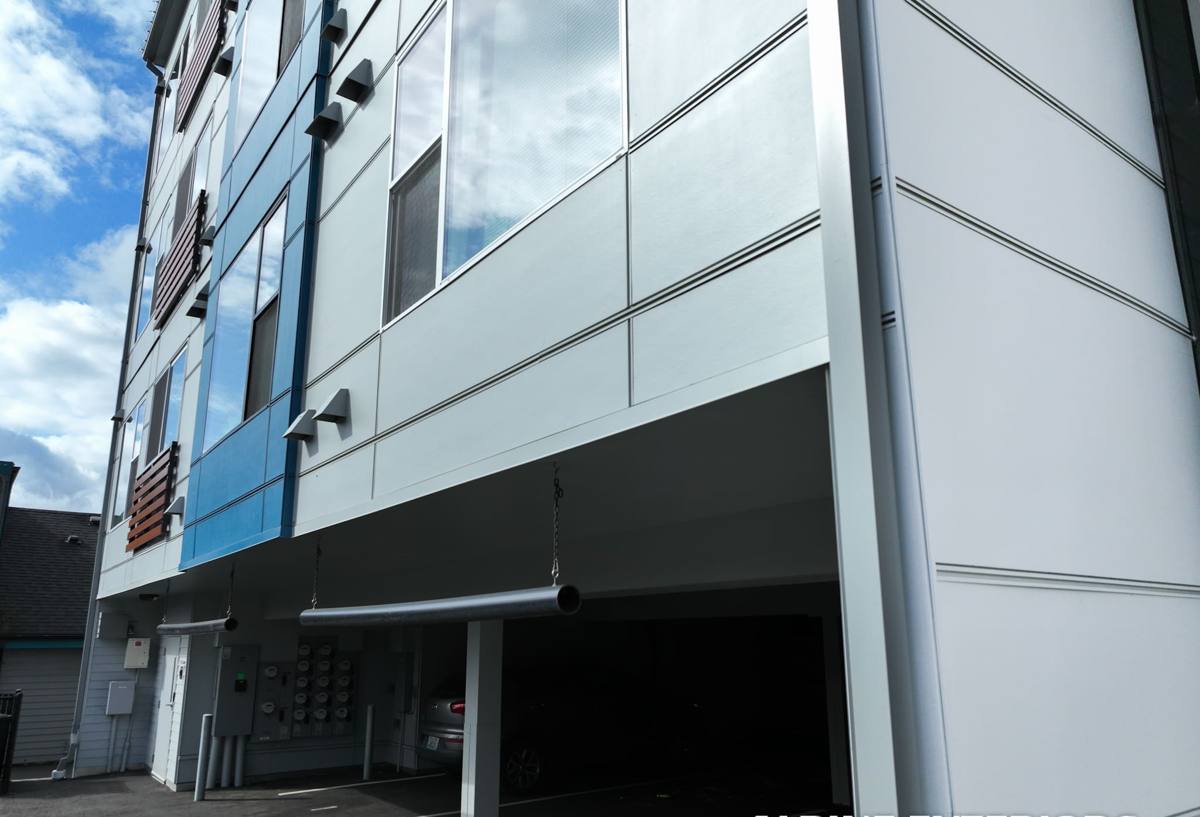
What Salt Air, Rain, and Moss Actually Do to a Window
Salt Air
Airborne salt is corrosive to bare metal hardware, fasteners, and some window frame finishes. On a home a few blocks from the water, salt deposits settle on glass and frames even when it isn't raining, and every wet-dry cycle concentrates that salt a little more. Over time this attacks unprotected aluminum components, pits vinyl cladding on lower-grade products, and accelerates corrosion on hinges, cranks, and locking hardware faster than most manufacturers' standard warranties anticipate.
Driving Rain
Wind off the water doesn't just bring rain straight down - it pushes it sideways into wall assemblies and window openings. A window that would perform fine under calm rainfall in a sheltered inland lot can leak at Birch Point if the flashing, sill pan, and sealant details weren't built for wind-driven water. Most leaks we find aren't glass or sash failures at all - they're flashing and installation issues that only show themselves under real storm conditions.
Moss and Sustained Moisture
Shaded, damp conditions along the water let moss, algae, and mildew establish on horizontal trim surfaces, sills, and anywhere water sits instead of shedding. Beyond the cosmetic issue, sustained moisture against wood trim or a poorly sealed frame is exactly what leads to rot and slow water intrusion behind the window - the kind of damage you don't see until it's already expensive.
What a Correctly Specified Window Looks Like Here
"Custom" for a Birch Point home means the window is matched to this specific exposure, not just cut to fit the opening. A handful of choices make the real difference over the life of the window:
- Corrosion-resistant hardware - stainless steel or coated fasteners and hinges instead of bare or lightly-plated metal that pits in salt air.
- Frame material suited to coastal exposure - fiberglass and quality vinyl generally hold up better against salt and moisture than raw or thin-gauge aluminum in this setting.
- Proper sill pan flashing - a sloped, sealed pan under the window that gives any water that does get past the sash somewhere to drain, instead of sitting against the framing.
- Storm-rated or upgraded weatherstripping - tighter compression seals that hold up under sustained wind-driven rain, not just standard-duty gaskets.
- Compatible, breathable sealants - the wrong caulk or sealant traps moisture behind it instead of letting the assembly dry, which is often worse than no sealant at all.
- Trim and cladding details that shed water and resist moss - smooth, well-drained surfaces instead of flat horizontal ledges where moisture and organic growth can sit.
How We Handle a Birch Point Window Project
1. On-Site Assessment
We start by looking at the actual condition of your existing windows and the wall assembly around them - not just the glass, but the sill, flashing, and trim. In a salt-air, high-rain area, the story of what's failing and why is usually visible if you know what to look for: corrosion patterns, soft wood, staining, or gaps in old sealant.
2. Honest Recommendations
We'll tell you plainly whether you need full replacement, or whether specific units or components can be repaired. Not every window on a Birch Point home needs to come out at once - exposure varies by which direction a wall faces and how sheltered it is.
3. Product and Detail Selection
We walk through frame material, hardware, and flashing options against your budget and how exposed the specific opening is. A window on a sheltered wall doesn't need the same spec as one facing straight into prevailing wind and rain.
4. Removal and Prep
Old sealant, damaged trim, and any rotted framing get addressed before the new window goes in. Installing a good window into a bad or contaminated opening just sets up the same failure again, faster.
5. Installation with Proper Flashing and Sealing
This is where most window problems in this area actually get created or prevented. Correct sill pan flashing, integration with the house wrap or building paper, and sealant applied in the right order and location are what keep wind-driven rain out - regardless of how good the window unit itself is.
6. Final Check and Walkthrough
We check operation, seal integrity, and finish details, and walk you through basic maintenance specific to your home's exposure before we consider the job done.
Comparing Frame Materials for Coastal Whatcom County Exposure
| Frame Material | Salt Air Performance | Maintenance | Typical Trade-Off |
|---|---|---|---|
| Vinyl (quality-grade) | Good - won't corrode | Low - occasional cleaning | Color and structural limits on very large openings |
| Fiberglass | Very good - highly stable in moisture and salt | Low | Higher upfront cost than vinyl |
| Wood (clad exterior) | Depends entirely on cladding quality and seal maintenance | Higher - finish and seals need monitoring | Best interior appearance, more upkeep near salt air |
| Bare/standard aluminum | Poor without coating - prone to pitting and corrosion | Higher - hardware and finish need attention | Lower cost, shorter effective lifespan here |
None of these is universally "best" - it depends on the wall's exposure, your budget, and how much upkeep you want to take on. Part of our job is helping you weigh that honestly instead of pushing one product line regardless of fit.
What Drives the Cost of a Window Project in This Area
Costs on Birch Point projects vary more than in a typical inland neighborhood, mainly because exposure and existing damage vary so much from wall to wall. Broadly, homeowners should expect a range depending on:
- Frame material selected (vinyl generally lowest, fiberglass and clad wood higher)
- Number of openings and whether they're standard sizes or custom shapes
- Condition of the existing sill and framing - rot repair adds cost but isn't optional if it's present
- Access difficulty for upper-story or hard-to-reach openings
- Upgraded hardware and flashing details appropriate for a high-exposure wall
We give straightforward, itemized estimates so you can see exactly what you're paying for and why - not a single lump number that hides which parts are driving the price.
A Homeowner's Pre-Storm-Season Checklist
Between our visits, there's a fair amount you can check yourself to catch problems early:
- Look for chalky or pitted hardware on cranks, hinges, and locks - an early sign of corrosion
- Check for soft or discolored wood at sills and lower trim
- Watch for moss or dark staining building up on horizontal trim surfaces
- Run a hand along interior sills after a hard rain to check for moisture that shouldn't be there
- Test that sashes still open, close, and lock smoothly - stiffness can mean swelling or hardware corrosion
- Look at exterior sealant lines for cracking, gaps, or separation from the frame
Why a Crew That Already Works Birch Point Matters
A window contractor who mostly works dry, inland jobs will spec and install to a standard that doesn't hold up here. We work regularly in Blaine and along the Whatcom County coastline, which means we're not guessing at how salt air and driving rain behave against a window assembly - we've seen how different products and installation details perform under this specific exposure over time. That shapes what we recommend, how we flash and seal an opening, and which corners we won't cut, even when they'd be invisible on installation day and only show up as a problem two or three winters later.
We're not going to tell you a budget aluminum window with standard hardware is a good long-term fit for a wall that takes direct wind-driven rain off the water - not because the product is inherently bad, but because it isn't the right match for this exposure, and we'd rather say so upfront than have you deal with early corrosion or a callback in a few years.
Get a Straight Answer for Your Home
Every home on Birch Point sits a little differently relative to wind, rain, and shade, so the right window specification for your house depends on an actual look at your walls and current windows - not a generic recommendation. If you'd like an honest read on what your windows need and a clear, itemized estimate, use the form below to request a free, no-pressure visit.