 Blaine Roofing
 Why Birch Bay Decks Take More Punishment Than Most
Birch Bay sits right on the water, and that changes how a deck ages compared to one a few miles inland. Salt-laden air corrodes metal fasteners, hinges, and brackets faster than dry-climate exposure ever would. Add Whatcom County's long wet season — months of driving rain blown sideways off the water — and you get a deck that's constantly cycling between soaked and dry. That cycling is what breaks wood down: swelling, shrinking, checking, and eventually rot at the joints and connections that hold the whole structure together.
Then there's moss. Birch Bay's mild, damp winters give moss and algae a long runway to establish on deck boards, especially in shaded corners or under overhangs where the sun never quite dries things out. Moss isn't just an eyesore — it holds moisture against the wood surface and can make boards dangerously slick underfoot.
None of this means every Birch Bay deck is doomed. It means the maintenance and repair standards need to match the environment. A deck built or repaired the way you'd do it in a dry inland town won't hold up here, and that mismatch is where we see the most avoidable failures.
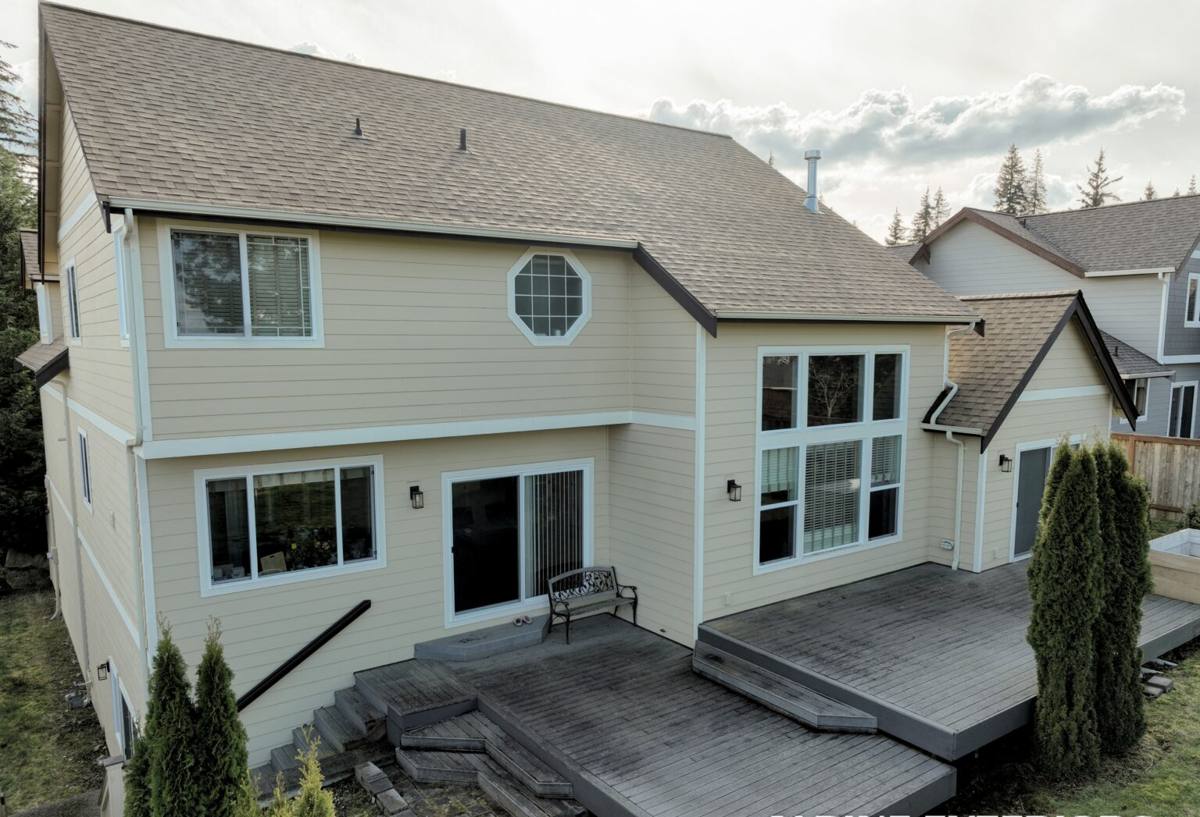
Common Deck Problems We Find in Birch Bay Homes
Fastener and Hardware Corrosion
Standard fasteners rust in a salt-air environment far faster than their rated lifespan suggests. We regularly find galvanized nails and screws that have corroded through in under a decade near the water, even though the surrounding wood still looks fine. Corroded fasteners lose grip strength quietly — there's often no visible warning before a board or railing comes loose.
Ledger Board and Rim Joist Rot
The ledger board — where the deck attaches to the house — is one of the most common failure points anywhere, and driving rain makes it worse in Birch Bay. Wind-blown water gets pushed up under flashing and siding at the attachment point, and if the flashing detail wasn't done right the first time, moisture works its way into the ledger and rim joist year after year without ever showing on the surface.
Post Base and Footing Deterioration
Posts that sit in or near standing water, or that were never properly isolated from ground contact, rot from the bottom up. This is a structural issue, not a cosmetic one, and it's one of the main reasons we always check below the decking surface, not just what's visible from the top.
Moss, Algae, and Surface Wear
Shaded and low-airflow sections of decking develop moss and slick algae film. Left alone, this traps moisture against the board surface and accelerates surface checking and splintering, especially on softer wood species.
| Symptom | Likely Cause | Typical Fix |
|---|---|---|
| Deck feels bouncy or springy | Undersized or weakened joists, loose joist hangers | Sister or replace affected joists, re-fasten hangers with corrosion-rated hardware |
| Railing wiggles or feels loose | Corroded fasteners, rotted post base | Replace hardware, repair or replace post if wood is compromised |
| Gap or staining where deck meets house | Failed or missing ledger flashing | Remove ledger, install proper flashing, reattach with structural fasteners |
| Green or black film on boards | Moss and algae growth from shade and moisture | Clean and treat surface, improve airflow/drainage where possible |
| Soft or spongy boards | Wood rot from prolonged moisture exposure | Replace individual boards or sections; assess framing below |
Repair or Replace: How We Make That Call
Not every issue means a full rebuild, and we don't push a bigger job than a deck actually needs. The decision usually comes down to whether the problem is isolated to the surface (decking boards, railings, fasteners) or has spread into the structural frame (joists, ledger, posts, footings).
| Factor | Favors Repair | Favors Replacement |
|---|---|---|
| Framing condition | Joists and posts are solid, problem is limited to surface | Rot or corrosion has spread through multiple structural members |
| Age of deck | Under 10-15 years, built to a reasonable standard | Original construction is old, undersized, or already patched repeatedly |
| Extent of damage | Isolated to one section, corner, or connection point | Damage is widespread or the ledger connection has failed |
| Code and safety | Structure meets current safety expectations once repaired | Original build has spacing, footing, or attachment issues repair can't fix |
We'll tell you honestly which category your deck falls into. Most of the calls we get in Birch Bay end up being targeted repairs — new fasteners, ledger flashing correction, a handful of replaced boards or joists — rather than a full teardown.
What a Correct Deck Repair Actually Involves
A repair that only addresses what's visible from the top rarely lasts in this climate. Here's what we check on every Birch Bay deck repair, regardless of what the customer initially called about:
- Ledger board attachment and flashing condition, checked by removing a section if there's any sign of past water intrusion
- Joist and beam condition, including probing for soft spots at connection points where moisture collects
- Post bases and footings, especially where posts meet grade or sit near low spots that hold water
- Fastener and hardware condition throughout — not just at the spot that's currently failing
- Railing post attachment, since a loose railing is a safety issue even if the rest of the deck is sound
- Drainage and airflow underneath and around the deck, since standing water and dead air are what let rot and moss take hold in the first place
Fixing the symptom you called about without checking these areas usually means a second problem shows up within a year or two — often in a spot that was already weakened but hadn't failed yet.
Materials and Hardware: Matching the Environment
Our standard for coastal Whatcom County repairs is stainless steel or high-grade corrosion-resistant fasteners and hardware at any connection point that's exposed to weather, even when it costs more than standard galvanized options up front. In a salt-air environment, the fastener is often the first thing to fail — replacing rotted decking with new boards attached by fasteners that will corrode again in a few years just moves the same problem down the road.
For decking material itself, both quality wood and composite have a place depending on the homeowner's priorities:
Wood Decking
Pressure-treated and naturally rot-resistant species can perform well here, but they require a real maintenance commitment — periodic cleaning, sealing, and moss treatment. Skipping that maintenance in this climate shortens the lifespan considerably.
Composite Decking
Composite resists rot and reduces the moss-and-algae maintenance burden, which appeals to a lot of Birch Bay homeowners who want less upkeep. The trade-off is a higher material cost and the need for correct installation spacing to handle expansion — composite that's installed too tight tends to buckle over time.
We'll walk you through the honest trade-offs for your specific deck rather than defaulting to whatever's easiest to install.
How Our Repair Process Works
1. On-Site Inspection
We walk the full deck — top, underneath, and connection points — and probe any area that shows staining, softness, or movement. This is where we catch problems that aren't obvious from a quick look.
2. Clear Scope and Plan
You get a plain explanation of what's actually wrong, what's structural versus cosmetic, and what we recommend fixing now versus what to keep an eye on. No pressure toward a bigger job than the deck needs.
3. The Repair Itself
We remove and replace only what's compromised, using corrosion-appropriate hardware and correct flashing details at every connection we open up. If we find additional damage once we're into the work, we'll show you before proceeding, not after the fact.
4. Final Check and Cleanup
We test railings, fastener points, and any structural repairs for solidness before calling the job done, and we clean up the work area completely.
Maintaining a Repaired Deck in a Coastal Climate
A good repair buys you years, but a little seasonal upkeep buys you more. This is the routine we recommend for Birch Bay properties:
- Rinse salt residue and debris off decking a few times a year, especially after storms with onshore wind
- Clean moss and algae off shaded boards before it builds up a thick layer — a stiff brush and deck cleaner is usually enough if you stay on top of it
- Check railing posts and stair connections for looseness once or twice a year
- Look at the ledger board area where the deck meets the house for any staining or gaps, particularly after the wet season
- Keep gutters and downspouts near the deck clear so runoff isn't draining directly onto or under it
- Reseal or refinish wood decking on the manufacturer's recommended schedule — don't stretch it just because it still looks okay on the surface
Why Hiring a Crew That Already Works in Birch Bay Matters
A deck repair contractor who mostly works inland doesn't run into salt-air fastener corrosion or driving-rain ledger failures often enough to build a real sense for where they show up first. We work these conditions regularly around Blaine and Whatcom County, so we know to check the ledger flashing before it's visibly failed, to spec hardware for the coastal exposure instead of the standard inland grade, and to recognize moss patterns that point to a drainage issue rather than just a cleaning problem.
That familiarity translates into fewer surprises during the job and repairs that are sized correctly for what your deck is actually dealing with — not over-built, not under-built.
If your deck has loose railings, soft boards, corroded hardware, or you just want an honest read on its condition, we're glad to take a look. Reach out for a free, no-pressure estimate using the form below.