 Blaine Roofing
 Bellingham's Climate Is Hard on Asphalt Shingle Roofs
Bellingham sits close enough to the water that salt-laden air is a constant factor in how a roof ages, and that's on top of the rain and moss pressure every roof in Whatcom County deals with. Asphalt shingles are still the right choice for the large majority of homes here — they're durable, affordable, and repairable — but "the right choice" only holds true if the installation actually accounts for what this climate does to a roof over time. A shingle roof installed the way it would be in a dry inland climate will underperform here. One built for marine conditions, driving rain, and a long wet season will not.
Three things define roofing conditions in this part of Washington: near-constant moisture for much of the year, salt air that accelerates corrosion on fasteners and metal flashing, and a moss and algae season that runs longer than most homeowners expect. None of these are dramatic, one-time events. They're slow, cumulative pressures, and they're exactly the kind of thing that separates a roof that looks fine at year five but fails at year twelve from one that reaches its full rated lifespan.
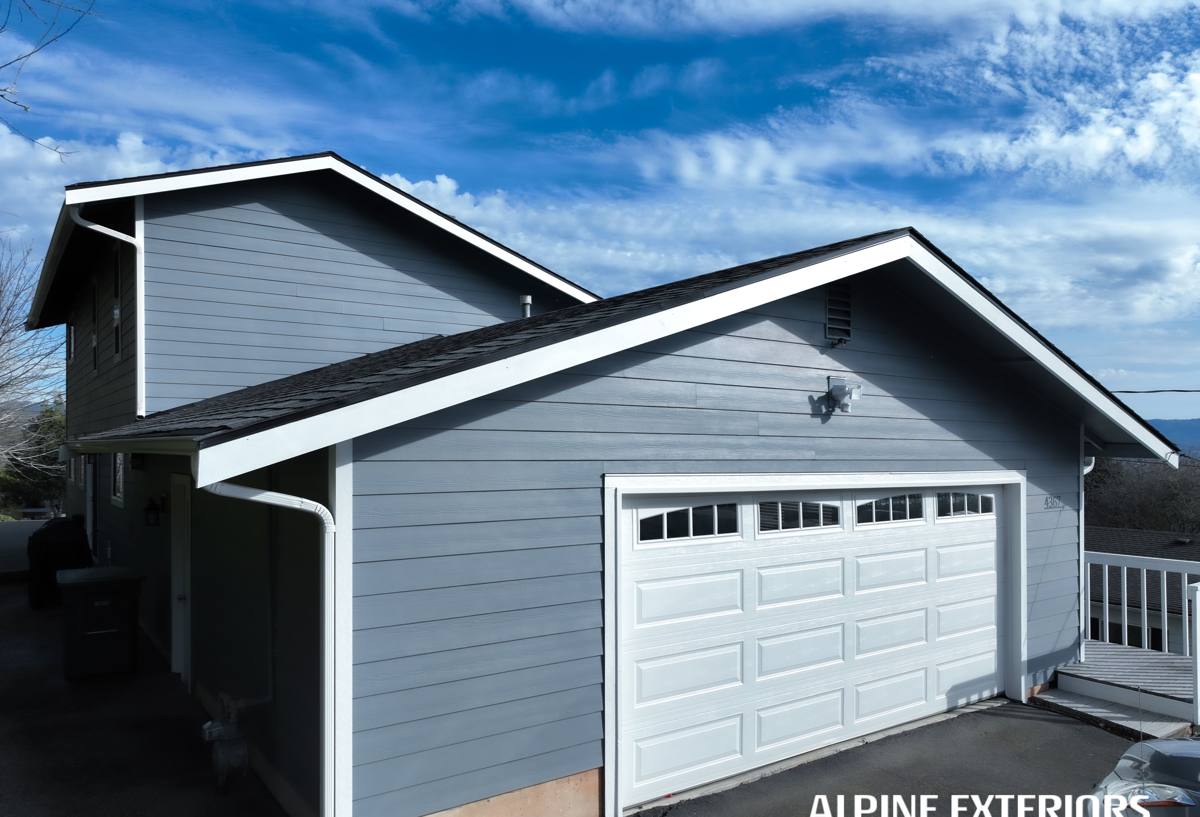
What Correct Installation Actually Involves Here
A correct asphalt shingle installation in this climate isn't just "shingles nailed to plywood." It's a layered water-management system, and every layer matters more here than it would in a drier region.
Underlayment and Ice-and-Water Barrier
Synthetic underlayment across the full roof deck is the baseline — it sheds wind-driven rain that gets under the shingle tabs during Whatcom County's stronger storms. At eaves, valleys, and around any roof penetration, we add a self-adhered ice-and-water membrane. This part of Washington doesn't see heavy, prolonged ice damming the way colder inland climates do, but valleys and eave lines are still the first place a marginal roof leaks, because that's where water volume concentrates during long rain events.
Fasteners and Corrosion Resistance
Salt air corrodes standard fasteners faster than most homeowners realize, and a corroded nail head is a future leak waiting to happen. We use corrosion-resistant fasteners and flashing hardware rated for coastal exposure, not the minimum-spec materials that are fine fifty miles inland but come up short here. The nailing pattern itself matters just as much — under-driven or overdriven nails, or nails placed outside the shingle's nailing zone, are one of the most common causes of early shingle failure, and it's a defect you can't see from the ground once the job is done.
Flashing at Every Transition
Chimneys, skylights, sidewalls, and roof-to-wall transitions are where the vast majority of leaks originate — not the open field of shingles. Step flashing, counter-flashing, and properly lapped valley metal need to be installed correctly and sealed with materials rated for long-term wet exposure. This is the part of a roofing job that's easiest to rush and hardest to inspect after the fact, which is exactly why it deserves the most attention during installation.
Choosing a Shingle Built for Salt Air and Moss
Not every asphalt shingle is built the same way, and the differences matter more in a marine climate than they do elsewhere. We look at three things when helping a homeowner choose: algae resistance, wind rating, and how the shingle's construction handles repeated wet-dry cycles.
| Shingle Type | Typical Lifespan | Best Fit For |
|---|---|---|
| 3-Tab Asphalt | 15–20 years | Budget-conscious re-roofs, secondary structures |
| Architectural (Dimensional) | 25–30 years | Most Bellingham homes — better wind and moisture performance |
| Premium/Designer Architectural | 30–50 years | Homeowners prioritizing longevity and algae resistance |
Algae-resistant (AR) shingles use copper or zinc granules that discourage the growth of the blue-green algae responsible for the dark streaking common on older roofs in wet Pacific Northwest climates. That streaking isn't just cosmetic — sustained algae and moss growth holds moisture against the shingle surface and shortens its usable life. For most homes in this area, we recommend algae-resistant architectural shingles as the practical baseline, not an upgrade. The cost difference over the life of the roof is small compared to what premature moss-driven wear ends up costing.
Ventilation: The Part Homeowners Never See
A shingle roof fails from the underside as often as it fails from the top. Without balanced intake and exhaust ventilation, moisture from everyday household activity gets trapped in the attic, condenses against the roof deck, and creates the damp conditions that rot sheathing and feed moss growth from below as well as above. In a climate as consistently wet as Whatcom County's, ventilation isn't optional — it's part of what makes a shingle warranty valid in the first place, since most manufacturers require adequate attic ventilation to honor their coverage.
We check existing ventilation on every roof we evaluate, not just on full replacements. Ridge vents paired with soffit intake are usually the most effective and least visually intrusive option for the roof lines common in this area, and in many cases correcting a ventilation imbalance solves a moisture problem that a homeowner had mistaken for a roofing leak.
Our Process, Start to Finish
- On-site evaluation. We walk the roof (not just look at it from the ground), check the attic for ventilation and moisture signs, and assess flashing, valleys, and any areas showing moss or granule loss.
- Honest scope and estimate. You get a clear written estimate that separates what needs to happen now from what can reasonably wait, with no pressure to over-scope the job.
- Material selection. We help you weigh shingle tier, algae resistance, and color against your budget and how long you plan to stay in the home.
- Tear-off and deck inspection. Old roofing comes off down to the deck so we can check for soft spots or rot that a re-cover would hide.
- Underlayment, flashing, and shingle installation. Installed in the sequence and with the materials described above — not shortcut for speed.
- Cleanup and final walkthrough. Magnetic sweep for nails, debris removal, and a walkthrough so you know exactly what was done and what to watch for going forward.
Moss, Algae, and Debris: What You Can Do Between Roof Checks
Even a correctly installed roof benefits from basic homeowner attention in a climate this wet. None of this requires getting on the roof yourself — most of it is about watching for signs and calling before a small issue becomes a bigger one.
- Keep gutters and downspouts clear, especially in fall — clogged gutters back water up under the shingle edge
- Watch for dark streaking or green-black patches, early signs of algae or moss establishing on the shingle surface
- Trim back overhanging branches that keep sections of the roof shaded and slow to dry
- Check for granules collecting in gutters or at downspout outlets — a sign of shingle wear worth having looked at
- After major windstorms, do a visual check from the ground for lifted or missing shingles
- Have the attic checked periodically for musty odors or damp insulation, early signs of a ventilation or leak issue
What Drives the Cost of a Bellingham Re-Roof
Every roof is priced on its own specifics, but a handful of factors consistently move the number up or down for homes in this area.
| Factor | Why It Matters Here |
|---|---|
| Roof pitch and access | Steeper or harder-to-access roofs take longer and require more safety setup |
| Existing layers of roofing | Full tear-off of old layers adds labor but lets us inspect the deck |
| Deck condition | Rotted or soft sheathing found during tear-off needs replacement before shingles go on |
| Shingle tier chosen | 3-tab, standard architectural, and premium algae-resistant lines carry different material costs |
| Valleys, penetrations, and flashing complexity | More transitions mean more flashing work, which is labor-intensive done correctly |
| Ventilation upgrades | Adding or correcting ridge and soffit venting is often bundled with a re-roof |
We'd rather walk you through these factors on your specific roof than quote a number that doesn't hold up once we're actually up there. A written estimate should tell you exactly what's driving the price, not just a bottom-line figure.
Why Local Experience in Bellingham Matters
Roofing crews that work this part of Whatcom County regularly develop a feel for how local weather patterns affect scheduling and installation — when a wet stretch means waiting an extra day for a dry deck versus when it's safe to proceed, and how to sequence a tear-off so a roof is never left exposed longer than necessary. That judgment comes from doing the work here repeatedly, not from a general roofing background applied to any climate.
Local experience also means familiarity with the permitting and inspection expectations that apply to roofing work in this area, and a working knowledge of how homes here were typically built — the roof pitches, decking materials, and older flashing details you're likely to find once tear-off starts. That familiarity shortens surprises and keeps a project on schedule.
Warranties and What They Actually Cover
Asphalt shingle warranties come in two parts, and it's worth understanding both before you sign anything. The manufacturer's warranty covers defects in the shingle material itself, and its terms are set by the shingle maker — we don't control those, but we do make sure installation meets the requirements (including ventilation) that keep that warranty valid. The workmanship warranty is what we stand behind directly, covering installation quality separate from the material itself. Ask any contractor you're considering to explain both in writing, and be cautious of anyone who's vague about where manufacturer coverage ends and their own responsibility begins.
If you're weighing a repair, a full replacement, or just want an honest read on where your roof currently stands, we're happy to take a look. The estimate is free, there's no pressure attached to it, and you'll get a straight answer either way — use the form below to get started.