 Blaine Roofing
 Windows in Sandy Point Take a Different Kind of Beating
Sandy Point sits right up against open water on the edge of Blaine, and that changes what a window has to survive out here. It's not just rain — it's salt-laden air moving off the water, wind that drives moisture sideways into places it was never meant to reach, and a long stretch of gray, damp months where surfaces rarely get a chance to fully dry out. A window that performs fine three miles inland can start showing problems within a few years on a waterfront lot like this.
We install windows all over Whatcom County, but Sandy Point homes get treated as their own category. The install details that matter most here — flashing, sealant choice, hardware finish, frame material — are exactly the details that get skipped on a rushed, generic job. Get them right and a window replacement should hold up for decades. Get them wrong and you're dealing with fogged glass, swollen sashes, or hidden rot behind the trim well before the windows are actually "old."
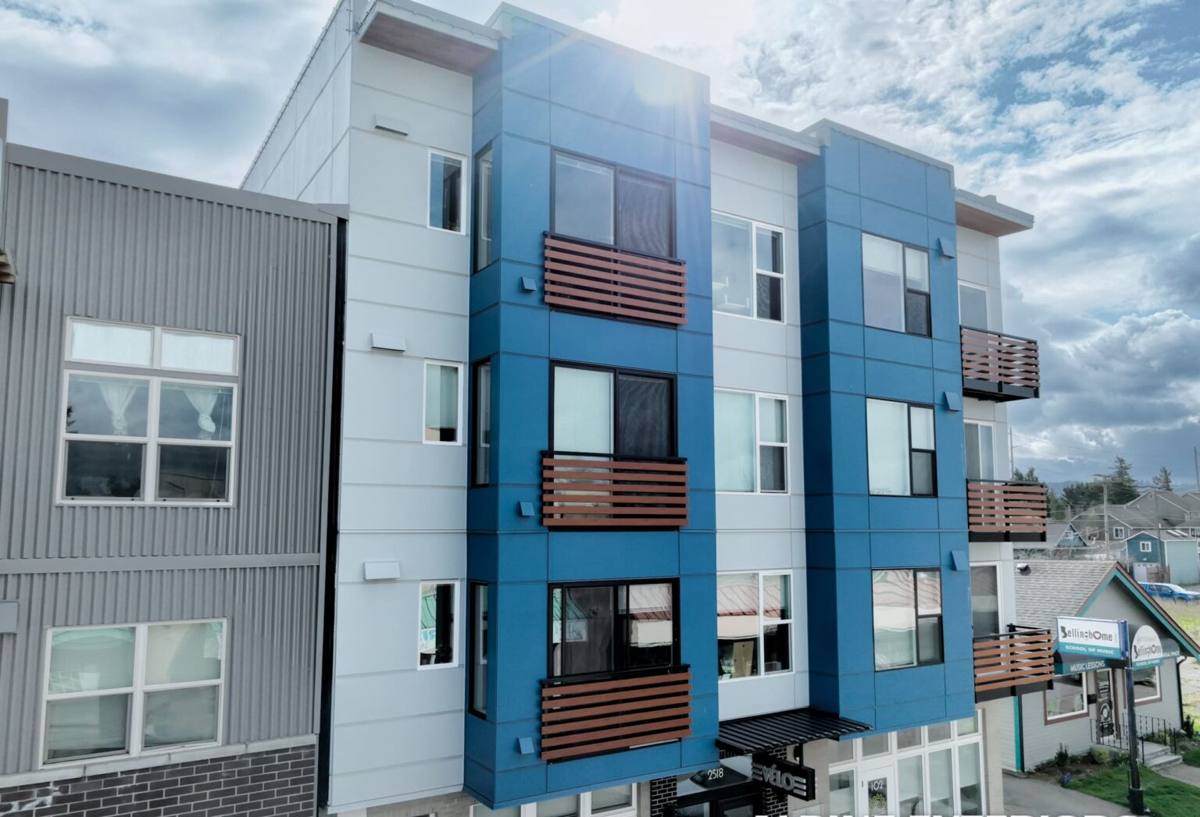
Signs a Sandy Point Home Needs Window Replacement
Because of the exposure out here, the warning signs tend to show up earlier and more visibly than they would on a sheltered inland home. Homeowners usually call us after noticing one or more of these:
- Fogging or a permanent haze between the panes — the seal has failed and the insulating gas has escaped
- Sashes that stick, drag, or won't latch cleanly, especially after a wet stretch of weather
- Soft or discolored wood trim around the frame, or paint that keeps bubbling in the same spot
- Visible pitting, chalking, or corrosion on hardware and hinges — a telltale sign of salt exposure
- A cold draft near the frame even with the window fully closed and latched
- Moss or dark streaking building up on sills and lower trim faster than on the rest of the house
Any one of these on its own isn't necessarily an emergency, but they're worth having looked at. Out here, moisture problems around a window rarely stay small — they tend to spread into the framing behind the wall if they're ignored through a winter or two.
What a Correct Window Replacement Actually Involves
Swapping in a new window is the easy part. What actually determines whether it holds up in a place like Sandy Point happens in the details around it.
Flashing and moisture management
Every opening needs to be built so that any water that gets past the glass or frame has a clear path back out — never inward, and never trapped behind the siding. That means proper flashing tape or pan flashing at the sill, a weather-resistant barrier that laps correctly with the house wrap, and head flashing sized to actually shed wind-driven rain rather than just token drip caps. On a wind-exposed lot, this step matters more than the window itself.
Sealant and gap treatment
Salt air and constant damp cycles break down cheap caulk fast. We use sealants rated for exterior, marine-adjacent exposure, and we don't rely on caulk alone to do a flashing detail's job — caulk is the last line of defense, not the plan.
Frame and hardware selection
Locks, hinges, and cranks with poor corrosion resistance will start showing rust or seizing within a few seasons this close to the water. We steer homeowners toward hardware and finishes built to handle salt exposure, even when it costs a little more up front.
Glass and energy performance
Low-E coatings and correctly sized gas-filled units cut down on the condensation that shows up when warm indoor air meets a cold, damp exterior — a common complaint in homes near the water where humidity runs higher for more of the year.
Choosing a Frame Material for This Exposure
There's no single "best" window material for every home — it depends on your budget, your home's style, and how much maintenance you want to take on. Here's how the common options actually behave under Sandy Point's conditions:
| Frame Material | How It Handles Salt Air & Rain | Maintenance |
|---|---|---|
| Vinyl | Won't rust or rot; performs well in coastal exposure at a reasonable price point | Low — occasional rinse to clear salt film |
| Fiberglass | Very stable in temperature swings and moisture; strong option for waterfront exposure | Low — durable finish, minimal upkeep |
| Aluminum | Durable but prone to pitting and corrosion near saltwater unless properly coated | Moderate — finish needs monitoring |
| Wood / wood-clad | Handsome look, but exposed wood is the most vulnerable to rot in this climate | High — regular sealing and paint upkeep |
We're upfront with Sandy Point homeowners: unclad exposed wood windows on a waterfront-facing wall are asking for a shorter service life out here, no matter how well they're installed. That's a maintenance and moisture-behavior tradeoff, not a knock on wood as a material — it just needs to be protected differently in this environment, and clad or vinyl/fiberglass options generally give a longer, lower-maintenance service life for the same location.
Our Window Replacement Process
- On-site assessment. We look at each opening individually — wind exposure, current flashing condition, any hidden water damage in the framing, and how the home sits relative to prevailing weather.
- Careful removal. Old units come out without tearing up more siding or trim than necessary, and we check the rough opening and sheathing underneath for rot before anything new goes in.
- Repair as needed. If we find soft framing or failed flashing behind the old window — common on older Sandy Point homes — we address it before installing anything new. Sealing a fresh window into a rotten opening just hides the problem.
- Correct flashing and sealing. Sill pan, tape, and integration with the water-resistive barrier come before the new window ever goes in the opening.
- Installation and leveling. The unit is set, shimmed, and fastened so it operates smoothly and seals evenly on all four sides.
- Exterior and interior finish work. Trim, caulking, and touch-up paint are completed to match the surrounding siding and interior casing.
- Final walkthrough. We test operation, check the seal, and confirm the site is cleaned up before we consider the job done.
What Window Replacement Costs Depend On in Sandy Point
We won't quote a number without seeing the openings, but the honest cost drivers on a job out here are fairly consistent:
| Factor | Why It Moves the Price |
|---|---|
| Frame material | Vinyl is typically the most budget-friendly; fiberglass and clad-wood run higher |
| Hidden framing damage | Rot found behind old flashing adds repair scope before install can proceed |
| Window size and count | Larger picture windows and multi-window bays cost more than standard sliders |
| Full-frame vs. insert replacement | Full-frame (tearing out to the studs) costs more than an insert but is often the right call when old flashing has failed |
| Access and site conditions | Waterfront lots and tighter access can add time compared to a straightforward street-facing job |
The one thing we'd caution against is choosing a contractor based on the lowest bid alone. On this stretch of coastline, the difference between a quote that skips proper flashing and one that doesn't is invisible on install day — and very visible in the wall three or four winters later.
Why Hiring a Crew That Already Works in Sandy Point Matters
A crew that's replaced windows in Sandy Point before already knows which walls take the brunt of the weather, how quickly moss and algae build up on north- and shade-facing trim, and what "normal" wear looks like on a home this close to the water versus a sign of a real problem. That familiarity shows up in small decisions — flashing details, sealant choice, hardware selection — that a contractor unfamiliar with waterfront exposure might not think twice about.
It also means scheduling around Whatcom County's weather realistically. Window openings are exposed to the elements during the swap, so timing the work for a dry stretch and moving efficiently matters more here than it does on a sheltered inland property. A crew that works this area regularly plans for that instead of learning it the hard way mid-job.
Keeping New Windows Performing Long-Term
A correctly installed window still benefits from a little seasonal attention in this environment. A short annual routine goes a long way:
- Rinse frames and hardware periodically to clear salt residue, especially after storms
- Check that weep holes (on vinyl and aluminum frames) stay clear of debris and moss
- Wipe down sills and tracks during the wetter months to discourage moss and algae buildup
- Inspect exterior caulking annually and have any cracked or peeling sealant redone promptly
- Operate each window a few times through the year so hardware doesn't seize from disuse
None of this replaces a correct install — it just protects the investment once the hard part is done right.
Get an Honest Look at Your Windows
If you're dealing with drafts, fogged glass, or trim that's taking on moisture faster than it should, it's worth having someone look who actually understands what Sandy Point's exposure does to a window over time. We offer free, no-pressure estimates — we'll walk the openings with you, tell you honestly what needs replacing versus what can wait, and lay out real options and pricing using the form below.