 Blaine Roofing
 Board & Batten Siding for Grandview Homes
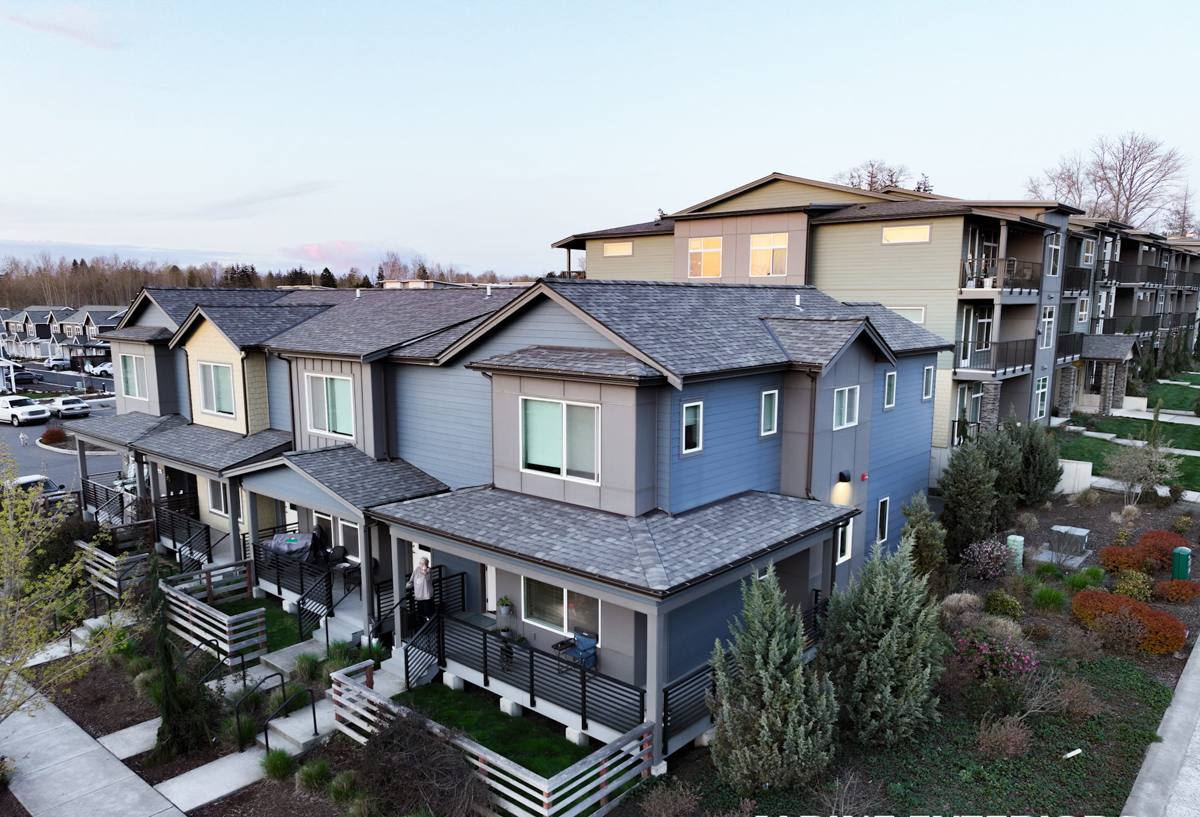
Board and batten has been a fixture of Pacific Northwest architecture for generations, and it's easy to see why it keeps showing up on homes throughout the Grandview area of Blaine. The vertical lines read as clean and modern on newer builds, but the style also has deep roots in farmhouse and craftsman design, which makes it a natural fit for the mix of housing you'll find in this part of Whatcom County. It's a look that works whether a home is going for a coastal-modern update or leaning into a more traditional Pacific Northwest character.
What most homeowners don't realize until they start shopping around is that board and batten is one of the least forgiving siding profiles when it comes to water management. The vertical seams, the batten strips, and the reveal gaps all create more places for water to find its way behind the cladding if the install isn't done right. In a climate like Blaine's, that's not a small detail — it's the whole ballgame.
What Grandview's Climate Actually Does to Vertical Siding
Grandview sits close enough to the water that salt air is a constant, low-grade stress on every exterior material on the home, not just the siding. Add in the steady flow of driving rain off the Strait of Georgia and the long moss season that Whatcom County is known for, and you've got a combination that tests both the siding material itself and the skill of whoever installed it.
The three things we're actually building against
- Salt air: accelerates corrosion on fasteners, flashing, and any metal trim details that aren't rated for coastal exposure.
- Driving rain: wind-driven moisture doesn't fall straight down — it pushes sideways into laps, seams, and butt joints, which is exactly where board and batten has more of them.
- Moss and prolonged dampness: months of overcast, wet weather mean siding rarely gets a long stretch to fully dry out, so any material that absorbs or traps moisture stays wet longer and starts breaking down faster.
None of that is unique to board and batten — it's true of every home in Blaine. But board and batten's vertical battens and reveal joints mean there's more linear footage of seam per square foot of wall than you get with standard lap siding. More seams means more opportunities for water intrusion if the rain screen, flashing, and fastening aren't handled correctly.
Why We Only Install James Hardie for This Application
We don't install vinyl, LP SmartSide, primed spruce, cedar, or other fiber cement brands for board and batten work, and that's a deliberate standard, not a lack of options. Here's the honest reasoning behind it.
Wood and engineered wood board and batten
Real cedar and primed wood board and batten can look beautiful, and plenty of Pacific Northwest homes still wear it well. But wood-based products are organic material — they absorb moisture, and in a climate with as much sustained dampness as Blaine's, that means an ongoing maintenance cycle of caulking, repainting, and watching for soft spots at the base of boards and battens where water sits longest. Engineered wood products reduce some of that risk but still rely on factory coatings and edge sealants that have to be maintained to keep water out.
Vinyl board and batten
Vinyl is low maintenance in the sense that it doesn't need painting, but it's a thin material that expands and contracts significantly with temperature swings, and it's not rigid enough to hold crisp battens without looking hollow or flexing in wind. It also doesn't perform well in impact or extreme cold, and its seams are typically overlapped rather than truly sealed, which isn't ideal in a driving-rain environment.
Why James Hardie
James Hardie fiber cement is engineered specifically for climate zones like ours — the HZ5 product line is formulated for regions with sustained moisture exposure. It's non-combustible, it doesn't rot, it holds paint and factory finish far longer than wood, and it's dimensionally stable, meaning the reveal lines on a board and batten installation stay straight and consistent instead of warping or cupping over time. The ColorPlus factory finish is baked on under controlled conditions, which gives it more consistent, longer-lasting color performance than field-applied paint on wood boards. It's also backed by a strong transferable warranty, which matters on a style like board and batten where the installation quality has such a direct effect on long-term performance.
What a Correct Board & Batten Installation Actually Involves
The material is only half the equation. Board and batten fails early far more often because of installation shortcuts than because of the product itself. Here's what we consider non-negotiable on every job.
Rain screen and drainage plane
A proper installation includes a drainage gap behind the panels — typically furring strips or a purpose-built rain screen product — so that any moisture that does get past the outer layer has somewhere to go instead of sitting against the wall sheathing. This is especially important in Blaine, where homes rarely get long dry stretches to air out.
Flashing at every horizontal transition
Every window head, door head, and horizontal trim board needs proper flashing integration, not just caulk. Caulk is a maintenance item; flashing is a permanent water-management detail. This is one of the most commonly skipped steps on lower-bid board and batten jobs.
Batten spacing and fastening
Battens need consistent spacing for the look to read correctly, but more importantly, fasteners need to land in solid backing at the correct penetration depth per manufacturer spec. Overdriven or underdriven fasteners are one of the top causes of early siding failure, and it's not something you can see from the ground once the job is finished.
Corrosion-resistant fasteners and trim
Given the salt air exposure in Grandview, we use fasteners and metal flashing components rated for coastal environments. Standard fasteners can start showing corrosion streaking within a few years near the water — a detail that's easy to overlook but shows up on the face of the siding eventually.
| Factor | James Hardie Board & Batten | Wood / Engineered Wood | Vinyl |
|---|---|---|---|
| Moisture resistance | Engineered for wet climates (HZ5) | Absorbs moisture; needs sealed edges | Doesn't absorb, but seams aren't sealed |
| Salt air / coastal exposure | Non-combustible, stable in coastal climates | Accelerated wear near salt air | Can become brittle over time |
| Finish longevity | Factory ColorPlus finish, long-lasting | Field-applied paint, shorter repaint cycle | Color molded in, can fade with UV |
| Dimensional stability | Holds straight reveal lines | Can cup, warp, or swell | Expands/contracts with temperature |
| Fire resistance | Non-combustible | Combustible | Combustible |
| Typical maintenance | Occasional wash, caulk check | Regular repainting, caulking, spot repair | Occasional wash, seam inspection |
Our Process for Grandview Board & Batten Projects
1. On-site assessment
We walk the home and look at current siding condition, moisture staining, existing flashing details, and any problem areas — corners, window transitions, and grade-level trim tend to show the most wear first in this climate.
2. Substrate check and prep
Before any new siding goes up, we check the sheathing underneath for water damage from prior siding failures. Installing new board and batten over a compromised substrate just hides the problem instead of solving it.
3. Rain screen and flashing installation
This is where the long-term performance of the job is actually decided. We install the drainage plane and all flashing details before a single Hardie panel or batten goes on the wall.
4. Panel and batten installation to spec
Panels and battens are fastened per James Hardie's published installation guidelines, with attention to fastener placement, spacing, and penetration — the details that don't show up in a walk-by but determine how the siding performs in year eight, not year one.
5. Final trim, caulking, and walkthrough
We finish with trim details and a walkthrough so the homeowner understands what was done and what, if anything, needs periodic attention.
Ongoing Care for Board & Batten in a Coastal Climate
Even a correctly installed system benefits from basic seasonal attention. This is what we recommend to Grandview homeowners:
- Rinse siding once or twice a year to clear salt residue and organic buildup before it feeds moss growth
- Check and clear gutters before the fall rains start, since overflow at the roofline is a common source of water tracking down siding
- Inspect caulking at trim joints annually — caulk is a maintenance item, not a permanent seal
- Trim back vegetation and landscaping that keeps siding in constant shade and dampness, which accelerates moss growth
- Have any impact damage or cracked panels addressed promptly rather than waiting, since small gaps are how water gets behind the system
Why Hiring a Crew That Already Works in Grandview Matters
Board and batten installation quality varies enormously between crews, and it's not something a homeowner can fully verify by looking at the finished wall. A crew that already works regularly in Grandview and the greater Blaine area has already seen how this specific coastal environment treats siding over time — which details fail first, which flashing choices hold up, and which shortcuts show up as problems three or five years down the line. That's institutional knowledge you don't get from a crew that mostly works inland or out of the area.
It also means faster response if something ever does need attention after the job is done. A local crew isn't driving in from two counties away for a warranty check or a quick caulking touch-up.
If you're weighing board and batten siding for a home in Grandview, we're happy to walk the property, look at what's there now, and give you a straightforward, no-pressure estimate for a James Hardie installation built for this exact climate.