 Blaine Roofing
 Why Windows Take More Punishment in Ferndale Than Inland Towns
Ferndale sits close enough to the water that homes here deal with a different set of stresses than a house forty miles inland. Salt-laden air drifts in off Puget Sound and the Strait of Georgia, driving rain comes in sideways during winter storms, and the mild, damp Whatcom County climate keeps moss and algae active on north-facing surfaces almost year-round. None of that is dramatic on its own, but stacked together, day after day, it's exactly the kind of slow, steady exposure that finds every weak point in a window's seal, frame, and flashing.
A window that's a perfectly fine product elsewhere can still under-perform here if it wasn't installed with this climate in mind. That's the real difference on a job like this — not the window itself, but how it's flashed, sealed, and tied into the wall so water and salt air can't get behind it.
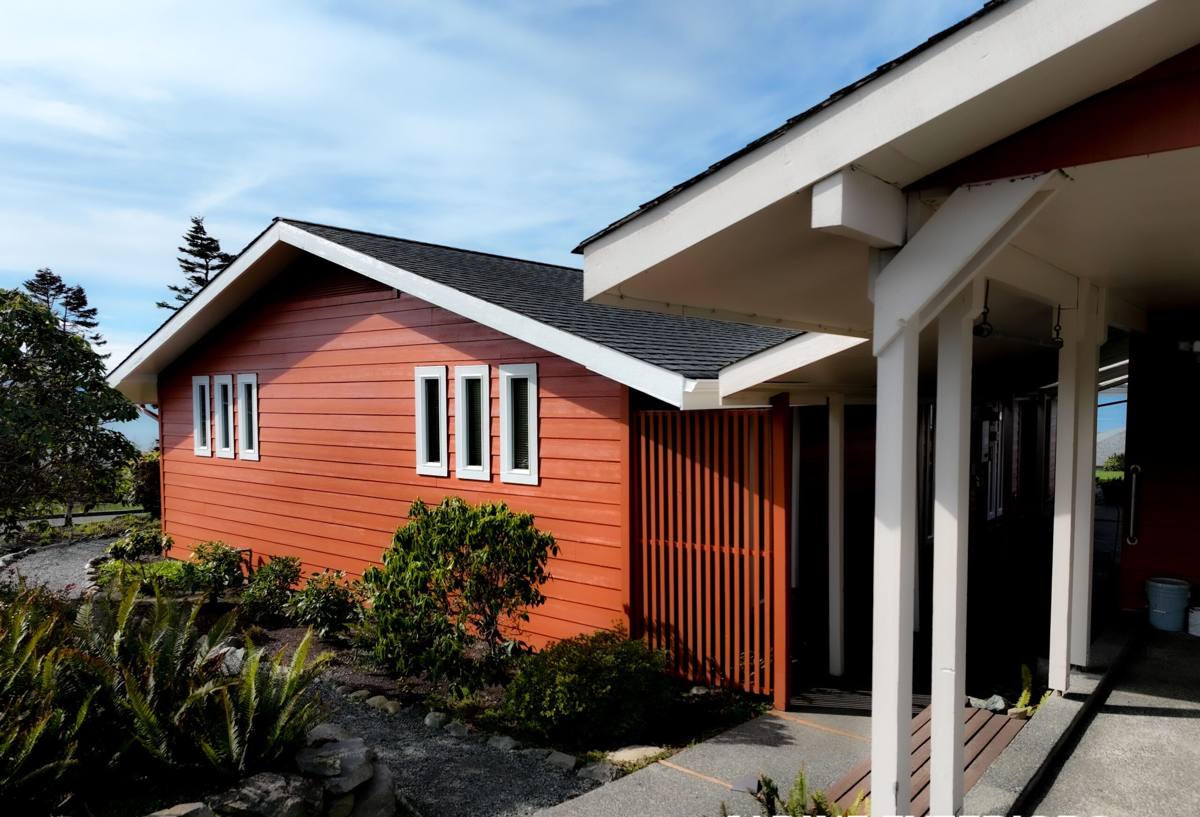
What Constant Moisture and Salt Air Do to a Window Over Time
Seal and Sealant Failure
Exterior sealants break down faster under repeated wet-dry cycling than they do in a drier climate. Once a bead of caulk or a compression seal starts to crack, wind-driven rain finds its way behind the trim, and from there it travels — often showing up as a stain or soft spot well away from where the actual gap is.
Frame and Trim Rot
Wood trim and sills that stay damp for extended stretches, especially on north- and west-facing walls that don't get much sun to dry out, are prone to soft, punky wood long before the glass or hardware shows any sign of trouble. Moss and algae holding moisture against the surface make this worse.
Hardware Corrosion
Latches, hinges, and balance mechanisms exposed to salt air corrode faster than the same parts would inland. Stiff cranks, latches that won't fully engage, and locks that stick are usually the first sign that hardware is on its way out.
Condensation and Fog Between Panes
A fogged or hazy look between the panes of a double- or triple-glazed unit means the seal on the insulated glass itself has failed and moisture has gotten into the gap. That's a glass unit issue, not a cleaning problem, and it's more common in homes near the coast where humidity is higher for more of the year.
What a Correct Installation Actually Involves
Window installation done right is mostly about water management — getting a window into a wall in a way that guarantees any moisture that reaches it gets directed back out, not trapped inside the wall cavity.
Flashing and Water Management
Flashing tape and pan flashing at the sill need to shed water outward and integrate correctly with the home's existing weather-resistive barrier. Skipping or shortcutting this step is the single most common cause of hidden water damage behind a "new" window.
Air Sealing and Insulation
The gap between the window frame and the rough opening needs to be filled with a proper low-expansion foam or backer rod and sealant — not just caulked over on the outside. Done wrong, this gap becomes a path for both drafts and moisture.
Shimming and Square
A window that isn't shimmed level, plumb, and square will bind, won't seal evenly against its weatherstripping, and will wear unevenly over time. This is a basic step, but it's the one that gets rushed on fast, low-bid jobs.
Choosing a Window Frame That Can Handle This Climate
Frame material matters more here than in a dry inland climate because it's dealing with salt air and sustained moisture, not just temperature swings. Here's how the common options compare for a coastal Whatcom County home:
| Frame Material | Salt Air / Moisture Resistance | Maintenance | Relative Cost | Best Fit |
|---|---|---|---|---|
| Vinyl | Good — won't rot or corrode | Low | $ | Most Ferndale homes, budget-conscious replacements |
| Fiberglass | Very good — dimensionally stable in wet/dry cycling | Low | $$$ | Homes wanting long service life with minimal upkeep |
| Wood-Clad | Fair — depends entirely on the cladding staying intact | Moderate to high | $$$ | Homeowners set on a wood interior look, willing to maintain it |
| Aluminum | Fair — prone to corrosion pitting near saltwater over time | Moderate | $$ | Larger openings where a slim frame profile matters most |
We're generally cautious about recommending bare wood or thin-clad wood frames for homes this close to the water — not because wood windows are a bad product, but because the maintenance burden of keeping the cladding and finish intact in this climate is real, and a lapse in upkeep shows up as rot faster here than it would forty miles inland. That's a trade-off we'll walk through honestly rather than upsell around.
Our Ferndale Window Installation Process
- On-site assessment — we check existing framing, sill condition, and signs of past water intrusion before quoting anything.
- Accurate measurement — exact rough opening dimensions, not estimates, so the unit fits without excessive shimming or gaps.
- Old window removal — careful removal that lets us inspect the sheathing and framing underneath before it's covered up again.
- Framing repair if needed — any soft, rotted, or water-damaged framing gets addressed before a new window ever goes in.
- Sill pan and flashing installation — proper flashing integrated with the existing weather barrier, sloped to shed water out.
- Setting the window — leveled, plumbed, squared, and shimmed correctly at all anchor points.
- Insulating and air sealing — low-expansion foam or backer rod around the perimeter, not just exterior caulk.
- Exterior trim and sealant — weather-rated sealant at all exterior joints, finished to shed water correctly.
- Final walkthrough — we test operation, locks, and seals with you before calling the job done.
Signs Your Current Windows Are Already Failing
If you're on the fence about whether replacement makes sense yet, these are the signs worth acting on before they turn into a bigger repair:
- Fog, haze, or moisture visibly trapped between the panes of glass
- Soft or spongy wood at the sill, jamb, or exterior trim
- Windows that are difficult to open, close, or lock
- Visible gaps, cracked caulk, or daylight around the frame
- A noticeable draft near the window even when it's fully closed
- Peeling paint or staining on interior trim below the window
- Moss or dark streaking building up on the exterior sill or trim
- Rising heating bills without any other clear explanation
Why It Matters That We Already Work in Ferndale
A crew that already works this stretch of Whatcom County isn't guessing at how to detail a window for it — we've seen how driving rain hits certain wall orientations, how long moss season really runs here, and what kind of flashing details hold up against salt air year after year. That's not something a crew based somewhere drier picks up on the first job.
Being based in Blaine also means we're a short drive away if something needs a warranty check or a follow-up adjustment after the install — not routing a service call through a call center for a company that installed and left.
Caring for New Windows in a Wet, Salty Climate
A correctly installed window still benefits from a little seasonal attention here:
Rinse salt residue and grime off exterior frames and glass periodically, especially after storms. Keep an eye on exterior caulk lines once a year and have any cracked or shrunk sealant redone before it becomes a leak path. Clear moss and debris off sills and tracks so moisture doesn't sit against the frame. Operate locks and cranks a few times a year so hardware doesn't seize up from disuse combined with corrosion.
What Homeowners Often Get Wrong About Window Replacement
The most common mistake we see isn't picking the wrong window — it's assuming the window itself is what determines performance. In this climate, the installation detailing (flashing, sealing, and how the unit ties into the existing wall assembly) matters as much as the product, if not more. The second common mistake is waiting until a window is visibly failing before addressing it, by which point there's often hidden moisture damage in the surrounding framing that turns a straightforward replacement into a larger repair.
If you're weighing whether it's time to replace windows on a Ferndale home, we're happy to take a look and give you a straight answer — including telling you if repair or a partial fix makes more sense than full replacement. Reach out for a free, no-pressure estimate using the form below.