 Blaine Roofing
 California Creek sits close enough to the water that homes here take a different kind of weathering than roofs just a few miles inland. Salt-laden air, wind-driven rain off the Strait, and a moss season that can stretch through most of the wet months all work on a roof at the same time, not one at a time. A repair that ignores any one of those factors tends to come back. This page covers what roof repair actually involves for homes in this part of Blaine, what a correct fix looks like, and what to expect when you call a crew that already works this neighborhood.
Why California Creek Roofs Wear Differently
Whatcom County gets plenty of rain everywhere, but proximity to salt water changes the equation. Airborne salt accelerates corrosion on exposed metal — nail heads, flashing edges, gutter fasteners, valley metal — well before the shingles around them show their age. A fastener that rusts through years ahead of schedule can cause a leak on a roof that otherwise still has useful life left in it.
Add to that the driving rain typical of this stretch of the coast. Wind-blown rain doesn't just fall on a roof, it gets pushed sideways and upward under laps, around penetrations, and into any gap that a calmer rain would never find. That's why roofs here fail more often at transitions — chimneys, skylights, wall-to-roof junctions, low-slope sections — than in the open field of the shingles themselves.
Then there's moss. The combination of shade, moisture, and mild temperatures common around California Creek gives moss a long growing window. Moss holds water against the roof surface, works its way under shingle edges, and lifts tabs enough to let wind and rain do further damage. A roof that looks fine from the ground can already have moss compromising the seal underneath.
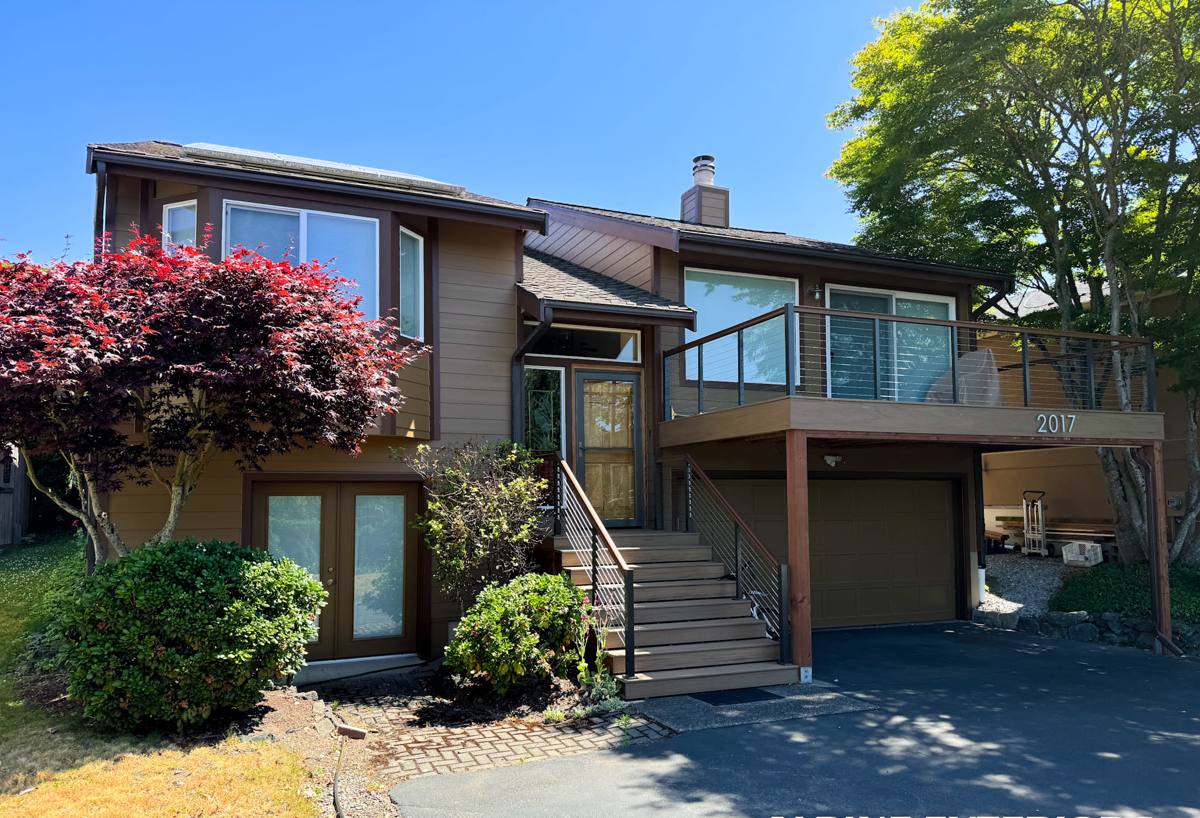
What Roof Repair Covers in This Neighborhood
"Roof repair" is a broad term, and part of doing it right is correctly diagnosing which category a problem falls into before any work starts. For homes in this area, the repairs we're called out for most often fall into a few groups.
Common Problem Areas
- Flashing failures — around chimneys, skylights, vents, and where a roof meets a wall, usually from corrosion or from sealant that has dried and cracked in the sun-to-rain cycle.
- Fastener corrosion — nail heads or screws that have rusted enough to back out slightly or lose their seal, letting water track down the shaft.
- Moss and organic buildup — lifted shingle edges, retained moisture, and granule loss from moss root structures working into the shingle surface.
- Wind and storm damage — lifted or torn shingles, especially on the windward roof planes that catch weather coming off the water.
- Clogged or damaged gutters and drip edge — water that can't shed properly backs up under the roof edge instead of running off it.
Repair vs. Replacement
Not every roof that's leaking needs a new roof. But not every leak is a simple patch, either. The honest answer depends on how much of the roof's remaining service life is intact versus how much damage is isolated. Here's how we think through that decision:
| Factor | Points Toward Repair | Points Toward Replacement |
|---|---|---|
| Age of roof | Under roughly 12-15 years | Nearing or past its rated lifespan |
| Extent of damage | Isolated to one section or penetration | Spread across multiple roof planes |
| Granule loss / shingle condition | Localized, surrounding shingles still flexible | Widespread granule loss, brittle shingles |
| Decking condition | Solid, no soft spots | Soft or delaminated decking found during repair |
| Moss/algae extent | Surface growth, removable without shingle damage | Moss has lifted or degraded shingle edges broadly |
We'll always tell you plainly which side of that line your roof is on, and why — not just recommend the bigger job by default.
Signs You Should Have a Roof Looked At
Because leaks in this climate often start at transitions and travel before they show up as a stain on a ceiling, it pays to catch the early signs rather than wait for water inside the house.
- Dark streaks or green-black growth on shingles, especially on north-facing or shaded slopes
- Moss visibly bridging shingle tabs or growing in a mat along the ridge or valleys
- Granules collecting in gutters or at downspout outlets
- Rust staining running down from flashing, vents, or nail heads
- Soft spots or slight sagging felt when walking a low-slope section
- Daylight visible through the roof deck from inside the attic
- Water stains on interior ceilings or upper walls, particularly after a windy rain
- Shingles that look curled, cracked, or lifted at the edges
How We Approach a Repair
A repair is only as good as the diagnosis behind it. We don't quote a fix sight-unseen off a phone description, because the visible symptom and the actual entry point for water are often in different places on this type of roof.
- On-site inspection. We walk the roof (not just look from the ground), checking flashing, fasteners, valleys, and any areas showing moss or granule loss.
- Trace the water path. Where a leak shows up inside is frequently not where it's entering the roof — wind-driven rain can travel along the deck or underlayment before dripping down.
- Written scope and honest recommendation. We explain what we found, what needs to happen, and whether it's a repair or something bigger — in plain terms, before any work starts.
- Correct the source, not just the symptom. That means replacing corroded fasteners and flashing, not just resealing over them, and clearing moss roots rather than just the visible growth.
- Reseal and re-integrate with the surrounding roof. Repairs are tied back into the existing shingle courses and flashing system so water sheds correctly across the repaired area, not around it.
Materials That Hold Up Near the Water
Fasteners and Flashing
Given the corrosion rate we see on exposed metal in this area, we use corrosion-resistant fasteners and flashing materials for repair work rather than matching cheaper hardware that will only fail again on the same timeline. This is a matter of our own standard for repair durability — it costs a little more up front and saves a callback in a few years.
Sealants
Sealant is a supporting material, not a primary defense — it's meant to back up a properly lapped and fastened flashing detail, not substitute for one. We use sealants rated for the temperature swings and UV exposure typical here, and we don't rely on sealant alone to close a gap that should be flashed correctly instead.
Shingles and Underlayment
For repair sections, we match shingle type, profile, and where reasonably possible, color to the existing roof, and we use synthetic or self-adhering underlayment at vulnerable transitions — valleys, eaves, and low-slope tie-ins — since that's where wind-driven rain is most likely to test the roof.
Moss Season Is a Maintenance Factor, Not a One-Time Job
Because of the tree cover and moisture pattern common around California Creek, moss isn't a one-time cleanup — it's a recurring maintenance item, similar to gutter cleaning. A roof that gets moss removed and treated periodically will hold up considerably longer than one that gets addressed only after growth has already lifted shingles. If your roof is prone to moss, we can talk through a maintenance interval that fits your specific property — how much shade it gets, tree overhang, and roof pitch all affect how fast moss comes back.
Why a Local Crew Matters for This Kind of Work
Roof repair in a coastal, moss-prone climate rewards familiarity with the specific failure patterns of the area over general roofing experience. A crew that works California Creek and the surrounding parts of Blaine regularly has already seen how salt air ages metal here, how wind off the water tends to hit certain roof orientations harder than others, and how long moss takes to become a real problem on shaded roof planes in this specific setting. That local pattern recognition is what shortens the time between "something's wrong" and "we know exactly where to look."
It also means we're not guessing at local permit requirements, typical roof ages for the housing stock in this area, or what materials genuinely perform here versus what looks good on a spec sheet written for a drier climate.
Getting a Repair Estimate
If you've noticed moss buildup, a rusty streak below a vent, or a slow leak that shows up only during a hard rain, it's worth having it looked at before the next storm off the water finds the gap first. We offer free, no-pressure estimates for California Creek homeowners — use the form below to get a straightforward look at what your roof needs and what it would take to fix it right.