 Blaine Roofing
 Bellingham's Climate Puts Real Demands on Window Installation
Bellingham sits in the same marine climate belt as Blaine and the rest of Whatcom County, which means the weather that wears down a house here isn't the occasional storm — it's the steady, year-round combination of moisture, wind, and shade. Homes closer to the water deal with salt-laden air that works its way into hardware and metal components over time. Homes tucked under mature trees deal with a long moss and algae season that keeps siding, trim, and window sills damp for months at a stretch. And nearly every home in the area deals with driving rain that comes in sideways during winter storms off the Salish Sea.
None of that is a problem for a window that's installed correctly. It becomes a problem fast for one that isn't — a gap in the flashing, caulk used as a substitute for proper water management, or hardware that was never rated for coastal exposure. We install windows with this climate in mind, not a generic approach borrowed from a drier region, because a "good enough" installation elsewhere can start failing within a few seasons here.
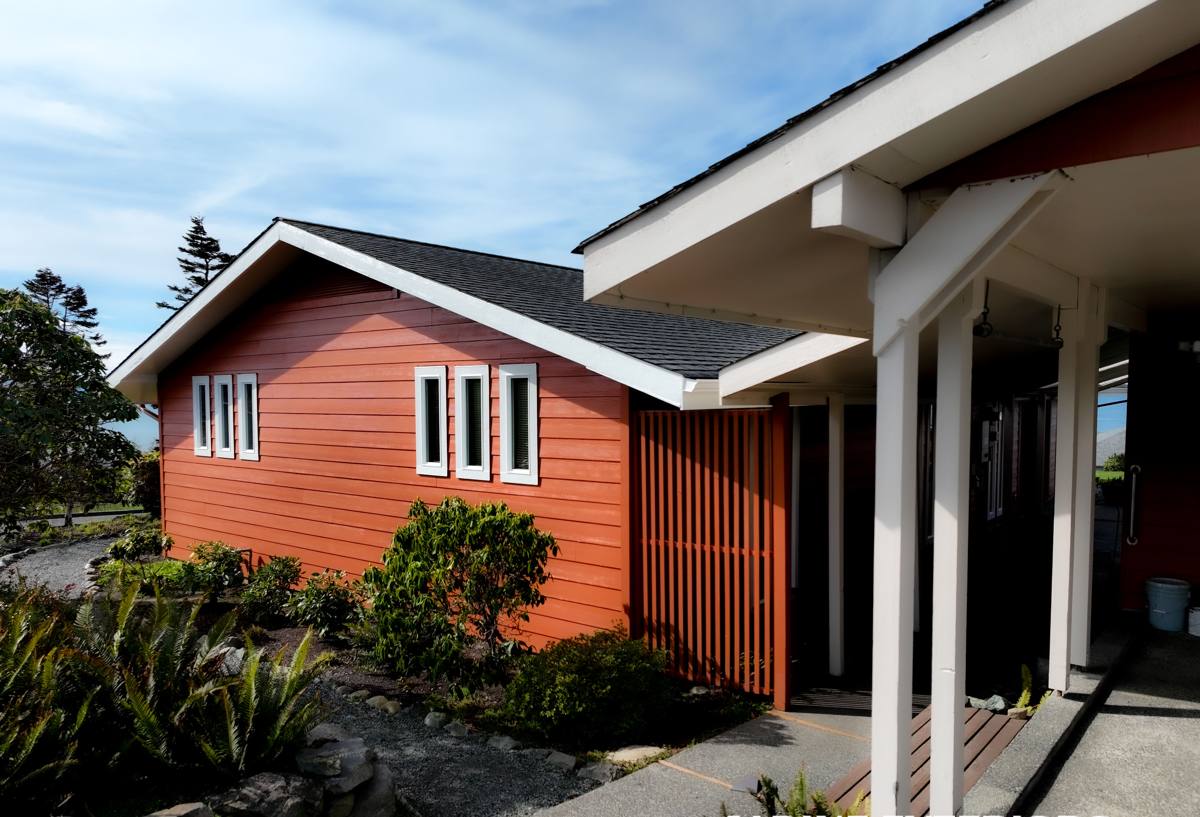
Signs a Bellingham Home Needs New Windows
Window failure in this climate is usually slow and easy to miss until it isn't. A few things worth checking for:
- Fogging or a hazy film between the panes of a dual-pane window — a sign the seal has failed and the insulating gas has escaped
- Soft, discolored, or spongy wood at the sill or exterior trim, usually a sign water has been getting behind the window for a while
- Windows that are hard to open, close, or lock, or that no longer sit flush in the frame
- A noticeable draft near the window even when it's fully closed and latched
- Cracked or missing caulk, or paint that's peeling specifically around the frame
- Rooms that feel colder or damper than the rest of the house, especially near north- or west-facing windows that catch the worst of the weather
Any one of these is worth a look. Several together usually mean the window itself, not just the caulking, needs to be replaced.
What a Correct Window Installation Actually Involves
Replacing a window sounds simple — remove the old unit, set the new one, seal it up. In practice, most of the water problems we find in older Whatcom County homes trace back to shortcuts taken during a past installation, not a defect in the window itself. A correct job has a few non-negotiable parts.
Flashing and Water Management
Every window opening needs sill flashing that sheds water outward, away from the wall framing, before the window ever goes in. That flashing has to tie into the house's weather-resistive barrier correctly — lapped so water is always directed down and out, never trapped behind the siding. Skipping or shortcutting this step is the single most common cause of hidden rot around a window, and it's invisible from the outside until the damage is already done.
Insulation and Air Sealing
The gap between the window frame and the rough opening needs the right amount of the right material — enough low-expansion foam or backer rod and sealant to stop air movement, without overfilling in a way that bows the frame and keeps it from operating smoothly. Too little insulation leaves a cold draft; too much can distort the frame and cause the exact seal failures homeowners are trying to avoid.
Trim, Caulking, and Finish Work
Exterior caulking should be a high-quality, flexible sealant suited to the temperature swings and constant damp of this region, applied at the joints that actually need it — not as a substitute for proper flashing. Interior and exterior trim gets reset cleanly, weep paths on the sill kept clear so the window drains the way it was designed to, and everything checked for square and level before the job is called done.
Choosing Window Materials for Whatcom County Weather
Frame material matters as much as installation quality in a climate like this. We don't install everything on the market — we stick to materials that hold up under sustained moisture and, for homes closer to the water, salt-laden air, because that's what keeps a small callback from turning into a full window replacement five years early.
| Frame Material | Moisture & Salt Air Resistance | Maintenance | Typical Lifespan |
|---|---|---|---|
| Vinyl | Good — won't rot or corrode; performance depends on quality of the seams and hardware | Low | 20-30 years |
| Fiberglass | Very good — dimensionally stable, resists moisture and salt exposure well | Low | 30-40+ years |
| Aluminum | Fair to poor near salt air unless properly coated; conducts cold | Moderate | 20-30 years |
| Wood / wood-clad | Fair — needs a well-maintained exterior finish or cladding to keep moisture out | High | Varies with upkeep |
Glass matters just as much as the frame. Dual-pane, low-E glass with an argon fill is the standard for good reason — it cuts heat loss and condensation risk significantly compared to older single-pane or early dual-pane units. Triple-pane glass is worth discussing for north-facing rooms or homes right along the water that take the worst of the wind and cold, but it isn't necessary on every window in every home, and we'll say so honestly when it isn't.
Full-Frame vs. Pocket (Retrofit) Replacement
There are two basic approaches to replacing a window, and the right one depends on the condition of what's already there — not just preference or price.
When Full-Frame Replacement Makes Sense
If we find rot in the framing, a flashing detail that was never done correctly, or an opening that's out of square, full-frame replacement is the right call. It means removing the old window down to the rough opening, repairing any damaged framing, and installing new flashing before the new window goes in. It's more labor, but in a climate where hidden water damage is common, it's the only way to actually fix the underlying problem instead of covering it up again.
When Pocket Replacement Is the Better Call
If the existing frame is sound, square, and free of rot, a pocket (or "retrofit") replacement — installing the new window into the existing frame — is faster, less invasive to surrounding siding and trim, and typically less expensive. We'll only recommend it when an inspection actually supports it, not as a default to save time on the estimate.
Our Window Installation Process
We run the same process on every window installation in Bellingham and throughout the area, because consistency is what prevents callbacks:
- Inspection and measurement. We check the existing frame, sill, and surrounding wall for rot, staining, or settling before recommending full-frame or pocket replacement, and take precise measurements for the new unit.
- Removal and opening prep. The old window comes out carefully to avoid damaging siding or trim we're keeping. Any damaged framing or sheathing found underneath is repaired at this stage, not covered up.
- Flashing and installation. Sill flashing goes in first, tied into the existing weather-resistive barrier, followed by the window itself — shimmed, leveled, and squared before it's fastened.
- Insulation, sealing, and trim. The gap around the frame is insulated correctly, exterior caulking is applied where it's actually needed, and interior and exterior trim is reset or replaced.
- Final walkthrough. We test operation, check the seal, and walk the finished job with the homeowner before considering it done.
Why Hiring a Crew That Already Works in Bellingham Matters
Window installation isn't identical from region to region. A crew that mostly works in a drier climate can do fine work there and still make choices that don't hold up here — the wrong sealant for our temperature swings, flashing details built for occasional rain instead of sustained driving rain, or hardware that was never meant to sit a few miles from salt water. We work throughout Whatcom County, including Blaine and Bellingham, and we see the same climate-driven failures often enough to know exactly what to check for and what to avoid before it becomes a problem.
That local familiarity also means we're not guessing about permitting expectations or how a particular era of housing stock tends to be built. If your home is older, there's a good chance we've already worked on one with a similar layout and know what's usually hiding behind the trim before we even open it up.
Caring for Your New Windows After Installation
A properly installed window in a good frame material needs very little upkeep, but a few habits go a long way in this climate:
- Rinse salt residue off exterior frames and hardware periodically if your home is near the water
- Keep gutters and downspouts clear so runoff isn't washing directly down the wall next to window openings
- Check exterior caulking once a year, especially after a hard winter, and have any cracked or missing sealant redone before it turns into a leak
- Clear moss, algae, or debris off sills and tracks so drainage paths stay open
- Operate each window a few times a season, even the ones you rarely open, so hardware doesn't seize up
If you're noticing drafts, fogged glass, or soft trim around your windows — or you're simply ready to stop fighting older windows through another wet Whatcom County winter — we're happy to take a look. Reach out for a free, no-pressure estimate on window installation for your Bellingham home, and we'll tell you honestly what your windows need and what they don't.