 Blaine Roofing
 Windows Built for Sumas' Climate, Not a Catalog Average
Sumas sits in a low-lying valley near the Canadian border, and homes here take on a different kind of weather stress than a lot of window installers realize until they've worked the area for a while. You get long stretches of driving rain off the marine air that moves through Whatcom County, seasonal fog that keeps siding and sills damp longer than homes further inland, and a moss season that seems to run most of the year on anything shaded or north-facing. None of that is dramatic on its own, but it adds up. Wood sashes swell and stick. Aluminum frames sweat and corrode at the corners. Old caulk lines fail quietly, and water finds its way behind the trim long before anyone notices a stain on the wall inside.
Window replacement in a climate like this isn't just about picking new glass. It's about getting the flashing, the sill pan, and the air seal right so the next twenty years of rain don't find the same weak points the last set of windows had. That's the piece that separates a window that looks good on install day from one that's still performing a decade from now.
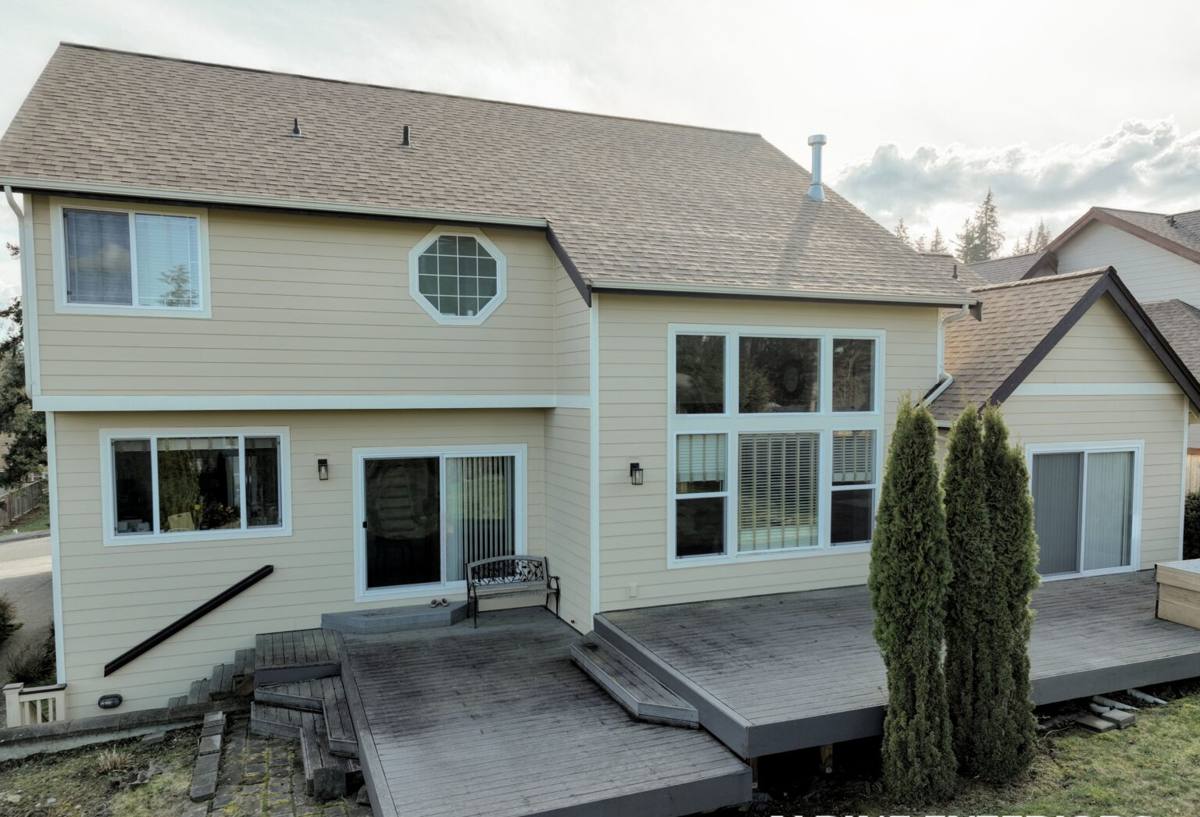
Signs Your Windows Are Ready to Be Replaced
Most homeowners don't wake up one day and decide to replace windows — it's usually a slow accumulation of small annoyances that finally add up. Here's what we look for, and what you can check yourself before calling anyone:
- Fogging or a hazy film between the panes — the seal has failed and the gas fill (or trapped air) has been compromised
- Visible gaps, drafts, or a cold spot near the frame even when the window is fully latched
- Soft or discolored wood at the sill or lower corners — often the first sign of moisture getting behind the frame
- Windows that are difficult to open, close, or lock, especially after damp weather
- Condensation forming on the inside of the glass regularly, not just on the coldest mornings
- Moss, algae, or black staining building up around the frame or sill faster than it does elsewhere on the house
- A noticeable jump in heating costs without any other explanation
Any one of these on its own might just mean a repair. Several of them together, especially on a home that's original to its build year, usually mean it's time to talk about replacement before the damage spreads into the framing around the window.
What a Correct Window Replacement Job Actually Involves
It Starts Before the Old Window Comes Out
A rushed job pulls the old window, drops in the new one, and caulks the gap. That approach might hold for a year or two in a dry climate. In a valley that sees this much sustained rain, it's an invitation for water to get trapped behind the new window instead of shedding off the front of it. Every opening should be checked for rot or soft framing once the old unit is out — and if we find it, it gets addressed before anything new goes in. Installing a new window over a compromised opening just hides the problem for a while.
The Details That Actually Keep Water Out
- A properly sloped sill pan so any water that does get past the exterior sheds outward instead of pooling
- Correctly lapped flashing and weather-resistant barrier tape, installed in the right order so water always drains downward and outward, never behind the layer below it
- Continuous, properly sized shims so the frame is square and doesn't rack over time, which is what causes seals to fail early
- Low-expansion foam and backer rod at the gap, not just a bead of caulk — caulk alone isn't an air seal, it's a cosmetic finish over one
- Exterior trim and caulk lines finished in a way that actually match the home's existing siding detail, not just whatever's fastest
None of this is visible once the job is done, which is exactly why it matters who's doing it. A window that's flashed correctly and one that isn't can look identical from the driveway for the first two years.
Choosing the Right Window for a Sumas Home
There's no single "best" window — the right choice depends on your home's age, exposure, and how much upkeep you actually want to do. Here's how the common options stack up for this climate specifically:
| Frame Material | Moisture & Climate Fit | Maintenance | Typical Lifespan |
|---|---|---|---|
| Vinyl | Very good — won't rot, rust, or absorb water; handles driving rain well | Low — occasional cleaning, no painting or sealing | 20–30 years |
| Fiberglass | Excellent — highly stable in wet, temperature-swinging climates, resists warping | Low — durable finish, rarely needs attention | 30–40+ years |
| Aluminum | Fair — prone to condensation and corrosion in cold, damp conditions unless thermally broken | Moderate — corner seals and finish need monitoring | 15–25 years |
| Wood / Wood-Clad | Requires diligence — beautiful, but exposed wood is vulnerable to our rot-friendly moss season | High — regular painting, sealing, and inspection | Varies widely with upkeep |
We install vinyl and fiberglass on the large majority of Sumas replacement jobs, for a straightforward reason: they don't give moisture anywhere to take hold. We're honest with homeowners who want an all-wood look — it can be done, but it comes with a real, ongoing maintenance commitment in this climate, and we'll walk you through that trade-off rather than just sell you what you asked for.
Glass Packages and Energy Performance
The frame keeps water out; the glass package is what keeps your heating bill and comfort level in check. For this region, we generally recommend:
- Double-pane with Low-E coating and argon fill as the practical baseline for most homes — good insulation value, proven performance, reasonable cost
- Triple-pane for north-facing rooms, homes with high heating costs, or anyone prioritizing sound dampening and maximum comfort near exterior walls
- Warm-edge spacers (rather than older metal spacers) to cut down on the cold-edge effect and interior condensation risk, which matters more in a consistently damp climate like ours
Whatcom County's mix of cold, wet winters and mild summers means the payback on better glass usually shows up in winter comfort and reduced condensation before it shows up as a dramatic bill reduction — both are worth factoring in, not just the sticker price.
Our Process, Start to Finish
- On-site assessment — we look at every window being considered, check for hidden rot or framing issues, and measure for accurate ordering
- Straightforward proposal — material options, glass package, and pricing laid out clearly, no pressure to upgrade beyond what your home actually needs
- Scheduling around the weather — we plan installs for windows of drier weather where possible and work efficiently to keep any opening exposed for as little time as necessary
- Removal and inspection — old units come out, framing is checked and repaired if needed before anything new goes in
- Installation — sill pan, flashing, insulation, and air sealing done in the correct order, every time, not just on the jobs someone happens to be watching
- Finish work and walkthrough — interior and exterior trim finished to match your home, operation tested on every window, and a walkthrough so you know what you're looking at
- Cleanup — job site left clean, old windows hauled away
Why Local Experience in Sumas Actually Matters
Window replacement isn't a one-size-fits-all job, and a crew that's worked around Whatcom County knows things a traveling install team doesn't — how a particular era of home in this area tends to be framed, where moisture typically finds its way in on homes exposed to valley fog and driving rain, and how to schedule a job so an opening isn't sitting exposed during the wrong stretch of weather. That local pattern recognition is the difference between a install crew troubleshooting your home for the first time and one that's already seen the same issue twenty times over.
It also matters for the boring-but-important stuff: knowing what local permitting looks like, being reachable afterward if a question comes up, and standing behind the work because we're not driving back out of the area when the job's done. If something needs a second look six months later, we're still local.
Protecting Your Investment After Installation
New windows are a long-term investment, and a little seasonal attention keeps them performing the way they should:
- Rinse frames and tracks periodically to keep moss spores and organic buildup from taking hold, especially on shaded or north-facing windows
- Check and clear weep holes on vinyl frames so water has somewhere to drain instead of pooling
- Inspect exterior caulk lines once a year — caulk is a wear item, not a permanent seal, and catching a small gap early is a lot cheaper than dealing with water damage later
- Keep an eye on any nearby vegetation or gutters that could be directing extra water toward a window opening
None of this is heavy maintenance if you stay ahead of it, and it's a fraction of the cost of dealing with a moisture problem that's been allowed to sit for a few seasons.
Get a Straightforward Estimate
If your windows in Sumas are drafty, fogging, or just past their useful life, we're happy to take a look and give you an honest read on what's actually needed — no pressure, no inflated scope. Fill out the form below and we'll set up a free estimate.