 Blaine Roofing
 Fiber Cement Siding Built for What Sumas Homes Actually Deal With
Sumas sits in a part of Whatcom County where the weather doesn't do a home any favors. Rain comes in sideways for months at a stretch, moss finds every shaded corner of a roofline and north wall, and the humidity off the Salish Sea and surrounding lowlands keeps wood siding damp longer than it should ever stay. We've worked enough homes in this corner of the county to know that siding here isn't just a cosmetic choice — it's the first line of defense against a climate that never really dries out from October through May.
This page is about one product, in one place: fiber cement siding, installed correctly, on homes in and around Sumas. We're not going to give you a generic rundown of siding options. We're going to explain what this climate does to a wall assembly, what a correct fiber cement install looks like in response, and why the crew doing the work matters as much as the material itself.
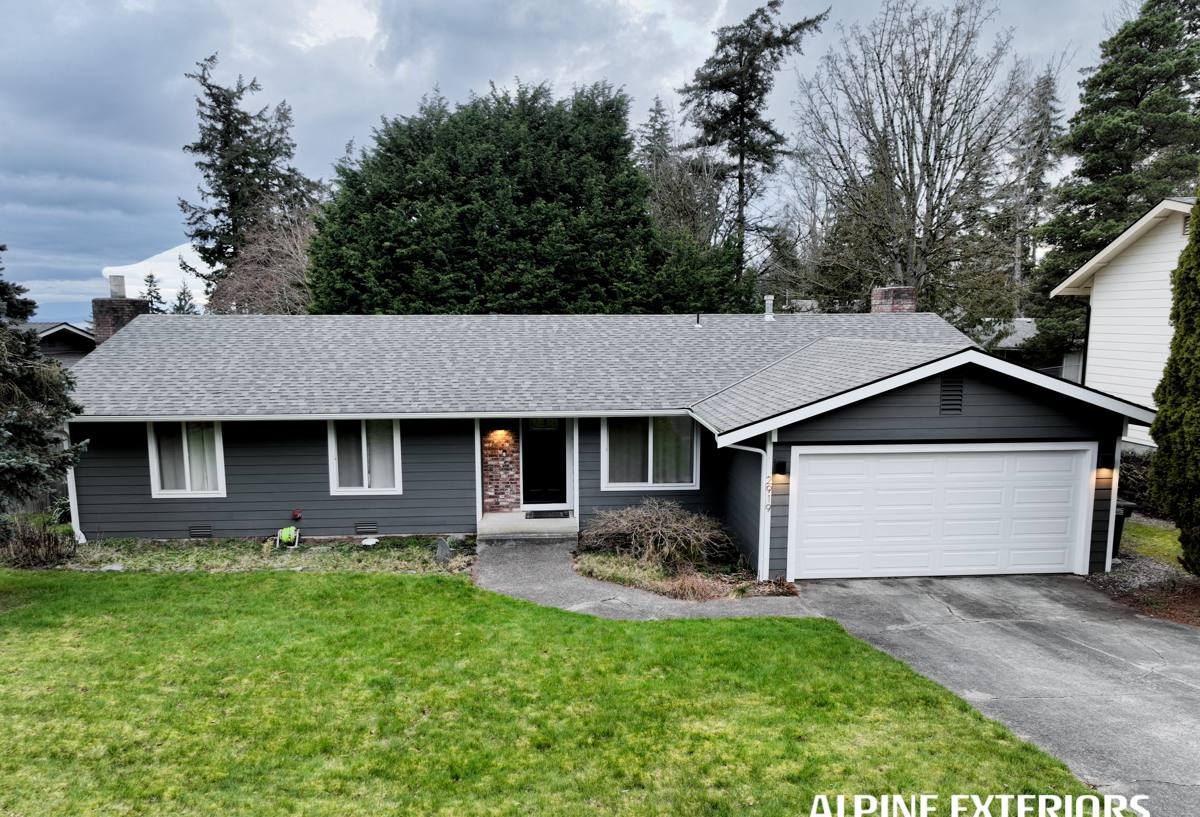
What the Climate Does to Siding Here
Three things wear down exterior siding in this part of Whatcom County faster than almost anywhere else in the state:
- Driving rain. Wind-driven rain doesn't just wet the surface of a wall — it pushes moisture up under laps, around trim, and into any gap that wasn't flashed or caulked correctly. Over a wet season, that moisture finds its way behind poorly installed siding and stays there.
- A long moss season. Shaded walls, tree-lined lots, and the persistent damp mean moss and algae get a real foothold on siding that holds moisture at the surface. Once moss establishes itself, it holds water against the material even longer, which accelerates whatever damage was already starting underneath.
- Salt-influenced coastal air. Homes closer to the water around Blaine and the broader Whatcom coastline deal with airborne salt that accelerates corrosion on fasteners, trim, and any exposed metal. Even set back from the shoreline, that coastal moisture load shapes how materials perform over a 20- or 30-year timeline.
None of this is unusual for the Pacific Northwest. What's specific to Sumas and the surrounding area is how long the wet season runs and how little direct sun some walls get to dry out between storms. A siding material that tolerates a few wet weeks is not the same as one built for a wet six months.
Why Fiber Cement Holds Up Where Other Materials Struggle
Fiber cement is cement, sand, and cellulose fiber pressed and cured into a rigid board. It doesn't absorb water the way wood does, it doesn't expand and contract with humidity the way vinyl does, and it doesn't feed mold and rot organisms the way untreated wood products can. That combination is exactly what a climate like this calls for.
| Material | Behavior in Driving Rain | Behavior in Moss/Shade | Long-Term Coastal Durability |
|---|---|---|---|
| Fiber Cement (Hardie) | Dense, engineered core resists water intrusion when properly flashed and sealed | Factory finish resists moss adhesion better than raw wood; cleans without damaging the substrate | Non-combustible, dimensionally stable, holds finish through salt-air exposure |
| Cedar/Primed Wood | Absorbs moisture at joints and end cuts; prone to swelling and checking | Organic material — moss and rot organisms attach and feed directly on it | Requires ongoing refinishing; salt air accelerates weathering of exposed grain |
| Vinyl | Sheds water at the surface but seams and J-channels can trap moisture behind panels | Doesn't rot, but moss and algae still colonize the surface; can look worn quickly | Can warp or become brittle with temperature swings; fasteners and trim more exposed |
This isn't a knock on every other product on the market — it's why, after years of doing exterior work in this region, we made fiber cement our standard and stopped installing the alternatives.
What a Correct Fiber Cement Install Actually Involves
Fiber cement siding fails early almost exclusively because of installation mistakes, not because the material itself gave out. In a climate that pushes water at a wall for months at a time, every detail below matters more than it would somewhere drier.
Weather-Resistive Barrier and Drainage Plane
A code-compliant water-resistive barrier goes on before the siding, lapped correctly from bottom to top so water sheds outward, not into the wall. On homes taking direct wind-driven rain, we pay close attention to how that barrier integrates with window and door flashing — this is where most hidden leaks start.
Rainscreen Gap
A ventilated gap between the barrier and the back of the siding lets any moisture that does get past the surface drain and dry instead of sitting against the wall sheathing. In a climate with this much sustained dampness, that gap is not optional detailing — it's what keeps a wall assembly dry over decades instead of years.
Fastening and Clearances
Fiber cement has to be fastened per manufacturer spec — correct nail type, spacing, and embedment depth — and kept off grade, decks, and roof lines by the clearances the manufacturer requires. Bottom-of-wall clearance is one of the most commonly skipped details, and it's one of the most important in a place where standing moisture at grade is common for months at a time.
Joint and Trim Sealing
Butt joints, corners, and trim intersections all need to be caulked and finished correctly with a sealant rated for exterior movement. Loose or missing sealant at these joints is the single most common entry point for wind-driven rain to get behind the siding.
Our Process for a Sumas-Area Siding Job
- On-site walkthrough. We look at wall exposure, shading, drainage at grade, and existing moisture damage before quoting anything.
- Tear-off and substrate check. Old siding comes off and we inspect the sheathing underneath for rot or hidden damage before anything new goes up.
- Barrier and rainscreen install. Water-resistive barrier, flashing at every penetration, and a drainage gap go in before a single piece of siding.
- Siding installation to manufacturer spec. Correct fastening, clearances, and joint treatment throughout.
- Final detailing and walkthrough. Trim, caulking, and touch-up finish work, followed by a walkthrough with the homeowner.
Why We Install James Hardie Fiber Cement and Nothing Else
We standardized on James Hardie products specifically — not fiber cement in general — because of how the material is engineered and backed. Hardie's ColorPlus factory finish is baked on under controlled conditions, which holds up better against sun and moisture cycling than field-applied paint. Their HZ product lines are engineered for regional climate zones, which matters directly here: a product built with our wet, moderate-temperature climate in mind performs differently than one engineered for a hot, dry region. The material is non-combustible, which matters given the wildfire smoke seasons this region has seen in recent summers, and the warranty structure is transferable, which protects resale value down the road.
We don't install LP SmartSide, vinyl, or other fiber cement brands. That's a standard we hold to on every job, not a sales pitch for this page — we'd rather turn down work than install something we don't trust to perform in this climate for the next 30 years.
Maintaining Fiber Cement Siding Once It's Installed
Fiber cement is low-maintenance compared to wood, but "low-maintenance" doesn't mean "no maintenance" in a climate this wet. A short annual routine keeps siding performing the way it's designed to:
- Rinse siding with a garden hose (not a high-pressure washer) once or twice a year to clear pollen, dust, and early moss growth
- Check caulking at joints, trim, and window/door edges annually and re-seal anything cracked or pulling away
- Trim back vegetation and tree limbs that keep walls shaded and damp — this is the single biggest factor in moss buildup
- Look at the bottom courses near grade each fall for standing water, mulch buildup, or splashback that could hold moisture against the siding
- Address any paint touch-up promptly at cut edges or fastener heads to keep the factory finish's protection intact
Why It Matters That Your Crew Already Works This Area
Siding installed to a national spec sheet without accounting for local conditions is how you end up with premature failures — moss trapped behind panels, joints that were sealed for a drier climate, or clearances that ignored how wet the ground stays here for half the year. A crew that regularly works Sumas and the surrounding Whatcom County area already knows which walls take the worst of the wind-driven rain, where moss problems start first, and how to detail a job so it holds up through a normal wet season instead of just the summer it was installed. That local pattern recognition is worth more than any spec sheet on its own.
If your current siding is showing moss buildup, soft spots, or peeling paint, or you're planning ahead for a replacement, we're happy to walk your home and give you a straightforward, no-pressure estimate — no obligation, just an honest look at what your walls need. Use the form below to get started.