 Blaine Roofing
 Windows Built for Lynden's Weather, Not Just the Showroom
Lynden sits inland from Blaine, in the Nooksack River valley, but it doesn't escape what makes Whatcom County hard on a house. The rain here isn't dramatic — it's persistent, low, and wind-driven for months at a stretch. Humidity sits in the valley air longer than it does along the immediate coast, and that combination of steady moisture and mild temperatures is exactly what moss, mildew, and slow wood rot need to get established. Add in the marine-influenced air that moves inland off the Strait of Georgia and Boundary Bay, and even homes well away from the water deal with corrosion on exposed hardware faster than homeowners expect.
Windows take the brunt of this. They're the weakest point in an exterior wall — more seams, more moving parts, more places for water to find a way in — and a window that was fine in a drier climate can fail early here if it wasn't built or installed with this specific weather in mind. This page covers what actually matters for energy-efficient window replacement on a Lynden home: the climate factors, what a correct installation involves, what it costs to think about, and why local installation experience isn't just a sales pitch.
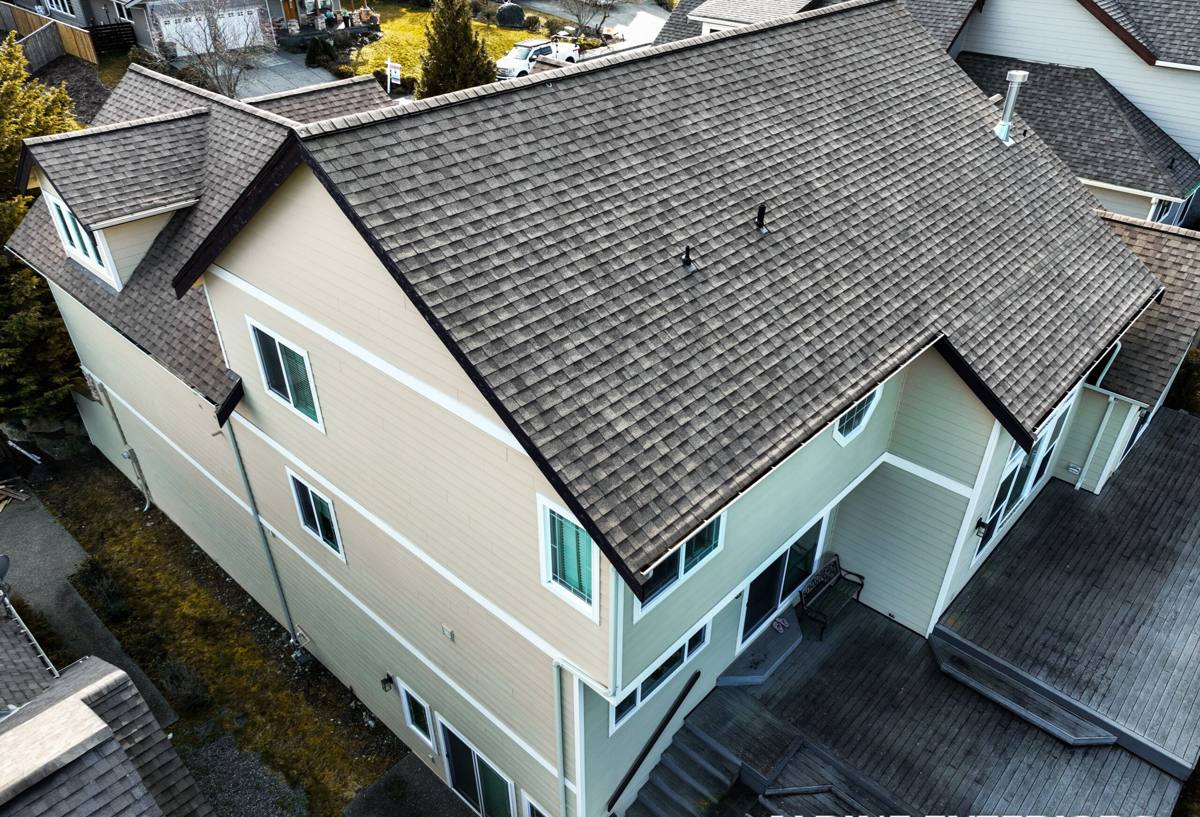
What This Climate Actually Does to Windows Over Time
Driving Rain and Wind-Driven Moisture
Whatcom County storms rarely come straight down. Wind pushes rain sideways against west- and south-facing walls, forcing water into any gap around a window frame that isn't properly flashed and sealed. Over years, this shows up as soft trim, water staining on interior sills, or a musty smell near the window that homeowners often blame on the window itself when the real issue is what's happening behind it.
Humidity and Moss Season
Whatcom County's moss season runs long — many months of the year offer the damp, shaded conditions moss and algae need. On windows, this doesn't mean moss growing on the glass, but it does mean sustained moisture sitting against frames, sills, and exterior trim longer than in drier climates. Wood components that aren't well protected can start breaking down from the inside before any damage is visible from the street.
Salt-Influenced Air and Hardware
Lynden is far enough inland that it doesn't take the direct salt spray a beachfront Blaine property would, but the broader region's marine air still carries enough salt content to accelerate corrosion on lower-grade hinges, locks, and screen hardware over time. It's a slower effect here than right on the water, but it's real, and it's one more reason cutting corners on hardware quality doesn't pay off in this county.
What "Energy-Efficient" Should Mean Here
Energy-efficient windows get marketed heavily, but the label alone doesn't tell you whether a window suits our climate. Two ratings matter more than any brand name:
- U-factor — how well the window resists heat loss. Lower is better for our cool, wet winters, where the goal is keeping conditioned air inside.
- Solar Heat Gain Coefficient (SHGC) — how much solar heat passes through the glass. Whatcom County doesn't get intense year-round sun, so this matters less here than in hot climates, but it still affects comfort on west-facing rooms during summer afternoons.
Beyond the glass, the frame material and the quality of the seal between sashes matter just as much for keeping moisture and drafts out as they do for energy performance. A window can carry a good efficiency rating on paper and still underperform in Lynden's climate if the frame material or installation doesn't hold up to sustained damp.
Signs a Lynden Home Needs New Windows
Homeowners usually notice symptoms long before they connect them to the windows themselves. Common signs worth acting on:
- Visible condensation between panes (a sign the seal has failed and insulating gas has escaped)
- Drafts you can feel near the frame even when the window is fully closed and locked
- Wood trim or sills that feel soft, spongy, or discolored
- Difficulty opening, closing, or locking — often a sign the frame has swelled or warped from moisture
- Noticeable temperature difference near the window compared to the rest of the room
- Rising heating bills without a clear cause elsewhere in the home
- Fogging or a persistent musty smell that returns even after cleaning
How We Approach a Window Replacement Project
On-Site Assessment
We start by looking at more than the glass — the condition of the framing, sheathing, and any existing water damage around each opening. In a climate like ours, what's happening behind the trim matters as much as the window unit itself. If there's rot or moisture damage in the framing, that gets addressed before a new window goes in, not covered up behind it.
Flashing and Moisture Management
This is the step that separates a window installation that lasts from one that leads to a callback in three years. Every opening gets properly flashed and sealed to shed wind-driven rain away from the framing, with attention to the sill pan and the integration with existing siding or trim. Because we also work on roofs and the broader exterior envelope, we think about how window flashing ties into the rest of the water management on the house — not as an isolated component.
Installation and Finish
New windows are set, shimmed, and insulated to spec, with exterior sealant and trim work finished to match the home. We test operation and seal quality before calling a job complete, and we walk the homeowner through what to expect during the first few weeks as sealants fully cure.
Comparing Window Frame Materials for This Climate
| Frame Material | Moisture Performance | Maintenance | Typical Lifespan |
|---|---|---|---|
| Vinyl | Good — won't rot, handles sustained damp well | Low; occasional cleaning | 20–30+ years |
| Fiberglass | Very good — dimensionally stable in wet/cool swings | Low | 30+ years |
| Wood (clad exterior) | Depends heavily on cladding and sealant maintenance | Higher; exterior finish needs monitoring | Varies widely with upkeep |
| Aluminum | Prone to condensation without thermal breaks | Low | 20–30 years, less common as primary frame here |
For most Lynden homes, vinyl and fiberglass frames handle our rain and humidity with the least ongoing maintenance. Wood-clad windows can look excellent and perform well, but they put more responsibility on the homeowner to keep exterior finishes maintained — worth knowing going in, not discovering after the fact.
What Drives the Cost of a Window Project
We don't quote pricing without seeing the home, but the main factors that move a project up or down in cost are consistent:
| Factor | Why It Matters |
|---|---|
| Number and size of openings | More or larger windows means more material and labor |
| Frame material chosen | Vinyl, fiberglass, and wood-clad carry different material costs |
| Condition of existing framing | Rot repair adds time and material beyond the window itself |
| Glass package | Double-pane vs. triple-pane, low-E coatings, gas fills |
| Access and site conditions | Second-story or hard-to-reach windows take more time to install safely |
Broadly, most Lynden window projects fall somewhere between a single-window repair-style replacement and a whole-home upgrade — the right scope depends on how many windows are actually failing versus which ones are still performing fine.
Why It Matters That We Already Work in Lynden
Lynden's building stock ranges from older farmhouses to newer developments, and each brings different framing quirks — older homes especially can have non-standard rough openings that off-the-shelf replacement windows don't always fit cleanly. Knowing what's typical for this area before we ever open a wall saves time and avoids surprises mid-project.
We also already understand the permitting expectations for Whatcom County exterior work, and because we handle roofing and exterior envelope work broadly, we look at how new windows interact with existing flashing, siding, and rooflines rather than treating the window as an isolated swap. That matters most in a climate where water always finds the weakest connection point.
Protecting the Investment After Installation
- Rinse exterior sills and tracks periodically to clear debris that traps moisture
- Check exterior caulking annually, especially after the first winter following installation
- Keep gutters and downspouts clear so runoff isn't sheeting directly over window openings
- Trim back vegetation that keeps foliage or shade pressed against a window, which slows drying
- Operate locks and hardware periodically even on windows you rarely open, to keep seals engaged correctly
If your windows are drafty, fogged, hard to operate, or just old enough that you're wondering whether they're still doing their job, we're happy to take a look. We offer free, no-pressure estimates for Lynden homeowners — come find out what your options actually are before you decide anything.