 Blaine Roofing
 Windows Built for Sumas, Not a Catalog Average
Sumas sits close enough to the water and the Cascade foothills that its homes take on a specific kind of weather load: salt-tinged air drifting in off the Strait and Boundary Bay, long stretches of driving rain through fall and winter, and a moss season that seems to start earlier every year. Windows here don't fail because the glass breaks. They fail slowly, at the edges — seals that give up, frames that trap moisture, and hardware that corrodes faster than a spec sheet ever accounted for. A window that's correct for inland Whatcom County isn't automatically correct for a home a few miles from the coast.
When we talk about "custom windows" for a Sumas property, we mean sizing, materials, and installation detailing that match the actual exposure of that specific house — not a one-size window pulled off a big-box shelf. That distinction matters more here than almost anywhere else in the county.
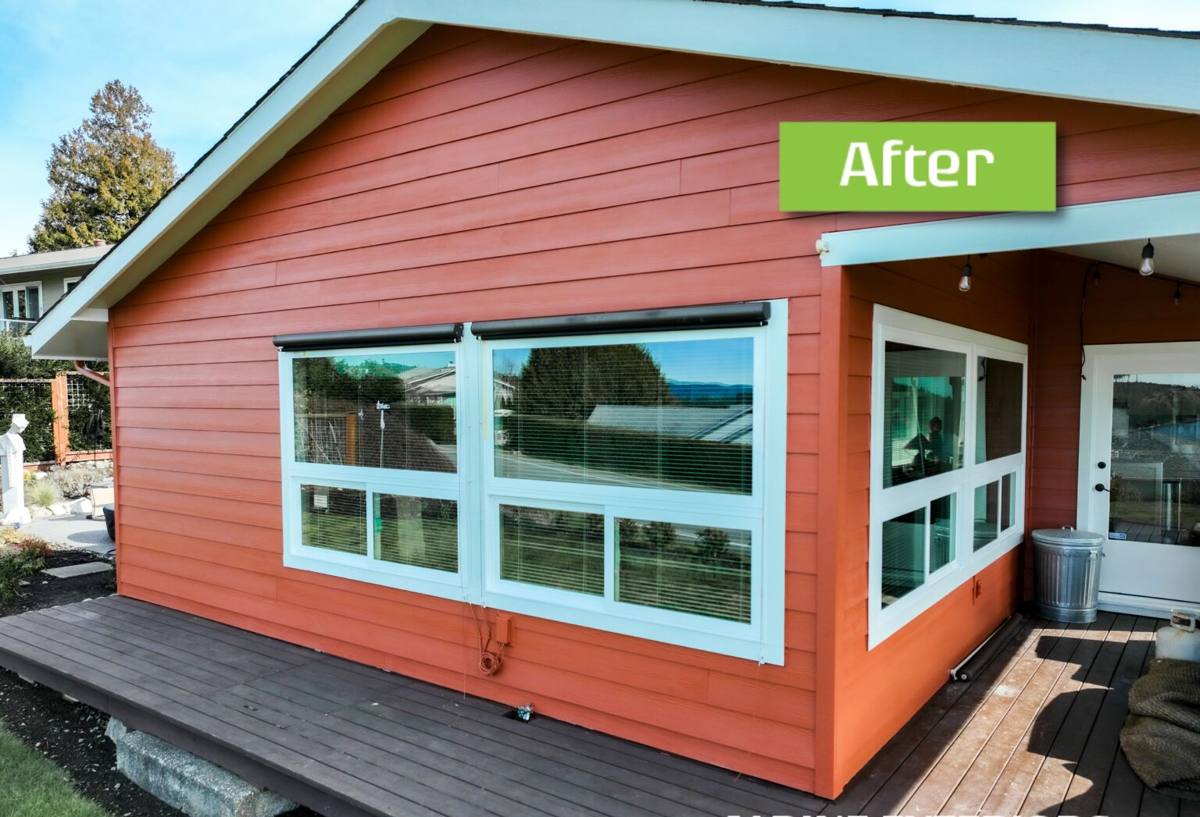
What Sumas Homes Actually Deal With
Salt Air and Slow Corrosion
Coastal-adjacent air carries fine salt particles that settle on exterior surfaces and accelerate corrosion on anything metal — hinges, cranks, locks, and lesser-grade fasteners. Over years, this shows up as stiff or seized hardware, streaking on frames, and premature pitting on components that were never rated for a marine-influenced environment. Windows spec'd for a dry inland climate often use hardware that simply wasn't built for this.
Driving Rain and Wind-Driven Water
Whatcom County storms don't always come straight down. Wind-driven rain pushes water sideways against a home's envelope, testing every seam around a window opening. A window can be perfectly good and still leak if the flashing, sill pan, and sealant details around it are wrong. This is genuinely more about installation than product — a premium window installed with poor water management will underperform a mid-grade window installed correctly.
Moss, Mildew, and Extended Damp Season
Long stretches of overcast, damp weather keep humidity elevated for months at a time. On window components with poor drainage or ventilation — clogged weep holes, packed-in debris, wood trim without adequate protection — you get slow moisture accumulation, mildew staining, and in older wood-frame windows, eventual rot at the sill and lower corners. This is a maintenance and design issue as much as a product one.
Condensation From Temperature Swings
Cool, humid air meeting a warmer interior creates condensation risk on interior glass and, in poorly detailed frames, inside the frame cavity itself — where it's much harder to catch early. Proper glazing selection and frame construction reduce this; ignoring it invites hidden moisture damage over time.
What "Correct" Looks Like for This Area
A properly specified window for a Sumas home accounts for exposure, orientation, and the age and construction of the house itself. There isn't a single right answer for every wall — a window facing prevailing weather needs different attention than one tucked under an eave on a sheltered side.
| Consideration | Why It Matters Here |
|---|---|
| Frame material | Needs to resist moisture absorption and corrosion without excessive maintenance |
| Hardware grade | Salt-air exposure accelerates wear on standard-grade cranks, hinges, and locks |
| Glazing/seal quality | Multi-pane seals under constant humidity cycling need to hold up over decades, not just pass initial inspection |
| Drainage design | Weep systems must stay clear and functional through moss/algae season |
| Flashing and sill pan detail | This is what actually stops wind-driven rain from getting behind the window, regardless of product tier |
| Orientation on the house | Weather-facing walls warrant more conservative material choices than sheltered elevations |
We walk through these factors with every homeowner before recommending a specific product line, rather than pushing a single "best" window for every wall of the house.
Our Process for a Sumas Window Job
1. On-Site Assessment
We look at each opening individually — current frame condition, evidence of past water intrusion, sill and header condition, and how exposed that particular wall is to prevailing weather. Two windows on the same house can need different approaches.
2. Honest Scope Conversation
We tell you what we find, including anything that isn't purely a "window" issue — rot in framing, inadequate flashing from a prior install, or siding conditions that affect the work. If a wall needs more than a window swap to be done right, we'll say so before starting, not after.
3. Removal Without Collateral Damage
Old windows and their surrounding trim come out carefully, with attention to what's underneath. This is where hidden moisture damage from years of marginal flashing often surfaces — better to find it now than to seal it back in.
4. Proper Flashing and Water Management
This is the step that actually determines whether a window stays dry for the next 20 years. Sill pans, flashing tape, and integration with the home's weather-resistive barrier are done in the correct sequence — shingle-lapped so water is always directed outward, never trapped.
5. Installation and Air/Water Sealing
The window is set plumb, level, and square, shimmed correctly to avoid stress on the frame, and sealed with materials rated for sustained damp exposure rather than a generic caulk.
6. Final Check and Walkthrough
We test operation, check seals, and walk you through what routine maintenance looks like for the specific product installed — because even the right window still needs some upkeep in this climate.
Maintenance Expectations for This Climate
No window is truly maintenance-free once it's dealing with salt air and extended damp seasons. Setting realistic expectations up front avoids surprises later.
- Rinse exterior frames periodically to clear salt residue, especially on weather-facing sides
- Keep weep holes clear of moss, dirt, and debris so water can actually drain
- Lubricate hardware (hinges, cranks, locks) on a regular schedule to slow corrosion
- Inspect exterior caulking and sealant annually for cracking or separation
- Watch for early signs of interior condensation between panes — a sign a seal may be failing
- Trim back vegetation or moss growth near sills and trim to reduce trapped moisture
Where Corners Get Cut — And Why We Don't
Not every window problem in this area is a bad product. Most of the leaks and rot we get called out for trace back to installation shortcuts, not the window itself. A few things we hold as a standard rather than an upsell:
Sill pans on every installation. Skipping a sill pan is faster, but it removes the last line of defense if water ever gets past the primary seal. On a wall exposed to driving rain, that's not a risk worth saving an hour on.
Matching hardware grade to exposure. Standard hardware on a weather-facing window in a salt-air zone will corrode faster than the glass and frame around it. We spec accordingly rather than defaulting to the cheapest option across the board.
Sequenced flashing integration. Flashing has to tie into the home's existing weather barrier in the right order. Doing it out of sequence looks fine on installation day and fails quietly, years later, inside the wall.
These aren't add-on charges dressed up as "premium service" — they're what a correct installation requires in this specific climate, and we build them into the base of the job.
Full Replacement vs. Repair: How to Think About It
Not every problem window needs full replacement. Sometimes a failed seal, a damaged sash, or worn hardware can be addressed without touching the frame. But there are signs that point toward replacement being the more honest long-term answer rather than a patch that buys a season or two.
| Sign | Repair Often Enough | Replacement Usually Better |
|---|---|---|
| Fogging between panes (seal failure) | Occasionally, on a newer unit | Yes, if recurring or on an older window |
| Stiff or corroded hardware | Yes, if frame is sound | Only if hardware isn't serviceable |
| Soft or rotted sill/frame wood | Rarely | Yes — structural moisture damage |
| Drafts around a sealed unit | Sometimes, with re-sealing | Yes, if frame has warped or shifted |
| Persistent leak history on that opening | Rarely fixes root cause | Yes — usually a flashing/installation issue best solved with reinstall |
We'll give you a straight answer on which category a given window falls into rather than defaulting to the higher-cost option.
Why It Matters to Hire a Crew That Already Works This Area
A contractor who mostly works drier, inland jobs can still install a window correctly by the book — but "by the book" for a generic climate isn't the same as what a Sumas home actually needs. Knowing how far the salt-air exposure typically reaches, which wall orientations in this area take the worst of the driving rain, and how aggressive moss growth gets on north-facing trim isn't something you get from a spec sheet. It comes from doing this work locally, on homes with the same weather patterns, season after season.
That local familiarity shows up in small decisions during a job — which sealants actually hold up through a wet Whatcom County winter, how much drainage margin to build in, when a "just replace the window" job is really a "check the framing first" job. Those calls are easier to get right when they're not your first time seeing this climate's specific failure patterns.
Get a Straight Estimate for Your Sumas Home
If you're dealing with drafty, foggy, or hard-to-operate windows, or you're planning ahead for a full replacement, we're happy to take a look and give you an honest read on what your home actually needs — no pressure, no inflated scope. Use the form below to request a free estimate.