 Blaine Roofing
 Storm Damage Roof Repair, Built for Lynden's Weather
Lynden sits inland in the Nooksack River valley, in the northern part of Whatcom County near the Canadian border. It doesn't take a named windstorm to put a roof here under real stress. A stretch of driving rain pushed sideways by wind, a heavy gust that lifts a run of shingles along a ridge, or months of slow moisture buildup under a moss mat can all do the same kind of damage a single dramatic storm gets blamed for. What matters after any of it is the same: find out exactly what the roof took, fix it correctly, and stop it from becoming a bigger problem than it needs to be.
We run a local crew that works Whatcom County roofs through all of it — the windstorms, the weeks of steady rain, and the long stretch of mild, damp weather in between that lets moss and organic growth take hold. That local pattern-recognition is the difference between a repair that actually holds and one that gets you through the next inspection but fails again at the next storm.
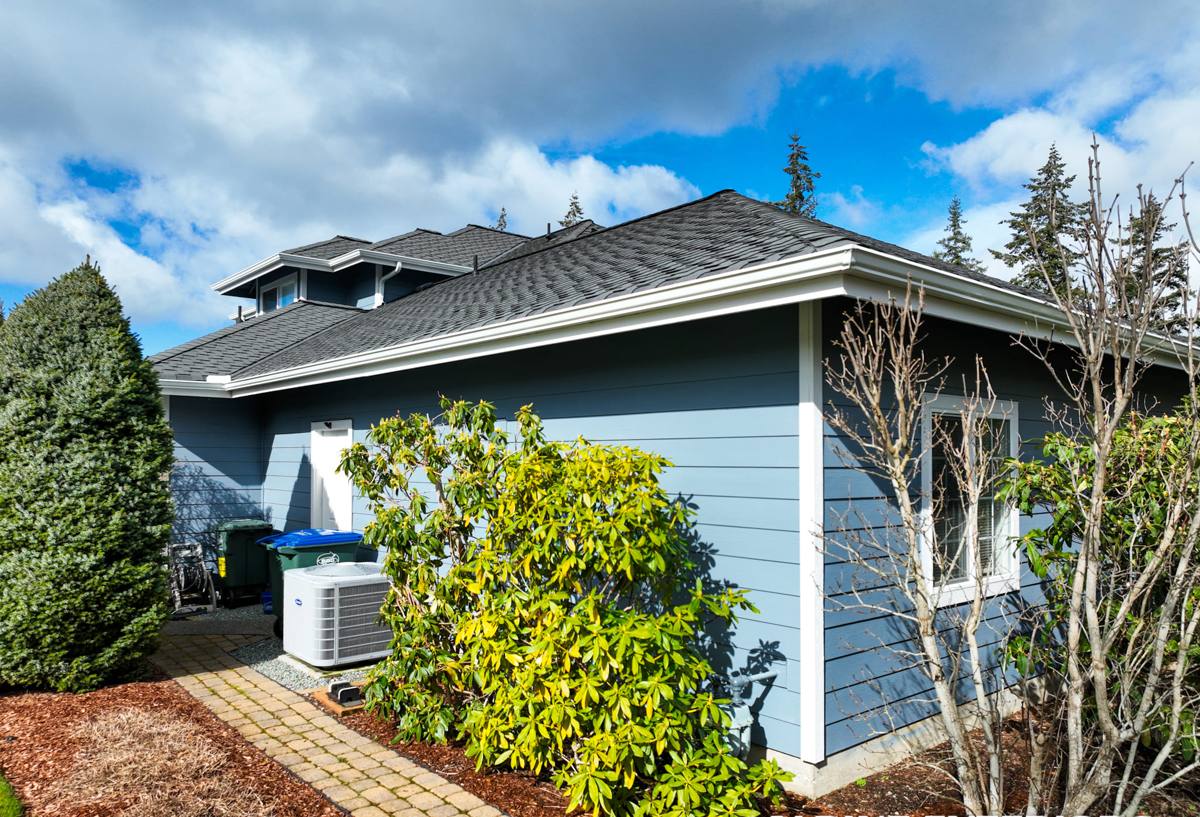
What Storm Damage Actually Looks Like on a Lynden Roof
Storm damage isn't always a dramatic hole or a pile of shingles in the yard. Most of what we find is quieter, and homeowners often don't know it's there until a leak shows up inside the house, sometimes weeks after the weather event that caused it.
Wind Damage
Wind doesn't need to be extreme to do damage — it needs to be directional and sustained. Gusts moving up a roof slope can lift shingle edges, break the seal strip that holds them flat, and crease or crack the shingle itself even if nothing blows off entirely. A shingle with a broken seal may sit back down and look fine from the ground while still letting wind-driven rain work underneath it during the next storm.
Wind-Driven Rain Intrusion
Rain in this valley frequently arrives at an angle instead of falling straight down, which pushes water into places a roof isn't designed to shed water from directly — under shingle tabs, up and under flashing at valleys and chimneys, and into gaps where fasteners have backed out or corroded. This is the most common storm-related cause of interior leaks we see, and it rarely shows up as an obvious point of entry.
Impact and Debris Damage
Branches and debris coming off nearby trees during high wind can bruise or puncture shingles, crack ridge caps, and dent or tear flashing. Even a glancing hit can compromise a shingle's water resistance without leaving a hole you'd notice from a ladder-free look at the roof.
Moss-Weakened Roofing That Fails Under Storm Load
A roof that's already carrying a heavy moss mat going into a storm season is more vulnerable, not less. Moss holds water against the roofing surface, works under shingle edges over time, and can lift or loosen roofing that would otherwise have shed wind-driven rain without issue. A storm often finishes off what a season of unchecked moss growth already started.
Why a Correct Repair Matters More Here Than Elsewhere
A roof repair that's technically patched but not built for this climate tends to fail again, often at the exact same spot, within a season or two. That's because the underlying conditions — salt-tinged marine air moving up the valley, wind-driven rain, and a long moss season — don't go away once the visible damage is fixed. A repair has to account for what put the roof in that position in the first place, not just cover the symptom.
| Repair Element | What a Shortcut Repair Does | What a Correct Repair Does |
|---|---|---|
| Damaged shingles | Replaces only the shingles that are visibly missing or torn | Checks the surrounding field for lifted seals and hidden creases, not just the obvious damage |
| Underlayment | Patches over existing underlayment if it looks intact | Inspects underlayment condition where shingles were removed, replacing any saturated or degraded sections |
| Flashing | Re-seals flashing with caulk or sealant as a quick fix | Re-laps or replaces flashing so water sheds correctly without relying on sealant alone |
| Fasteners | Reuses existing nail holes and hardware | Replaces corrosion-prone fasteners with hardware rated for sustained damp, salt-influenced air |
| Decking | Assumes the deck is fine if there's no visible sag | Checks deck condition under removed shingles for soft spots from slow moisture intrusion |
The gap between these two approaches usually isn't dramatic in cost, but it's the difference between a repair that holds through the next several storm seasons and one that reopens the same leak a year later.
Insurance Claims and Storm Repairs
If the damage is significant enough to involve a homeowner's insurance claim, we can document what we find with a written assessment and photos to support that process. We're not in the business of inflating a claim or telling you a roof needs full replacement when a targeted repair will do — our job is to give you an honest read on what actually happened to the roof, and let that drive the decision, not the other way around.
Our Process for a Lynden Storm Repair Call
- Inspection. We get on the roof, not just look from the ground, and check the full roof surface for damage related to the storm event — not only the spot you called about.
- Assessment and documentation. We document what we find with photos and a written explanation of the damage and its likely cause, useful whether or not an insurance claim is involved.
- Honest scope recommendation. We tell you plainly whether this is a targeted repair, a larger repair, or a case where a full re-roof genuinely makes more sense — and explain why.
- Written estimate. You get a clear, itemized estimate before any work starts, so there's no ambiguity about scope or cost.
- Repair work. We complete the repair with materials and methods suited to this climate, not the cheapest patch that will pass a quick look.
- Follow-up check. After the repair, we confirm the area is sealed and performing as expected, particularly through the next round of wet weather.
When a Repair Makes Sense — and When It Doesn't
Not every storm-damaged roof needs a full replacement, and not every roof can be safely limited to a patch. The right call depends on the roof's overall age and condition going into the storm, not just the size of the damaged area.
- A roof under roughly 10-15 years old with isolated, storm-related damage is usually a good repair candidate
- An older roof that was already showing wear — widespread moss, brittle or curling shingles, multiple prior repairs — may have the storm damage be the tipping point toward replacement
- Damage concentrated in one area, like a single slope or valley, generally repairs cleanly if the surrounding roofing is sound
- Damage scattered across multiple slopes often signals the whole roof surface is at a similar age and condition, which changes the repair-versus-replace math
- A roof with existing decking damage from long-term moisture, discovered during the repair, may need more extensive work than the storm damage alone suggested
We'll walk you through which situation yours is honestly, including telling you when a repair is the right, cost-effective answer rather than pushing a bigger job than the roof needs.
Preventing the Next Storm From Doing the Same Damage
Once a storm repair is done, there are a few practical things that reduce the odds of a repeat problem, particularly given how often this valley sees wind-driven rain and a long moss season.
A Few Practical Checks Worth Doing Between Storms
- Keep gutters and downspouts clear so storm rain has somewhere to go instead of backing up under the roof edge
- Trim back branches that overhang the roof, since they're a common source of both debris impact and shaded, moss-friendly roof areas
- Have moss addressed before it builds into a thick mat, especially on shaded, north-facing slopes
- Get an inspection after any significant wind event, even if nothing looks obviously wrong from the ground
- Address minor flashing or fastener issues promptly rather than waiting for them to become a leak
None of this eliminates storm exposure entirely — nothing does in this part of Washington — but it meaningfully reduces how much damage a given storm actually does to the roof.
Why a Local Crew Matters for Storm Repair Specifically
Storm repair work has a time-sensitive element that other roofing jobs don't always have. A damaged roof left exposed between the storm and the repair is a roof that's actively taking on more water with every additional rain event. A crew that's already working in and around Lynden and the rest of Whatcom County can respond faster than one that has to travel in from outside the area, and doesn't disappear once the immediate repair is done if a follow-up issue shows up.
It's also worth being cautious after any significant storm about door-to-door or out-of-area crews offering fast, cheap repairs. Some do fine work, but many aren't positioned to stand behind a repair a year or two later if something doesn't hold. A local, established crew has a reason to get the repair right the first time, because they're the ones you'll call if it doesn't.
If you've got storm damage on a Lynden roof, or you're not sure whether what you're seeing needs attention, we're glad to take a look and give you a straightforward, no-pressure written estimate — no obligation, just an honest read on what the roof actually needs.