 Blaine Roofing
 Storm Damage Roof Repair Built for Birch Point's Exposure
Birch Point sits close to the water, and that changes what a roof has to deal with compared to a home a few miles inland. Wind comes off the water with fewer obstructions to slow it down, rain gets driven sideways into laps and flashing that were never meant to handle horizontal water, and the salt-laden air speeds up corrosion on anything metal. Add in Whatcom County's long, damp shoulder seasons and you get a roof that ages differently than one in a drier, more sheltered part of the region. Storm damage repair here isn't just patching a hole — it's understanding why that spot failed in the first place and making sure the fix holds up under the same conditions that caused the problem.
We work on roofs in this area regularly, which means we're not guessing at how a Birch Point roof behaves in a windstorm or an atmospheric river event. We've seen the patterns repeat: the same ridge caps that lift first, the same low-slope transitions that back up water, the same fastener heads that corrode ahead of schedule near the shoreline.
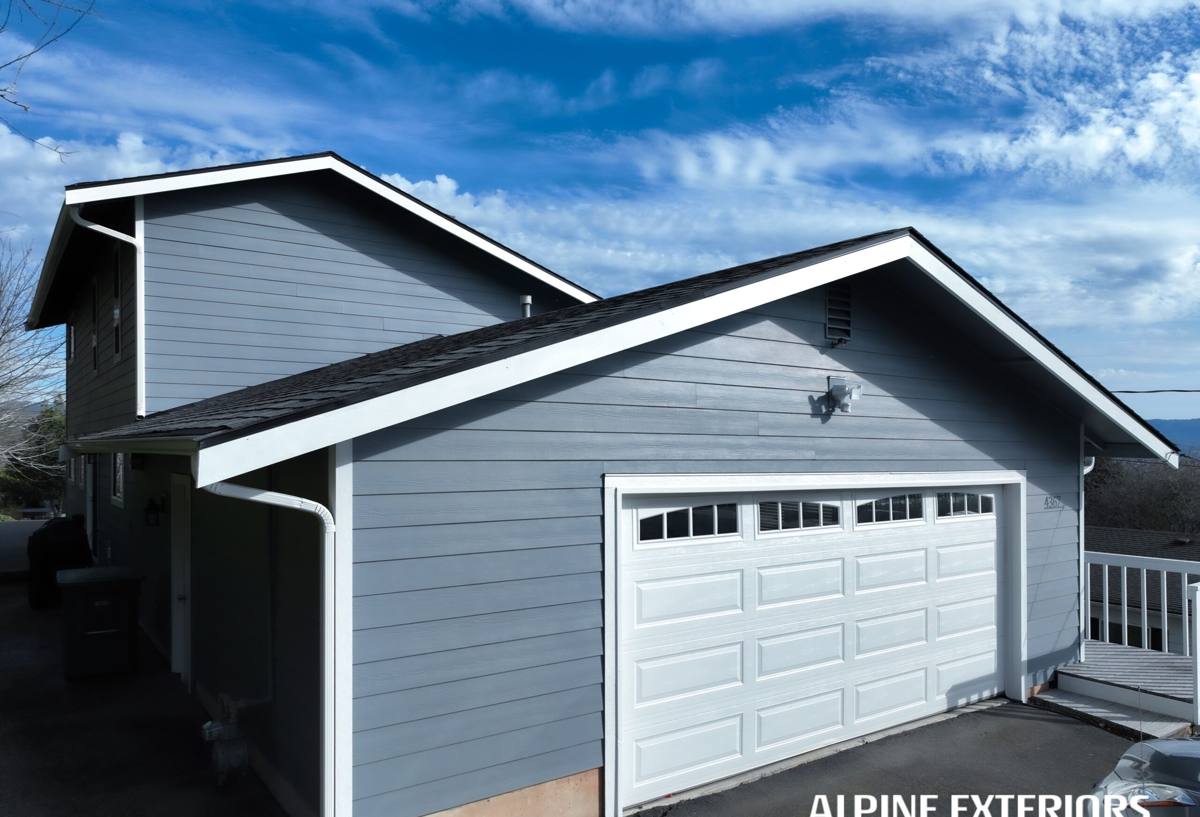
How Storms Actually Damage Roofs in This Part of Whatcom County
Wind and Wind-Driven Rain
Straight-line wind off the water doesn't just push against a roof — it gets underneath shingle edges and ridge caps that have lost adhesion, prying them up further with each gust. Once a shingle or cap is lifted even slightly, wind-driven rain finds its way behind it. That water doesn't need a hole to get into your attic; it just needs a path, and a lifted edge or a stressed seal is enough.
Salt Air and Metal Components
Flashing, fasteners, gutters, and vent caps all take a harder hit near the water than they would further inland. Salt in the air accelerates corrosion on exposed metal, and once a fastener or flashing seam starts to corrode, it stops doing its job as a water barrier well before it looks obviously "broken." This is one of the more common causes of slow leaks we find in this area — not a single dramatic storm, but ordinary weather working on already-weakened metal.
Moss and Prolonged Moisture
Whatcom County's moss season runs long, and a roof that stays damp for weeks at a time gives moss and algae plenty of time to establish. Moss holds moisture against the roofing material, works into laps and under shingle tabs, and can lift material enough to create the same kind of entry point that wind does. A storm that wouldn't cause damage on a clean, well-maintained roof can cause real damage on one where moss has already compromised the surface.
Signs a Birch Point Roof Has Storm Damage
Some storm damage is obvious. A lot of it isn't, especially from ground level. Here's what we'd want you to check after any significant wind or rain event:
- Shingles or ridge cap pieces missing, cracked, or visibly lifted at the edges
- Granules collecting in gutters or at downspout outlets after a storm
- New or worsening water stains on interior ceilings, especially near exterior walls
- Soft or spongy spots when walking a low-slope section (never do this without proper footing and caution)
- Flashing around chimneys, vents, or skylights that looks bent, separated, or rusted at the edges
- Daylight visible through the attic roof deck where there shouldn't be any
- Gutters pulling away from the fascia or sagging after heavy wind
- Moss buildup that's thicker or spreading faster than in previous seasons
If you see two or more of these after a storm, it's worth getting a proper inspection before the next weather system moves through.
What a Correct Storm Damage Repair Actually Involves
A rushed repair after a storm often just covers the visible damage without addressing why it happened. That's how the same spot ends up leaking again after the next windstorm. A repair done right includes:
- Full inspection, not a spot check. We look at the whole roof plane, not just where you saw the stain, because wind damage often shows up in more than one place.
- Deck assessment. If water has been getting in for a while, the roof deck underneath may be soft or delaminating. Replacing shingles over a compromised deck doesn't fix anything.
- Flashing and fastener check. Given how much of the damage in this area traces back to corroded or failed metal, we check flashing and fastener condition even in areas that look fine from above.
- Matching materials correctly. Repairs should tie into existing roofing in a way that sheds water the way the original installation intended — not just cover the gap.
- Sealing for the exposure, not the average case. A repair on a waterfront-adjacent roof needs sealing details that account for wind-driven rain, not just standard installation spacing.
Repair vs. Replacement — What Actually Determines the Right Call
| Situation | Repair Usually Makes Sense | Replacement Should Be Considered |
|---|---|---|
| Roof age | Under 10–12 years, otherwise sound | Nearing or past expected material lifespan |
| Damage extent | Isolated to one section or a few components | Spread across multiple planes or recurring in different spots |
| Deck condition | Solid, no soft spots found | Soft, delaminating, or repeatedly wet decking |
| Prior repair history | First or second repair on this roof | Third or more repair in the same general area |
| Underlying materials | Flashing and fasteners still sound | Corrosion found beyond the immediate damage site |
We'll tell you honestly which category your roof falls into rather than defaulting to the more expensive option. Sometimes a solid repair genuinely is the right call, and we'll say so.
Our Process for Storm Damage Calls in Birch Point
When you call us about storm damage, here's what to expect: we schedule an inspection promptly, especially if you've got active water intrusion, and we document what we find with photos so you have a clear record. We explain what caused the damage in plain terms — not just what's broken, but why — and give you a written scope before any work starts. If the damage is minor, we tell you that too; we're not looking to turn a small repair into a bigger job than it needs to be.
For homes where the damage ties back to insurance-covered events (wind, falling debris, and similar), we provide documentation that supports a claim, though the claim itself is between you and your insurer.
Materials and Installation Standards for This Exposure
Near the water, we're more particular about a few things than we might be on an inland job. We favor corrosion-resistant flashing and fastener specifications appropriate to salt-air exposure, because standard-grade metal simply doesn't hold up as long here. We pay close attention to sealing details at ridge caps and hip lines, since those are the components wind gets under first. And we factor moss resistance into material choices where it makes sense, since a roof that resists moss buildup is a roof that's less likely to sustain hidden damage between storms.
None of this is about pushing premium products for their own sake — it's about matching the repair to the conditions the roof actually faces. A fastener or sealant that performs fine in a drier, more sheltered location isn't always the right choice a few hundred yards from open water, and we'd rather spec it correctly the first time than have you calling us back after the next storm.
Why Local Experience Matters for This Kind of Repair
A crew that hasn't worked waterfront-adjacent roofs in Whatcom County can miss the details that matter here — the flashing that needs a different spec, the ridge detail that needs extra attention, the moss pattern that signals a bigger moisture problem. We work in Blaine and the surrounding communities, including Birch Point, regularly enough to know how these roofs behave through a full wet season, not just how they look on the day of the inspection. That familiarity is part of what keeps a repair from becoming a repeat visit.
Get an Honest Look at Your Roof
If a recent storm has you wondering whether your roof took damage, or you've noticed one of the warning signs above, it's worth getting a straightforward inspection before the next system rolls in off the water. We'll give you a clear, no-pressure assessment of what we find and what your real options are — use the form below to request a free estimate.