 Blaine Roofing
 Why Siding Fails Faster in Ferndale
Ferndale sits in the stretch of Whatcom County between Bellingham and Blaine, close enough to the water that homes here deal with a version of siding wear that inland Washington towns simply don't see. It's not one big storm that does the damage — it's the accumulation of three things working on a wall, year after year, for decades.
First is salt-laden air moving off the coast. Airborne salt is corrosive to fasteners, trim, and paint film, and it accelerates the breakdown of siding materials that aren't built to resist it. Second is driving, wind-pushed rain, which behaves differently than a straight-down rainstorm — it gets pushed sideways into seams, laps, and butt joints that were never designed to shed water horizontally. Third is moss. Whatcom County's long wet season, combined with tree cover and north-facing walls that rarely see direct sun, gives moss and algae months at a time to establish themselves on a siding surface. Once organic growth takes hold, it holds moisture against the substrate far longer than bare siding ever would.
None of these three things is dramatic on its own. Together, over ten or fifteen years, they're the reason a lot of Ferndale homes end up needing siding work well before a homeowner expected to think about it.
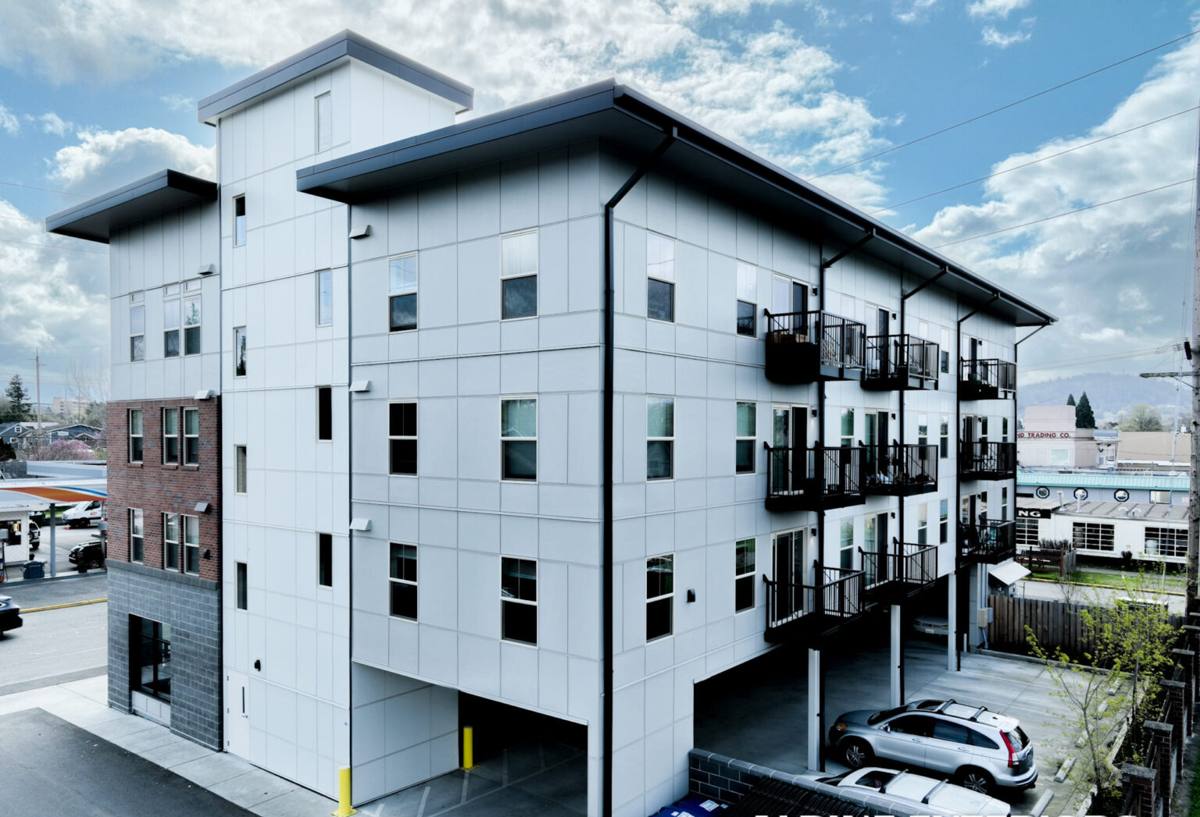
Signs a Ferndale Home Needs Siding Replacement, Not Just Repair
Not every siding problem calls for a full replacement, but there's a point where patching individual boards or panels stops making financial sense and starts just delaying the inevitable. Here's what we look for during an assessment:
- Soft or spongy spots when you press on the siding, especially near the bottom courses and around windows
- Persistent moss or dark streaking that comes back within a season or two of cleaning
- Paint that's peeling, bubbling, or chalking heavily rather than just fading
- Visible warping, cupping, or buckling of individual boards or panels
- Gaps opening up at seams, corners, or where siding meets trim
- A musty smell or visible staining on interior walls that back up to exterior siding
- Rising heating bills that aren't explained by anything else — often a sign the siding and its underlying barrier are no longer doing their job
One or two of these on a single wall might mean a repair. Several of them spread across the house, or any sign of moisture reaching the sheathing underneath, usually means it's time to talk about full replacement.
What a Correct Siding Replacement Actually Involves
It Starts Underneath the Siding, Not With It
The siding itself is the part homeowners see, but the work that actually determines whether a job lasts happens underneath it. A correct replacement means full tear-off of the old material, an inspection of the sheathing for rot or soft spots, and repair of anything compromised before a single new piece goes up. Skipping this step is the single most common shortcut that leads to callbacks — and it's invisible once the new siding is on, which is exactly why it matters who you hire.
The Weather-Resistive Barrier Is Not Optional
In a climate that pushes rain sideways for months at a time, the house wrap and flashing details behind the siding are doing as much work as the siding itself. That means correctly lapped weather-resistive barrier, properly flashed windows and doors, and drainage planes that give any moisture that does get past the siding a way out instead of a place to sit. This is detail work — it doesn't show up in a driveway estimate, but it's the difference between siding that performs for decades and siding that looks fine for a few years before problems start showing up on the inside.
Installation to Manufacturer Spec
Fiber cement siding has specific installation requirements — fastener spacing and type, minimum clearances from grade and roof lines, proper caulking at penetrations, and correct field-cutting and sealing of cut edges. Installed to spec, it holds up to everything Whatcom County weather can throw at it. Installed loosely — wrong fasteners, missed clearances, unsealed cuts — it can develop the same moisture problems people replace siding to get away from. This is why installation quality matters as much as the product choice itself.
Why We Only Install James Hardie Fiber Cement
We get asked fairly often why we don't offer vinyl, LP SmartSide, or cedar as options. It's a fair question, and the honest answer is that we made a standard for ourselves based on what holds up in this specific climate over the long run.
| Material | How It Handles Salt Air & Driving Rain | Moss & Moisture Behavior | Long-Term Maintenance |
|---|---|---|---|
| Vinyl | Doesn't corrode, but can warp, crack, or fade under UV and temperature swings; seams can allow wind-driven rain behind panels | Doesn't feed moss itself, but traps moisture behind it if installed loosely | Low, but limited repair options once brittle with age |
| LP SmartSide (engineered wood) | Performs well if maintained, but wood-based substrate is vulnerable if moisture reaches cut edges or seams | Requires diligent sealing and repainting to keep moisture and organic growth out | Higher — regular inspection and recaulking needed |
| Cedar | Naturally attractive but softens and checks under sustained wet-dry cycling; salt air accelerates weathering | Prone to moss and mildew without frequent treatment | Highest — refinishing and treatment on a recurring schedule |
| James Hardie fiber cement | Non-combustible, dimensionally stable; engineered HZ5 formulation for Pacific Northwest wet climates | Resists moisture absorption and doesn't feed organic growth; factory finish sheds water at the surface | Low — periodic washing, no recurring refinishing |
Each of those materials has legitimate strengths, and plenty of homes around the country do fine with them. Our decision comes down to what we've seen hold up, unmaintained-for-a-few-years-because-life-happens, in a climate that doesn't give siding much of a break. James Hardie's fiber cement is non-combustible, engineered specifically for wet regions through its HZ5 product line, holds a factory-applied ColorPlus finish that resists the fading and chalking we see on painted siding out here, and carries a strong transferable warranty. When it's installed correctly, it's the product we're most comfortable standing behind on a Ferndale roofline for the next thirty-plus years.
Our Process for a Ferndale Siding Replacement
- On-site assessment. We walk the exterior, check for soft sheathing, moisture intrusion, and existing damage, and identify problem areas specific to sun exposure, wind direction, and moss buildup on your particular lot.
- Scope and product selection. We go over Hardie board profiles, textures, and ColorPlus color options suited to the home, and confirm the correct HZ product for our zone.
- Tear-off and sheathing repair. Old siding comes off, sheathing is inspected and repaired where needed, before anything new is installed.
- Weather barrier and flashing. House wrap, window and door flashing, and drainage details go in first — this is the layer that protects the home even if siding is ever damaged later.
- Installation to spec. Fastening, clearances, and sealed cut edges are done to Hardie's published installation requirements, not shortcuts.
- Final walkthrough. We review the finished work with you and go over basic care so the siding performs the way it's designed to.
What Drives the Cost of a Siding Replacement
| Factor | Why It Matters |
|---|---|
| Total square footage of exterior wall | The main driver of material and labor cost |
| Number of stories and roofline complexity | Affects access, staging, and safety requirements |
| Condition of the sheathing underneath | Hidden rot or moisture damage adds repair scope once tear-off begins |
| Trim, window, and corner detail work | More cuts and flashing details increase labor time |
| Siding profile and finish selected | Lap width, texture, and color options vary in material cost |
| Site access | Tight lots, landscaping, or limited driveway access can affect staging and timeline |
We won't quote a number without seeing the home — anyone who does is guessing — but these are the factors that move a project up or down, and we walk through each one with you during the estimate.
Why It Matters That We Already Work in Ferndale
A siding replacement isn't just a materials question — it's a judgment call on dozens of small decisions specific to how a particular house sits on a particular lot. A crew that already works Ferndale and the surrounding Whatcom County area knows which wall orientations take the worst of the wind-driven rain, which neighborhoods deal with heavier moss growth from tree cover, and what local permitting and inspection expects. That local familiarity shows up in fewer surprises during the job and a longer-lasting result once it's done. It also means we're not driving in from out of the area for warranty work or follow-up questions — we're already here.
Caring for Hardie Siding After Installation
One of the practical advantages of switching to fiber cement in this climate is how little upkeep it asks for compared to what most Ferndale homeowners are used to. There's no repainting cycle to plan around and no annual sealing schedule. A rinse with a garden hose once or twice a year keeps salt residue and early moss growth from building up, and it's worth a quick visual check after major windstorms for any loose trim or caulking that needs attention. That's a meaningfully lighter maintenance load than cedar or engineered wood siding asks for in this same climate.
Get a Straightforward Look at Your Siding
If your Ferndale home is showing any of the wear signs above, or if you're just not sure whether you're looking at a repair or a replacement, we're happy to take a look and give you an honest read — no pressure, no upsell. Fill out the form below to schedule a free estimate.