 Blaine Roofing
 Why California Creek Siding Wears Differently
Homes in the California Creek area sit close enough to the water and the open weather patterns that roll through Whatcom County that siding here works harder than siding fifty miles inland. Salt-laden air off the strait carries moisture and fine particulate that settles on exterior surfaces year-round, not just during storms. Add in driving, wind-blown rain that hits walls at an angle rather than straight down, and a moss season that can stretch from late fall well into spring, and you have three separate stresses converging on the same wall assembly.
None of these stresses is dramatic on its own. The damage shows up slowly — a soft spot near a butt joint, a paint film that keeps failing in the same spot every couple of years, a green cast on the north side that pressure washing only knocks back for a few months. By the time it's visible, the siding has usually been losing the fight for longer than most homeowners realize.
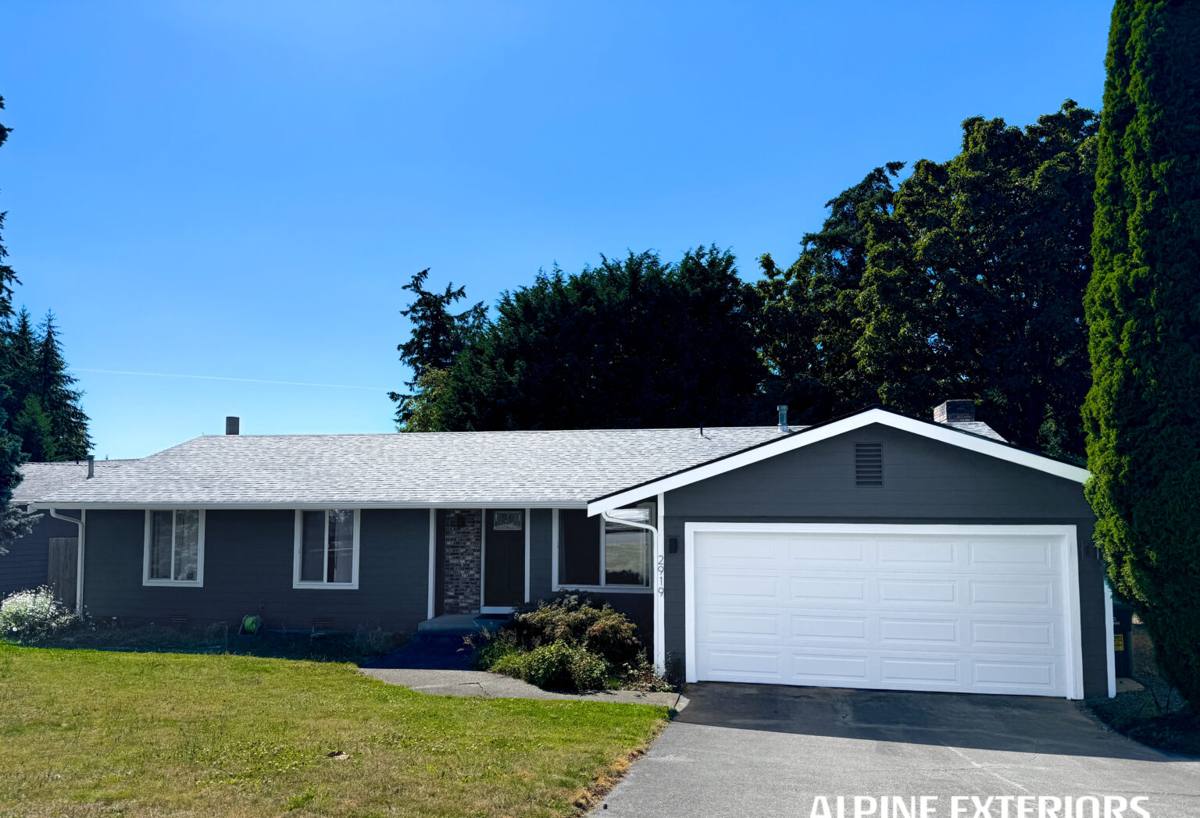
What Salt Air, Rain, and Moss Actually Do to Siding
Salt Air
Airborne salt is hygroscopic — it pulls moisture out of the air and holds it against whatever surface it lands on. On wood-based or wood-composite siding, that means the surface stays damp longer than it would inland, which accelerates paint breakdown and gives fungal growth a head start. On fasteners and flashing, it accelerates corrosion, which is why fastener choice matters as much as the siding material itself in this area.
Driving Rain
Wind-driven rain doesn't just wet the face of the siding — it gets pushed into laps, joints, and any gap in the water-resistive barrier behind the siding. A siding system that relies purely on caulk or paint film to stay watertight will eventually fail here. What holds up is a system with proper lap geometry, correctly flashed penetrations, and a drainage plane behind the cladding that can move incidental water back out.
Moss and Sustained Dampness
Moss itself rarely destroys siding directly, but it's a marker of a bigger problem: a surface that stays wet longer than it should. Moss holds moisture against the siding face, shades it from the drying effect of sun and wind, and its root structure can work into hairline cracks or checked paint film. On siding that's already marginal, sustained moss coverage is often the tipping point that turns a cosmetic issue into a structural one.
Signs Your California Creek Home Needs Siding Replacement, Not Just Repair
- Soft or spongy spots when you press on the siding, especially near the bottom courses or around window and door trim
- Paint that fails repeatedly in the same locations within a year or two of repainting
- Visible gaps, warping, or cupping at panel edges or lap joints
- Persistent moss or dark staining that returns within months of cleaning
- Bubbling, delamination, or a chalky, crumbling texture on the siding surface
- Interior signs — musty smell, discoloration on interior walls near exterior corners, or trim that feels damp to the touch
- Siding that's original to a home built more than 20-25 years ago, particularly wood or older composite products
A few of these can sometimes be addressed with targeted repair. Multiple items on this list, especially combined with soft spots or interior moisture signs, usually point to a wall assembly that's past the point where patching makes sense.
What a Correct Siding Replacement Actually Involves
Siding replacement is not simply pulling off old panels and nailing up new ones. In a climate like this, most of the long-term performance is determined by what happens before the new siding ever goes on the wall.
Tear-Off and Wall Inspection
Once the old siding is off, the sheathing underneath tells the real story. This is where hidden rot, compromised framing, or a water-resistive barrier that failed years ago gets found. Any soft or damaged sheathing needs to be cut out and replaced — covering it back up with new siding just resets the clock on the same failure.
Water-Resistive Barrier and Flashing
A new weather-resistive barrier gets installed correctly lapped, shingle-style, so water sheds downward and out rather than behind the barrier. Windows, doors, and any wall penetration get properly flashed and integrated into that barrier — this is the single most common place we find shortcuts on older installs, and it's the detail that determines whether a home stays dry through a driving rain event.
Drainage Plane
Depending on the wall assembly, a rainscreen or drainage gap behind the siding gives incidental moisture a path to escape rather than sitting trapped against the back of the cladding. In an area with this much sustained dampness, that airspace is what keeps a wall assembly drying out between rain events instead of staying chronically damp.
Installation to Manufacturer Spec
Fastener type, fastener spacing, gap and clearance requirements, and caulking locations all matter. James Hardie publishes specific installation requirements for exactly this reason — the product performs as engineered only when it's installed to spec, and most of the failures we see traced back to an installer who skipped a step, not a flaw in the material.
Why We Install Only James Hardie Fiber Cement
We get asked regularly why we don't offer vinyl, LP SmartSide, cedar, or other fiber cement brands. The honest answer is that we've made a standard, and it's based on what holds up in this specific climate over the long haul, not on what's cheapest to install.
| Material | How It Performs Near the Water | Where It Falls Short Here |
|---|---|---|
| Vinyl Siding | Low cost, low maintenance in mild conditions | Can warp or become brittle with temperature swings; seams and panel movement create paths for wind-driven rain; not fire-rated |
| Cedar / Primed Spruce | Attractive, traditional look | Wood is the most moisture-sensitive option; requires ongoing refinishing to resist rot and fungal growth in a damp, salt-air climate |
| LP SmartSide / Engineered Wood | Reasonable cost, easier install than fiber cement | Wood-strand core is more sensitive to sustained moisture exposure than fiber cement; edge sealing and caulking maintenance is critical and often skipped |
| Other Fiber Cement Brands | Similar base material chemistry to Hardie | Differences in factory finish systems, engineered climate-specific product lines, and warranty structure |
| James Hardie Fiber Cement | Non-combustible, dimensionally stable, engineered moisture and climate resistance | Higher material and install cost; correct installation is more labor-intensive and installer-sensitive |
Every product on that list has honest strengths. Vinyl is affordable. Cedar looks the way a lot of homeowners want a home to look. LP SmartSide installs quickly. What none of them offer, together, is the combination of non-combustible construction, dimensional stability in a wet-dry cycling climate, and a factory-applied finish system engineered to resist the specific conditions California Creek sees — salt exposure, sustained moisture, and UV cycling. That combination is why we standardized on one product line instead of offering several.
James Hardie's HZ Product Lines and ColorPlus Finish
James Hardie engineers its siding in climate-specific formulations, sold under the HZ5 and related designations for regions like ours that see significant moisture exposure. The fiber cement composition and the way the boards are manufactured are tuned for wet-climate performance rather than a one-size-fits-all national product.
The ColorPlus finish is a factory-applied, baked-on finish system rather than field-applied paint. That matters directly for this area: a factory finish cures under controlled conditions and bonds more consistently than paint applied on-site in variable humidity, which is common in the Pacific Northwest install season. It also comes with its own finish warranty, separate from the substrate warranty, which is part of why we can stand behind the work with a transferable warranty that means something if the home changes hands.
Our Siding Replacement Process for California Creek Homes
- On-site assessment — we inspect the current siding, sheathing condition where accessible, and any known trouble spots (chronic moss areas, north-facing walls, areas near ground contact)
- Scope and product selection — HZ5 lap, panel, or shingle-style siding and trim selected to match the home and the specific exposure conditions on each elevation
- Tear-off and sheathing repair — old siding removed, sheathing inspected and repaired or replaced as needed before anything new goes back on
- Water-resistive barrier and flashing installation — correctly lapped barrier, integrated window and door flashing, and a drainage gap where the wall assembly calls for one
- Hardie installation to manufacturer spec — correct fasteners, spacing, clearances, and joint treatment
- Trim, caulking, and final detailing — the places most likely to leak if rushed get the most attention, not the least
- Final walkthrough — we go over the finished work with the homeowner before calling the job complete
What Siding Replacement Typically Costs — And What Drives the Price
Every home is different, and we don't quote pricing without seeing the house, but the factors below are what actually move the number up or down.
| Cost Factor | Why It Matters |
|---|---|
| Home size and wall complexity | More corners, dormers, and trim details mean more labor and material waste |
| Sheathing condition underneath | Hidden rot found at tear-off adds repair scope that can't be quoted until the old siding is off |
| Siding profile chosen | Lap, shingle, and panel styles have different material and labor costs |
| Trim and detail work | Window and door trim, corner boards, and fascia detailing add labor |
| Access and site conditions | Multi-story walls, tight lot lines, or landscaping obstacles affect labor time |
| Existing drainage plane needs | Adding a rainscreen system where one doesn't exist is additional scope beyond a straight re-side |
Because tear-off often reveals conditions that weren't visible beforehand, we build room into the process for an honest conversation if something unexpected turns up — rather than either ignoring it or padding every quote to cover a worst case that may not happen.
Why Hiring a Crew That Already Works in California Creek Matters
Siding installation quality depends heavily on whether the crew understands the specific exposure conditions of the wall they're working on. A crew that mostly works drier inland areas of Whatcom County may not instinctively over-build the drainage detailing on a west-facing wall that takes direct wind-driven rain off the water. A crew that's replaced siding on other homes in this same area already knows which elevations tend to hold moss the longest, where flashing tends to have been shortcut on older builds, and how the local building department wants permitting and inspections handled.
That local pattern recognition doesn't replace following manufacturer spec — it supplements it. It's the difference between a crew that installs siding correctly everywhere they go, and a crew that installs siding correctly for this specific stretch of coastline.
If your California Creek home is showing any of the warning signs above, or you're simply due for a look at how your current siding is holding up, we're happy to come take a look. The estimate is free, there's no pressure, and you'll get a straight answer about what your home actually needs — not a sales pitch.