 Blaine Roofing
 Siding in the Peace Arch Area: A Different Kind of Climate Test
Homes near the Peace Arch border crossing sit right where the Salish Sea meets the wettest stretch of Whatcom County's weather calendar. That combination — salt-laden air off the water and a marine rain pattern that barely lets up from October through May — puts more stress on exterior siding here than in most inland parts of Washington. It's not dramatic, catastrophic stress. It's slow, cumulative stress: the kind that shows up as soft trim boards, peeling paint, and swollen panel edges five or ten years before a homeowner expects to be dealing with any of it.
We've installed and repaired siding on enough homes in this part of Blaine to know what holds up here and what doesn't. This page is about one job, done right, for one area: siding installation for Peace Arch-area homes, with the actual climate factored into every decision — not just the material choice, but the flashing details, the fastening, and the drainage plan behind the finished wall.
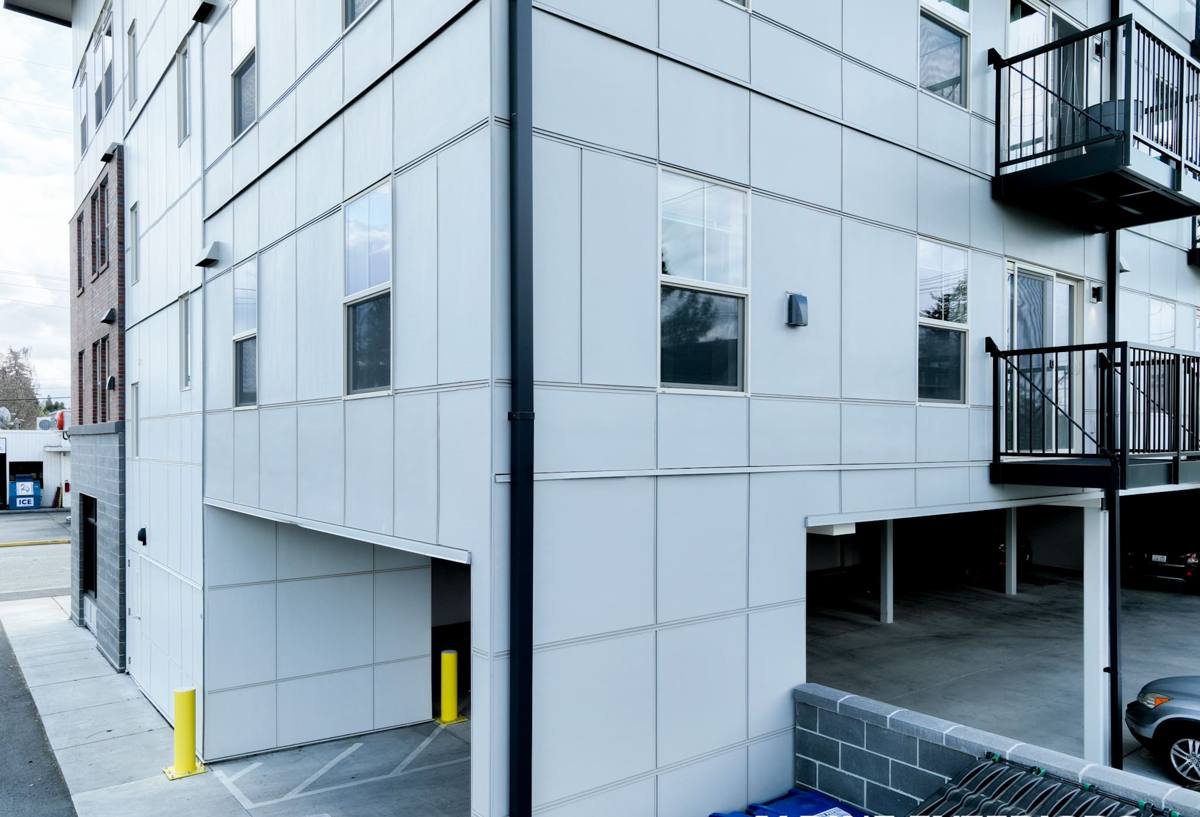
What Salt Air Actually Does to Siding
Coastal salt air isn't just "humid air." It carries fine airborne salt that settles on exterior surfaces and accelerates two things: corrosion of exposed metal fasteners and trim, and moisture retention in porous or absorbent siding materials. Over years, that combination is what causes fastener bleed-through, rusting flashing, and paint failure on siding that would otherwise hold up fine a few miles inland.
This matters for material selection and for workmanship. A siding product that handles interior Whatcom County well can underperform two miles from the water. It also matters for hardware — the screws, nails, and flashing behind the siding need to be rated for the exposure, not just whatever's standard-issue on a typical job.
Driving Rain and Why Wall Assembly Matters as Much as the Siding Itself
Blaine gets wind-driven rain, not just vertical rain. Wind off the water pushes moisture sideways and upward into laps, seams, and penetrations that would stay dry in a calmer climate. That's a bigger deal than most homeowners realize, because it means the siding material itself is only part of the story. The weather-resistive barrier behind it, the flashing above windows and doors, the kick-out flashing at roof-wall intersections, and the drainage gap that lets any moisture that does get in escape — all of that has to be right, or water finds a way past even good siding.
We see this most often on older homes where the siding looks fine from the street but the sheathing behind it has been slowly absorbing moisture for years through a missed flashing detail. Replacing the siding without correcting that underlying assembly just repeats the same problem on a ten-to-fifteen-year delay.
Moss Season and Why It's a Siding Issue, Not Just a Roof Issue
Whatcom County's moss season gets talked about mostly in the context of roofing, but siding on shaded, north-facing, or tree-adjacent walls deals with the same slow, damp buildup. Moss and algae growth on siding holds moisture against the surface for extended periods, which is exactly the condition that degrades paint finishes, softens absorbent trim, and — on wood-based products — invites rot at seams and butt joints. A siding installation in a shaded Peace Arch yard needs to account for that reality: proper standoff and drainage behind the panels, and a finish that resists moisture and biological growth rather than one that depends on a homeowner repainting every few years to keep ahead of it.
What a Correct Siding Installation Actually Involves
Siding installation done right is mostly invisible once the job is finished — which is exactly why it's easy for a rushed or inexperienced crew to cut corners without it showing up for years. Here's what we consider non-negotiable on every job in this climate.
Weather-Resistive Barrier and Flashing
A continuous, correctly lapped weather-resistive barrier goes behind every square foot of siding, with flashing integrated at every window, door, and roof-wall intersection so water sheds outward and downward — never behind the barrier. Kick-out flashing where a roofline meets a wall is one of the most commonly missed details on older homes, and it's one of the most damaging to skip in a heavy-rain climate.
Clearances and Drainage
Siding needs proper clearance from grade, roofing, decks, and hardscape — typically a minimum gap that keeps the bottom edge from sitting in standing water or splash-back. A drainage plane behind the siding lets incidental moisture escape instead of getting trapped against the sheathing, which is especially important given how much wind-driven rain this area sees.
Fastening and Joints
Fasteners need to be corrosion-resistant and installed to the manufacturer's specified pattern and depth — not just "enough to hold it up." Butt joints and seams are a common failure point if they're not flashed, sealed, or engineered correctly, and it's exactly where salt air and driving rain do the most damage over time if the detail is wrong from day one.
Finish and Long-Term Exposure
The finish coat is the first line of defense against UV, salt, and moisture. A factory-applied finish that's engineered to resist fading and moisture intrusion holds up far better over a coastal Whatcom County winter than a field-applied paint job, which is one of the reasons we standardized on a factory-finished product rather than something that depends on repainting to perform.
Our Installation Process for Peace Arch-Area Homes
- Assessment: we inspect the existing siding, sheathing, and flashing to understand what's actually happening behind the wall, not just what's visible from the curb.
- Moisture check: where there's reason for concern — soft spots, staining, past water intrusion — we check moisture levels in the sheathing before deciding whether it needs to be addressed as part of the job.
- Prep and removal: old siding, trim, and any compromised barrier or sheathing come off cleanly, and we correct flashing and drainage details as we go rather than installing new siding over old problems.
- Weather barrier and flashing installation: a new, continuous weather-resistive barrier goes on with properly integrated flashing at every penetration.
- Siding installation: panels, fasteners, and joints go in to manufacturer spec, accounting for this climate's exposure and wind-driven rain patterns.
- Trim, caulking, and finish detail: final trim and sealant work is done at the joints and transitions that matter most for keeping water out.
- Walkthrough: we go over the finished job and what maintenance, if any, it'll need going forward.
Why We Only Install James Hardie Fiber Cement
We install James Hardie fiber cement siding exclusively — we don't install vinyl, LP SmartSide, or other engineered wood or fiber cement alternatives. That's a deliberate standard, not a default. In a salt-air, high-rain climate like Peace Arch, the trade-offs between siding materials show up faster and more visibly than they would somewhere drier and inland, and we'd rather stand behind one product system we know performs here than offer a menu of options with very different long-term outcomes.
Fiber cement is non-combustible, dimensionally stable in wet-dry cycling, and — with a factory-applied ColorPlus finish — doesn't depend on a homeowner's repainting schedule to keep moisture and salt exposure from degrading the surface. James Hardie's HZ5 product line is specifically engineered for climates with more moisture exposure, which fits this part of Whatcom County better than a general-purpose product line does.
| Factor | Why It Matters in Peace Arch's Climate |
|---|---|
| Moisture resistance | Handles wind-driven rain and prolonged damp exposure without swelling or softening |
| Salt air tolerance | Doesn't corrode like exposed metal-faced products; finish resists salt-related fading and breakdown |
| Moss and algae resistance | Factory finish sheds biological growth better than field-painted or absorbent surfaces |
| Non-combustible | Doesn't contribute fuel in a wildfire-adjacent or ember-exposure scenario |
| Warranty structure | Manufacturer-backed, transferable coverage on both the substrate and the factory finish |
Why Local Experience with This Area Actually Matters
A siding crew that regularly works homes near the Peace Arch border area knows the wind exposure, the typical age and construction of homes in this part of Blaine, and the flashing and drainage mistakes that tend to show up here specifically. That's different from general siding experience. It means we're not guessing at how much clearance a job needs from grade, or whether a north-facing wall under tree cover needs extra attention to drainage — we've already seen how those conditions play out on homes like it.
It also means faster, more accurate estimates. We're not learning the area's climate on your job; we're applying what we already know about how homes perform here.
What to Look For When Choosing a Siding Installer in This Area
- Experience specifically with coastal, high-rain climates — not just siding installation in general
- A clear explanation of how they'll handle flashing, drainage, and weather-resistive barrier detail, not just the siding panels themselves
- Willingness to inspect and address sheathing or moisture issues found during tear-off, not just install over them
- Manufacturer training or certification on the specific siding product being installed
- A written scope that specifies fastener type, flashing details, and clearances — not just "siding installation" as a line item
- A transferable warranty on both material and workmanship
What Affects the Cost of a Siding Installation Here
| Cost Factor | Why |
|---|---|
| Condition of existing sheathing | Moisture-damaged sheathing found during tear-off needs repair or replacement before new siding goes on |
| Home size and wall complexity | More corners, gables, and penetrations mean more flashing and cutting time |
| Siding profile and trim selection | Lap width, trim style, and accessory details affect material and labor |
| Access and site conditions | Tight lots, slopes, or landscaping near the foundation can add setup and protection time |
| Scope of tear-off | Full removal of old siding and barrier versus a more limited replacement changes labor significantly |
We don't quote a job without seeing the wall assembly first — a number given over the phone for siding installation on a coastal Blaine home isn't a real estimate until someone's actually looked at what's behind the existing siding.
Signs a Peace Arch-Area Home May Need New Siding Soon
- Paint that's peeling, bubbling, or chalking well before a typical repaint cycle
- Soft or spongy spots when pressing on siding or trim, especially near the bottom edge or seams
- Visible warping, buckling, or gaps opening up at joints
- Persistent moss, algae, or dark staining that keeps coming back after cleaning
- Rust streaking from fasteners or metal trim
- Rising interior humidity or musty smell along exterior walls
If a home is showing more than one of these, it's worth having someone look at the wall assembly, not just the siding surface — in this climate, the two problems usually show up together.
If you're near the Peace Arch area and dealing with aging, damaged, or underperforming siding, we're glad to take a look and give you a straight, no-pressure assessment of what it actually needs. Use the form below to request a free estimate.