 Blaine Roofing
 Decks Built for Birch Point's Marine Climate
Birch Point sits close enough to the water that homes here deal with a different set of stresses than a deck built a few miles inland. Salt-laden air moves off the water and settles on everything, driving rain comes in sideways during winter storms, and Whatcom County's long wet season keeps shaded surfaces damp for months at a stretch. A deck built the same way you'd build one in a dry inland yard will show its age early out here — loose fasteners, stained hardware, slick boards, and soft spots around the ledger. A deck built for this specific exposure holds up the way it should.
This page focuses on one thing: what it actually takes to build a custom deck that performs well on a Birch Point property, year after year, without turning into a maintenance headache by the third winter.
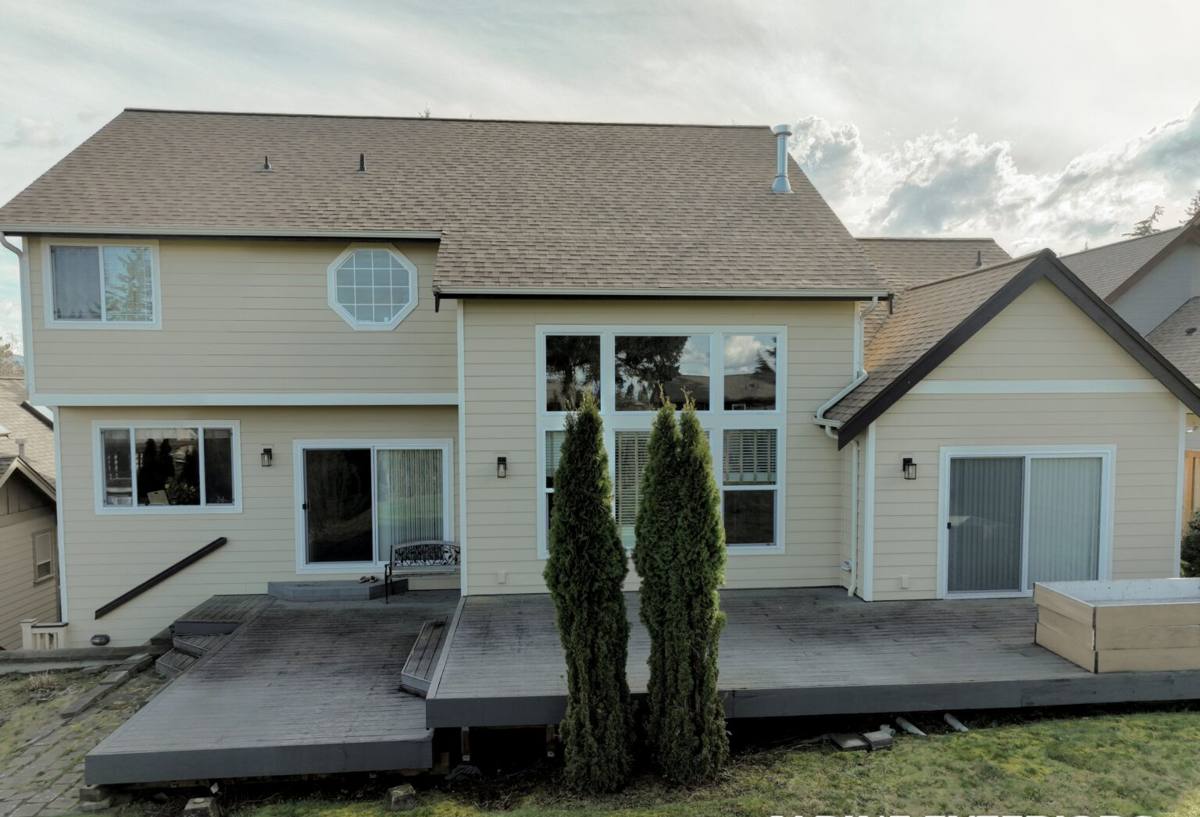
What Salt Air Does to an Unprotected Deck
Salt air is corrosive, and it doesn't need direct ocean spray to do damage — the airborne salt content along this stretch of the coast is enough on its own. Over time it attacks metal, and a deck has a lot of metal holding it together that homeowners never see.
Fastener and Hardware Corrosion
Standard carbon-steel deck screws and generic joist hangers will streak, rust, and weaken faster near the water. The visible sign is usually a rust stain bleeding down through the decking boards — but by the time you see that, the fastener underneath has already lost some of its holding strength. We spec stainless steel or coastal-rated coated fasteners and hardware on Birch Point builds specifically because standard-grade material isn't built for this kind of exposure.
Framing Connections
The bigger risk isn't the fasteners you can see — it's the ones buried in the structure: ledger bolts, hanger nails, post base hardware. These connections carry the structural load of the whole deck, and corrosion there is invisible until the deck starts to feel spongy or a hanger actually fails. Using the right grade of hardware at every connection point, not just the exposed surface fasteners, is the difference between a deck that's solid at year fifteen and one that needs structural repair at year seven.
Driving Rain: Drainage and Flashing Done Right
Wind-driven rain off the water doesn't fall straight down — it gets pushed sideways and up under edges that would stay dry in a calmer climate. That changes how a deck needs to be flashed and drained.
Ledger Board Flashing
Where the deck attaches to the house is the single most common failure point on any deck, and it's the point driving rain attacks hardest. Caulk alone doesn't hold up. A proper build uses flashing membrane integrated with the house's water-resistive barrier so wind-driven rain can't get behind the siding or into the rim joist, where it causes rot you won't see until it's advanced.
Joist Protection Tape
We run butyl flashing tape across the top of every joist before the decking goes down. It's a small step that a lot of decks skip, but it stops water from sitting on exposed end grain and wicking into the framing — which matters a lot more here than in a drier climate.
Board Spacing and Slope
Decking needs a consistent gap for drainage and airflow, and the frame underneath needs a slight slope away from the house so water sheds instead of pooling. Get the slope wrong, or space the boards too tight, and you end up with standing water that accelerates rot, staining, and moss growth in exactly the areas that already get the least sun.
Moss Season: Traction, Shade, and Airflow
Whatcom County's wet season runs long, and shaded or low-airflow parts of a deck can stay damp for weeks without a hard freeze or dry stretch to reset them. That's what grows moss and algae film, and it's what makes a deck surface dangerously slick underfoot.
Surface Texture and Material Choice
Smooth painted wood and some low-grade composite surfaces get slippery fast once a thin layer of moss or algae builds up. Boards with a brushed, grooved, or embossed texture hold traction noticeably better through the wet months. This is one of the more overlooked decisions in deck material selection, and it matters more in Birch Point than in most inland yards.
Deck Orientation and Ventilation
We can't change how much sun a given spot on your property gets, but we can build so the deck dries out faster between rains — adequate under-deck airflow, board spacing that lets water and debris pass through instead of collecting, and design choices that avoid trapping moisture against the house. Keeping nearby vegetation trimmed back also helps a surprising amount, since overhanging branches both shade a deck and drop the organic debris that feeds moss.
Choosing the Right Decking Material for Birch Point
There's no single "best" decking material — the right choice depends on how much maintenance you're willing to do, your budget, and how much direct weather exposure your specific site gets. Here's how the common options compare for a coastal, moss-prone property like this one.
| Material | Salt Air / Moisture Behavior | Maintenance | Slip Resistance (Wet/Moss Season) | Relative Cost |
|---|---|---|---|---|
| Pressure-treated wood | Good if sealed regularly; end grain and fasteners are the weak points | Highest — annual cleaning and resealing | Fair; smooth boards get slick, textured grades do better | Lower upfront |
| Cedar | Naturally rot-resistant but still needs sealing near salt air | High — regular oiling to prevent graying and cracking | Fair to good depending on finish | Mid |
| Composite (capped) | Very good; won't rot, resists salt staining | Low — occasional washing | Good with textured/grooved profiles | Mid to higher |
| PVC decking | Excellent; fully moisture-proof, no wood fibers to absorb salt or water | Lowest — soap and water | Good, varies by brand's surface texture | Higher |
We install all of the above and don't push one brand over another as a default — the right call depends on your budget, how the deck will be used, and how much sun or shade it actually gets. What we won't do is put a smooth, low-traction surface in a heavily shaded, wet corner of a Birch Point yard and call it good; that's a slip hazard waiting to happen, regardless of material.
Our Process, From First Visit to Finished Deck
Every Birch Point deck starts with an honest look at the site, not a generic template.
- Site assessment — we walk the property, note sun and wind exposure, drainage patterns, and how close the build is to salt air and moss-prone shade.
- Design and material selection — we talk through decking material, railing, and layout based on how you'll actually use the space and how much upkeep you want going forward.
- Permitting — we handle the paperwork with the city or county so the deck is built and signed off to code, not just to look right.
- Construction — proper ledger flashing, coastal-rated hardware, joist tape, correct board spacing and slope, built by a crew that treats those steps as standard, not optional upgrades.
- Final walkthrough — we go over the finished deck with you, including what maintenance it actually needs and on what schedule.
Maintaining Your Deck Through Whatcom County Winters
A well-built deck out here still needs some seasonal attention — it just needs a lot less if the flashing, fasteners, and material were right from the start. A simple annual routine keeps most problems from ever starting.
- Rinse off salt film and debris a few times a year, more often if the deck faces the water directly
- Clear leaves and organic buildup out of the gaps between boards before they trap moisture
- Check exposed fasteners and railing hardware annually for rust streaking or looseness
- Reseal wood decking on the manufacturer's recommended schedule — don't wait until it's visibly gray or cracking
- Inspect the ledger flashing line where the deck meets the house for any gaps or caulk failure
- Trim back vegetation that's shading or overhanging the deck to reduce moss growth
- Address any soft or spongy boards right away — they're a sign of moisture getting into the framing, not just the surface
Why Local Birch Point Experience Matters
A deck built by a crew that hasn't worked this specific stretch of coastline tends to make the same mistakes: standard hardware instead of coastal-rated, caulk instead of proper flashing, smooth decking in a shaded corner that turns into a moss patch by December. None of those show up on day one — they show up in year three or four, as repair calls. Building for Birch Point's combination of salt air, driving rain, and a long moss season isn't a specialty add-on for us; it's just how we build decks in this area, because it's the only approach that actually holds up here.
If you're planning a new deck or replacing one that's showing its age, we're happy to take a look and walk you through what your specific site needs — no pressure, no obligation. Use the form below to request a free estimate.