 Blaine Roofing
 Why Birch Point's Shoreline Setting Is Hard on Siding
Homes along Birch Point sit close enough to the water that the exterior of a house takes a different kind of beating than a house even a few miles inland in Whatcom County. Salt-laden air moves off the water and settles on siding, trim, and fasteners day after day. Wind-driven rain comes in sideways during winter storms instead of falling straight down. And the region's mild, damp winters give moss and algae months at a time to get established on anything that stays shaded and wet. None of this is unique to one house — it's the baseline condition for siding anywhere near this shoreline, and it's why a siding installation done "by the book" for a drier climate often underperforms here.
Salt Air and Metal Fasteners
Airborne salt accelerates corrosion on anything metal — nail heads, flashing, screws holding trim in place. Once a fastener starts to rust, it can bleed a stain down the face of the siding and eventually lose its grip. Homes closer to the water need fastener and flashing materials chosen with that exposure in mind, not just whatever is cheapest to stock.
Driving Rain and Water Management
Wind-driven rain doesn't just hit a wall — it gets pushed sideways and upward into laps, seams, and trim joints that would stay dry in calmer weather. If the water management behind the siding isn't right, moisture works its way past the surface material and into the wall assembly, where it can sit for months before anyone notices a problem.
The Long Moss Season
Whatcom County's wet season runs long, and shaded, north-facing walls near the water can stay damp for weeks at a stretch. That's ideal for moss and algae, which don't just look bad — sustained moisture against a wall surface is exactly the condition that causes problems for materials that aren't built to handle it.
What a Correct Siding Installation Actually Involves
Siding is a system, not just a decorative skin. A correct installation on a home exposed to Birch Point's conditions includes several layers working together, and skipping or shortcutting any one of them is where most siding failures start.
- A continuous water-resistive barrier installed over the sheathing, lapped correctly at every seam
- A drainage gap (rainscreen) behind the siding so any water that gets past the surface has somewhere to go and can dry out
- Properly flashed windows, doors, and every other penetration — this is where driving rain finds its way in if it's done wrong
- The manufacturer's specified fastening pattern, spacing, and fastener type — not a generalized "close enough" approach
- Correct starter strips, corner treatments, and butt joints so panels shed water instead of trapping it
- Caulking used only where it belongs — sealant is a backup to good flashing, not a substitute for it
Every one of these details matters more in a coastal, high-rain environment than it would in a drier region, because the margin for error is smaller and the consequences of a mistake show up faster.
Why We Install Only James Hardie Fiber Cement Siding
We standardized on James Hardie fiber cement siding for every home we side, including homes at Birch Point, and we don't install vinyl, LP SmartSide, Cemplank, Allura, primed spruce, or cedar. That's a deliberate professional standard, not a sales pitch, and it comes down to how these products actually perform over years of salt air, rain, and moss exposure rather than how they perform on a spec sheet.
Fiber cement is made from cement, sand, and cellulose fibers — it doesn't have an organic wood or wood-composite core that can absorb water and swell, rot, or delaminate if moisture gets behind it. It's also non-combustible, which matters to insurers and to homeowners thinking about wildfire risk in drier months. James Hardie's HZ5 product line is engineered specifically for climates like the Pacific Northwest's — freeze-thaw cycles, sustained moisture, and coastal exposure — rather than being a one-size-fits-all product shipped to every region.
The factory-applied ColorPlus finish is baked on under controlled conditions and backed by its own finish warranty, which matters directly for moss and mildew: a consistent, durable factory finish holds up to washing and doesn't need repainting on the schedule that field-painted wood or engineered wood siding does.
James Hardie Product Lines We Use at Birch Point
Not every Hardie product fits every part of a home the same way. Part of doing this correctly is matching the product line to the wall, the exposure, and the look the homeowner wants.
| Product | Best Suited For | Why It Works Here |
|---|---|---|
| HardiePlank Lap Siding | Primary wall surfaces | Traditional lap look, wide range of profiles and textures, proven track record in wet coastal climates |
| HardieShingle | Accent gables, dormers | Cedar-shingle appearance without the moisture and moss vulnerability of real wood shingles |
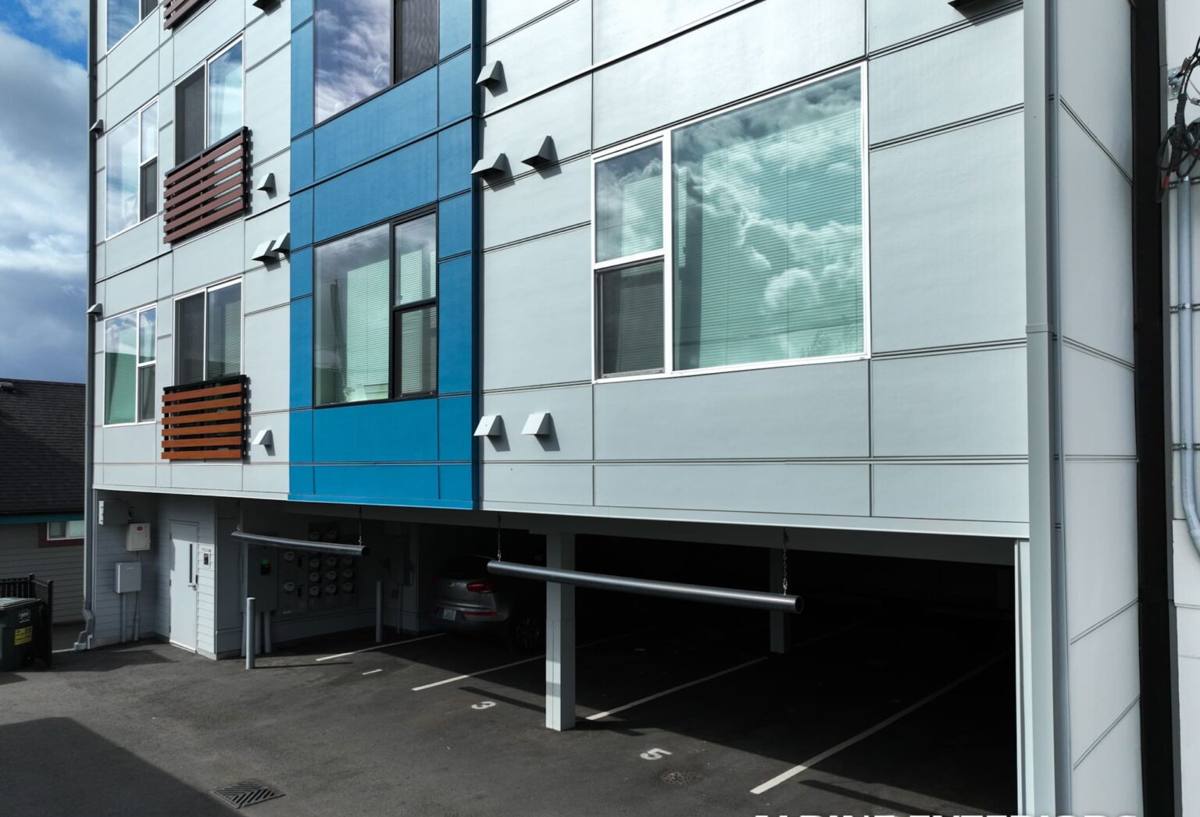
| HardiePanel | Modern facades, garages, accent walls | Clean vertical lines, fewer horizontal laps for water to work into on exposed elevations |
| HardieTrim | Corners, fascia, window and door surrounds | Matches the siding's moisture and finish performance instead of mixing in wood trim that ages differently |
Why We Don't Install Vinyl, LP SmartSide, or Cedar Here
Each of these products has legitimate uses somewhere, but we've made a professional call not to install them, and homeowners deserve the honest reasoning rather than a vague "we don't do that."
Vinyl siding is inexpensive and low-maintenance in mild conditions, but it expands and contracts significantly with temperature swings, and its seams and overlapping panels rely on gaps for that movement — gaps that wind-driven rain can exploit. It also has no fire resistance to speak of and tends to fade and become brittle with long-term UV and salt exposure.
LP SmartSide and similar engineered-wood products use an OSB-based core with a resin-treated surface. It performs well when installation is flawless and maintained perfectly, but if water finds its way past a joint, corner, or fastener hole — which is more likely in a driving-rain environment — the wood-based core can swell and deteriorate from the inside, often before it's visible from outside.
Cedar and primed spruce are attractive, traditional choices, but they're organic materials that need ongoing refinishing, are more susceptible to moss and mildew staining in shaded, damp conditions, and require real long-term maintenance discipline to keep from cupping, splitting, or rotting near the coast.
Fiber cement asks less of the homeowner over time and holds up better to the specific combination of salt, rain, and moss that Birch Point sees every year.
Our Siding Installation Process
- On-site assessment of the home's exposure, existing siding condition, and sheathing/framing underneath
- Removal of old siding and inspection of the wall structure for any hidden moisture damage that needs to be addressed before new siding goes on
- Installation of a continuous water-resistive barrier and rainscreen gap
- Flashing of every window, door, and penetration according to manufacturer and code requirements
- Installation of James Hardie siding, trim, and accessories to manufacturer spec — correct fastener type, spacing, and clearances
- Caulking, touch-up, and final detailing at seams and joints
- Full cleanup and a final walkthrough with the homeowner
Maintenance Birch Point Homeowners Should Expect
A correctly installed James Hardie system is low-maintenance, not no-maintenance. In a salt-air, high-moss environment, a little seasonal attention goes a long way.
- Rinse siding periodically to clear salt residue, especially on walls facing the water
- Walk the exterior once a year and check caulking at trim and penetrations for cracking or separation
- Keep shrubs and trees trimmed back from shaded walls to reduce moss and algae buildup
- Gently wash any developing moss or algae before it spreads — soft wash methods, not high-pressure blasting
- Check gutters and downspouts so runoff isn't sheeting down or pooling behind siding
- Watch for any signs of rust bleed at fastener heads or flashing and have it addressed early
What It Costs — and What Drives the Price
Every home is different, and the honest answer to "what will this cost" depends on the specifics of the house. These are the factors that actually move the number.
| Factor | Why It Matters |
|---|---|
| Home size and number of stories | More square footage and taller walls mean more material and more labor, including staging for upper stories |
| Condition of existing sheathing | Hidden rot or moisture damage found during tear-off adds repair work before new siding can go on |
| Complexity of the exterior | Dormers, multiple gables, and lots of trim detail take more time than simple, flat elevations |
| Product mix | Combining lap siding with shingle accents or panel sections costs more than a single uniform product |
| Site access | Waterfront lots with limited access or steep grades can add setup and staging time |
We walk every home in person before giving a number, because guessing at these factors from a phone call does homeowners a disservice.
Why Local Experience in Birch Point Matters
A crew that already works in and around Birch Point knows which walls take the worst of the wind and salt exposure before they even climb a ladder, and installs accordingly — extra attention to flashing on the water-facing elevations, fastener choices that account for the salt air, and scheduling around the weather windows that actually work for exterior work in this part of Whatcom County. A crew unfamiliar with this shoreline is more likely to treat it like any other job, and the siding is what pays for that gap in experience over the following years. Local knowledge doesn't show up on a quote — it shows up a decade later in how the siding is holding up.
If you're weighing a siding project for a home at Birch Point, we're happy to take a look and give you an honest, no-pressure assessment of what your home actually needs. Use the form below to request a free estimate.