 Blaine Roofing
 Roof Repair Built for Sandy Point's Waterfront Exposure
Sandy Point sits right on the water at the edge of Blaine, and that position shapes almost everything about how a roof ages here. Homes this close to open water take a steadier dose of salt-laden marine air than houses set even a mile or two inland, and that salt works quietly on fasteners, flashing, and shingle granules for years before a leak ever shows up on the ceiling below. Add in wind-driven rain coming straight off the water and a moss season that runs long in Whatcom County's mild, damp climate, and you have a roof that's under more consistent stress than the average home in the region.
This page is specifically about roof repair for Sandy Point homes, not full roof replacement. A lot of roofs out here don't need a new roof, they need someone who understands exactly where this climate finds its way in and who fixes that correctly the first time, instead of laying down a patch that buys a season or two before the same problem comes back. That distinction matters more here than it does in a lot of Whatcom County, because a roof on a waterfront lot has less room for error than one sitting further from the shoreline.
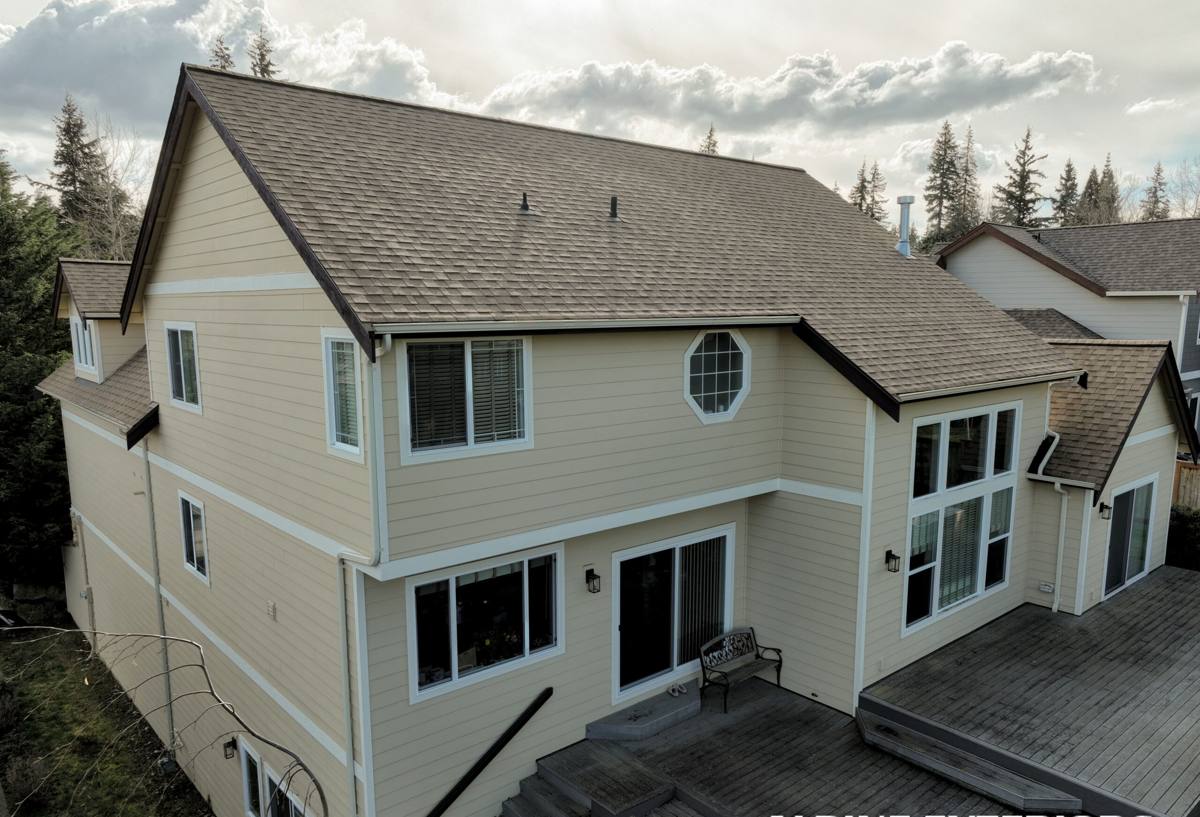
What Makes Sandy Point Roofs Wear Faster
Salt Air Off the Water
Airborne salt is corrosive to metal, and a roof has a lot of exposed metal on it: nail heads, flashing at valleys and penetrations, drip edge, and any exposed fasteners on vents or chimney caps. In a town like Blaine, and especially on a waterfront community like Sandy Point, that corrosion process runs faster than it would on a home set back from the shoreline. A flashing detail that would last decades inland can start failing years earlier here if it wasn't built with corrosion-resistant materials to begin with.
Driving Rain and Wind Exposure
Open water means open wind, and storms coming across it don't just drop rain straight down onto a roof. Wind pushes that rain sideways and forces it upward under shingle tabs and around flashing edges, which is a very different load than a calm, straight-down rain event. Roofs on more exposed lots in Sandy Point catch this directly, and it's often the reason a repair that looked minor from the ground turns out to involve water that's traveled well past where it first got in.
A Long Moss Season
Mild temperatures and near-constant moisture add up to a moss season that can run most of the year on shaded or north-facing roof planes. Moss holds water against the shingle surface long after the rest of the roof has dried out, and that sustained dampness is what eventually works shingle edges loose and lets water track underneath. On tree-shaded lots in Sandy Point, this is one of the more common reasons we get called out for a repair.
Repair Problems We See Most Often in Sandy Point
Roof repair calls out here tend to fall into a fairly consistent set of patterns, almost all tied back to the same three stressors above.
- Flashing failures at valleys, chimneys, and wall transitions: Corroded or improperly lapped flashing is the single most common source of leaks we find, and it's rarely visible from the ground.
- Wind-lifted or missing shingles: Exposed lots near the water take a harder wind load, and shingles that were fastened correctly but are simply reaching the end of their adhesive life start lifting at the edges first.
- Corroded or popped fasteners: Salt-accelerated corrosion on nail heads and exposed fasteners is a slow process that eventually lets a shingle work loose or lets water track down a nail shaft into the deck.
- Moss holding moisture against shingles: Left untreated, moss growth on shaded roof planes gradually lifts shingle edges and keeps the surface underneath damp far longer than it should stay.
- Granule loss and thinning near roof edges: Edges and eaves take the brunt of wind-driven rain, and granule loss there is often an early warning sign before a leak actually develops.
- Gutter and fascia issues tied to drainage: Clogged or undersized gutters back water up under the lowest course of shingles and against fascia boards, which shows up as rot even when the roof field itself is sound.
What a Correct Repair Actually Involves
A roof repair is only as good as the diagnosis behind it. Sealing over a visible symptom without finding where water is actually entering the system is one of the more common ways a "repair" ends up needing to be redone within a year or two.
Diagnosis Before Patching
Water rarely shows up directly below where it entered the roof. It can travel along the underlayment or a rafter for several feet before dripping somewhere visible, which means a repair that only addresses the spot where a stain appeared on the ceiling often misses the actual point of failure entirely. We trace it back to the source before deciding what the repair needs to include.
Matching the Existing System
A repair has to integrate with what's already on the roof, not just sit on top of it. That means matching shingle type, color, and profile where possible, and making sure any new underlayment or flashing ties properly into the surrounding material so water is still directed the way the original system intended.
Flashing Done as Part of the Repair, Not an Afterthought
Since flashing failure is the most common cause of leaks we see in Sandy Point, we treat flashing repair as its own scope item, not something caulked over as a quick fix. That means re-lapping or replacing the metal where it's corroded or improperly installed, not just sealing the surface and hoping it holds through the next storm off the water.
Repair or Replace? How We Help You Decide
Not every roof issue calls for the same response, and an honest contractor should be able to explain why a repair makes sense in one case and a full replacement makes more sense in another.
| Factor | Repair Usually Makes Sense | Replacement Usually Makes Sense |
|---|---|---|
| Age of roof | Roof is well within its expected lifespan | Roof is near or past the end of its expected service life |
| Extent of damage | Isolated to one section, valley, or penetration | Widespread across multiple roof planes |
| Underlying deck condition | Deck is sound where the repair is needed | Rot or soft decking found across a broader area |
| Shingle condition elsewhere | Remaining shingles still have good granule coverage and flexibility | Shingles elsewhere are already brittle, curling, or losing granules |
| History of repeat leaks | First occurrence in this area of the roof | Same area has needed repair more than once |
We'll always walk the roof in person before recommending one path over the other. A repair that's scoped honestly should hold up for years when the rest of the roof is in reasonable shape, and we'd rather tell you that than push a full replacement the roof doesn't actually need yet.
How Our Sandy Point Roof Repair Process Works
- In-person inspection: We get on the roof and, where relevant, into the attic to trace the actual source of a leak or damage rather than guessing from the ground or a photo.
- Written scope and estimate: You get a clear explanation of what we found, what the repair involves, and a price before any work starts.
- Scheduling around the weather: Most shingle and flashing repairs need a reasonably dry window to seal correctly, so we build the timeline around Whatcom County's weather rather than rushing a repair between storms.
- The repair itself: Damaged materials come out, the deck underneath gets checked, and new shingles, underlayment, or flashing go in matched to the existing system.
- Cleanup and walkthrough: We clear debris and old material off the property and walk you through exactly what was done before we call the job finished.
Signs Your Sandy Point Roof Needs Repair Now
- Water staining on a ceiling or in the attic, even if it's small or only shows up during heavy rain
- Missing, curling, or lifted shingles, especially after a windy stretch off the water
- Visible moss buildup or dark streaking on shaded or north-facing roof planes
- Granules collecting in gutters or at the base of downspouts
- Rust staining around vents, chimney flashing, or other metal roof components
- Daylight visible through the roof deck from inside the attic
- Sagging or soft spots along the roofline
A Practical Checklist Before You Hire a Roof Repair Contractor
- Do they inspect in person, on the roof, rather than quoting from a description over the phone?
- Does the estimate explain what's actually failing, not just what will be patched?
- Is flashing work called out specifically if flashing is part of the problem?
- Do they carry current Washington contractor licensing and liability insurance?
- Can they point to work they've actually done in or near Sandy Point or Blaine?
- Do they explain honestly when a repair isn't enough and replacement is the better call?
Why a Crew That Already Works in Sandy Point Matters
A contractor who regularly works roofs in Sandy Point has already seen how salt air corrodes underspecified flashing, how wind off the water finds gaps that a calmer climate would never expose, and which roof orientations hold moss the longest through the wet months. That's the kind of practical knowledge that shapes real decisions on a repair: which flashing detail is worth doing right instead of quickly, and which symptoms usually point to a bigger issue upstream. It also matters after the work is done. A repair warranty is only useful if the company behind it is still reachable in this area a few years down the road, not a name that did one job here and moved on.
If your Sandy Point home has a leak, storm damage, or a roof section that's been bothering you, we're happy to take a look and give you an honest, no-pressure assessment of what it actually needs. Use the form below to request a free estimate.