 Blaine Roofing
 Building Decks for Grandview's Coastal Conditions
Grandview sits close enough to the water that salt air is a daily fact of life, not an occasional nuisance. Add Whatcom County's long wet season, driving rain that comes in sideways off the Strait, and months of shade and moisture that keep moss and algae active nearly year-round, and you have one of the tougher environments in the state to build an outdoor structure that lasts. A deck built with generic, one-size-fits-all methods might look fine the first summer. Within a few winters, fasteners bleed rust through the boards, ledger connections trap water against the house, and railing posts start to wobble because the hardware underneath was never rated for this kind of exposure.
A custom deck for a Grandview home has to be engineered around those conditions from the ground up — not decorated to hide them later. That means thinking about drainage, fastener chemistry, ventilation under the deck surface, and material choice before a single board goes down.
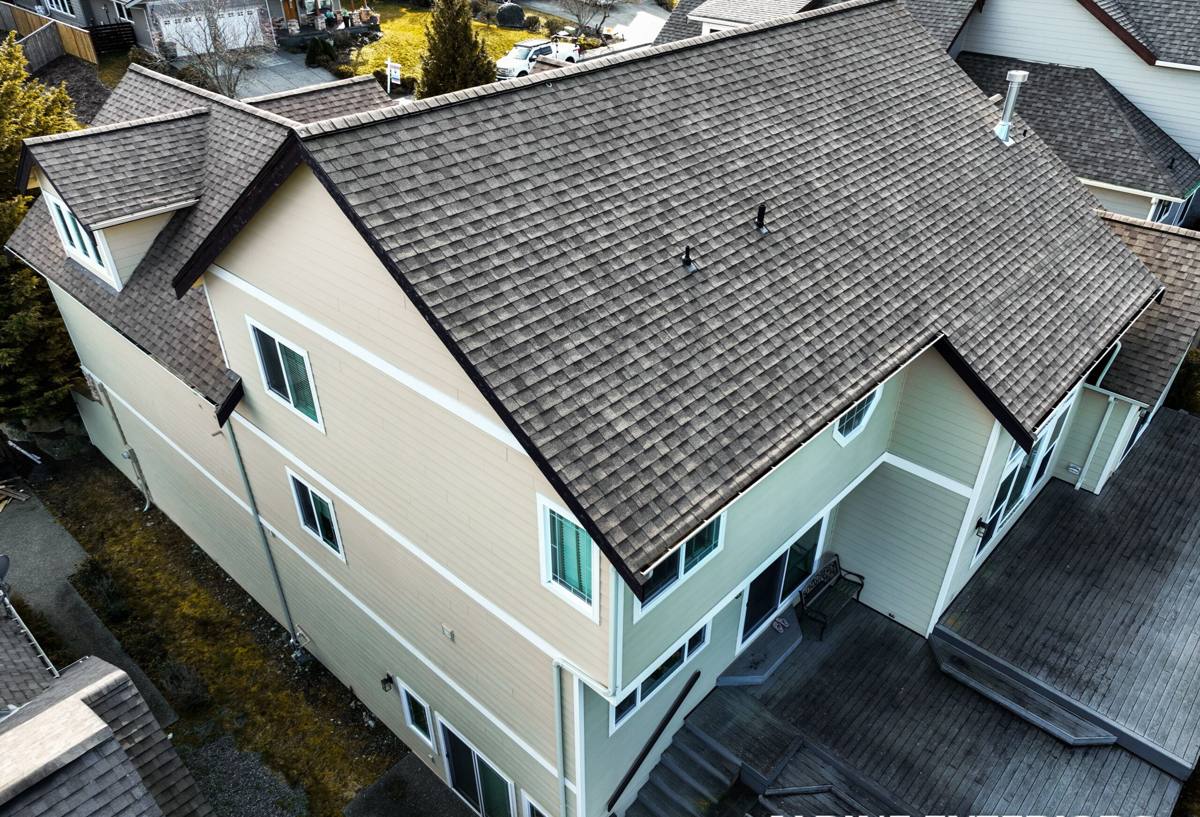
What Grandview Homes Actually Need From a Deck
Every deck we build here has to answer three questions specific to this area: how will it shed water fast, how will it resist salt-driven corrosion, and how will it stay clean enough that moss and algae don't turn the surface into a slip hazard by November. Homes in this part of Blaine tend to sit on lots with mature trees and damp, shaded ground — great for privacy, but it means airflow under and around a deck matters more here than it would on an open, sunbaked lot inland.
Site-Specific Factors We Account For
- Prevailing wind and rain direction off the water, which affects board orientation and railing gaps
- Shade patterns from trees or the house itself, which drive how much moss pressure the deck will see
- Ground slope and existing drainage, so runoff moves away from the foundation instead of pooling under the structure
- Distance from salt spray exposure, which changes our hardware and fastener recommendations
- How the deck ties into existing siding, doors, or roofline, since a bad ledger connection is the single most common source of rot we find on older Grandview decks
Decking Material Options: What Holds Up Here
There's no single "right" decking material for every home, but in a salt-air, high-rain environment some options need more attention than others to perform well. We'll walk through the honest trade-offs rather than push whatever is easiest to install.
| Material | How It Handles Salt Air & Rain | Moss/Algae Resistance | Long-Term Upkeep |
|---|---|---|---|
| Pressure-treated fir/hem-fir | Good if properly sealed and re-coated; end grain is the weak point | Low — needs regular cleaning and treatment | Annual inspection, periodic staining/sealing |
| Cedar | Naturally moisture-resistant, but salt air still grays and dries it faster than inland use | Moderate — still needs cleaning in shaded areas | Periodic oiling or sealing to prevent checking |
| Composite decking | Handles moisture well; core materials vary in how they manage trapped water | Better than wood, but still grows algae film in shade without cleaning | Low — occasional wash, no staining |
| PVC/capped polymer | Excellent resistance to moisture and salt exposure | Good, especially with textured caps designed for wet climates | Lowest — wash only, higher upfront cost |
For a lot of Grandview homes, especially ones with heavier shade, we lean toward composite or capped polymer boards specifically because the maintenance burden of real wood in constant dampness is significant — not because wood is a bad material, but because keeping it looking and performing well here takes ongoing work most homeowners would rather not sign up for.
Wood Species vs. Cut and Orientation
Material choice only gets you halfway there. How the boards are cut and oriented matters just as much in this climate. End grain exposed to standing water is where rot starts fastest, so we detail board ends, stair stringers, and post bases to shed water rather than collect it, regardless of species.
Framing and Substructure — The Part No One Sees
The surface boards get all the attention, but the framing underneath determines whether a deck lasts fifteen years or thirty-five. In a climate with this much sustained moisture, we pay particular attention to:
- Joist tape or flashing on top of every joist, so fasteners don't create a path for water into the wood grain
- Proper ledger board flashing where the deck meets the house — this single detail causes more hidden rot than any other point on a deck
- Post base connectors that keep wood posts elevated off concrete, since constant ground moisture wicks upward through direct wood-to-concrete contact
- Adequate under-deck clearance and airflow, especially on shaded lots where ground moisture doesn't evaporate quickly
None of this is visible once the deck is finished, which is exactly why it's the part most likely to get shortcut by a crew that isn't used to building in this kind of weather.
Fasteners and Hardware: Where Salt Air Does the Most Damage
Salt air accelerates corrosion on standard fasteners far faster than most homeowners expect. Screws and joist hangers rated for general use inland can start showing rust streaks on a coastal Blaine deck within a couple of seasons. We spec stainless steel or hot-dip galvanized hardware rated for coastal exposure on every custom deck we build in this area — it costs more upfront than standard fasteners, but replacing streaked, failing hardware under a finished deck is a much bigger job than paying for the right material the first time.
Railings, Stairs, and Code Requirements
Railings and stair systems have to meet Washington building code for height, baluster spacing, and load — that part doesn't change by neighborhood. What does change here is material selection for the same reasons as decking: railing hardware and post connections take the brunt of wind-driven rain, so we use corrosion-resistant fasteners and detail post tops and cap rails to shed water rather than trap it at the joints. Stair stringers, in particular, are a common weak point on older decks in wet climates — moisture collects at the notched cuts, so we treat or seal every cut surface before assembly.
Our Process, Start to Finish
1. On-Site Consultation
We walk the property, assess drainage, sun exposure, and how the new deck will tie into the house. This is also where we talk through material options honestly, based on your specific lot rather than a generic recommendation.
2. Design and Estimate
You get a clear layout, material breakdown, and a written estimate — no vague allowances that turn into surprise change orders later.
3. Permitting
Deck projects of most sizes require a permit in Whatcom County. We handle the permit submission and inspections as part of the job so you're not navigating that process alone.
4. Framing and Flashing
This is where the durability of the deck actually gets decided — ledger flashing, joist protection, and post connections all happen before any decking is installed.
5. Decking, Railings, and Finish Work
Boards, railings, stairs, and any fascia or skirting go on last, with attention to fastener placement and drainage gaps between boards.
6. Final Walkthrough
We walk the finished deck with you, cover basic care for whatever material you chose, and answer any questions before we consider the job done.
Maintenance: What Actually Keeps a Coastal Deck Looking Good
Even a well-built deck needs some seasonal attention in this climate. The goal isn't constant work — it's a short list of things done at the right time of year.
- Sweep debris off the surface regularly, especially in fall — trapped leaves hold moisture against boards and feed moss growth
- Scrub shaded, damp areas with a deck-safe cleaner once or twice a year to knock back algae and moss before it gets established
- Check railing posts and stair connections annually for movement, which can signal a hardware or moisture issue starting underneath
- Re-seal or re-stain wood decking on the manufacturer's recommended cycle — don't wait until it's visibly gray and dry
- Keep gutters and downspouts near the deck clear, since overflow directed onto or under a deck accelerates everything listed above
- Look underneath the deck once a year if access allows — hidden rot or hardware corrosion is far cheaper to catch early than after a board or post fails
Why Local Experience in Grandview Matters
A deck built the same way you'd build one in a dry inland climate simply doesn't hold up here. Crews that work Grandview regularly already know which fastener grades hold up against the salt air, how much drainage slope this ground actually needs, and where moss pressure tends to be worst based on tree cover and shade patterns specific to this part of Blaine. That local knowledge shows up in decisions made before the first post hole is dug — decisions a crew unfamiliar with this coastline and county wouldn't necessarily think to make.
If you're planning a new deck or replacing one that's showing its age, we're glad to come take a look, walk the site with you, and put together a straightforward estimate — no pressure, no obligation, just a clear picture of what the job would involve.