 Blaine Roofing
 Decks in Nooksack Take a Different Kind of Beating
A deck in Nooksack doesn't fail the way one does in a dry climate. Out here in Whatcom County, the damage is slow and cumulative — months of driving rain soaking into end grain, salt-tinged air working its way into fasteners and hardware, and a moss season that can stretch from late fall well into spring. By the time a homeowner notices soft boards or a wobbly rail, the underlying structure has usually been losing strength for a year or two already.
We work on decks throughout the Blaine area and the surrounding Whatcom County communities, and the pattern in Nooksack is consistent: it's rarely one dramatic failure. It's moisture finding the same weak points over and over — ledger connections, board ends, post bases — until something finally gives.
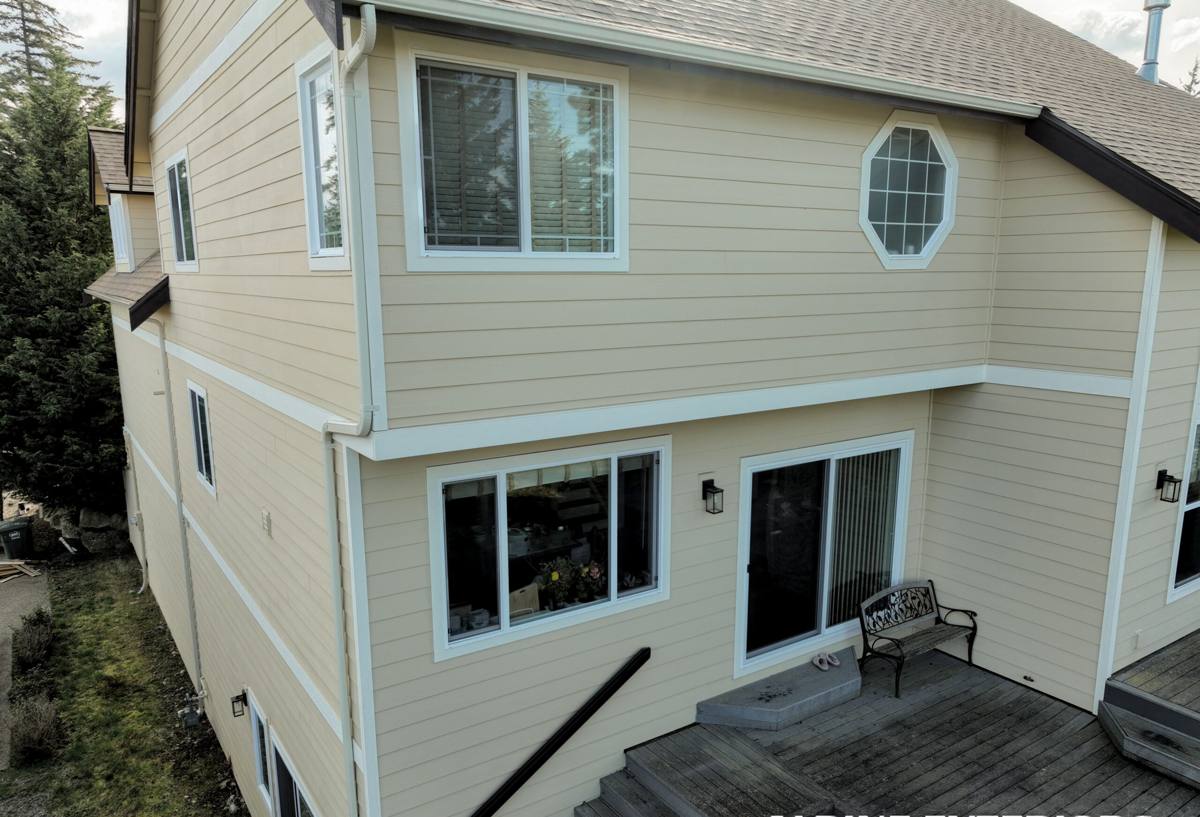
Warning Signs Worth Acting On
Most deck repairs get more expensive the longer they're ignored, because rot spreads and fastener corrosion accelerates once moisture gets a foothold. These are the signs we tell Nooksack homeowners not to wait on:
- Boards that feel spongy or flex underfoot, especially near the house or at board ends
- Green or black moss buildup that returns within weeks of cleaning
- Railings or posts that wiggle when you push on them
- Rust streaks running down from screws or bolts
- Gaps opening up where the deck meets the house (a sign the ledger board may be pulling away)
- A musty smell coming from underneath the deck
- Visible daylight or soft spots where stairs meet stringers
Any one of these on its own might be minor. Two or three together usually means it's time for a proper inspection rather than a patch job.
Why Moss Is More Than a Cosmetic Problem
Moss holds moisture against the wood surface long after the rain stops, which is exactly what accelerates rot underneath a coating that still looks fine on top. In a region where deck surfaces can stay damp for days at a stretch during the wet season, moss isn't just something to pressure-wash off for looks — it's actively shortening the life of the boards it's growing on.
What a Correct Repair Actually Involves
Deck repair gets treated as a cosmetic job more often than it should. A repair that only addresses what's visible from the top — replacing a few obviously bad boards, re-staining, calling it done — tends to leave the actual source of the damage in place. We look at three layers before we touch a board.
The Structure Underneath
Joists, beams, posts, and especially the ledger board (the piece bolted to the house that carries a huge share of the deck's load) get checked for rot, corrosion, and proper flashing. A deck can look fine on the surface while its ledger connection has been quietly compromised by water intrusion behind it — this is one of the more serious failure points we find in older decks in this area, and it's not something a surface repair fixes.
The Decking and Railings
Individual boards, guardrails, and stair components get evaluated for rot, splitting, and fastener condition. In our climate, galvanized or coated fasteners that were adequate when the deck was built can corrode faster than expected, especially anywhere air carries a salt component off the water. Loose railings are a safety issue first and a repair issue second — we treat them accordingly.
Drainage and Airflow
A huge share of deck problems trace back to water that has nowhere to go. Boards installed too tight, no gap for drainage, gutters dumping runoff onto the deck, or vegetation blocking airflow underneath — all of it keeps wood wet longer than it should be. Fixing the visible damage without correcting the drainage problem just means the same repair again in a few years.
Repair or Replace? What Actually Determines That
Homeowners often ask us to just quote "fixing the deck," but the honest answer depends on a few specific factors. Here's how we walk through that decision:
| Factor | Leans toward repair | Leans toward replacement |
|---|---|---|
| Deck age | Under 15 years | Over 20-25 years, especially original untreated framing |
| Ledger board condition | Solid, properly flashed | Soft, rotted, or poorly flashed originally |
| Extent of rot | Isolated boards or one section | Rot found in multiple structural members |
| Fastener condition | Localized corrosion | Widespread rust or fastener failure |
| Code compliance | Meets current railing/spacing standards | Built to older codes with real safety gaps |
| Typical cost range | Several hundred to a few thousand dollars | Full replacement runs considerably higher, priced per square foot |
We'll always give you a straight answer on which side of that line your deck falls on. A repair that's really a patch on a failing structure isn't a favor to anyone — it just moves the bigger cost down the road.
Materials: What We Use and Why
Wood Repairs
For most structural repairs — joists, beams, framing — we use pressure-treated lumber rated for ground contact where appropriate, matched to the existing structure's dimensions. Treated lumber handles our wet season well when it's properly sealed at cut ends and fastened with corrosion-resistant hardware; the failure point is almost always a cut end or fastener that wasn't protected, not the lumber itself.
Decking Surface Options
When it comes to replacing decking boards, we'll walk through the real trade-offs rather than push one material. Wood decking is more affordable up front and repairable board-by-board, but it needs regular cleaning and sealing to hold up against our moss season. Composite decking costs more initially and resists moss growth better, but it has its own installation sensitivities — spacing, fastening, and ventilation all have to be done to spec, or moisture can get trapped in ways that are harder to spot and harder to fix than with solid wood. We'll tell you honestly which option fits your budget, your maintenance appetite, and the specific conditions of your deck's location and exposure.
Our Repair Process
1. Inspection
We check the structure from underneath as well as the surface — ledger connection, posts, joists, flashing, and drainage — not just the boards you can see standing on top.
2. A Clear, Written Plan
You get a straightforward explanation of what's failing, what's still sound, and what we recommend — repair, partial rebuild, or full replacement — with the reasoning behind it, not just a number.
3. The Work Itself
Rotted material comes out completely; we don't build over compromised wood. Structural repairs are matched to code-appropriate framing, flashing gets corrected where it's failed, and fasteners are upgraded where the originals were undersized or corroding.
4. Cleanup and Walkthrough
We clear debris and old material from the site and walk the finished repair with you so you know what was done and what to keep an eye on going forward.
Keeping a Repaired Deck From Needing This Again
A repair holds up a lot longer with a bit of seasonal upkeep. A few habits make a real difference in a climate like ours:
- Clear leaves and debris from between boards before the rainy season sets in — trapped debris holds moisture directly against the wood
- Rinse off moss buildup before it establishes, rather than waiting for a thick mat to form
- Check that gutters and downspouts aren't draining onto the deck surface
- Reseal or restain wood decking on the schedule the product calls for — skipping a cycle in a wet climate costs more than the maintenance itself
- Keep vegetation trimmed back from the deck edges and underside to allow airflow
Why Local Experience on Nooksack Decks Matters
A deck repaired by a crew that already knows how Whatcom County weather behaves gets built differently than one repaired by someone unfamiliar with the area. We know which details actually matter here — flashing that can handle sustained driving rain, fastener choices that hold up against the salt-tinged air moving through this part of the county, and framing practices that account for a moss season that doesn't really end for months at a time. That's not guesswork; it's what shows up, repair after repair, on decks throughout this region.
Local also means practical things: we're not driving in from out of the area to give you a quote, and we're not disappearing after the job if a question comes up later. For a structure that's exposed to the weather year-round, that ongoing accountability matters as much as the repair itself.
If your deck in Nooksack is showing soft spots, persistent moss, or a rail that doesn't feel as solid as it used to, we're happy to take a look. We offer free, no-pressure estimates — just fill out the form below and we'll get back to you with a straight assessment of what your deck actually needs.