 Blaine Roofing
 Board & Batten Siding for Sandy Point's Waterfront Conditions
Sandy Point sits close to the water on the edge of Blaine, and that location shapes everything about how a home's exterior needs to be built. Homes here take on salt-laden air coming off the water, wind-driven rain that hits siding at an angle instead of falling straight down, and long stretches of gray, wet Whatcom County winter that keep exterior walls damp for weeks at a time. Board and batten is a popular look in this neighborhood — it fits the coastal cottage character a lot of Sandy Point homes have, whether that's a smaller beach house or a newer build going for that same clean, vertical-line look. But the style only works long-term if the material underneath it is built for what this specific location throws at a house.
This page is about that combination: board and batten as a siding style, applied to Sandy Point conditions specifically, using the one product we install — James Hardie fiber cement. We don't do this style in vinyl, LP SmartSide, or wood, and we'll explain why as we go.
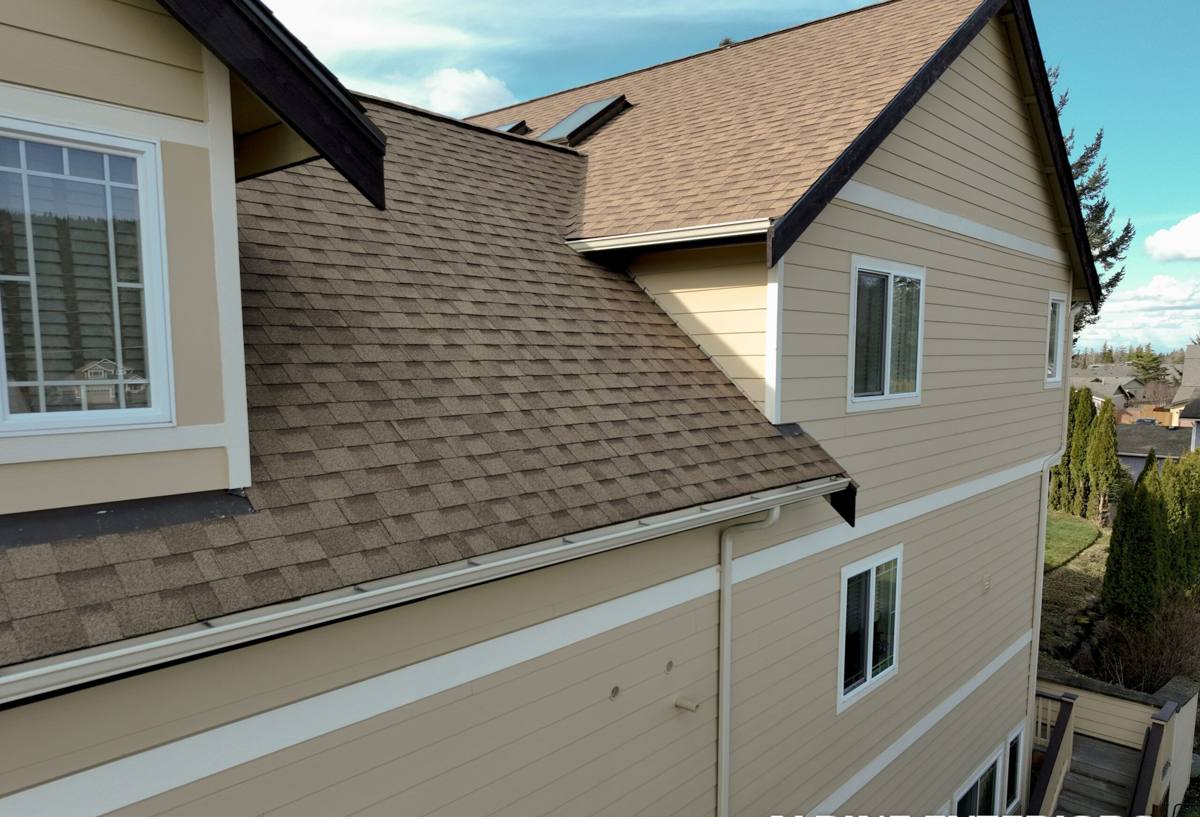
What Salt Air, Driving Rain, and Moss Season Actually Do
These three conditions don't act alone — they compound each other, and that's what makes waterfront exposure harder on siding than a typical inland lot.
Salt Air
Airborne salt settles on exterior surfaces and accelerates the breakdown of paint film, caulking, and any exposed fasteners. On wood-based products, salt exposure speeds up moisture uptake at the grain. On lower-grade composites, it can accelerate surface degradation. Paint and factory finishes both wear faster near open water than they do a few miles inland.
Driving Rain
Wind off the water doesn't let rain fall straight — it pushes it sideways into wall assemblies, which puts far more stress on seams, joints, and butt ends than vertical rainfall does. Board and batten has more vertical seams per square foot than horizontal lap siding, so how those seams are detailed matters more here than it would on a sheltered inland lot with lap siding.
Moss and Algae Season
Whatcom County's wet season runs long, and shaded or north-facing walls near mature trees or close-set neighboring homes stay damp for extended stretches. That damp, shaded combination is exactly what moss and algae need to take hold. Once organic growth establishes on a wall, it holds moisture against the siding surface, which extends every other problem on this list.
Why Board & Batten Specifically Raises the Stakes
Board and batten is a great-looking style for this kind of neighborhood, but it's less forgiving of poor material choice or sloppy installation than standard lap siding, for a simple reason: it has more seams. Every vertical batten strip creates two additional seams next to the board it covers, both of which need to shed water instead of trapping it. On a typical lap siding wall, water runs down a continuous horizontal plane. On board and batten, you're managing dozens of vertical joints, each one a potential path for moisture if it's not built correctly.
That's not a reason to avoid the style — it's a reason to be selective about material and installer. A board and batten wall done right, in the right product, is genuinely durable in this climate. Done with the wrong material or a rushed install, it's one of the faster ways to end up with rot and repaint cycles on a waterfront home.
Why We Only Install James Hardie for This Application
We install James Hardie fiber cement exclusively, and board and batten is one of the applications where that standard matters most.
- Non-combustible core: Fiber cement doesn't feed a fire the way wood-based products can, which matters on any home but is a genuine plus on properties with limited defensible space near neighbors.
- Engineered for wet marine climates: Hardie's HZ5 product line is formulated for regions with prolonged moisture exposure, which describes Sandy Point's winters accurately.
- ColorPlus factory finish: A baked-on finish applied under factory conditions holds up to salt air and UV exposure far longer than field-applied paint, and it resists the fading and chalking that shows up fastest on south- and west-facing walls near open water.
- Dimensionally stable: Fiber cement doesn't swell, cup, or split at the seams the way wood-based boards can when they take on repeated wetting and drying cycles — which is exactly the cycle Sandy Point's climate produces.
- Backed by a strong transferable warranty: Because the product is engineered and factory-finished consistently, the warranty terms are meaningful in a way that's harder to get with field-finished or lower-grade composite products.
We don't install vinyl, LP SmartSide, Cemplank, Allura, primed spruce, or cedar for board and batten work. Each of those has a legitimate place in the market, but none of them holds up to the seam count of board and batten combined with sustained salt air and driving rain the way Hardie does, and we'd rather turn down work than install something we don't believe will perform on a property like this.
What a Correct Board & Batten Installation Involves
The material is only half the equation. On a waterfront lot, installation detail is what actually determines whether those vertical seams stay dry for decades or start failing in five years.
Rainscreen Gap
A drainage gap behind the siding lets any moisture that does get past the outer layer drain and dry out instead of sitting against the wall sheathing. This is especially important on board and batten, where wind-driven rain has more seams to work through.
Flashing at Every Penetration
Windows, doors, hose bibs, vents, and light fixtures all need proper flashing integrated with the water-resistive barrier before siding goes on. Skipping or shortcutting flashing is one of the most common causes of hidden rot behind board and batten walls.
Fastener Pattern and Placement
Hardie specifies exact fastener spacing and placement for board and batten assemblies, including how battens are fastened relative to the boards beneath them. Fastening through the wrong layer or at the wrong spacing voids warranty coverage and creates weak points exactly where they're most exposed.
Gaps, Caulking, and Sealant Choice
Board and batten needs specific expansion gaps at butt joints and trim transitions, sealed with a sealant rated for the movement and exposure involved — not just whatever's on the truck. Salt air degrades cheap sealants faster than it degrades quality ones, and a failed seam seal is often the first visible sign of a problem.
Starter Strips and Bottom Clearance
Board and batten needs correct clearance from grade, decks, and roofing to avoid wicking moisture up from below — a detail that's easy to shortcut and expensive to fix later.
Our Process on Sandy Point Homes
- On-site assessment: We look at wall orientation, tree cover, proximity to the water, existing moisture or rot damage, and how the current siding has held up, to understand what this specific home is dealing with.
- Tear-off and sheathing inspection: Old siding comes off and we check the sheathing underneath for hidden damage before anything new goes on — a step that matters more on older beach homes where prior siding may have been trapping moisture for years.
- Weather barrier and rainscreen installation: We install the water-resistive barrier and drainage gap system correctly before any board or batten goes up.
- Flashing at every penetration: Windows, doors, and fixtures get flashed and integrated with the barrier system, not caulked over as an afterthought.
- Board and batten installation to Hardie spec: Correct fastener pattern, board spacing, and batten placement, following manufacturer installation requirements so the warranty stays intact.
- Final inspection and cleanup: We walk the finished job with the homeowner before we consider it done.
Comparing Board & Batten Material Options for This Location
| Material | Salt Air / Coastal Performance | Moisture & Seam Durability | Maintenance Over Time |
|---|---|---|---|
| James Hardie fiber cement | Factory ColorPlus finish resists salt-driven fading and chalking | Dimensionally stable at seams; engineered HZ5 line for wet climates | Low — no repainting cycle with ColorPlus, occasional wash |
| Vinyl board & batten | Can warp or discolor with prolonged UV and temperature swings | More seams to manage expansion/contraction; not repairable, only replaceable | Low upfront, but limited lifespan and no refinishing option |
| LP SmartSide / engineered wood | Wood-strand core more sensitive to sustained salt and moisture exposure | Field-applied finishes wear faster than factory finishes near open water | Moderate — depends heavily on caulking and finish upkeep |
| Cedar or primed spruce | Natural wood is highly sensitive to salt air and repeated wet/dry cycling | Prone to cupping, splitting, and seam movement over time | High — regular refinishing and seam maintenance required |
This is a general comparison of how these material categories tend to perform under coastal exposure, not a claim about any specific product failing — every option has trade-offs, and it's why we've standardized on one product we're confident performing in this environment rather than installing several.
What to Check Before Hiring for a Sandy Point Board & Batten Job
- Ask specifically whether the crew has installed board and batten on waterfront or near-waterfront properties, not just standard lap siding.
- Confirm a rainscreen/drainage gap is included in the bid, not treated as an upgrade.
- Ask how flashing will be handled at every window, door, and penetration before you sign.
- Get the fastener and gap spec in writing — it should match the manufacturer's published installation instructions.
- Confirm what warranty applies to both material and labor, and whether it stays valid if the home is later sold.
- Ask what happens if hidden sheathing damage is found once old siding comes off, and how that's priced.
Why a Crew That Already Works Sandy Point Matters
Board and batten performance on this street isn't the same question as board and batten performance five miles inland. A crew that's worked other properties in this neighborhood already understands the wind exposure, the moss patterns on shaded walls, and how quickly salt air ages a poor finish — before they ever pull a tape measure on your house. That's not something you get from a general contractor doing their first waterfront job. It shows up in small decisions: where the drainage gap needs extra attention on a wall that faces prevailing wind, which sealant actually holds up here versus what's rated fine on paper, and how much bottom clearance a wall really needs given how close some Sandy Point lots sit to grade and water.
If you're weighing board and batten for a home in Sandy Point, we'd rather walk the property with you and give you a straight assessment than sell you on a style before we've seen the conditions. We're happy to provide a free, no-pressure estimate — use the form below to get started.