 Blaine Roofing
 Roof Repair Built for Cherry Point's Coastal Conditions
Cherry Point sits right where Whatcom County's marine climate does its most work on a roof. Homes and industrial-adjacent properties out here take a steady beating from salt-laden air off the Strait of Georgia, wind-driven rain that finds every gap in flashing, and a moss season that runs long and wet almost year-round. A roof repair here isn't the same job as a repair twenty miles inland, and treating it that way is how homeowners end up calling a second contractor a year later for the same leak.
We repair roofs in the Cherry Point area regularly, which means we're not guessing at what the local climate does to shingles, underlayment, and flashing over time. We've seen how salt air accelerates corrosion on exposed metal, how persistent moisture keeps moss and moss-related shingle damage active longer than in drier parts of the county, and where wind-driven rain typically finds its way in. That local pattern recognition is a big part of what makes a repair actually hold.
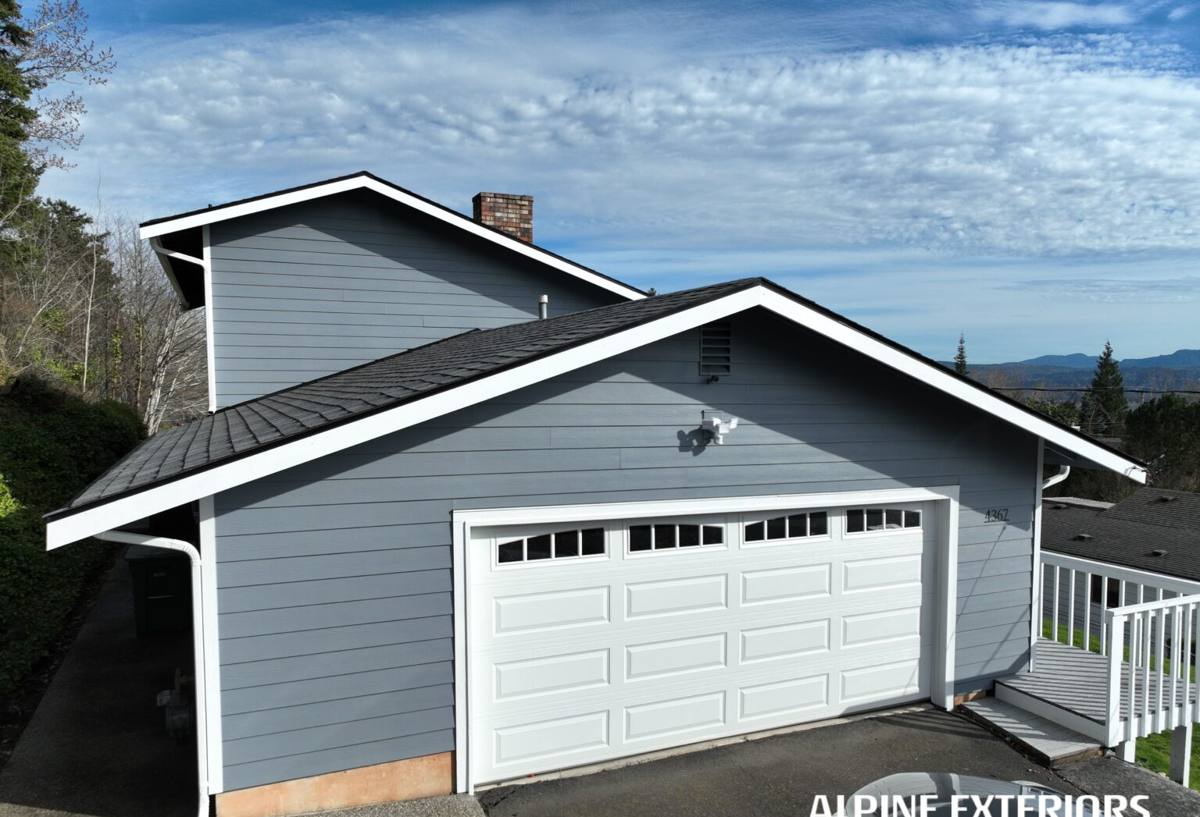
What Cherry Point's Climate Actually Does to a Roof
Salt Air and Metal Fatigue
Proximity to the water means airborne salt settles on roofing surfaces and metal components continuously, not just during storms. Over years, this accelerates corrosion on exposed fasteners, flashing, and any unprotected metal edges. A repair that reuses corroded fasteners or doesn't account for this ongoing exposure is a short-term fix, not a real one.
Driving Rain and Wind-Driven Water Intrusion
Blaine's exposure to weather coming off the water means rain doesn't just fall straight down — it gets pushed sideways into laps, seams, and flashing details that would stay dry in a calmer climate. Roofs here need repair work that assumes water will be tested at angles a standard installation might not anticipate.
Extended Moss Season
Whatcom County's damp, mild climate gives moss a long growing window. Left unaddressed, moss holds moisture against the roof surface, lifts shingle edges, and works its way under flashing over time. A repair that patches the symptom (a leak) without addressing active moss growth nearby is likely to need revisiting.
Common Roof Repair Needs We See in This Area
- Flashing failures around chimneys, vents, and roof-to-wall transitions where wind-driven rain has worked its way in over time
- Moss-related shingle lifting and granule loss, especially on north-facing slopes that stay shaded and damp longer
- Corroded or failing fasteners and metal edge details from prolonged salt air exposure
- Localized leaks around skylights, plumbing vents, and roof penetrations
- Wind-lifted or missing shingles after a storm, common with weather coming off the Strait
- Gutter and drainage issues that let water sit against roof edges longer than it should
What a Correct Repair Actually Involves
A roof repair done right starts with understanding why the damage happened, not just patching where water is currently showing up inside the house. Water can travel along the underlayment or decking before it drips through a ceiling, so the visible leak point and the actual entry point are often in different places. Skipping that diagnostic step is the most common reason repairs fail to hold.
Our Repair Process
- Roof inspection and diagnosis. We get on the roof (not just a ground-level look) to trace the actual path water is taking, checking flashing, shingles, underlayment condition, and any moss or debris buildup contributing to the problem.
- Honest assessment. We explain what we found, what's causing it, and whether a targeted repair makes sense or if the roof's overall condition means a repair would just be a stopgap. We'd rather tell you that upfront than sell a repair that won't last.
- Repair scope and materials. We match materials and fasteners to what actually holds up in this environment — corrosion-resistant hardware given the salt air exposure, and flashing details built to handle wind-driven rain rather than just vertical runoff.
- The repair itself. This includes removing and replacing compromised shingles or underlayment, correcting or replacing failed flashing, and addressing any moss or organic growth contributing to the moisture problem.
- Cleanup and final check. We clear debris, confirm the repair area sheds water correctly, and walk you through what was done.
Repair vs. Replacement: How We Help You Decide
Not every leak means a new roof, and not every repair is a good use of money. The honest answer depends on the roof's age, how widespread the damage is, and whether the underlying materials are still sound.
| Factor | Repair usually makes sense | Replacement worth discussing |
|---|---|---|
| Roof age | Roof is well within its expected service life | Roof is near or past the end of its typical lifespan for the material |
| Damage extent | Isolated to one area — a flashing detail, a section of shingles | Multiple areas showing wear, or damage spread across several slopes |
| Underlayment condition | Underlayment and decking are still sound beneath the damaged area | Water has been getting in long enough to compromise decking or underlayment broadly |
| Moss/organic growth | Growth is manageable and hasn't caused widespread lifting | Long-term moss damage has affected shingle integrity across large areas |
| Recurring leaks | First occurrence or clearly isolated cause | Same general area has leaked more than once despite prior repairs |
We'll give you a straight answer based on what we actually see on your roof, not a default push toward the bigger job.
Why Flashing Detail Matters More Here Than Elsewhere
Flashing is where most roof leaks actually originate, and it's also the detail most sensitive to installation quality. In a coastal, wind-exposed area like Cherry Point, flashing has to handle water being pushed sideways and upward under wind pressure, not just water running downhill. Chimney flashing, valley flashing, and the transitions where a roof meets a wall or dormer all need to be built with that in mind. A repair that reuses old flashing or reinstalls it without correcting the underlying issue is one of the most common reasons homeowners see a "fixed" leak come back after the next storm.
We also pay close attention to fastener and metal choice given the salt air. Standard fasteners can corrode faster than expected this close to the water, and a corroded fastener eventually loses its grip — which reopens the exact problem the repair was meant to solve. Using the right hardware for this environment is a small cost difference that matters over the life of the repair.
Moss Management as Part of the Repair
In much of Whatcom County, and especially in shaded or north-facing roof sections common to this area, moss isn't a cosmetic issue — it's an active contributor to shingle damage and moisture retention. When moss growth is part of what's causing a leak, we address it as part of the repair rather than leaving it to keep working on the roof after we've left. That typically means careful removal without damaging the shingle surface, and a conversation about what ongoing maintenance (or a moss treatment plan) would help prevent it from becoming a repeat problem.
Signs You Likely Need a Roof Repair Soon
- Water stains or discoloration on ceilings or interior walls, especially after a windy rain
- Visible moss buildup, particularly on shaded or north-facing roof slopes
- Missing, curling, or lifted shingles you can see from the ground
- Granules collecting in gutters or at downspout outlets
- Rust staining or visible corrosion around flashing, vents, or metal roof edges
- Daylight visible through the roof deck from inside an attic space
Why Local Experience in Cherry Point Matters
Roofing crews unfamiliar with this stretch of Whatcom County sometimes underestimate how much salt exposure and wind-driven rain change the math on a repair. A repair approach that works fine in a drier, inland climate can fail within a season or two out here if it doesn't account for corrosion resistance and wind-loaded water intrusion. Working in and around Blaine regularly means we're not learning these lessons on your roof — we've already accounted for them in how we diagnose and repair.
We're also familiar with what typical roof ages and construction look like in this part of the county, which helps us give a realistic answer on repair versus replacement rather than a generic one.
What to Expect When You Call Us
We start with a straightforward inspection and a clear explanation of what we find — no pressure, no inflated scope. If a repair is the right call, we'll walk you through what's involved and give you a realistic estimate before any work starts. If the roof's overall condition means a repair isn't a good long-term investment, we'll tell you that too, along with why.
If you're dealing with a leak, visible moss damage, or storm-related shingle loss on a Cherry Point area roof, we'd rather take a look now than have it turn into a bigger repair later. Reach out for a free, no-pressure estimate using the form below — we'll take a look and give you a straight answer about what your roof actually needs.