 Blaine Roofing
 Why Birch Bay Roofs Wear Differently
Birch Bay sits right up against the water, and that changes what a roof has to deal with compared to a home a few miles inland. Salt-laden air moves off the bay and settles on every exposed surface, including your roof, where it slowly works on exposed fasteners, flashing, and any metal component that isn't built to shrug it off. Add in wind that regularly drives rain sideways instead of straight down, and you get moisture pushed into laps, seams, and edges that were never designed to handle water arriving from that angle.
Then there's the moss. Whatcom County's damp season runs long, and Birch Bay's proximity to the water keeps humidity and shade-driven dampness lingering on north-facing and tree-covered slopes well after other parts of a roof have dried out. Moss isn't just cosmetic — it holds moisture against roofing material, lifts shingle edges, and works its way under flashing over time. None of this means Birch Bay roofs are doomed to constant problems. It means repairs here need to account for conditions that a generic patch job doesn't anticipate.
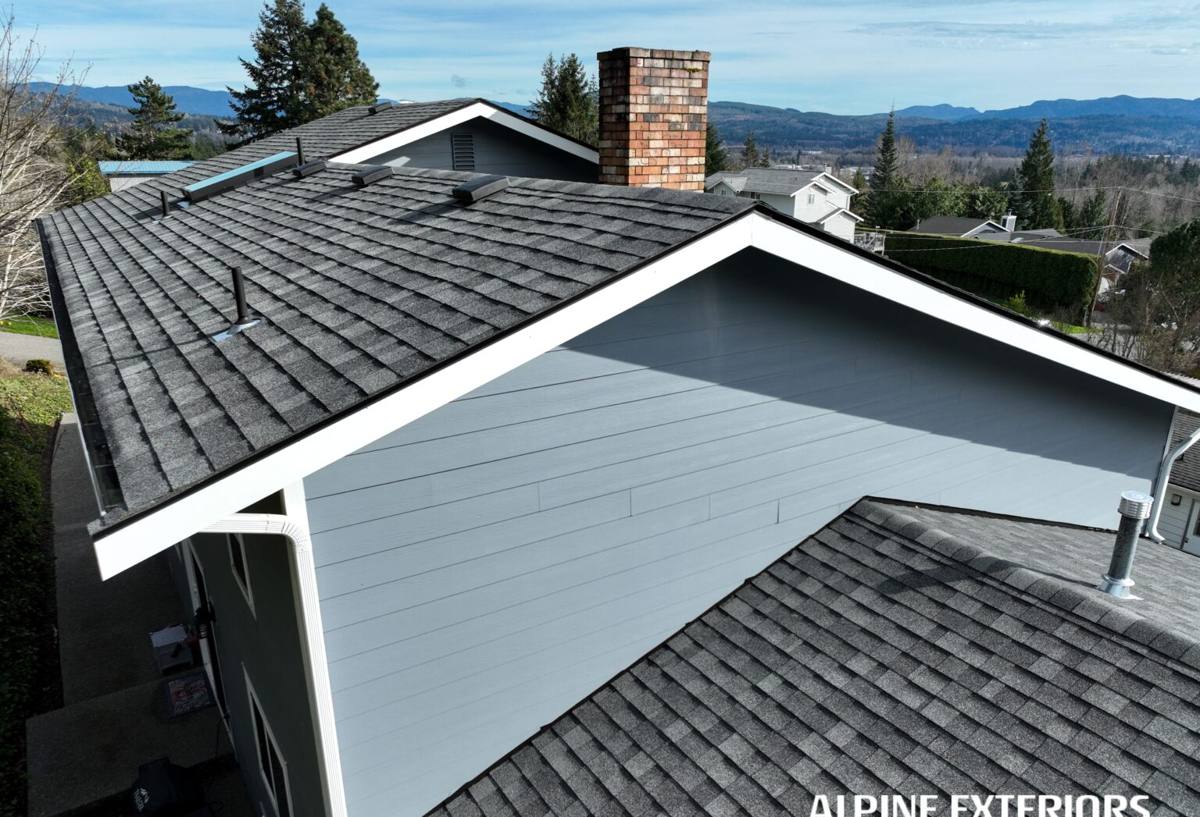
Common Roof Repair Issues We See Around Birch Bay
Moss and Organic Growth
Moss and algae streaking show up earlier and thicker on shaded or north-facing roof sections near the water. Left alone, moss holds moisture against the roofing surface, lifts shingle tabs, and creates channels for water to work underneath — turning a surface issue into a leak over one or two wet seasons.
Flashing and Fastener Corrosion
Salt air accelerates corrosion on exposed nail heads, step flashing, and vent boots that aren't properly sealed or coated. Once a fastener or flashing piece corrodes, it stops doing its job even if the surrounding shingles look fine.
Wind-Driven Rain Leaks
Because storms here often push rain horizontally, water can find its way under shingle edges, around chimneys, and past flashing laps that would stay dry in a calmer climate. These leaks are notorious for showing up somewhere inside the house that's several feet from where the water actually got in.
Nail Pops and Underlayment Fatigue
Repeated wet-dry cycles cause roof decking to expand and contract, which can work fasteners loose over time. Underlayment beneath older shingles can also degrade faster in a consistently damp climate, reducing the backup protection you're counting on if the top layer ever gets compromised.
What a Correct Roof Repair Actually Involves
A roof repair that actually holds up starts with figuring out where water is entering — not just patching where it's showing up inside. Interior stains and exterior damage don't always line up directly; water travels along rafters and decking before it drips somewhere visible. That means a proper repair usually involves checking the attic or roof cavity, not just the shingles from the ground or a ladder.
Once the source is identified, a correct repair matches materials to what's already on the roof as closely as possible, reseats or replaces compromised flashing rather than just caulking over it, and checks the decking underneath for soft spots or rot before closing everything back up. Caulk and sealant have a place in roofing, but they're a short-term fix when used in place of proper flashing work — they degrade faster than the roofing material around them, especially with the UV and salt exposure common along the bay.
- Locate the actual entry point, not just the visible symptom
- Inspect decking and framing for hidden moisture damage
- Match shingle or roofing material as closely as available product allows
- Replace or properly reseat flashing rather than relying on sealant alone
- Check surrounding fasteners and seams while the area is already open
Signs Your Roof Needs Attention
Some of these are obvious, others are easy to miss until they've been developing for a while. If you're noticing any of the following, it's worth having someone take a look before the next round of wind and rain moves through.
- Water stains or discoloration on ceilings or upper walls
- Granules collecting in gutters or at downspout outlets
- Visible moss, algae, or dark streaking on the roof surface
- Curling, cracked, or lifted shingle edges
- Daylight visible through the roof deck from inside the attic
- Soft or spongy spots when walking the roof
- Missing or displaced shingles after a windstorm
- Rusty streaks around nail heads, vents, or flashing
Our Roof Repair Process in Birch Bay
- Initial contact and scheduling — we get a general sense of the problem and set a time to come look at it in person.
- Roof and attic inspection — we check the roof surface and, where accessible, the underside of the deck to confirm where water is actually getting in.
- Written estimate — you get a clear explanation of what needs to happen and why, along with the cost, before any work starts.
- Repair work — flashing, decking, underlayment, and shingles are addressed as needed, matched to your existing roof as closely as possible.
- Cleanup and walkthrough — the work area is cleared of debris and old material, and we walk you through what was done.
Repair or Replace? Key Factors We Weigh
Not every roof problem calls for a full replacement, and we're not going to tell you it does when a targeted repair will hold up. The right call depends on a handful of factors we walk through with you.
| Factor | Leans Toward Repair | Leans Toward Replacement |
|---|---|---|
| Roof age | Under 15 years, or well within expected lifespan for the material | Near or past the material's typical service life |
| Extent of damage | Localized to one area — a valley, vent, or section of flashing | Spread across multiple areas or slopes |
| Repair history | First or second repair in that area | Same spot has needed repeated fixes |
| Decking condition | Solid, dry decking under the damaged section | Soft, rotted, or water-damaged decking in multiple spots |
| Material availability | Matching shingle or material still obtainable | Discontinued or badly mismatched material available |
Materials We Use — and Why
Matching your existing roofing material is our first priority on a repair, since mismatched shingles or metal stand out and can create their own weak points at the seams. For flashing and fasteners, we favor corrosion-resistant options given how much faster standard materials break down in a salt-air environment — this isn't about any single product being bad, it's about picking the option that holds up best to the specific conditions along the bay.
For moss-affected areas, we treat the growth and address the drainage or shade issue contributing to it, rather than just scraping the surface and leaving the underlying moisture problem in place. We're upfront about trade-offs: a treatment that knocks back moss quickly may need reapplication over time, and a premium flashing metal costs more up front but saves you from redoing the same repair in a few years. We'd rather explain the trade-off than oversell a product.
A Note on Underlayment
When a repair opens up a section of roof, it's worth checking the underlayment underneath, not just the shingles on top. In a consistently damp climate, underlayment that's degraded loses its backup value — meaning the next leak has nothing standing between it and your decking. We'll flag this if we see it, rather than close things up and hope it holds.
Why Local Experience in Birch Bay Matters
A roofer who mostly works drier, inland areas doesn't necessarily think about salt-air corrosion or wind-driven rain the same way a crew that regularly works Whatcom County's coastline does. Knowing which flashing details tend to fail first in this environment, which slopes hold moss longest, and how local wind patterns off the water tend to find weak points in a roof comes from having actually done the work here repeatedly — not from a general roofing checklist.
There's also a practical side to it: being familiar with Birch Bay and the surrounding Blaine area means faster response when weather damage happens, and a better sense of what's realistic for scheduling around the wetter months when roof work is harder to do well.
Simple Maintenance That Extends a Repair's Life
A good repair lasts longer with a little upkeep in between. None of this requires climbing on the roof yourself — most of it is about staying ahead of moisture and debris.
- Keep gutters and downspouts clear so water isn't backing up under roof edges
- Trim back tree limbs that keep sections of roof shaded and damp
- Have moss addressed early, before it lifts shingle edges or works under flashing
- Schedule a periodic visual check, especially after a significant windstorm
- Address small leaks promptly rather than waiting for them to become bigger repairs
If you're noticing a leak, moss buildup, or storm damage on your Birch Bay home, we're happy to come take an honest look and walk you through what's actually going on — no pressure, no upsell. Use the form below to request a free estimate.