 Blaine Roofing
 Why Peace Arch Siding Wears Differently
Homes in the Peace Arch area sit close to the water, right where Whatcom County's marine climate is at its most aggressive. The combination of salt-laden air drifting off the Strait, sustained driving rain through fall and winter, and a moss season that can run eight months or longer puts a specific kind of stress on exterior siding that homes further inland simply don't face. If you've noticed premature paint failure, soft spots near trim, or green growth that comes back every year no matter how often it's cleaned, your siding is telling you something about how it was built and installed, not just how old it is.
Siding replacement here isn't a cosmetic decision. It's a chance to correct the moisture and material problems that caused the failure in the first place, rather than repainting or patching a system that was never suited to this environment.
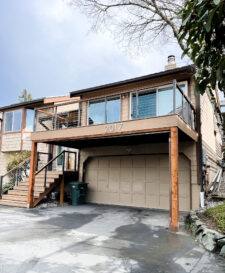
What Salt Air and Moisture Actually Do to Siding
Salt Exposure
Airborne salt is corrosive to fasteners, flashing, and any metal trim components. It also accelerates the breakdown of paint film on wood-based and composite sidings, which is why homes near the water tend to need repainting more often than homes even a few miles inland. Salt residue holds moisture against the siding surface, extending the time the material stays wet after a storm.
Driving Rain
Peace Arch's exposure means rain often comes in at an angle, driven by wind off the water rather than falling straight down. That kind of weather pushes moisture into laps, seams, and butt joints that would stay dry in a calmer climate. Any siding installed with tight or unsealed joints, or without correct water-resistive barrier detailing behind it, is going to take on moisture over time.
Moss and Prolonged Dampness
Whatcom County's moss season is long, and Peace Arch's tree cover and proximity to the water keep humidity elevated for much of the year. Moss and algae hold moisture against the siding surface, which is a slow but steady contributor to rot in wood-based products and finish breakdown on painted surfaces. Siding that can't shed water quickly, or that has organic material sitting on it for months at a time, ages faster than it should.
What a Correct Siding Replacement Involves
A siding replacement is only as good as what happens underneath the new material. In a climate like this, the work below the surface matters more than it does in drier parts of the state.
- Full removal of existing siding and inspection of the sheathing for rot, delamination, or soft spots
- Repair or replacement of any damaged sheathing before new material goes on
- Installation of a correctly lapped water-resistive barrier, sealed at all penetrations
- Proper flashing at windows, doors, and any roof-to-wall transitions
- Rainscreen or drainage gap detailing where conditions call for it, so bulk water has a path to drain and dry
- Fasteners and trim hardware rated for coastal, high-moisture exposure
- Correct nailing pattern and fastener spacing per the manufacturer's installation instructions
- Factory-finished siding installed to the manufacturer's specified clearances from grade, roofing, and decking
Skipping any one of these steps is how a siding job that looks fine on installation day ends up with moisture problems three or four years later. This is especially true in a coastal exposure like Peace Arch, where the margin for error is smaller than it is elsewhere in the county.
Why We Only Install James Hardie Fiber Cement Here
We install exclusively James Hardie fiber cement siding, and we don't offer vinyl, LP SmartSide, Cemplank, Allura, or bare wood species like primed spruce or cedar. That's not a marketing preference — it's a standard we hold because of what this climate does to siding over time.
Fiber cement is non-combustible and dimensionally stable, meaning it doesn't expand and contract with moisture the way wood-based products do. That matters directly in a marine environment: wood-based siding that takes on repeated wetting and drying cycles is more prone to swelling, delamination, and eventual rot at joints and edges. Vinyl siding can work loose or warp under sustained wind-driven rain and temperature swings, and its seams rely on overlap rather than a sealed, factory-engineered joint system.
James Hardie's HZ5 product line is specifically engineered for climates like the Pacific Northwest, with a heavier moisture and impact profile than the company's HZ10 line built for drier regions. Combined with the factory-applied ColorPlus finish, which is baked on rather than field-painted, the result is a siding system that resists the paint fade, cracking, and moisture intrusion that we see on older, wood-based, and vinyl-clad homes throughout Peace Arch and the rest of Blaine.
Comparing Siding Materials for a Coastal Blaine Home
| Factor | James Hardie Fiber Cement | Vinyl | Wood-Based (Cedar, Primed Spruce, LP SmartSide) |
|---|---|---|---|
| Salt air resistance | Strong — non-organic, dimensionally stable | Moderate — can become brittle over time | Weak — organic material prone to moisture damage |
| Driving rain performance | Strong with correct installation and flashing | Moderate — seams and laps can leak under wind-driven rain | Weak — swelling and rot at joints if moisture sits |
| Moss and algae resistance | Good — factory finish resists organic growth | Fair — surface can host algae in shaded, damp areas | Poor — organic surface feeds moss and mildew growth |
| Finish longevity | Factory ColorPlus finish, long fade resistance | Color molded in, but can chalk and fade | Field-applied paint, needs repainting more often |
| Fire resistance | Non-combustible | Combustible | Combustible |
Every material on this table has legitimate uses somewhere. Our decision to standardize on James Hardie is based specifically on how these products perform in the salt air, wind-driven rain, and prolonged dampness that define Peace Arch's exposure.
Our Process for a Peace Arch Siding Replacement
1. On-Site Assessment
We walk the exterior, check for signs of moisture intrusion, and inspect sheathing condition where accessible. We look specifically at areas most exposed to wind-driven rain — corners, upper stories, and walls facing open water or open ground.
2. Scope and Product Selection
We help you select the right James Hardie profile — lap siding, shingle-style panels, or a mix with trim — and the HZ5 climate designation appropriate for this exposure, along with a ColorPlus finish that fits the home.
3. Tear-Off and Sheathing Repair
Old siding comes off completely so we can see what's underneath. Any compromised sheathing is repaired or replaced before we move forward — this step gets skipped by crews trying to save time, and it's the single most common cause of early failure in coastal siding jobs.
4. Weather Barrier and Flashing
We install and seal the water-resistive barrier, then flash every window, door, and transition point to shed water away from the wall assembly, not into it.
5. Installation to Spec
Siding goes on following James Hardie's fastening and clearance requirements exactly, including drainage detailing suited to this level of rain exposure.
6. Final Walkthrough
We review the completed work with you, confirm caulking and trim details, and go over basic care so the siding performs the way it's designed to for decades.
Why Local Experience in Peace Arch Matters
A crew that regularly works Blaine and the Peace Arch area already understands how the wind comes off the water, which wall orientations take the worst of the driving rain, and how fast moss reestablishes itself on a shaded north face here compared to a sunnier lot. That's the kind of judgment that doesn't show up in a spec sheet — it shows up in where extra flashing attention goes, how drainage details get adjusted for a specific lot's exposure, and which corners never get cut because we've seen what happens when they do. Hiring a crew with that local track record reduces the chance of a callback in year three for a problem that should have been caught on day one.
A Practical Pre-Replacement Checklist
- Check for soft or spongy spots when pressing on siding, especially near the bottom courses and around windows
- Look for recurring moss or algae growth that returns within months of cleaning
- Note any paint that's peeling, bubbling, or chalking heavily, particularly on walls facing the water or prevailing wind
- Check trim and corner boards for gaps, cracking, or visible water staining
- Ask any contractor for their specific flashing and water-resistive barrier detailing plan, not just a material brand name
- Confirm whether sheathing repair is included in the scope if damage is found during tear-off
What to Expect Cost-Wise
Siding replacement costs vary based on square footage, the amount of sheathing repair needed, trim complexity, and product selection within the James Hardie lineup. Homes with existing moisture damage typically cost more due to the sheathing repair work required before new siding can go on — which is one more reason to address failing siding before it progresses to structural damage. We provide a detailed, itemized estimate after the on-site assessment rather than a ballpark number, since the condition of what's underneath the existing siding has a real impact on scope.
If your Peace Arch home is showing signs of coastal wear — paint failure, recurring moss, or soft spots near the base — we're happy to take a look and walk you through what correct replacement would involve. Reach out for a free, no-pressure estimate using the form below.