 Blaine Roofing
 Siding Repair Near the Peace Arch: What Makes This Area Different
Homes near the Peace Arch border crossing sit in one of the more exposed corners of Whatcom County. You're close enough to Semiahmoo Bay and Drayton Harbor to get salt-laden air working on your siding year-round, and the same weather systems that roll off the Strait of Georgia bring long stretches of driving rain that hit exterior walls at an angle, not just straight down. Add a shaded, damp climate that keeps moss and algae active for most of the year, and you have a siding environment that's genuinely harder on a home than what you'd find twenty miles inland.
That combination — salt air, wind-driven rain, and a moss season that barely takes a break — means siding repair calls in this part of Blaine tend to be about moisture that's already gotten behind the cladding, not just cosmetic wear on the surface. A patch job that only addresses what's visible from the driveway often leaves the actual problem in place.
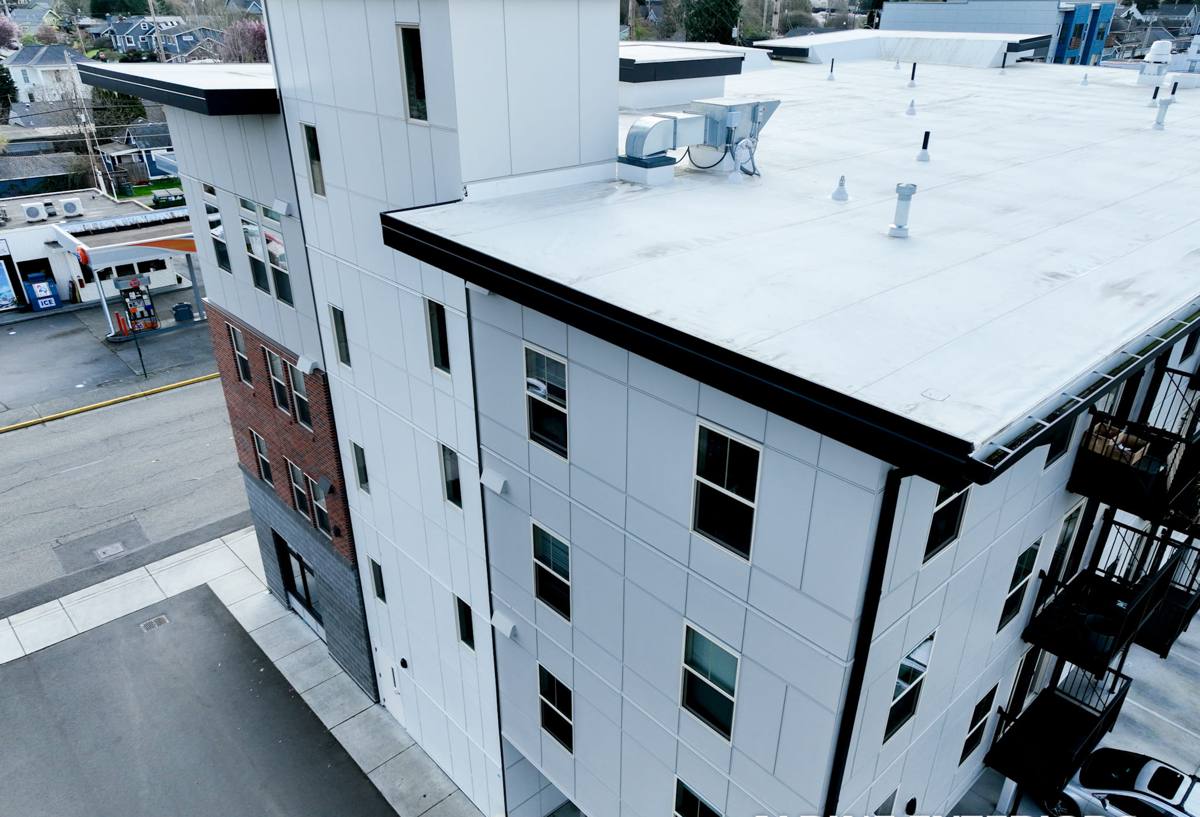
Signs Your Siding Needs Repair
Most homeowners call us after noticing one or two symptoms, but siding damage rarely shows up as a single clean problem. Here's what we look for on a service call in this neighborhood:
- Soft or spongy spots when you press on a panel or board, especially near the bottom courses and around window trim
- Dark streaking or a greenish cast that keeps returning within weeks of cleaning
- Visible gaps, warping, or cupping at butt joints and corners
- Paint or finish that's bubbling, peeling, or chalking faster than the rest of the house
- Musty smell or visible staining on interior walls that share an exterior wall with damaged siding
- Cracked or missing caulk at seams, penetrations, and trim transitions
- Nail heads popping out or streaking with rust
Any one of these can be minor. Two or three together, especially on a wall that faces the prevailing weather, usually means water has been getting in for a while.
Why Symptoms Show Up Where They Do
Damage in this area is rarely random. Walls facing the water and the open weather side of a lot take the brunt of driving rain, so that's where we see the most active decay. North-facing and heavily shaded walls, on the other hand, are where moss and algae take hold first, because they stay damp the longest between storms. Knowing which pattern you're dealing with changes how we diagnose and repair it.
What's Actually Behind the Damage
Salt Air and Metal Fasteners
Airborne salt from the bay accelerates corrosion on exposed nail heads, flashing, and any metal trim components. Once a fastener starts rusting, it loses holding power and can telegraph a rust stain through paint or factory finish. This is a slow process, but it's constant here in a way it isn't for homes further from the water.
Wind-Driven Rain
Rain that hits siding at an angle finds its way behind laps, into butt joints, and around poorly sealed trim far more easily than rain falling straight down. Over time this drives water behind the cladding at seams that were never built to shed water aggressively, which is where a lot of hidden rot starts.
Moss, Algae, and Trapped Moisture
Moss and algae themselves don't destroy siding, but they hold moisture against the surface for extended periods, which keeps wood-based products wet longer than they're designed to tolerate and breaks down paint films faster. Left alone through a full moss season, that constant dampness turns a cosmetic issue into a structural one.
Repair vs. Replace: How We Make the Call
| Situation | Repair Usually Makes Sense | Replacement Usually Makes Sense |
|---|---|---|
| Damage extent | Isolated to one or two wall sections | Spread across multiple elevations |
| Underlying structure | Sheathing and framing are still sound | Rot has reached sheathing or framing |
| Cause | A specific, fixable failure point (flashing, caulk, one bad panel) | Systemic issue — original install, product, or age |
| Material match | Matching product still available or a near-invisible transition is possible | Original product discontinued or mismatched beyond acceptable blending |
| Home's siding age | Under two-thirds of expected service life | Nearing or past expected service life |
We'll always tell you honestly which side of that line your home falls on. A well-timed repair can add years to siding that's otherwise sound, but there's no point patching a wall that's going to need full replacement in two years anyway — that's money spent twice.
What a Correct Repair Job Involves
A repair that just replaces the damaged board and re-caulks the joint is treating the symptom. Our process is built around finding and fixing the actual water path, then restoring the cladding on top of a dry, sound wall.
- Remove damaged material beyond the visibly affected area, since rot and moisture staining almost always extend further than what's obvious from outside.
- Inspect the sheathing and water-resistive barrier underneath. If the barrier is torn, missing, or degraded, that gets repaired before anything goes back on the wall.
- Correct the water entry point — this might mean re-flashing a window head, re-lapping a seam that was installed backward, or extending flashing that was cut short during the original install.
- Address any rot in framing if it's reached that stage, before closing the wall back up.
- Install matching or compatible siding material, fastened and lapped to shed water correctly rather than just to look right from the ground.
- Reseal and refinish so the repaired section holds up to the same salt air and driving rain that damaged the original.
Material Matching, and Why We Repair With James Hardie
When a repair calls for new material — whether it's a few boards or a full elevation — we install James Hardie fiber cement, and only James Hardie. It's a decision we've made as a company, not something we default to out of convenience.
Fiber cement doesn't absorb moisture and swell the way wood-based siding does, and it doesn't corrode the way metal panel systems can in a salt-air environment. Hardie's ColorPlus factory finish is baked on rather than field-applied, which matters a great deal in a climate where field-applied paint is fighting damp, low-light conditions for a good part of the year. And Hardie's HZ product lines are engineered specifically for climate zones like ours — freeze-thaw cycles, sustained moisture exposure, and coastal air are part of what they're built to handle.
We don't install LP SmartSide, vinyl, Cemplank, Allura, or primed cedar or spruce siding. Each of those products has legitimate uses elsewhere, but for the moisture load and salt exposure this stretch of Blaine sees, we've found fiber cement — installed correctly — holds up with the least long-term maintenance and the strongest warranty backing. When we're patching an existing non-Hardie wall, we'll tell you plainly what the mismatched material means for long-term durability, and we'll price out converting to Hardie as an option, not a hard sell.
Blending Repairs Into Existing Siding
If your home already has Hardie siding, matching a repair is usually straightforward — Hardie's ColorPlus lines have been consistent for years, and we can source compatible profiles and colors. If your home has a different product, we'll walk you through what a visible seam or transition will look like honestly, rather than pretending a perfect blend is guaranteed.
Why a Crew That Already Works This Neighborhood Matters
Siding repair done right depends on correctly diagnosing why a wall failed in the first place, and that diagnosis is faster and more accurate when a crew has already seen the failure patterns specific to this part of Blaine. We know which elevations near the water tend to take the worst of the wind-driven rain, how far moss damage typically travels before it's visible, and what original installation shortcuts show up most often in homes built in this area during different eras.
That local pattern recognition shortens the inspection, keeps the estimate accurate, and means we're not guessing at causes we haven't seen play out on nearby homes in this exact climate.
Between Repairs: Keeping Siding in Good Shape
A few habits go a long way toward stretching the life of a repair in this climate:
- Rinse siding periodically to keep salt residue and organic buildup from sitting on the surface
- Trim back vegetation and tree cover that keeps walls shaded and damp longer than necessary
- Check and re-caulk seams around windows, doors, and trim every couple of years rather than waiting for a visible gap
- Walk the exterior after major wind-driven storms and look for anything newly loose, cracked, or displaced
- Address small issues — a popped fastener, a hairline crack — before the next wet season rather than after
None of this replaces a professional inspection, but it does reduce how often you need one.
If you're seeing any of the warning signs above, or just want an honest read on whether your siding needs a repair or something more, we're glad to take a look. We offer free, no-pressure estimates for homes in the Peace Arch area and throughout Blaine — no obligation, just a straight answer on what your siding actually needs.