 Blaine Roofing
 Roofing in the Shadow of the Peace Arch
Homes near the Peace Arch — close enough to smell the salt off Semiahmoo Bay and Drayton Harbor on a west wind — carry a different repair history than roofs ten miles inland. The border-crossing area sits right where the Strait of Georgia weather meets Whatcom County's marine climate: wind off the water, rain that comes in sideways more often than straight down, and a moss season that can run eight months out of twelve on north-facing slopes. A roof repair here isn't just patching a leak. It's addressing why that leak happened in a spot that gets more salt exposure and more standing moisture than most.
We repair roofs in this specific stretch of Blaine regularly, and the failure patterns repeat themselves. Once you've traced a dozen leaks back to the same handful of causes, you stop guessing and start checking the usual suspects first — which is exactly why a Peace Arch repair call usually moves faster and gets diagnosed more accurately than one from a crew that doesn't normally work this close to the water.
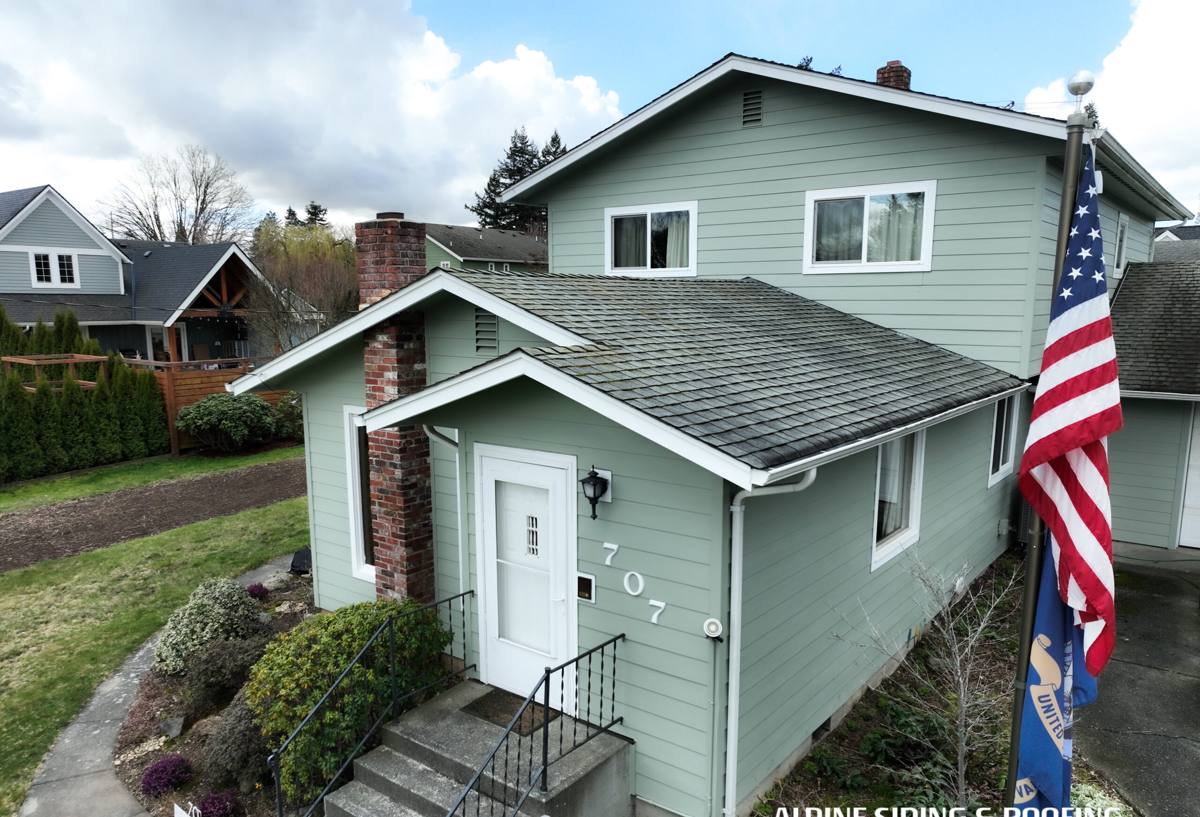
What Salt Air and Coastal Moisture Actually Do to a Roof
Corrosion at the Small Metal Parts
Roofs don't fail as one big sheet — they fail at the small metal pieces that hold everything together and direct water off the edges. Nails, staples, flashing, vent boots, and drip edge are all exposed to a fine, near-constant salt mist blowing off the bay. That mist accelerates corrosion on anything that isn't fully rated for coastal exposure, and once a fastener or flashing seam corrodes, it stops sealing the way it did when it was installed. This is almost always where a "mystery leak" traces back to.
Moss That Holds Water Against the Roof Deck
Moss doesn't just look bad — it acts like a sponge sitting directly on your shingles or shakes, holding moisture against the roof surface long after the rain has stopped. On the shaded, north- and east-facing slopes common in this neighborhood's tree cover, that extended dampness slowly breaks down shingle granules, lifts shake edges, and works its way under laps and seams. A roof with heavy moss is often losing waterproofing years before anyone sees a stain on the ceiling.
Wind-Driven Rain at Edges, Valleys, and Penetrations
Driving rain off the Strait doesn't fall straight down — it gets pushed sideways and upward under eaves, around chimneys, and into valleys where two roof planes meet. Ordinary roofing details can shed rain fine in calm conditions but let water in once wind pressure forces it uphill or sideways. Valleys, skylight curbs, and chimney flashing take the brunt of this and are where we find the majority of active leaks in this area.
Common Repair Calls We See Near Peace Arch
- Lifted or cracked shingles along ridge lines exposed to prevailing wind off the water
- Rusted or failed step flashing and counterflashing around chimneys and dormers
- Moss-damaged shingle mats on shaded north slopes, sometimes with granule loss visible in the gutters
- Deteriorated pipe boots and vent flashing (usually the first thing to crack from UV and salt exposure)
- Valley leaks after heavy wind-driven rain events, especially where debris has collected
- Soft or spongy decking discovered only once a shingle or flashing repair is opened up
- Gutter and fascia rot from prolonged moisture contact at the roof edge
What a Correct Roof Repair Actually Involves
A repair that actually holds up in this climate is not the same as a quick patch. The difference shows up within a season or two, usually as the same leak coming back in slightly different weather. Here's what separates a durable repair from a temporary fix:
| Quick Patch Approach | Proper Repair Approach |
|---|---|
| Seals visible crack or gap with caulk or roofing cement | Identifies why the material failed (corrosion, UV breakdown, wind uplift) before sealing anything |
| Works on the surface layer only | Checks the decking underneath for soft spots or rot before closing the repair back up |
| Reuses existing flashing if it "still looks okay" | Replaces flashing showing rust, pitting, or lifted seams — the parts salt air attacks first |
| Matches materials loosely by eye | Matches shingle type, profile, and where reasonably possible, color/lot to blend and maintain proper overlap |
| Leaves surrounding moss and debris in place | Clears moss and debris from the repair area so the fix isn't undermined again in a few months |
This matters more near the water than it does inland. A patch that would hold five extra years in a drier, less exposed neighborhood might only buy one or two seasons here before salt-air corrosion or trapped moisture reopens the same weak point.
Our Process for a Peace Arch Roof Repair
1. On-Roof Inspection, Not a Ground-Level Guess
We get on the roof and look at the actual failure point, plus the surrounding flashing, fasteners, and decking condition — not just the spot where the stain shows up inside. Leaks travel before they show, so the interior stain and the actual entry point are often a few feet apart.
2. A Clear Explanation Before Any Work Starts
You'll know what failed, why it failed, and what the repair involves — including if we find decking damage that changes the scope. No work starts on assumptions; if something needs to be opened up to confirm, we tell you before we do it.
3. Repair Using Materials Rated for This Exposure
We use fasteners, flashing, and sealants suited to coastal, salt-exposed conditions rather than generic inland-spec materials that corrode faster here. It costs a little more upfront and saves you from paying for the same repair twice.
4. Cleanup and a Straightforward Walkthrough
We clear debris and moss from the repair area, confirm the fix with you, and leave you with a clear picture of the roof's overall condition — including anything worth watching, even if it's not urgent yet.
Repair or Replace? Honest Signs Either Way
| Repair Usually Makes Sense | Replacement Is Worth Discussing |
|---|---|
| Single leak source, roof is under roughly 15 years old | Multiple unrelated leak points across the roof at once |
| Localized flashing or fastener failure | Widespread granule loss, curling, or brittle shingles |
| Decking underneath is still solid | Soft or rotted decking found in more than one area |
| Moss is surface-level and hasn't lifted shingle edges | Moss has been established long enough to lift or crack shingles in multiple spots |
| Roof has years of expected service life left | Roof is already near or past its expected lifespan for its material |
We'll tell you honestly which category your roof falls into. A repair that's genuinely enough to solve the problem is the right call — we're not going to push a replacement a roof doesn't need, and we're equally not going to patch something that's going to keep failing on you.
Materials We Use for Coastal Repairs
For shingle repairs, we favor algae-resistant, coastal-rated shingle lines and match them as closely as possible to your existing roof's profile and color. For flashing, we use corrosion-resistant metal appropriate for salt-air exposure rather than standard-grade material that pits and rusts faster this close to the bay. Sealants and fasteners are chosen for UV and moisture resistance rather than lowest cost, because on this coastline the cheaper option is usually the one you're paying to redo sooner.
We're straightforward about trade-offs where they exist. Some lower-maintenance shingle and metal options carry a higher material cost but need far less attention over a Blaine winter; some traditional materials look great but demand more upkeep — moss treatment, more frequent inspection — to perform well in this climate. We'll walk you through what fits your roof, your budget, and how much maintenance you actually want to take on.
Why a Crew That Already Works Peace Arch Matters
A roofer who works this specific stretch of Blaine regularly already knows which slopes hold moss longest, which flashing details tend to fail first in wind off the water, and roughly what condition to expect from a roof of a given age this close to the coast. That familiarity shortens the diagnosis, avoids guesswork, and means the repair addresses the actual cause instead of just the symptom that happened to show up inside your ceiling.
It also means understanding Whatcom County permitting and inspection expectations for roofing work, and being realistic with you about weather windows — scheduling repairs around the wetter stretches of the year here isn't an afterthought, it's part of doing the job right the first time.
Simple Maintenance That Extends a Repair's Life
- Keep gutters and valleys clear of needles and debris so water has a clear path off the roof
- Have moss treated or removed before it spreads across a full slope, not after
- Trim back overhanging branches that keep shaded slopes wetter and mossier longer
- Check flashing around chimneys and vents once a year for early rust or lifting
- Address small leaks promptly — a small, cheap fix now beats a decking repair later
- Have the roof looked at after any unusually strong wind or storm event off the Strait
If you're dealing with a leak, missing shingles, or just want an honest read on a roof's condition near the Peace Arch, we're glad to take a look. Reach out for a free, no-pressure estimate using the form below.