 Blaine Roofing
 Why Peace Arch Roofs Take More Punishment Than You'd Think
The homes near the Peace Arch border crossing sit about as close to the water as you can get in Whatcom County. That location is part of what makes the area beautiful, and part of what makes roofing here harder than it looks from the street. Salt-laden air off Semiahmoo Bay and the Strait of Georgia doesn't just smell different — it's chemically active. It settles on metal fasteners, flashing seams, and painted surfaces every single day, whether or not it ever rains.
Add in wind-driven rain that comes off the water sideways during winter storms, and a moss season that can run eight months or longer under the tree cover common to this part of Blaine, and you've got three separate stressors working on a roof at once: corrosion, water intrusion, and organic growth. A roof spec'd for a drier inland town doesn't automatically hold up here. This page is about what actually works for metal roofing specifically in the Peace Arch area, not generic roofing advice.
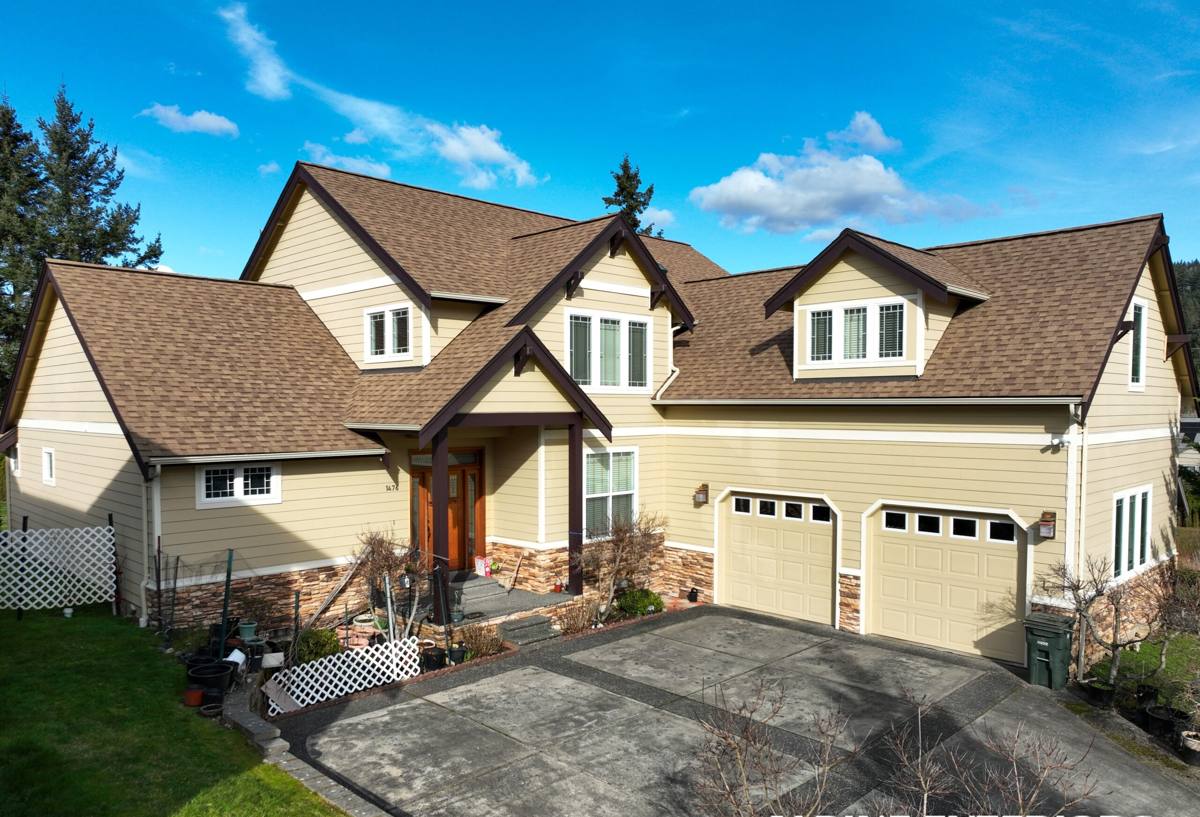
What Salt Air Actually Does to a Roof Over Time
Corrosion at the Small Details
Salt air rarely fails a roof by attacking the big flat panels first. It goes after the small stuff: exposed fastener heads, cut edges where a panel was trimmed on site, screw washers, and any spot where two dissimilar metals touch. Once a fastener starts to weep rust, that streak is both a cosmetic problem and an early sign the coating and gasket at that point are breaking down.
Wind-Driven Rain Finds the Weak Seam
On a calm day, water runs off a roof and doesn't ask any hard questions. In a Strait of Georgia storm with sideways rain, water gets pushed uphill under laps, into valleys, and around penetrations that would never leak in a gentler climate. Correct lap direction, sealed seams, and properly lapped underlayment matter more here than in most of the state, because the wind is doing work that gravity alone doesn't have to fight elsewhere.
Why Metal Roofing Is a Strong Fit for This Specific Location
We install and maintain several roofing systems across our service area, and we recommend metal for Peace Arch homes more often than not — not as a default, but because it genuinely handles this combination of salt exposure and heavy moss pressure better than most alternatives when it's specified and installed correctly.
Smooth Surface, Faster Drying
Moss needs moisture and time to establish. A textured shingle surface holds both. A smooth metal panel sheds water fast and dries quickly between rain events, which starves moss of the standing moisture it needs to take hold, especially on the shaded, north-facing slopes common on wooded Blaine lots.
Material Choice Matters More Near Salt Water
Not every metal roofing product is built the same for this exposure. Bare or lower-grade galvanized steel can corrode faster this close to the water. Our standard for coastal installs is aluminum, which doesn't rust, or steel with a heavier zinc-aluminum coating and a quality paint system rated for marine exposure. It costs a bit more up front. It's also the difference between a roof that still looks and performs well in year fifteen and one that's showing rust streaks by year seven.
| Panel Type | Salt Air Performance | Best Fit For |
|---|---|---|
| Standing seam, concealed fastener | Strongest — no exposed screw heads to corrode | Full re-roofs, higher-exposure lots near the water |
| Exposed-fastener (screw-down) panel | Good, but fastener maintenance becomes part of the roof's life | Budget-conscious projects, outbuildings, additions |
| Stone-coated steel | Solid if coating and cut edges are properly sealed | Homeowners wanting a shake or shingle look in metal |
| Aluminum panel systems | Best rust resistance of the group — no ferrous corrosion | Properties with direct water exposure or heavy salt spray |
What a Correct Metal Roof Install Involves Here
Underlayment and Flashing Are Not Optional Upgrades
On a Peace Arch roof, we treat a high-quality synthetic or self-adhered underlayment as the baseline, not an add-on, particularly at valleys, eaves, and any low-slope sections. Wind-driven rain will test every flashing detail eventually, and the underlayment is what protects the deck if a fastener, seam, or sealant ever does let a small amount of water through.
Fastener and Metal Compatibility
Mixing incompatible metals — say, a steel screw against an aluminum panel — sets up galvanic corrosion that eats away at the contact point over time. We match fasteners, flashing, and panel material so the whole system corrodes at the same slow rate instead of failing early at one weak point.
Ventilation That Accounts for the Wet Season
A metal roof sheds surface water well, but attic moisture is a separate issue. In a climate this wet for this many months of the year, proper intake and exhaust ventilation keeps condensation from building up under the deck, which protects both the roof structure and the insulation below it.
Moss and Debris Management in a Long Wet Season
Metal roofing dramatically reduces moss compared to shingles, but "reduces" isn't "eliminates," especially on shaded sections under tree canopy. Needles and leaf litter can still collect in valleys and along eaves, and where debris sits wet against a roof for weeks at a time, algae staining can develop even on metal. Zinc or copper strips near the ridge are a low-maintenance option worth discussing if your lot has heavy shade.
- Clear valleys and gutters of needles and leaf debris before the fall rains set in
- Keep overhanging branches trimmed back to cut down shade and debris load
- Rinse visible algae streaking with a gentle wash — never pressure-wash a coated metal panel
- Check exposed fasteners and sealant points every year or two for early corrosion or shrinkage
- Have flashing at chimneys, vents, and skylights inspected after any major windstorm
Our Process for Peace Arch Metal Roofing Projects
On-Site Assessment
We walk the roof and the attic, not just one or the other. Deck condition, existing ventilation, tree cover, slope, and how exposed the lot is to wind off the water all factor into the panel and material recommendation we give you.
Straightforward Written Proposal
You get a clear scope: panel type and gauge, underlayment, flashing approach, fastener spec, and a realistic timeline. No vague line items.
Install and Detail Work
Panels go on correctly the first time, with particular attention to laps, valleys, and penetrations — the details that determine whether the roof performs in a driving winter storm, not just on a dry day.
Walkthrough and Follow-Up
We review the finished roof with you and stay reachable if a question comes up after the first real storm season tests it.
Cost Factors for Metal Roofing on a Peace Arch Home
Every roof is different, but the line items that move the price on projects in this area are consistent. Rather than quote a number that won't mean much without seeing your roof, here's what actually drives cost:
| Factor | Why It Matters Here |
|---|---|
| Panel material (steel vs. aluminum) | Aluminum costs more but resists salt-air corrosion better long-term |
| Panel system (standing seam vs. screw-down) | Concealed-fastener systems cost more but reduce future maintenance |
| Roof complexity and pitch | More valleys and penetrations mean more flashing detail work |
| Tear-off vs. overlay | Full tear-off lets us inspect and repair the deck, important on older wet-climate homes |
| Coating and paint system | Marine-grade coatings cost more but hold up longer this close to the water |
As a broad honest range, homeowners in this area should expect metal roofing to run higher than a standard asphalt shingle job, with the final number depending heavily on the factors above. We'll always walk you through where your money is actually going.
Why It Matters That We Already Work Peace Arch
A roofer who's never worked this close to the water might spec a roof that's technically fine for the code but not really built for salt exposure and eight months of rain. We already know which corners of a Peace Arch lot tend to hold moisture, which fastener grades hold up and which ones start weeping rust in a few winters, and how much ventilation a wet-season attic actually needs. That's not a sales pitch — it's the difference between a roof that's engineered for Whatcom County's coastline and one that just happens to be sitting on it.
If you're weighing metal roofing for a home near Peace Arch, we're glad to take a look and give you a straight answer on what your roof actually needs — no pressure, no upsell. Use the form below to request a free estimate.