 Blaine Roofing
 Why Peace Arch Homes Take a Harder Hit Than the Rest of Blaine
Homes in the Peace Arch area sit close to the water and close to the border, which means they catch weather that inland Whatcom County properties simply don't deal with. Salt-laden air moves off Semiahmoo Bay and the Strait of Georgia, driving rain comes in sideways off the water for months at a stretch, and the deep shade from mature landscaping and long PNW winters keeps siding damp far longer than the calendar suggests. That combination — salt, wind-driven moisture, and shade — is exactly the environment that separates siding materials that hold up from siding materials that quietly fail from the inside out.
We work on homes throughout Blaine, but the Peace Arch pocket gets specific attention from us because the failure patterns we see there are consistent: paint chalking and peeling years ahead of schedule, moss colonizing north- and west-facing walls, and lap siding that looks fine from the street but is soft or delaminating where it's been absorbing moisture behind a compromised paint film. None of that is inevitable. It's a product and installation problem, and it's the reason we standardized on one material instead of offering the usual menu of options.
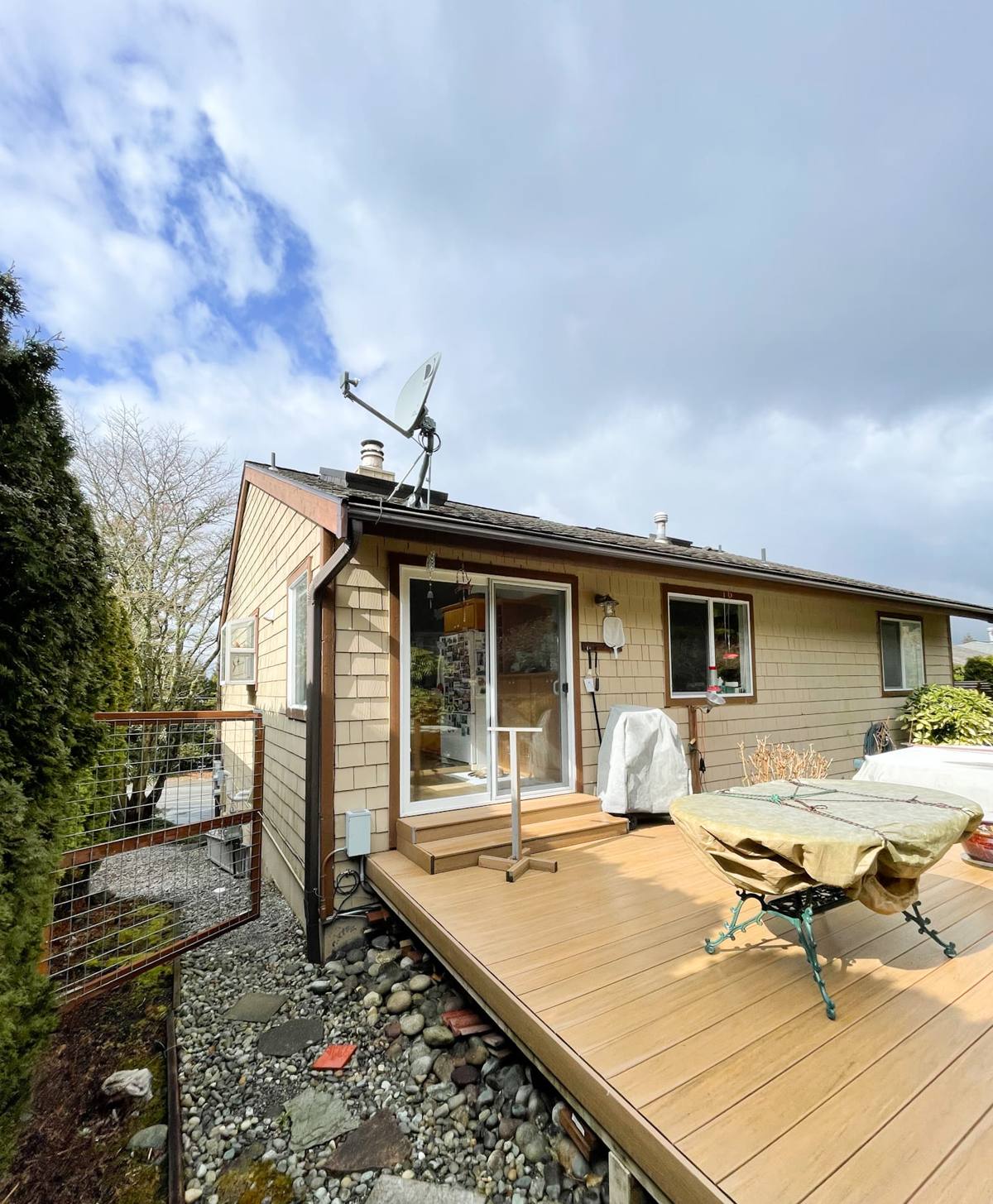
What Salt Air, Driving Rain, and Moss Season Actually Do to Siding
It helps to understand the mechanism, not just the symptom. Three things are working against siding here at the same time:
- Salt air is corrosive to fasteners, trim flashing, and any exposed metal, and it also breaks down lower-grade paint and coating systems faster than inland UV exposure alone would.
- Driving rain pushes water horizontally into laps, seams, and butt joints that were only ever designed to shed water moving straight down. Wind-driven moisture finds every gap a standard installation leaves behind.
- Extended moss and algae season means organic growth gets a longer runway to establish itself on shaded, damp siding. Moss holds moisture against the surface long after the rain has stopped, which keeps wood-based and composite products wet for days at a time.
Wood, primed spruce, and even engineered wood products are vulnerable to this cycle because their core material absorbs moisture at cut edges, fastener penetrations, and anywhere the factory coating gets breached. Once moisture gets into the substrate, it doesn't leave quickly in a marine climate — and that's when swelling, soft spots, and paint failure start.
Why We Only Install James Hardie Fiber Cement
We made the decision years ago to stop installing anything but James Hardie fiber cement siding, and Peace Arch's climate is a big part of why that decision holds up. Fiber cement is made from cement, sand, and cellulose fibers — there's no wood core to absorb water and swell, and it's non-combustible, which matters for wildfire-season embers as much as it does for everyday fire safety. James Hardie's ColorPlus factory finish is baked on under controlled conditions, not brushed or sprayed on-site, which gives it a more consistent bond and better fade and chip resistance than field-applied paint on other materials.
We don't say this to knock every other product on the market. Vinyl, LP SmartSide, primed wood, and other fiber cement brands all have legitimate uses in the right setting. But we build our reputation on what we put on a house, and we're not willing to install something in a salt-air, high-rainfall environment that we know is more sensitive to moisture, more maintenance-dependent, or backed by a thinner warranty than the alternative. Hardie is the one product line where the engineering, the finish, and the warranty structure line up with what Peace Arch homes actually need.
The HZ5 Climate Engineering Advantage
James Hardie engineers its siding in regional formulations called HZ (HardieZone) products, and the Pacific Northwest falls under HZ5 — the formulation built specifically for cold, wet, high-moisture climates like ours. HZ5 boards are engineered with moisture and freeze-thaw cycling in mind, which is a meaningfully different product than the version of Hardie siding sold in a dry Southwest market. When we quote a Peace Arch project, we're specifying HZ5 boards, not a generic national product.
What a Correct Installation Involves in This Climate
Fiber cement siding is only as good as the installation behind it, and this is where a lot of the visible failures we see on older homes actually originate — not from the siding material itself, but from shortcuts in the details you can't see once the job is finished. A correct install for a wind-driven-rain environment includes:
- A properly lapped weather-resistive barrier (housewrap) with all seams and penetrations taped, installed before a single board goes up
- Rainscreen or drainage gap furring where conditions call for it, so bulk water and vapor can drain and dry rather than sitting against the sheathing
- Correct fastener type, spacing, and penetration depth — under- or over-driven nails are one of the most common causes of premature failure
- Proper clearance between the bottom of the siding and grade, decks, and roof lines, so splash-back and standing water don't wick into the board
- Factory-mitered or properly caulked butt joints, with joint treatment that matches James Hardie's published installation specs
- Correct flashing at every window, door, and penetration — this is the single most common point of water intrusion on any siding job, regardless of material
James Hardie backs its product with a strong transferable limited warranty, but that warranty depends on installation to their published specifications. A beautiful-looking job with the wrong fastener schedule or missing flashing detail can still let water in behind the siding — and in a driving-rain climate, that failure shows up faster than it would somewhere drier.
Our Process for Peace Arch Projects
1. On-Site Assessment
We start by walking the exterior and identifying the specific exposure each elevation faces — which walls take the worst of the wind-driven rain off the water, which stay shaded and damp longest, and where existing moisture or moss damage is telling us something about the wall assembly underneath.
2. Tear-Off and Substrate Check
Once old siding comes off, we inspect the sheathing and framing for hidden rot or moisture damage before anything new goes up. This is the point where problems that have been building for years, invisible from the outside, actually get caught and addressed.
3. Weather Barrier and Drainage Plane
We install and properly lap the weather-resistive barrier and, where the wall assembly calls for it, a drainage gap, so the whole system is designed to shed and dry — not just resist water on the surface.
4. HZ5 Hardie Installation to Spec
Boards go up following James Hardie's published fastening, clearance, and joint-treatment requirements for our climate zone, with flashing detailed at every window, door, and roof intersection.
5. Final Inspection
We walk every elevation before calling the job done, checking fastener lines, caulk joints, and clearances against spec — the same details that determine whether the warranty actually holds up if it's ever needed.
James Hardie vs. Other Materials in a Marine Climate
| Factor | James Hardie Fiber Cement | Wood / Primed Spruce / Cedar | Vinyl / Engineered Wood |
|---|---|---|---|
| Moisture absorption | Cement-based, does not swell like wood | Absorbs moisture at cut edges and joints | Vinyl resists moisture; engineered wood cores can swell |
| Moss/algae resistance | Non-organic surface, factory finish resists staining | Organic material, more prone to growth in shade | Vinyl resists growth; engineered wood is more vulnerable |
| Finish durability | Factory-baked ColorPlus finish | Field-applied paint, wears faster in salt air | Color molded-in (vinyl) or field-painted (engineered wood) |
| Fire resistance | Non-combustible | Combustible | Combustible |
| Typical repaint interval | Longer, ColorPlus-backed | Shorter in this climate | N/A (vinyl) / shorter (engineered wood) |
What Drives Cost on a Peace Arch Hardie Project
Every home is different, but the same handful of factors move the price up or down on most jobs we quote in this area:
| Cost Factor | Why It Matters |
|---|---|
| Substrate condition | Hidden rot found during tear-off adds repair scope before new siding goes up |
| Home complexity | Multiple gables, dormers, and trim details take more labor per square foot than a simple rectangular wall |
| Product line and profile | Lap width, shingle-style panels, and trim boards vary in material cost |
| Accessibility and exposure | Multi-story walls, tight setbacks, or heavy landscaping affect staging and labor time |
| Existing siding removal | Full tear-off versus siding over an already-sound assembly changes scope |
We give straightforward, itemized quotes so you can see what's driving the number, not just a bottom-line figure.
Why Local Experience in Peace Arch Actually Matters
A crew that's worked this specific stretch of Blaine knows which elevations take the worst weather without having to guess, understands how moss establishes on these lots given the tree cover and shade patterns, and has already seen how wind off the water behaves against different home orientations. That's not something you get from a crew that mostly works inland Whatcom County or comes up from further south. It shows up in small decisions — where we add extra flashing attention, which joints get extra scrutiny, how we sequence work around this area's rain patterns — that add up to a siding job that's built for the conditions it actually has to survive.
A Homeowner's Checklist Before Hiring for a Siding Job Here
- Ask what siding material and product line they're specifying, by name, not just "fiber cement" or "James Hardie" generically
- Ask whether they install to James Hardie's published fastening and flashing specifications, and whether that's required for the warranty to remain valid
- Ask how they handle window, door, and roofline flashing specifically — this is the most common source of leaks
- Ask whether they inspect sheathing and framing during tear-off, not just install over what's there
- Ask for a written, itemized quote, not a single lump-sum number
- Ask how they'd handle a wall that shows moss or shade-related moisture history differently than a sun-exposed wall
If your Peace Arch home is due for new siding, or you're seeing early signs of moss, paint failure, or soft spots on your current exterior, we're happy to take a look and walk you through what we're seeing and what it would take to fix it right. There's no pressure and no cost to get an estimate — just a straight assessment from a crew that installs one product because we believe it's the right one for homes in this climate.