 Blaine Roofing
 Why Decks Near the Peace Arch Wear Out Faster Than the Manual Says
If you own a home in the Peace Arch area of Blaine, you already know your deck doesn't behave like a deck fifty miles inland. Being this close to the water and the border means your outdoor structure spends most of the year dealing with three things at once: salt-laden air rolling in off the bay, driving rain that comes in sideways during winter storms, and a moss and algae season that can run from October well into spring. None of these alone would be a problem. Together, over ten or fifteen years, they quietly break down decking, hardware, and framing faster than most homeowners expect.
We're not describing anything unusual for Whatcom County — this is just what it means to build outdoors this close to the Salish Sea. The point of this page is to walk through what that actually does to a deck, what a correct replacement looks like in this specific environment, and why the details matter more here than they would somewhere drier.
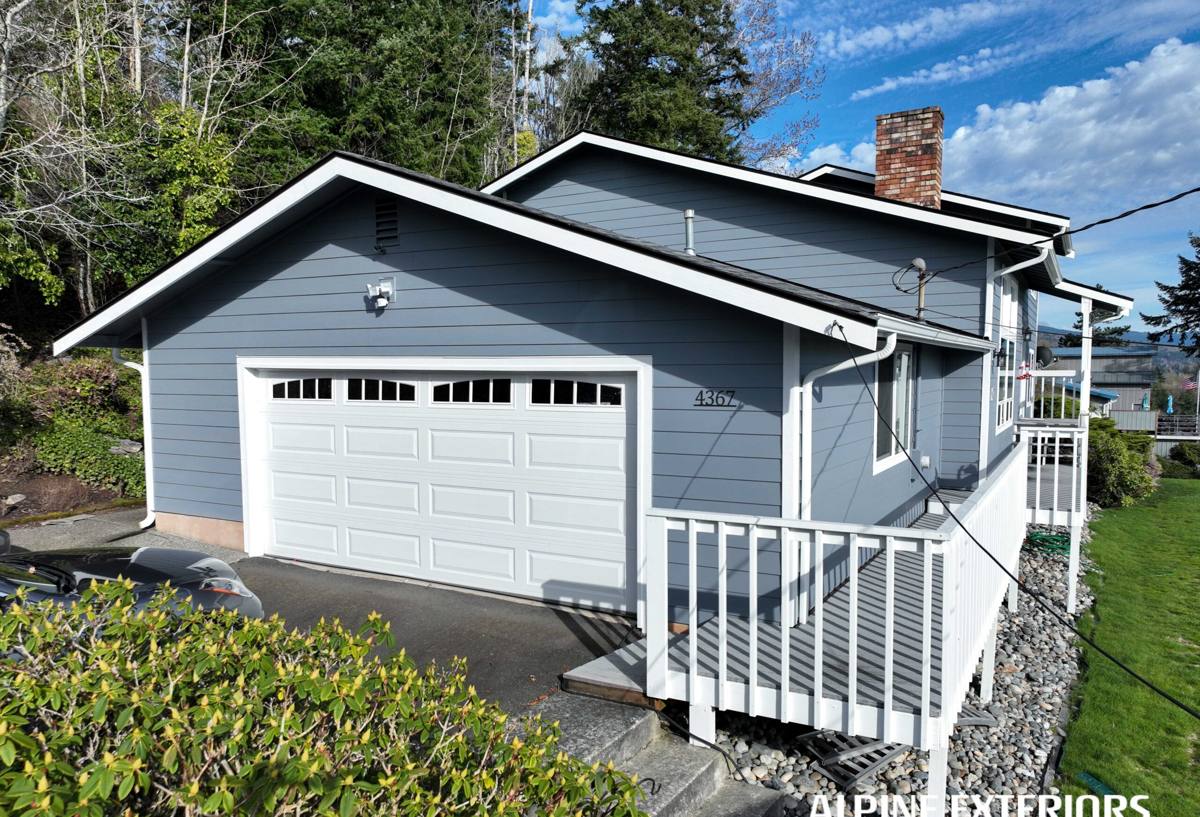
Signs Your Deck Needs Replacement, Not Another Repair
A lot of decks in this area get patched for years past the point where patching still makes sense. Replacing individual boards or sistering a joist can buy time, but it doesn't fix a structure that's failing from the inside. Here's how to tell the difference.
- Soft, spongy, or bouncy spots underfoot, especially near the ledger board where the deck meets the house
- Fasteners that are rusted, backing out, or leaving black streaks down the boards
- Persistent moss or green algae film that comes back within weeks of cleaning
- Visible gaps, cupping, or splitting in the decking boards themselves
- Railing posts that wiggle or feel less solid than they did a few years ago
- Water pooling instead of draining, or staining on the siding or foundation below the deck
Any one of these can sometimes be repaired in isolation. Two or three of them together, especially on a deck that's already 15-20 years old, usually means the framing and connections have been absorbing moisture for a long time and a full replacement is the more honest recommendation.
What a Correct Deck Replacement Actually Involves
A deck replacement isn't just pulling up old boards and screwing down new ones. Done right, it's a structural project, and in a marine climate the structural details matter more than the decking material itself.
Tear-Off and Structural Inspection
Once the old decking and railing come off, we inspect the framing underneath — joists, beams, posts, and footings — before anything new goes down. This is where hidden problems usually show up: rot at the ledger connection, undersized or corroded post bases, or footings that were never poured to depth. Any home this close to the water benefits from this step being done carefully rather than skipped.
Ledger Board and Flashing
The ledger board, where the deck attaches to the house, is the single most common failure point on any deck, and it's especially unforgiving in a wet coastal climate. Correct flashing here means a proper metal flashing cap integrated with the house's water-resistive barrier, not just caulk over the top of an old connection. Get this wrong and water tracks behind the siding for years before anyone notices the damage.
Framing and Fasteners
New framing should be moisture-resistant lumber rated for ground or structural contact, with joist tape over the tops of joists and beams to keep standing water from soaking into end grain. In salt air, fastener choice stops being a minor detail — hot-dip galvanized or stainless steel hardware holds up; standard zinc-coated fasteners can start showing corrosion within a few seasons this close to the bay.
Drainage and Airflow Underneath
A deck that can't shed water and breathe underneath will grow moss and mildew no matter what decking you choose. Grading the ground below to drain away from the house, keeping skirting vented rather than sealed tight, and avoiding low spots where water can sit are all part of a correct build, not an upsell.
Choosing Decking Material for a Peace Arch Climate
There's no single "right" material for every home, but there is a right way to weigh the options when salt air, rain, and moss are part of the equation every year.
| Material | How it handles this climate | What to know |
|---|---|---|
| Pressure-treated wood | Affordable, widely available, needs the most upkeep | Requires regular sealing/staining or it will gray, cup, and grow moss faster than composite |
| Cedar | Naturally rot-resistant, ages to a soft gray if left unfinished | Softer than composite, so it's more prone to surface wear and staining near the water |
| Composite decking | Very good moisture resistance, minimal seasonal maintenance | Higher upfront cost; still benefits from occasional cleaning to keep moss from taking hold in shaded, damp spots |
| PVC/vinyl decking | Fully moisture-proof surface, no wood fibers to feed rot or algae | Premium price point; look and feel differs from wood, which matters to some homeowners |
Our standard is to talk through these trade-offs honestly rather than push whatever has the best margin. For a lot of Peace Arch homes, composite or PVC earns its higher price tag simply because it cuts the maintenance burden in a climate that punishes wood. For others, especially where the deck is partly covered or well away from direct salt exposure, a properly finished wood deck still makes sense.
Railings, Stairs, and Code Requirements
Railings and stairs are where a lot of older decks fall out of compliance without anyone realizing it — codes have tightened over the years around baluster spacing, guard height, and stair rail continuity. A full replacement is the natural point to bring these up to current requirements, and it's also worth applying the same hardware standards here as the rest of the structure: railing posts and connectors near the water should use corrosion-resistant fasteners, not whatever was on the shelf.
Blaine and Whatcom County require permits for most deck replacements, particularly when the structure attaches to the house or exceeds certain height and size thresholds. We handle the permitting and inspection process as part of the job rather than leaving it to the homeowner to sort out — it's a normal part of doing this correctly, not an extra step we tack on.
What Affects the Cost of a Deck Replacement
We don't think broad ranges help anyone make a real decision — every deck is different, and the honest answer is "it depends on the specifics." What we can tell you is which factors move the price and in which direction, so an estimate makes sense once you have one in hand.
| Factor | Tends toward lower cost | Tends toward higher cost |
|---|---|---|
| Size and footprint | Small, single-level deck | Large, multi-level, or wraparound deck |
| Framing condition | Existing footings and posts are sound and reusable | Footings, posts, or ledger need to be rebuilt from scratch |
| Decking material | Pressure-treated wood | Premium composite or PVC |
| Railing style | Standard wood or metal baluster railing | Cable rail, glass panel, or custom designs |
| Access for demo/build | Easy ground-level access | Elevated decks or tight side-yard access |
| Stairs | None or a single short run | Multiple stair runs or landings |
Our Deck Replacement Process, Start to Finish
- On-site assessment — we look at the existing deck, the framing underneath where accessible, and how the site drains before quoting anything
- Written proposal — materials, scope, and timeline laid out plainly, including whether any structural rebuild is needed
- Permitting — we pull the necessary permits with the city or county before work begins
- Tear-off and disposal — old decking, railing, and any compromised framing removed and hauled away
- Structural rebuild — footings, posts, beams, and joists repaired or replaced as needed, with correct ledger flashing
- Decking and railing installation — installed to manufacturer spec with corrosion-resistant fasteners throughout
- Final inspection and walkthrough — passed off by the local building inspector, then walked through with you before we call it done
Why Hiring a Crew That Already Works Peace Arch Matters
A deck built by a crew with no local track record can still look fine the day it's finished. The difference shows up two or three winters later, when the fasteners a contractor from a drier region specified start showing rust, or when a flashing detail that would hold up in a low-rain climate lets water in during a real Blaine storm season. Working this area regularly means we've already seen which details fail here and which ones hold up — the fastener grade, the flashing approach, the drainage slope — and we build to that standard by default, not as an afterthought.
It also means we're realistic about scheduling. Whatcom County's wet season isn't a surprise to us, so we plan tear-offs and structural work around weather windows instead of leaving framing exposed to a storm mid-project.
Protecting Your New Deck: A Maintenance Checklist
A correctly built deck still needs some seasonal attention, especially this close to the water. This isn't a sales pitch for a maintenance contract — it's just what keeps a deck looking and performing the way it should for its full lifespan.
- Sweep debris and standing leaves off the surface before fall rains set in, so moisture doesn't sit in one spot
- Rinse off salt residue and grime periodically, particularly on railings and hardware closest to open water views
- Check fastener heads and connector hardware once a year for early rust or loosening
- Keep gutters and downspouts near the deck clear so runoff isn't dumping directly onto or under the structure
- Reseal or restain wood decking on the schedule the product calls for — don't wait until it's already graying and cupping
- Clear moss promptly in shaded, damp corners before it spreads across the whole surface
If your deck near the Peace Arch is showing its age, or you're just weighing repair against replacement, we're glad to take a look and give you a straight answer. Reach out for a free, no-pressure estimate — there's a form below to get started.