 Blaine Roofing
 Decks Near the Peace Arch Take a Different Kind of Beating
If you own a home in the Peace Arch area of Blaine, your deck isn't dealing with the same conditions as a deck twenty miles inland. You're close to Semiahmoo Bay and the international border, which means salt-laden air moving through the yard almost year-round, driving rain off the Strait, and a moss season that can run from October well into April. None of that is unusual for Whatcom County, but the combination of marine air and heavy shade from mature trees common in this part of Blaine speeds up deck deterioration in ways a lot of homeowners don't expect until they're standing on a soft board.
This page is specifically about repairing decks for homes in and around Peace Arch — not a general "deck repair" rundown. The failure points, the materials that hold up, and the inspection process all shift a bit when salt air and constant moisture are part of the equation.
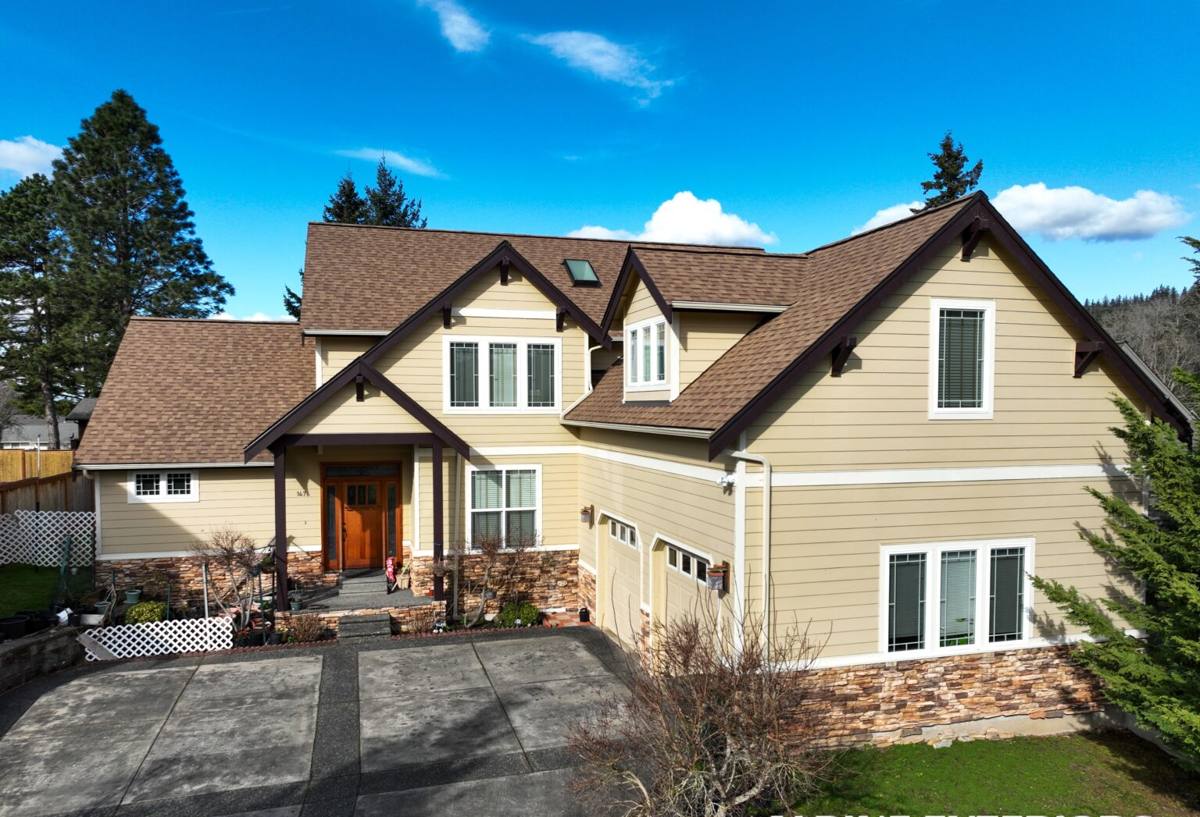
What Salt Air and Rain Actually Do to a Deck
Salt air doesn't rot wood by itself, but it accelerates two things that do: metal corrosion and moisture retention. Here's the breakdown of what we typically find on decks in this area versus decks further inland.
Fastener and Hardware Corrosion
Nails, screws, and joist hangers that aren't rated for coastal exposure corrode faster near the water. Once a fastener starts rusting, it loses grip strength, and the surrounding wood fibers around it stay damp longer because the metal is no longer sealing that hole. This is one of the most common hidden failure points we find on decks in the Peace Arch area — the surface boards look fine, but the hardware underneath has been quietly failing for years.
Moss, Algae, and Trapped Moisture
Blaine's long moss season means anything shaded — the north side of a deck, the space under a hot tub, the gap between boards that have swelled tight — stays wet far longer than it should. Moss and algae hold moisture against the wood surface, which is exactly the environment rot fungus needs. On decks with tight board spacing or minimal airflow underneath, we regularly see rot start from the underside up, which means it's often further along than it looks from the top.
Driving Rain and Ledger Board Exposure
Rain that comes in sideways off the water finds its way into spots a straight-down rain wouldn't reach — behind rim joists, around post bases, and especially at the ledger board where the deck attaches to the house. A failing ledger connection is a structural issue, not a cosmetic one, and it's one of the first things we check on any older deck in this area.
Signs Your Deck Needs Repair, Not Just Cleaning
A lot of deck problems get masked by a good pressure wash. Here's how to tell the difference between a deck that needs cleaning and one that needs structural attention.
- Boards that flex or feel spongy underfoot, especially near the house or along the edges
- Visible gaps opening up between the ledger board and the house siding
- Rust streaks running down from screw heads or joist hangers
- Wood that's gone gray and fibrous (not just dirty) when you scratch the surface
- Railing posts that wiggle at the base
- Stairs that feel less solid than they used to
- Persistent moss or dark staining in the same spots every year, even after cleaning
- A musty smell coming from underneath the deck
If you're seeing two or more of these, it's worth having someone look underneath, not just at the walking surface.
How We Inspect a Deck in This Area
Because ledger connections and hidden hardware corrode from the inside out here, a surface-level look isn't enough. Our process for a Peace Arch deck repair starts with:
- Underside inspection. We get underneath the deck to check joists, beams, post bases, and hardware directly — this is where the real condition of the structure shows up first.
- Ledger board check. We look at the connection point to the house for water intrusion, flashing failure, or fastener corrosion, since this connection carries a significant share of the deck's load.
- Probe testing. Soft-spot areas get probed with an awl or screwdriver to find the actual boundary of rot damage, not just the visibly discolored area.
- Fastener and hanger review. Every joist hanger and major connection point gets checked for rust, loosening, or undersized hardware from a prior repair.
- Drainage and airflow assessment. We look at how water moves off and out from under the deck, since poor drainage is often the root cause behind repeat rot in the same spots.
That inspection tells us whether you're looking at a targeted repair — a few boards, a hanger replacement, a ledger reseal — or something more involved like a partial rebuild of the substructure.
What a Correct Repair Actually Involves
Deck repair done right isn't just swapping bad boards for new ones. A few things we treat as non-negotiable on every job:
Matching or Upgrading Hardware
Any fastener or hanger we touch gets replaced with stainless steel or hot-dip galvanized hardware rated for coastal, high-moisture exposure — not the standard-grade hardware that's often what failed in the first place. This costs a bit more up front and saves you from doing the same repair again in five years.
Fixing the Cause, Not Just the Symptom
If rot is showing up because of poor drainage or trapped moisture under tight board spacing, replacing the boards without addressing airflow just resets the clock. Where it makes sense, we'll adjust spacing, add ventilation, or correct grading and drainage around post bases as part of the repair.
Ledger Flashing Done Properly
If the ledger board is involved, proper flashing that directs water away from the house band joist is essential. This is a spot where corner-cutting on a past build or repair shows up years later as hidden rot — we don't skip it.
Structural Sign-Off, Not Guesswork
If a repair touches structural framing — joists, beams, posts, or the ledger connection — it gets sized and fastened to current structural standards, not just "close enough to what was there before."
Decking Material Options for This Climate
When boards need full replacement, the material choice matters more here than in a drier inland climate. Here's an honest comparison of what we typically discuss with homeowners in the Peace Arch area:
| Material | Salt Air / Moisture Performance | Maintenance | Typical Lifespan |
|---|---|---|---|
| Pressure-treated lumber | Good if properly sealed and re-coated regularly | Annual cleaning, periodic sealing | 10–15 years with upkeep |
| Cedar | Naturally rot-resistant but needs consistent sealing near salt air | Regular sealing/staining, more frequent near the water | 15–20 years with diligent care |
| Composite decking | Doesn't absorb moisture or rot; resists salt exposure well | Occasional washing, no sealing needed | 25+ years, varies by product warranty |
There's no universally "right" choice — it comes down to budget, how much upkeep you want to do, and how the deck is used. What we won't do is install materials without being upfront about the maintenance trade-offs, especially in an environment where skipping a season of sealing can matter more than it would inland.
Repair vs. Rebuild: How We Help You Decide
Not every deck with problems needs to be torn out. As a general guide:
- Repair usually makes sense when rot or damage is isolated to a few boards, one section of railing, or a handful of hardware connections, and the main structural framing (posts, beams, ledger) is sound.
- Rebuild is usually the better call when rot has reached multiple joists or the ledger connection, when the deck was undersized or under-fastened to begin with, or when repair costs start approaching a meaningful share of rebuild costs.
We'll give you a straight answer on which category your deck falls into after the inspection — not a default push toward the bigger job.
Why a Crew That Already Works Peace Arch Matters
A roofing and exteriors crew that regularly works in this specific pocket of Blaine has already seen how the local combination of marine air, shade, and driving rain plays out on real decks — which framing details tend to fail first, which hardware holds up and which doesn't, and where drainage problems tend to originate on lots near the water. That local pattern recognition shortens the inspection and avoids repairs that look fine for a season and then fail again. It also means we're not guessing at material choices based on generic climate data — we're basing them on what actually holds up on decks a few streets over.
Maintenance Habits That Extend a Repair's Lifespan
Once a repair is done right, a little seasonal upkeep goes a long way in this climate:
- Clear moss and debris from board gaps before the wet season sets in each fall
- Keep gutters and downspouts clear so runoff isn't draining directly onto or under the deck
- Check railing posts and stair stringers for movement once a year
- Re-seal wood decking on the manufacturer's recommended schedule — don't stretch it in a marine climate
- Trim back vegetation that's keeping sections of the deck in constant shade and dampness
- Look underneath once a year, not just at the surface
If you're seeing soft spots, rust stains, or a deck that just doesn't feel as solid as it used to, we're glad to take a look. We offer free, no-pressure estimates for homeowners in the Peace Arch area — you'll get a straight read on what's actually wrong and what it'll take to fix it, using the form below.