 Blaine Roofing
 Windows Built for the Peace Arch Stretch of Blaine
The homes along the Peace Arch side of Blaine sit close to the water and close to the border, which means they take weather from two directions: marine air pushing in off the Salish Sea and the driving rain systems that roll through Whatcom County most of the year. Custom windows here have to do more than look good and open smoothly. They need to hold a seal against wind-driven rain, resist corrosion from salt-laden air, and shed moisture fast enough that algae and moss don't get a foothold on sills and frames.
We've worked on enough houses in this area to know that a window that performs fine in a drier inland town can fail early here — not because it's a bad product, but because it wasn't matched to this specific exposure. This page covers what that mismatch looks like, what a correct installation actually involves, and how we approach custom window work for Peace Arch homes specifically.
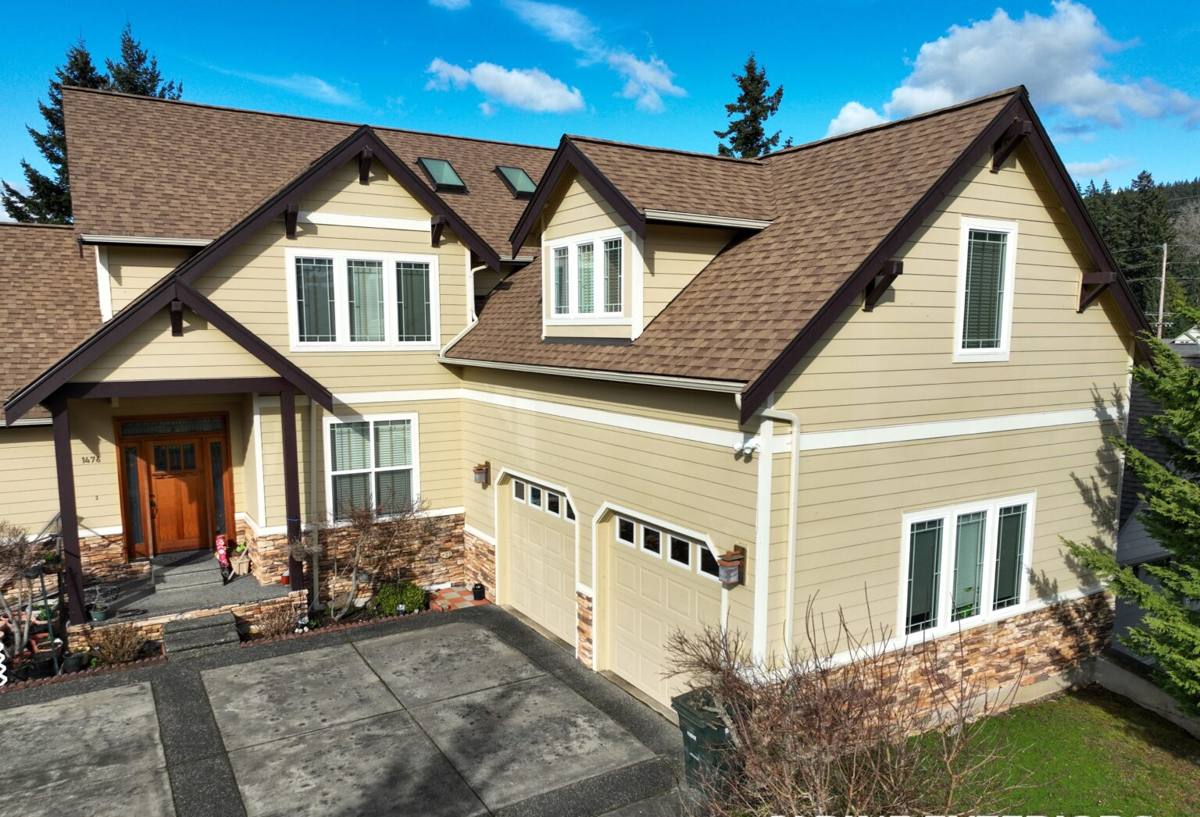
What This Climate Does to Windows Over Time
Salt Air and Hardware Corrosion
Proximity to the water means airborne salt settles on everything, including window hardware. Cheaper hinges, cranks, and locking mechanisms can start to pit or seize up well before the glass or frame shows any wear. It's usually the small moving parts that fail first, and once a lock or crank binds, homeowners often force it, which cracks the mechanism housing.
Driving Rain and Seal Failure
Wind-driven rain doesn't just fall straight down — it gets pushed sideways into the wall assembly, which puts real pressure on window flashing and perimeter sealant. A window that's been caulked in place instead of properly flashed will often look fine for a year or two, then start showing water staining on the interior sill or on the wall below the window as the seal degrades.
The Long Moss and Algae Season
Whatcom County's wet season runs long, and anywhere moisture sits — window sills, the bottom of a frame, the meeting rail on an older sash — algae and moss spores can take hold. Beyond the cosmetic staining, that moisture-holding growth keeps wood and composite components damp longer than they should be, which accelerates rot in older or lower-grade window materials.
What a Correct Window Installation Actually Involves
Custom window work isn't just swapping an old sash for a new one. Done right, it's a sequence of steps where skipping or rushing any one of them creates a weak point that this climate will find.
Accurate Measuring and Fit
Rough openings on older Blaine homes are rarely perfectly square, especially in houses that have settled over the decades. We measure each opening individually rather than assuming uniformity across a house, because a window that's forced into an out-of-square opening won't seal evenly no matter how good the unit itself is.
Flashing and Moisture Management
This is the step that matters most in a driving-rain climate. Proper flashing directs any water that gets past the window unit itself back out of the wall assembly instead of letting it pool against sheathing or framing. Housewrap integration, sill pan flashing, and correctly lapped head flashing all matter more here than they would in a drier region.
Frame and Hardware Selection
We factor in salt exposure when recommending frame material and hardware finish, not just style and budget. A window package that's a fine choice a few miles inland isn't automatically the right call for a home with a clear line of sight to the water.
Interior and Exterior Finish Work
Trim, sealant beads, and interior casing get finished last, and only after we've confirmed the unit is square, level, and sealed. Finish work covers mistakes visually but doesn't fix them structurally — we don't let it substitute for getting the installation right underneath.
Comparing Window Materials for This Exposure
There's no single "best" window material for every home — the right choice depends on how exposed the home is to salt air and driving rain, how much upkeep the homeowner wants to do, and budget. Here's how the common options compare for Peace Arch conditions specifically.
| Material | Salt Air Resistance | Maintenance | Typical Trade-Offs |
|---|---|---|---|
| Vinyl | Good — won't corrode | Low, occasional cleaning | Budget-friendly; frame can look less refined on higher-end homes |
| Fiberglass | Very good — stable in coastal air | Low | Higher upfront cost; holds paint well if a custom color is wanted |
| Wood-Clad | Depends on cladding quality | Moderate to high | Best interior appearance; exterior cladding must be well-sealed against moisture |
| Aluminum | Fair — hardware and fasteners need corrosion-resistant grades | Moderate | Slim sightlines; conducts heat and cold more than other options |
For homes closest to the water, we lean toward fiberglass or well-specified vinyl because both shrug off salt exposure without ongoing maintenance. Wood-clad windows can still be the right call for homeowners who want a specific interior look, but we're upfront that the exterior cladding and its seals need to be inspected more regularly in this environment.
Our Process, Start to Finish
- On-site assessment — We look at each window opening individually, check the condition of existing flashing and sheathing where visible, and note the home's specific exposure to wind and salt air.
- Material and product recommendation — Based on that assessment, we recommend frame materials and hardware that make sense for the home's exposure and the homeowner's budget, not a one-size-fits-all package.
- Written estimate — Scope, materials, and cost factors are laid out clearly before any work starts.
- Removal and opening prep — Old units are removed carefully, and we inspect the opening for any hidden water damage or rot before installing anything new.
- Flashing and installation — New windows go in with proper sill pan flashing, housewrap integration, and correct fastening — the step that determines how the window performs in wind-driven rain.
- Sealing and finish work — Interior and exterior finish work is completed only after the installation itself is confirmed square, level, and sealed.
- Final walkthrough — We walk the homeowner through the finished work and operation of each window before calling the job done.
Signs Your Current Windows Are Already Failing
In this climate, window problems often show up gradually. These are the signs we'd want a homeowner to catch early, before they turn into a wall or framing issue:
- Cranks, locks, or hinges that feel gritty, stiff, or take extra force to operate
- Visible water staining on the interior sill or on the wall below a window
- Condensation forming between panes on double- or triple-glazed units
- Green or black growth on sills, bottom rails, or exterior trim that keeps coming back
- A noticeable draft near the frame even when the window is fully closed and locked
- Soft or spongy wood trim around the window opening
- Difficulty getting the window to latch fully, which usually points to a frame that's shifted
Any one of these on its own isn't necessarily an emergency, but a few of them together on the same window usually means the seal or flashing has already given way.
Why a Crew That Already Works Peace Arch Matters
Window installation standards written for a general climate don't always account for what a house a few blocks from the water actually deals with year-round. A crew that regularly works this specific stretch of Blaine already knows which details — flashing laps, hardware grade, sill drainage — need extra attention here, instead of learning that on your house.
There's also a practical side to it: a local crew can respond quickly if a seal issue or a flashing problem shows up after the fact, without a long drive or a scheduling gap. That matters more in a climate where a small gap in flashing can turn into water damage after just one bad storm system.
What Affects the Cost of a Custom Window Project
Every home and every window opening is different, so we don't quote broad averages that don't apply to your project. The main factors that move the cost of a custom window job here are:
| Factor | How It Affects Cost |
|---|---|
| Frame material | Vinyl is generally the most budget-friendly; fiberglass and wood-clad run higher |
| Number and size of openings | More or larger windows increase both material and labor cost |
| Condition of the existing opening | Hidden rot or water damage found during removal adds repair work before installation |
| Custom shapes or sizing | Non-standard openings cost more than stock sizes due to custom manufacturing |
| Hardware and glass upgrades | Corrosion-resistant hardware and upgraded glazing add cost but reduce long-term maintenance |
We walk through these factors with every homeowner during the estimate so there are no surprises once the work starts — and if we find hidden damage during removal, we'll show you before doing anything about it, not after.
Get a Straightforward Estimate
If you're weighing a window replacement or a custom window project for a home in the Peace Arch area, we're happy to take a look and give you an honest read on what your home needs — no pressure, no inflated scope. Use the form below to request a free estimate, and we'll follow up to schedule a time that works.