 Blaine Roofing
 Storm Repair Built for How Nooksack Actually Weathers
Nooksack sits close enough to Blaine and the Strait of Georgia that homes here deal with a specific mix of weather stress: salt-laden air blowing off the water, long stretches of driving rain, and a moss season that can run most of the year in shaded, north-facing sections of a roof. None of those three things alone destroys a roof overnight. Together, over years, they wear down fasteners, flashing, and shingle mat faster than the same roof would age in a drier inland climate. When a windstorm or heavy rain event finally does damage, it's rarely hitting a roof in pristine condition — it's hitting one that's already been softened up by everything that came before it.
That's the context we bring to every storm repair call in this area. A repair that ignores the underlying wear and just patches the visible damage tends to fail again within a season or two. A repair that accounts for it holds.
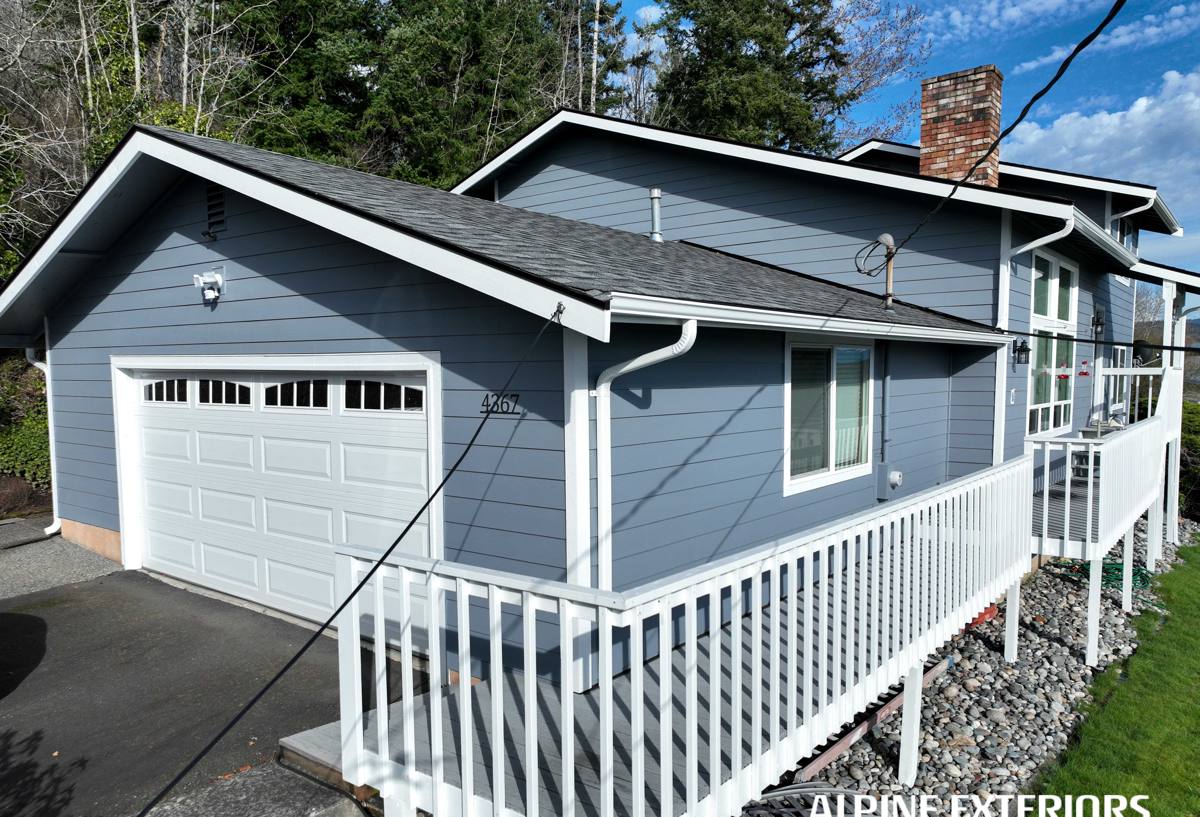
What Actually Counts as Storm Damage
Homeowners often picture storm damage as a missing shingle or a tree branch through the roof deck. Those are the obvious cases. More often, what we find after a wind or rain event in Whatcom County is quieter and easier to miss:
- Shingles that lifted, cracked at the seal line, or creased during high wind but stayed in place
- Flashing around chimneys, skylights, and vent pipes that pulled loose or bent enough to break its seal
- Granule loss from wind-driven rain that's stripped the protective coating off shingles without removing them
- Fascia or soffit damage from wind pressure at roof edges, where uplift forces are strongest
- Gutter and drip-edge separation that lets wind-blown rain track back under the roofline
- Fastener backing-out, where nails work loose from repeated flexing rather than a single dramatic event
Most of these won't show up as a leak the same week. They show up months later, after enough rain has found its way through a compromised seal. That lag is exactly why a post-storm inspection matters even when nothing looks obviously wrong from the ground.
The Three-Part Problem: Wind, Rain, and Salt
Wind
Storm systems moving through this part of Whatcom County can generate sustained wind and gusts strong enough to work under shingle edges, especially on roofs with older or under-sealed shingles. Uplift damage tends to concentrate at eaves, rakes, and ridge lines — the edges where wind pressure is highest.
Rain
It's rarely a single downpour that causes trouble. It's the volume of rain over the course of a wet season finding every small gap that wind or age has already created. Wind-driven rain, in particular, can be pushed sideways under flashing and shingle laps that would otherwise shed water fine.
Salt Air
Proximity to the water means airborne salt settles on roofing metal and fasteners. Over time it accelerates corrosion on lower-grade flashing, nail heads, and gutter hardware. A fastener that's corroding loses holding power well before it visibly fails, which is part of why older roofs in this area sometimes show wind damage in a storm that a newer roof next door shrugs off.
What a Correct Storm Repair Involves
A storm repair done right isn't just replacing what's visibly missing. It generally includes:
- A full-roof inspection, not just a spot check of the reported problem area, since wind and rain damage rarely stays confined to one spot
- Checking the roof deck itself for soft spots or moisture intrusion where shingles lifted or flashing failed
- Re-securing or replacing damaged shingles with matching material, properly nailed to current fastening patterns
- Resealing or replacing flashing at penetrations — chimneys, vents, skylights — rather than just caulking over a gap
- Confirming gutters, drip edge, and fascia are reattached and pitched to actually move water off the roof
- Checking attic ventilation and insulation near any leak point, since trapped moisture causes its own separate problems
Skipping the deck check or the full-roof look is the most common shortcut in rushed storm repairs, and it's the one that costs homeowners the most later — a patched shingle over a soft deck just moves the failure point, it doesn't fix it.
How Our Process Works
When you call about storm damage, we walk it in a consistent order so nothing gets missed and you know what you're paying for before work starts.
- Initial inspection. We look at the whole roof, not just the area you're worried about, and document what we find with photos.
- Honest assessment. We tell you plainly whether this is a targeted repair, a larger repair, or something that's crossed the line into replacement territory — and why.
- Written estimate. Scope and cost range in writing before any work begins, no verbal-only quotes.
- Repair work. Matching materials where possible, proper fastening for this area's wind exposure, and flashing details sealed correctly rather than just caulked.
- Final walkthrough. We show you what was done and what to watch for going forward.
If your situation involves an insurance claim, we can document damage in a way that's useful for that process — clear photos, a written scope, and plain descriptions of cause and extent. We work for you, not the insurance company, but a clean, honest report helps claims move faster on both sides.
Repair or Replace? How We Make That Call
Not every storm-damaged roof needs replacing, and not every roof that looks fine from the driveway is actually fine. Here's roughly how we weigh it:
| Factor | Leans Toward Repair | Leans Toward Replacement |
|---|---|---|
| Roof age | Under 12-15 years, in otherwise good condition | Nearing or past expected lifespan for its material |
| Extent of damage | Localized to one section or a few penetrations | Spread across multiple slopes or the whole roof |
| Deck condition | Solid, dry decking under the damaged area | Soft spots, rot, or repeated past leaks in the same area |
| Moss and granule wear | Minimal moss, granules mostly intact | Heavy moss coverage, significant granule loss overall |
| Prior repair history | First real repair need on this roof | Multiple patch jobs already layered on |
We'd rather tell you a repair will hold for years than sell you a replacement you don't need — and we'd rather tell you honestly when a repair is just delaying the inevitable, so you can plan for it instead of getting surprised later.
Materials and Fastening Choices for This Climate
Given the salt air and wind exposure, we lean toward corrosion-resistant flashing and fastener grades over the cheapest available option, and we follow fastening patterns rated for higher wind exposure rather than minimum code on every repair, not just full replacements. It's a small cost difference on a repair-sized job and a meaningful difference in how long that repair actually lasts through a few more wet seasons.
We also pay attention to moss-prone areas during any repair. If we're already up on a roof section for storm damage, we'll flag heavy moss growth or trapped organic debris nearby, since moss holds moisture against shingles and shortens their working life independent of any storm.
Signs You Should Get an Inspection Soon
You don't need to wait for an obvious leak. Consider a storm inspection if you notice any of the following after a windy or wet stretch:
- Granules collecting in gutters or at downspout outlets
- A shingle edge that looks lifted or "fluttery" from the ground
- New staining on an interior ceiling, even faint
- A section of roof that looks visibly different in color or texture from the rest
- Gutters pulling away from the fascia or sagging in one spot
- Any debris impact you're aware of, even if nothing looks broken
Catching these early is almost always cheaper than waiting for a leak to show up inside the house.
Why Local Experience in Nooksack and the Blaine Area Matters
A crew that regularly works roofs in this part of Whatcom County has already seen how salt air, wind exposure, and moss growth interact on homes with similar orientation, tree cover, and proximity to the water that yours has. That familiarity shows up in practical ways — knowing which flashing details tend to fail first in this area, which fastening approach actually holds through winter wind events, and which moss situations need attention now versus which can wait for a scheduled cleaning. It's the difference between a repair based on general roofing knowledge and one based on what actually holds up on roofs like yours, in this specific place.
If a recent storm has you wondering about your roof, or you just want a second set of eyes after noticing something that looks off, we're happy to take a look. Fill out the form below for a free, no-pressure estimate — we'll give you a straight answer about what's going on and what, if anything, it needs.