 Blaine Roofing
 Why Composite Decking Holds Up Better in Nooksack's Climate
Homes around Nooksack deal with a specific combination of weather stress that most decking material simply wasn't designed for. Salt-laden marine air moving through this part of Whatcom County corrodes exposed metal hardware over time. Long stretches of driving rain push moisture into every seam, screw hole, and end cut in a wood deck. And the moss season that stretches from fall through spring coats any north-facing or shaded surface in a slick green film that traditional lumber never fully sheds. Composite decking was built to shrug off exactly this kind of abuse, but only when it's specified and installed correctly for the conditions it's actually going to face.
We're not going to tell you composite is magic. It's a manufactured product, and like any manufactured product, its performance depends entirely on how it's framed, fastened, and finished. A composite deck installed by someone who treats it like a wood deck with different boards will fail in the same ways a wood deck does — just more slowly, and often in ways that are harder to diagnose because the boards themselves look fine while the structure underneath rots.
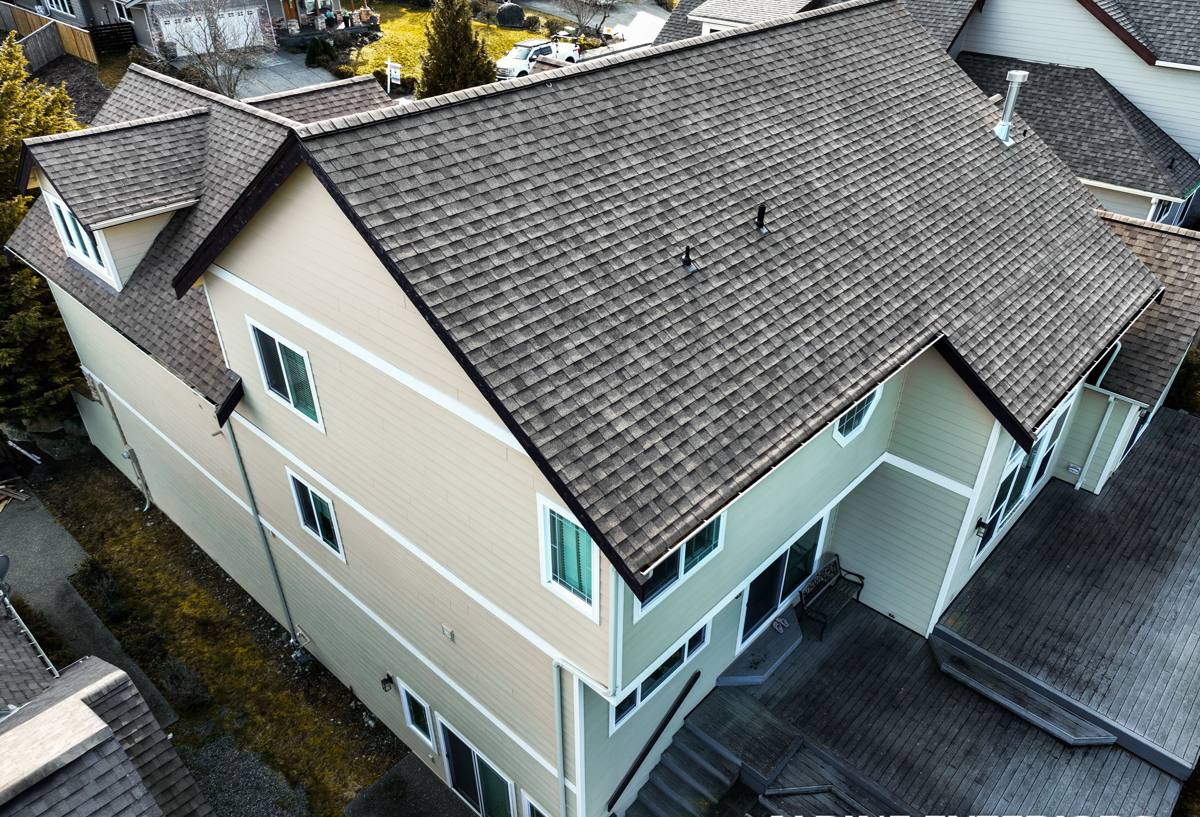
What a Correct Composite Deck Build Actually Involves
Substructure and Framing
Composite boards are heavier and behave differently under load and temperature than wood, which means joist spacing, blocking, and beam sizing need to match the manufacturer's engineering specs — not generic lumber-deck rules of thumb. Undersized framing under composite decking shows up as bounce, sag between joists, and boards that telegraph every seam in the frame below. In a climate this wet, we also treat the framing itself as the first line of defense: pressure-treated joists, proper ledger flashing, and airflow underneath the deck so moisture has somewhere to go instead of sitting against the wood all winter.
Fasteners and Hardware
This is where salt air does the most damage, and it's the detail most often cut on a cheap install. Standard zinc-coated screws and joist hangers will start rusting within a couple of seasons this close to marine air, and once hardware corrodes, it weakens the whole connection — including ledger bolts holding the deck to the house. We use stainless or coated fasteners rated for the exposure, hidden fastener clips designed for the specific board profile being installed, and hardware at every structural connection rated for treated lumber contact, not the bargain-bin version.
Drainage, Flashing, and Ledger Attachment
Most rot failures on any deck, composite or wood, start at the ledger board where the deck meets the house. Given how much sustained rain this area gets, that connection needs proper flashing that sheds water away from the wall assembly, not just a bead of caulk and a prayer. We also grade and gap the substructure so water moving through and off the deck actually drains instead of pooling against framing members or trapping debris that holds moisture against the underside of the boards.
Choosing a Composite Board for This Climate
Not all composite decking is built the same way, and the differences matter more here than they would in a dry climate. The biggest split is between capped and uncapped composite boards.
| Board Type | Moisture Resistance | Moss & Mildew Resistance | Maintenance |
|---|---|---|---|
| Uncapped composite | Absorbs some surface moisture over time | Can stain and hold mildew in shaded, wet spots | Periodic cleaning and occasional sealing |
| Capped composite | Full polymer shell resists moisture penetration | Sheds moisture, resists staining better | Rinse and light scrub as needed |
| PVC (all-polymer) decking | No wood content, essentially moisture-proof | Very resistant, easiest to keep clean | Low — rinse only in most cases |
For a shaded lot or anywhere moss tends to collect, we generally steer homeowners toward a capped composite or PVC board with a textured, slip-resistant surface. It costs more up front than the cheapest uncapped composite on the market, but it holds its color and grip through wet Whatcom County winters far better, and it doesn't need the periodic sealing that uncapped boards benefit from. We'll walk through the real trade-offs for your specific site — sun exposure, tree cover, budget — rather than pushing whatever has the best margin.
Our Installation Process
- Site walk and design. We look at drainage, sun and shade patterns, existing structure (if it's a replacement), and how the deck ties into the house before recommending a board and layout.
- Framing and structural work. Joists, beams, posts, and footings are built or reinforced to spec, with treated lumber and proper flashing at every point the deck meets the house.
- Fastening system installed. Hidden fastener clips or approved face-screw patterns go in per the manufacturer's requirements, using hardware rated for our climate, not just whatever's in the truck.
- Board installation. Boards are laid with correct expansion gaps, since composite expands and contracts with temperature more than people expect, and gaps that are too tight will buckle.
- Trim, stairs, and railing. Fascia boards, stair stringers, and railing are installed to match the deck system and local code requirements.
- Final walkthrough. We check fastener seating, board alignment, drainage, and railing stability before calling the job done.
Keeping a Composite Deck Clean Through Moss Season
Composite doesn't rot the way wood does, but it isn't maintenance-free, especially with the moss and organic debris this region produces most of the year. A little seasonal upkeep goes a long way toward keeping the surface safe and looking good.
- Sweep leaves, needles, and debris off the deck regularly, especially in shaded corners where moisture lingers longest.
- Rinse the deck surface a few times a season with plain water to prevent moss spores and algae from getting a foothold.
- Use a soft-bristle brush and a mild composite-safe cleaner on any green or black staining as soon as you notice it — it's much easier to remove early.
- Keep gutters and downspouts near the deck clear so runoff isn't dumping directly onto the boards or framing below.
- Check that gaps between boards stay clear of packed debris, which traps moisture against the substructure over time.
- Inspect railing posts and stair connections once a year for any looseness, since that's usually the first sign of a fastener or framing issue.
Signs Your Existing Deck Was Installed Wrong
We get a fair number of calls in Nooksack from homeowners whose composite deck is only a few years old but already showing problems that shouldn't happen this early. A few patterns come up often enough that they're worth knowing about before they get worse.
- Rust streaking at fastener heads or through board seams — usually a sign of non-rated hardware used in a salt-air environment.
- Persistent green or black staining in the same spots every year — often a drainage or airflow problem underneath, not just surface dirt.
- Boards that have buckled or bowed — almost always improper expansion gapping during installation.
- Soft or spongy feel near the ledger — points to a flashing failure letting water into the house-side connection, which is a structural issue, not cosmetic.
- Visible sag between joists — framing spaced for wood decking instead of the heavier composite spec.
None of these are reasons to panic, but they are reasons to get a second set of eyes on the deck before a cosmetic problem becomes a structural one.
Permits and Site Considerations in Whatcom County
Most deck replacements and new builds in the county require a permit once you're past a certain height or size threshold, and structural changes like new footings or a deck attached at a second story almost always need one. We handle the permitting conversation as part of the job rather than leaving it for the homeowner to sort out, and we build to the load, railing, and guard requirements the local code calls for — not just what looks right. If your property has specific setback or drainage requirements, that gets confirmed before we finalize the design, not discovered halfway through the build.
Why Hiring a Crew That Already Works in Nooksack Matters
A lot of composite decking problems we're called out to fix weren't caused by bad boards — they were caused by a crew that installed the deck the same way they'd build one somewhere dry and inland, then left town. Fastener selection, flashing detail, drainage planning, and even board choice should all reflect the specific conditions a deck is going to sit in for the next 20-plus years. A crew that regularly works this part of Whatcom County already knows how salt air treats hardware, how much rain the framing needs to shed, and which shaded lots are going to fight moss year-round — so those details get handled up front instead of becoming a callback two years later.
There's also the practical side: a local crew is around for warranty work, seasonal questions, and the occasional adjustment that any outdoor structure needs over time. That matters more with a composite deck than people expect, since manufacturer warranties on the boards themselves don't cover installation mistakes — only a properly documented, correctly built deck actually gets the protection that warranty is supposed to provide.
Get a Straight Answer for Your Property
Every lot around Nooksack drains differently, sits in different sun and shade, and has its own quirks worth walking through before you commit to a board or a budget. If you're weighing a new composite deck or trying to figure out why an existing one is already showing problems, we're happy to take a look and give you a straightforward assessment — no pressure, no upsell, just what your project actually needs. Use the form below to request a free estimate.