 Blaine Roofing
 Board & Batten Siding, Built for the Nooksack Stretch Near Blaine
The homes along the Nooksack area outside Blaine sit in a stretch of Whatcom County that takes weather from two directions — salt-laden air pushing in off Semiahmoo Bay and Boundary Bay, and long stretches of driving rain rolling through on the wind off the Strait of Georgia. Add in a moss season that runs most of the year in this part of the county, and you've got a set of conditions that will find every weakness in a siding job within a few winters. Board and batten siding, done right, holds up well here — but "done right" is doing a lot of work in that sentence. This page covers what a correct board and batten job looks like on a Nooksack-area home, why we only build it in James Hardie fiber cement, and how our process is shaped by the specific conditions this stretch of the county throws at a house.
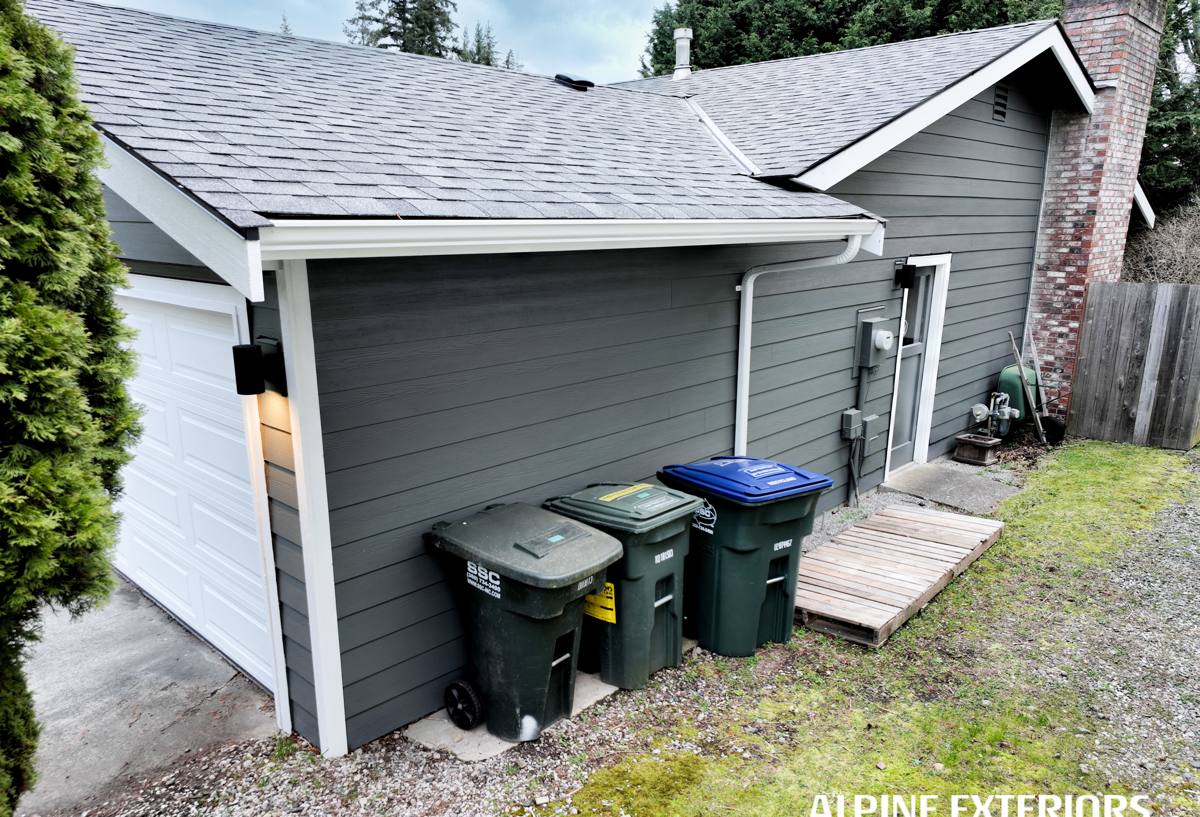
What Nooksack-Area Homes Actually Need From Their Siding
Board and batten is a style choice — vertical boards with narrow strips (battens) covering the seams between them — but out here it also has to be a performance choice. Three things drive that:
Salt Air
Proximity to Semiahmoo Bay and the broader Salish Sea means airborne salt is a constant, low-level presence on siding, trim, and fasteners. Salt air accelerates corrosion on unprotected metal fasteners and flashing, and it's hard on finishes that aren't engineered to resist it. This is one of the biggest reasons we're picky about both the siding material and the fastener spec on every job out here.
Driving Rain
Rain in this part of Whatcom County rarely falls straight down. Wind off the water pushes it sideways, which means it's testing every seam, joint, and batten edge on a vertical siding profile — not just the top of the wall. A board and batten system that isn't flashed and gapped correctly will let wind-driven rain track behind the battens and into the wall assembly, where it does damage you won't see until it's expensive.
Moss and Algae
Damp, shaded, and mild — that's moss weather, and this area gets a long season of it. Moss and algae don't just look bad; sustained moisture held against a wall surface by organic growth keeps that surface wetter, longer, which is bad news for wood-based products in particular. Siding material and coating matters a lot here, and so does keeping trees and landscaping trimmed back from walls.
Why Board and Batten Holds Up Well Out Here — When It's Built Right
The vertical lines of a board and batten profile shed water down and off the wall rather than pooling on a series of horizontal ledges, which is one reason it's a good fit for a wet, wind-driven climate. But that advantage only exists if the assembly behind it is correct. A board and batten wall depends on:
- A drainage plane (or full rainscreen gap) behind the siding so any moisture that does get past the surface can drain and dry instead of sitting against the sheathing
- Correct flashing at every window, door, roofline, and horizontal transition
- A bottom clearance gap so the lowest course of siding isn't wicking moisture from grade, decking, or hardscape below it
- Battens fastened and spaced to the manufacturer's actual installation instructions, not just "close enough"
- Corrosion-resistant fasteners and flashing metal suited to a salt-air environment
Skip any one of these and you've got a wall that looks right for a season or two and then starts showing problems — soft spots, staining, battens pulling away — right where the wind and rain hit hardest.
Why We Only Install James Hardie Fiber Cement
We don't install LP SmartSide, vinyl, Cemplank, Allura, or primed wood board and batten. That's a deliberate standard, not a lack of options. Here's the honest reasoning:
Vinyl is affordable and low-maintenance, but it's a thin, flexible material that can warp in temperature swings and doesn't hold up as a premium look on the kind of vertical, architectural board and batten elevations homeowners in this area tend to want. Engineered wood products (like LP SmartSide) perform reasonably well when maintained, but they're wood-based at the core — meaning edge sealing, caulking, and paint maintenance are non-negotiable, and any lapse in that maintenance in a wet climate like this one shortens the product's life. Primed spruce or cedar board and batten gives you a genuine, traditional look, but real wood in a salt-air, high-moss climate is a high-maintenance commitment — repainting, caulking, and watching for rot are ongoing costs, not one-time ones. Other fiber cement brands (Cemplank, Allura) are legitimate fiber cement products, but we've standardized our crews, fastening specs, and warranty backing on one manufacturer so every job we do is built the same correct way, with one company standing behind the material.
James Hardie fiber cement is non-combustible, holds paint and factory finish far longer than wood-based alternatives, and Hardie engineers specific product lines (their HZ5 line) for regions with exactly this kind of moisture exposure. The ColorPlus factory finish process bakes color onto the board before it ever reaches the jobsite, which matters a lot in a climate where field-applied paint is fighting rain and humidity during the whole cure window. It's also backed by a real, transferable warranty — something worth asking about directly with any siding product before you sign a contract.
How We Approach a Board and Batten Install in Nooksack
1. Walk and Assess
We look at the existing wall assembly, current siding condition, moisture staining, moss buildup, and how the house is oriented relative to prevailing wind and rain. A wall that takes the brunt of driving rain off the water gets extra attention on flashing and drainage detailing.
2. Prep and Moisture Check
Old siding comes off, sheathing gets inspected for hidden rot or moisture damage (common on older homes in this area that were built or last sided before rainscreen practices were standard), and any damaged material gets repaired before a single new board goes up.
3. Drainage Plane and Flashing First
Weather-resistive barrier, furring for a drainage gap, and flashing at every penetration go in before siding. This step is invisible once the job is done, but it's the difference between a wall that handles driving rain for decades and one that doesn't.
4. Install to Spec
Boards, battens, and fasteners go in per James Hardie's published installation requirements — correct nailing pattern, correct clearances at grade and roof transitions, correct joint treatment. We don't shortcut fastener spacing or clearance gaps to save time; those are exactly the details that fail first in this climate.
5. Final Walkthrough
We walk the finished job with you, check every elevation, and make sure trim, caulking, and touch-up are complete before we call it done.
Why a Crew That Already Works Nooksack Matters
A lot of siding problems on homes in this area trace back to work done by crews unfamiliar with this specific microclimate — installers used to drier interior counties who under-detail flashing or skip a rainscreen gap because it "usually" isn't necessary where they normally work. Out here, it is necessary. Working this stretch of Whatcom County regularly means we already know how the wind and rain hit these walls, what the salt air does to unprotected fasteners over a few winters, and how aggressive the moss season is on north- and shade-facing elevations. That local pattern recognition shows up in the details — which is exactly where board and batten installs succeed or fail.
Cost Factors on a Board and Batten Project
| Factor | Why It Affects Cost |
|---|---|
| Wall prep and repair | Rot or moisture damage found under old siding has to be fixed before new siding goes on |
| Drainage plane / rainscreen detailing | Proper furring and flashing take more labor than a face-nailed, no-gap install |
| Board and batten vs. lap profile | Vertical board and batten typically uses more trim pieces and batten strips than a straight lap install |
| Elevation exposure | Walls taking direct wind-driven rain or salt exposure may warrant heavier flashing and fastener upgrades |
| Color and finish | Factory ColorPlus finish costs more up front than field paint, but avoids a repaint cycle |
| Trim and window detailing | Older homes often need trim rework to integrate cleanly with a new board and batten profile |
Questions Worth Asking Before You Sign With Any Siding Contractor
- Will you install a drainage plane or rainscreen gap behind the new siding, not just a weather barrier?
- What fastener material are you using, and is it rated for a salt-air environment?
- How do you flash windows, doors, and roof transitions on a vertical board and batten wall?
- What's the manufacturer's actual warranty, and is it transferable if you sell the home?
- Will you inspect and repair sheathing before covering it, or just side over what's there?
- Can you show me the specific product line and finish you're proposing to install?
Let's Look at Your Home
If you're weighing board and batten siding for a home in the Nooksack area or elsewhere around Blaine, we're glad to come take a look, walk the current siding and wall condition with you, and talk through what a correct James Hardie install would actually involve on your house — no pressure, no generic estimate off a photo. Use the form below to request a free estimate.