 Blaine Roofing
 Roofing in the California Creek Area
The California Creek area sits in one of the quieter, more wooded stretches of Blaine, Washington, where mature conifer cover, close-in marine air, and long stretches of wet weather all shape how a roof ages. Homes here don't fail the way a roof does in a drier inland climate. In this corner of Whatcom County, a roof spends most of the year damp, partly shaded, and exposed to salt-laden air moving in off the water. That combination is hard on materials designed with a drier climate in mind, which is why a roof that might coast for thirty years elsewhere can start showing real trouble in half that time out here.
We've installed and repaired roofs throughout this part of Blaine long enough to know which systems actually hold up under these conditions and which ones just look good on a spec sheet. This page walks through what a new roof installation in California Creek needs to account for, what a correct job looks like from tear-off to final inspection, and how to think through the decision if your roof is getting close to the end of its life.
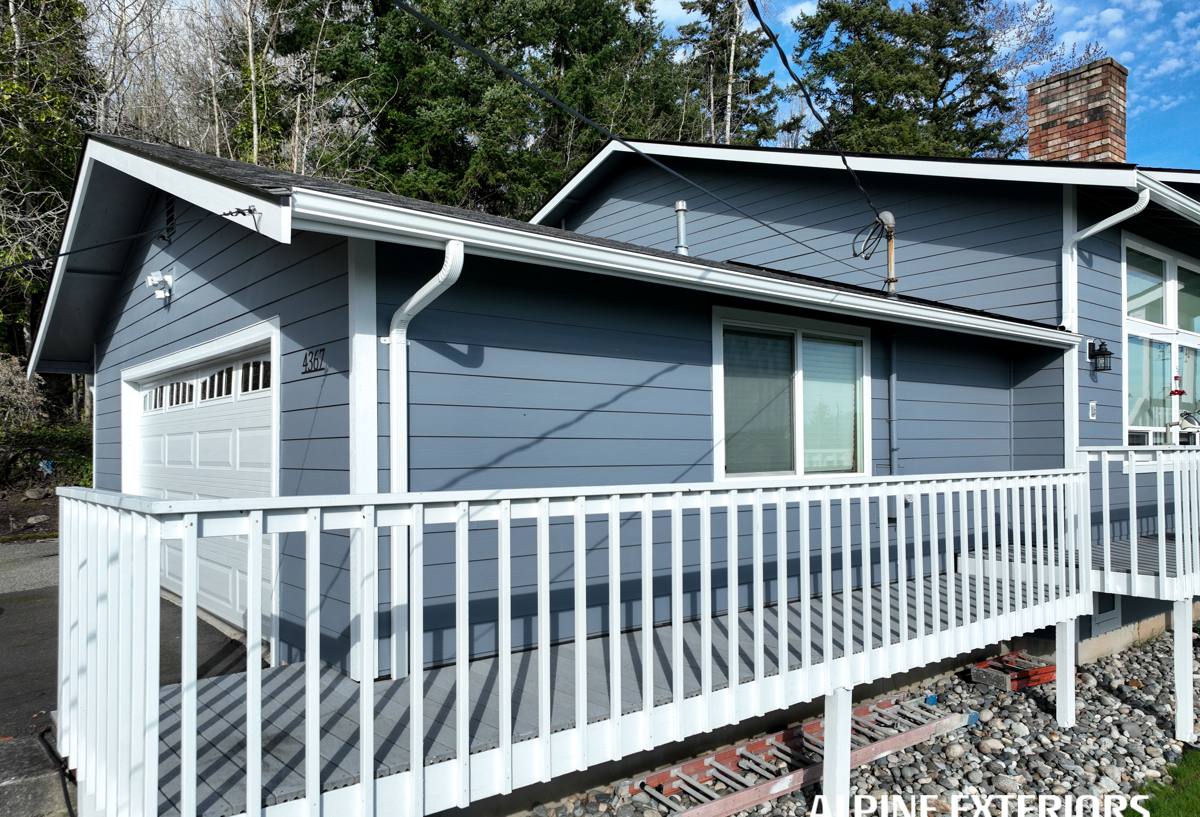
What Blaine's Climate Does to a Roof Over Time
Salt Air and Metal Components
Properties near the water in and around Blaine deal with airborne salt that settles on every exposed surface, including the roof. Over years, that salt exposure accelerates corrosion on unprotected fasteners, cheap flashing, and low-grade drip edge. A roof that skimps on hardware quality in this area doesn't fail gradually and predictably — it fails at the fasteners and flashing seams first, often well before the field material itself is worn out.
Driving Rain and Wind-Driven Water
Rain here rarely falls straight down. Wind off the water pushes it sideways, up under shingle tabs, and into any gap around penetrations, valleys, or wall-to-roof transitions. A roofing system that only handles vertical rainfall well will still leak in this area. Every seam, lap, and flashing detail has to be built assuming the water is coming in at an angle.
The Long Moss Season
Between the tree cover common on California Creek lots and the region's extended damp season, moss has months of favorable conditions to take hold, not just a few weeks. Moss doesn't just sit on top of a roof — it holds moisture against the shingle surface, works into laps and granule layers, and gradually lifts tabs and edges as it grows. Left unmanaged, it shortens the usable life of a roof regardless of how good the underlying material is.
Signs Your Roof Has Reached the End of Its Useful Life
Not every roof problem means a full replacement — plenty of issues are legitimate repairs. But there's a point where continuing to patch a roof stops making financial sense. Signs worth taking seriously include:
- Granule loss heavy enough that you're finding grit in gutters and downspouts every season
- Shingles that are cupping, curling, or cracking across large sections rather than one isolated spot
- Moss or algae staining that keeps returning within a year or two of cleaning
- Soft or spongy spots underfoot, or sagging visible from the ground
- Daylight visible through the attic roof deck, or damp insulation after storms
- Flashing around chimneys, skylights, or vent pipes that's rusted, cracked, or pulling away
- A roof that's already had multiple patch repairs in the last few years
- Interior water stains on ceilings or upper walls that show up after wind-driven rain specifically
If you're seeing two or three of these at once, it's usually a sign the roofing system as a whole — not just one component — is wearing out.
Choosing a Roofing System That Holds Up Here
Material choice matters more in a climate like this than in most. We install several systems, and the right one depends on your home's exposure, roof pitch, budget, and how much long-term maintenance you're willing to take on.
| Material | Moss Resistance | Salt/Wind Performance | Typical Lifespan | Maintenance |
|---|---|---|---|---|
| Architectural asphalt shingle | Moderate — improves with algae-resistant granules | Good with proper fastening and flashing | 25–30 years | Periodic moss treatment and gutter clearing |
| Standing seam metal | High — sheds moisture quickly, little surface for moss to grip | Very good with coated, corrosion-resistant fasteners | 40–50+ years | Low; occasional fastener and sealant checks |
| Synthetic/composite shingle | Good, varies by product | Good, lighter weight than metal | 30–50 years depending on product | Low to moderate |
| Wood shake | Low without regular treatment | Fair; more sensitive to sustained moisture | 20–30 years with upkeep | High — regular treatment and moss removal |
We're honest with homeowners about trade-offs rather than pushing whatever's easiest for us to install. Wood shake, for example, can look great, but in a shaded, damp lot it demands a level of ongoing maintenance most homeowners don't want to keep up with — that's a maintenance-burden and moisture-behavior issue, not a knock on the material itself. Metal costs more up front but asks the least of you over time. Architectural asphalt remains the most common choice because it balances upfront cost, appearance, and durability reasonably well when it's installed correctly.
What a Correct Installation Actually Involves
Tear-Off and Deck Inspection
We remove the old roofing down to the deck rather than layering over it. That's the only way to actually see the condition of the sheathing underneath — soft, delaminated, or water-stained deck sections get replaced before anything new goes down. Skipping this step is one of the most common shortcuts in the industry, and it's the reason some "new" roofs start failing within a few years: the new material was installed over a deck that was already compromised.
Underlayment and Flashing
Given how much wind-driven rain this area sees, underlayment choice matters. We use synthetic underlayment across the field and self-adhering ice-and-water membrane at the vulnerable spots — eaves, valleys, around chimneys and skylights, and anywhere two roof planes meet. Flashing gets replaced, not reused, and every penetration is sealed with materials rated to handle sustained moisture exposure rather than just a quick bead of sealant.
Fastening and Field Layout
Shingles or panels are fastened according to manufacturer specs for wind exposure, with attention to nail placement and count — under-fastened roofs are one of the more common failure points we find on older homes in this area. On homes with heavier salt exposure, we favor corrosion-resistant fastener and flashing hardware so the metal components don't become the weak link years before the roofing material itself wears out.
Ventilation and Moisture Control
A new roof is only as good as the airflow underneath it. In a damp climate, an attic without balanced intake and exhaust ventilation traps moisture, which condenses on the underside of the deck and slowly rots sheathing from the inside — often invisibly, until it shows up as a soft spot or a musty smell. As part of a new roof installation, we check existing soffit and ridge ventilation and correct any imbalance, since it's far cheaper to fix during a re-roof than to discover after the fact that trapped moisture has been working on the deck for years.
Our Installation Process
- On-site inspection. We walk the roof and attic, check the deck condition where accessible, and note flashing, ventilation, and any problem areas specific to your property.
- Written estimate. You get a clear, itemized quote covering materials, labor, tear-off, disposal, and any deck repair allowance — no vague lump-sum numbers.
- Material selection. We go over the options that make sense for your home's exposure and budget, with honest trade-offs rather than an upsell pitch.
- Scheduling around weather. We plan installation for a dry weather window where possible, since a roof installed in a rush during a storm cycle is more prone to installation defects.
- Tear-off and installation. Old material comes off, the deck gets inspected and repaired as needed, and the new system goes on following manufacturer specs for this climate.
- Site cleanup. Debris removal and a magnetic sweep for stray fasteners, so your yard and driveway are left clean.
- Final walkthrough. We go over the completed work with you and confirm everything meets the standard we quoted.
Why Local Experience in California Creek Matters
A lot of roofing crews can install a shingle in dry, calm conditions. Fewer have real experience with the specific combination this area presents: wooded, often shaded lots that hold moisture longer, proximity to the water that brings salt exposure into the mix, and a wind pattern that punishes any weak flashing detail. Crews unfamiliar with Blaine's marine climate sometimes under-spec underlayment or skip the extra flashing work that this area actually requires, because it isn't necessary where they normally work.
There's also the practical side of working on these properties — longer driveways, tree-covered access, and staging considerations that differ from a tighter in-town lot. Knowing the area means fewer surprises on install day and a crew that isn't learning Whatcom County's roofing challenges on your dime.
What Factors Drive the Cost of a New Roof
Every property is different, so we don't publish a flat price — but these are the main variables that move the number up or down:
| Factor | Why It Matters |
|---|---|
| Roof size and pitch | More square footage and steeper pitches mean more material and labor time, plus added safety measures |
| Material choice | Asphalt, synthetic, and metal carry different material and labor costs, with metal generally the highest upfront |
| Number of existing layers | Removing multiple old layers adds tear-off time and disposal cost |
| Deck condition | Rotted or delaminated sheathing found during tear-off requires repair before installation can proceed |
| Roof complexity | Valleys, dormers, skylights, and multiple penetrations add flashing work and labor time |
| Site access | Tree cover, long driveways, or difficult staging on wooded lots can affect equipment and labor logistics |
We walk through these factors with you during the estimate so you understand exactly what's driving the number, rather than handing over a price with no explanation behind it.
Get a Straight Answer About Your Roof
If your roof in the California Creek area is showing its age, or you just want an honest read on how much life it has left, we're glad to come take a look. The estimate is free, there's no pressure attached to it, and you'll get a clear explanation of what we find. Use the form below to get started.