 Blaine Roofing
 Window Installation Built for Whatcom County Weather
Lynden homes deal with a demanding mix of conditions year-round: long stretches of driving rain, salt-laden air moving in off the coast, and a damp season that stretches from fall through spring. Windows sit at one of the most vulnerable points on any house — a seam in the exterior envelope that has to keep water out, hold up to wind pressure, and still open and close smoothly after years of swelling humidity and freeze-thaw cycles. When a window is installed correctly, it does all of that quietly for decades. When it isn't, the problems show up slowly — soft trim, fogged glass, drafts, stains on the siding below the sill — often long after the crew that installed it is gone.
Blaine Roofing Co installs windows the way this climate demands: with attention to flashing, drainage, and sealant detail that generic installers from outside the area sometimes skip. This page covers what Lynden homeowners actually need to know about window installation in this region — not a generic national write-up, but what matters here.
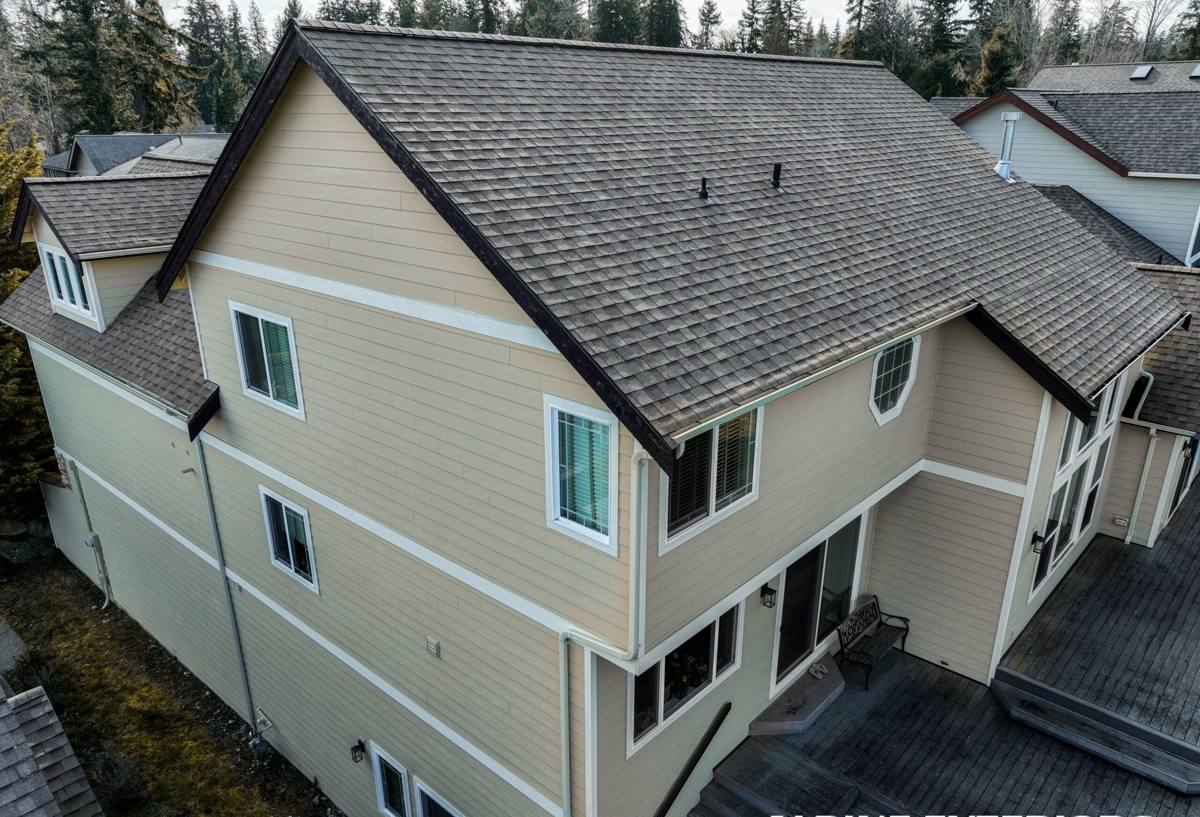
What This Climate Does to Windows Over Time
Whatcom County's marine climate is the main factor driving how windows should be installed and maintained here. A few specific stresses matter more in this area than in drier parts of the country:
- Wind-driven rain: Storms off the Strait push rain sideways into wall assemblies, not just straight down. A window that only sheds water from above will eventually leak from the sides or bottom.
- Salt-influenced air: Proximity to the coast accelerates corrosion on unprotected fasteners, hardware, and some metal flashing products faster than inland installations see.
- Extended damp season: Long stretches of high humidity and low sun exposure mean any moisture that gets behind a window frame has fewer chances to dry out before it causes rot or mold.
- Moss and organic growth: The same dampness that feeds moss on roofs and north-facing siding also collects in window sills and tracks that aren't detailed to drain properly.
None of this means windows fail quickly here — it means the installation details that don't matter much in a dry climate matter a great deal in this one.
Where Problems Actually Start
In our experience, the large majority of window failures we're called out to look at are installation problems, not product defects. Missing or improperly lapped flashing, sealant used in place of proper drainage, and window openings that weren't correctly sized or leveled before the window went in are the usual culprits. A quality window installed poorly will leak. A modest window installed correctly, with proper flashing and drainage, will usually outperform it.
Signs a Lynden Home May Need Window Attention
Because window damage often develops behind the wall before it's visible on the surface, it helps to know the early warning signs:
- Soft, discolored, or bubbling paint on interior or exterior trim around a window
- Condensation building up between panes on double- or triple-glazed windows (a sign the seal has failed)
- Windows that stick, won't stay open, or have gaps you can feel a draft through
- Visible staining or streaking on siding directly below a window
- A musty smell near window openings, especially in closed-up rooms during the wet months
- Wood sills that feel soft or spongy when pressed
Any one of these on its own isn't necessarily an emergency, but they're worth having looked at before the next wet season, since moisture problems in this climate tend to compound rather than resolve on their own.
Full-Frame Replacement vs. Insert Replacement
There are two general approaches to replacing an existing window, and the right one depends on the condition of what's already there — not just cost.
| Approach | What It Involves | Best For |
|---|---|---|
| Insert (pocket) replacement | New window unit fits inside the existing frame; original frame and exterior trim stay in place | Frames that are still sound, dry, and square — a faster, less invasive project |
| Full-frame replacement | Old window and frame are removed down to the rough opening; new flashing, sill pan, and window are installed fresh | Frames with any rot, water damage, or out-of-square openings — the only real fix when moisture has already gotten in |
Insert replacements are a reasonable option when the existing frame is genuinely in good shape, but in a climate like this one, we won't recommend an insert over a frame we can't confirm is dry and sound. Covering up a compromised frame with a new window on top of it just delays a bigger repair.
What a Correct Installation Actually Involves
A window installation is only as good as the details most homeowners never see once the trim goes back on. On every job, this includes:
- Opening inspection: Checking the rough opening and existing framing for rot, moisture, or square before anything new goes in.
- Sill pan flashing: Installing a sloped, water-tight pan at the bottom of the opening so any water that does get past the window drains back outside instead of pooling against wood framing.
- Weather-resistive barrier integration: Lapping flashing tape and building paper correctly — shingle-style, top over bottom — so water is always directed outward and down, never trapped behind the siding.
- Air sealing and insulation: Filling the gap between the window frame and rough opening with the correct low-expansion foam or insulation, not left empty or overpacked.
- Proper fastening and shimming: Setting the window level, plumb, and square, with shims and fasteners placed to manufacturer spec so the frame doesn't rack or bind over time.
- Exterior sealant as a backup, not a first line of defense: Caulk seals gaps, but it is never the primary water barrier — flashing and drainage do that work. Sealant that's asked to do a flashing detail's job will eventually fail.
This is the level of detail that separates a window installation that lasts thirty years from one that starts leaking in five.
Choosing Windows for This Climate
Frame material and glass package both affect how a window holds up here. There's no single "best" option for every home — it depends on budget, the style of the house, and how exposed the window is to weather.
| Frame Material | Moisture Tolerance | Maintenance | Trade-offs |
|---|---|---|---|
| Vinyl | Good — won't rot, resists corrosion | Low | Budget-friendly; limited color/finish options; can expand and contract with temperature swings |
| Fiberglass | Very good — dimensionally stable, resists moisture and corrosion well | Low | Higher upfront cost; strong long-term performance in wet, coastal-influenced climates |
| Wood-clad | Depends entirely on cladding and installation quality | Higher — exposed wood needs upkeep | Traditional appearance many homeowners want; more installation-sensitive in a wet climate |
On glass, look for a good U-factor (a measure of how much heat the window loses) and a warm-edge spacer between panes, which resists condensation and seal failure better than older-style aluminum spacers — an important detail given how often this area sees temperature swings between a cold night and a damp, milder day.
Our Process for Lynden Window Installation
We keep the process straightforward and communicate at each step:
- On-site assessment: We look at each window opening individually — condition of the frame, evidence of past water intrusion, and how exposed that side of the house is to prevailing wind and rain.
- Honest recommendation: We'll tell you plainly whether an insert replacement is appropriate or whether a full-frame approach is the right call for that opening, and why.
- Written scope and timeline: You know what's being done, in what order, and roughly how long it will take before work starts.
- Installation with proper flashing and drainage detail: No shortcuts on sill pans, WRB integration, or fastening — the parts that determine how the window performs in ten winters, not just how it looks on install day.
- Cleanup and walkthrough: We walk the finished openings with you so you know how to operate and maintain the new windows.
Why a Local Crew Matters
Window installation done right depends on understanding the specific conditions a house faces — which direction the weather comes from, how much wind exposure a given wall gets, and what kind of moisture problems tend to show up first in this part of Whatcom County. A crew that works in and around Lynden regularly has already seen how local homes age, what details tend to fail first, and what actually holds up through a full wet season rather than just looking good on install day. That's not something a crew passing through the area for a one-off job brings with them.
We're also positioned to respond if something needs a follow-up look after the fact — a real consideration in a climate where a flashing detail can take a full rainy season to reveal a problem.
What Affects the Cost of a Window Installation
| Factor | Why It Matters |
|---|---|
| Insert vs. full-frame replacement | Full-frame work involves more labor, flashing, and often trim or siding repair around the opening |
| Number of openings | Per-window cost typically drops as more windows are done in a single project |
| Frame material and glass package | Vinyl, fiberglass, and wood-clad options carry different material costs; upgraded glass packages add cost but improve performance |
| Condition of the existing opening | Rot or water damage discovered once the old window is out adds repair scope that can't always be predicted beforehand |
| Window size and configuration | Large picture windows, bays, or custom shapes cost more than standard single- or double-hung units |
We'd rather walk your home and give you real numbers than throw out a broad estimate that doesn't hold up once we see the actual openings.
Get a Free, No-Pressure Estimate
If you're noticing drafts, condensation, or trim damage around your windows — or you're just planning ahead for a home in a climate that doesn't go easy on window openings — we're happy to take a look. Fill out the form below and we'll set up a time to walk your home, assess your windows honestly, and give you a clear, written estimate with no pressure to move forward.