 Blaine Roofing
 Windows Built for Grandview's Weather, Not Just Its View
Grandview sits close enough to the water that salt air is part of daily life, and that changes what a window has to do for a living. Between the coastal moisture, the driving rain that comes sideways off the Strait, and the long moss season that keeps everything damp for months at a time, window components take a beating here that they simply wouldn't see in a drier inland climate. Frames swell, seals fail early, and hardware corrodes faster than most manufacturers' warranty language assumes. If you've owned a home in this neighborhood for more than a few years, you've probably already noticed one or two windows that don't close quite right anymore, or that fog up between the panes.
This page is specifically about window replacement for Grandview homes — not a general overview of every window product on the market. We're covering what actually matters for houses in this pocket of Blaine, Whatcom County, and what a correct installation looks like when the climate is working against the window from day one.
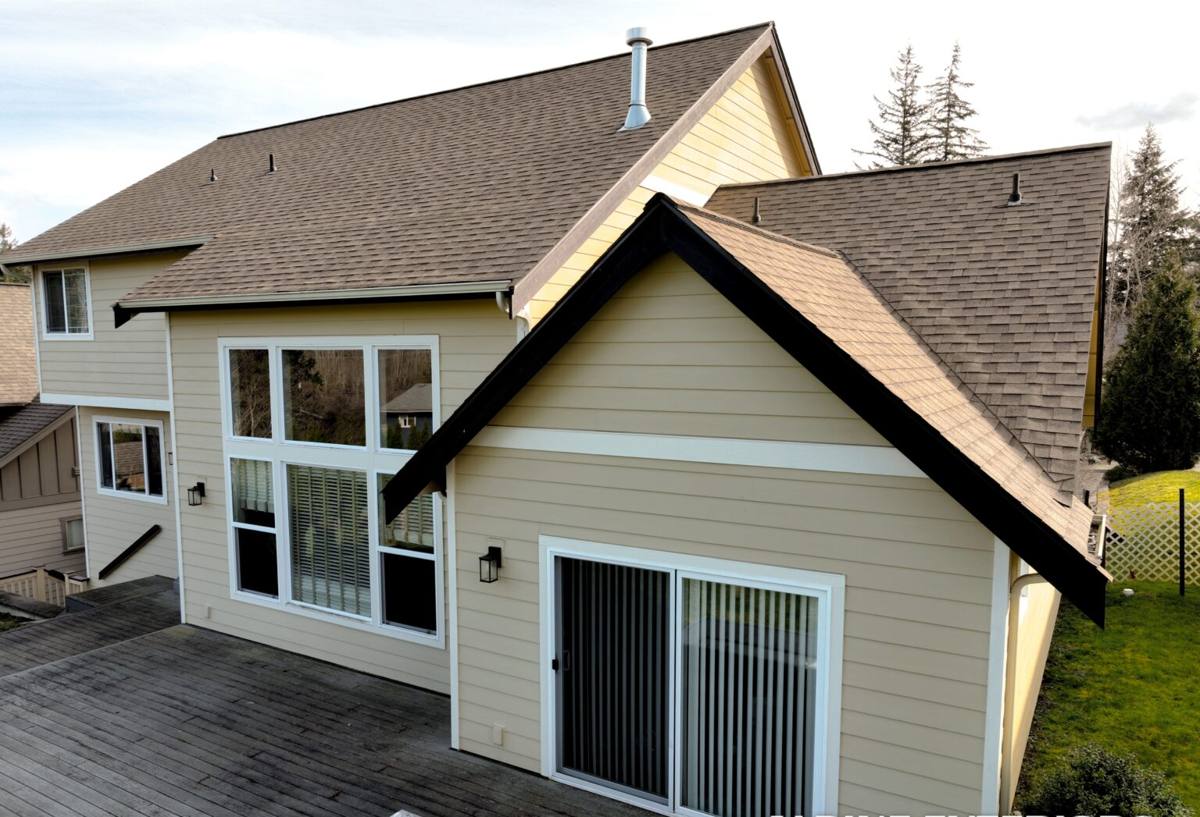
Why Grandview's Microclimate Is Harder on Windows Than People Expect
Salt Air and Metal Components
Salt-laden air corrodes exposed metal — hinges, balance systems, screen frames, and lock hardware — well before the glass or vinyl itself shows wear. Once hardware starts corroding, windows get harder to operate, and a window that's hard to operate usually ends up left cracked open or shut and never opened, either of which causes its own problems (condensation, or lost ventilation).
Driving Rain and Wind-Driven Water
Blaine gets rain that doesn't just fall — it's pushed sideways against the west and south faces of a house during winter storms. A window that's watertight in a still rain can still leak under wind-driven conditions if the flashing detail, sill pan, or sealant joint isn't done correctly. This is one of the most common reasons we find water staining below a window that "looks fine" from the outside.
Moss Season and Sustained Moisture
The stretch of the year when moss thrives on roofs and siding is also the stretch when window sills, trim, and the wood framing behind them stay damp for extended periods. Wood that never fully dries out is wood that eventually rots, and a window installed into rotted framing will never seal properly no matter how good the window itself is.
What "Correct" Window Replacement Actually Involves
A window replacement is not just popping an old sash out and a new one in. Done right, it's a sequence of steps where skipping any one of them is what causes the callbacks we get asked to fix on other contractors' work.
- Remove the old unit and inspect the rough opening — this is the point where hidden rot, soft framing, or old water damage gets found. It has to be dealt with before anything new goes in.
- Repair or rebuild the opening as needed — new framing material, treated where it should be, so the new window has a sound structure to sit in.
- Install a proper sill pan and flashing sequence — this is what actually stops wind-driven rain from getting behind the window, not the caulk bead on the exterior trim.
- Set the window level, plumb, and square — even a slight rack in the frame stresses the seals and shortens the life of the unit.
- Insulate the gap correctly — too little insulation leaves a cold, drafty perimeter; overfilling with the wrong foam can bow the frame and cause the sash to bind.
- Seal and finish the exterior — appropriate sealant at the right joints, not sealant used as a substitute for proper flashing.
- Finish the interior trim and confirm the window operates smoothly through its full range before we consider the job done.
Choosing the Right Window for This Environment
There's no single "best" window brand or material for every home — it depends on exposure, budget, and what the rest of the house is doing. What we can tell you honestly is which factors matter most for a Grandview installation.
| Factor | Why It Matters Here |
|---|---|
| Frame material corrosion resistance | Salt air accelerates corrosion on exposed fasteners and hardware; material choice affects long-term maintenance |
| Weep system design | Determines how well the window sheds water that gets past the outer seal during wind-driven rain |
| Glazing / seal quality | Poor seals fog between panes faster in a damp, temperature-swinging coastal climate |
| Hardware finish | Cheaper finishes pit and corrode visibly within a few years near the water |
| Warranty structure | Some warranties exclude coastal/salt-air conditions entirely — worth reading before you buy |
We install a range of quality window lines and will walk you through the honest trade-offs of each rather than pushing whatever has the best margin. If a product's warranty language excludes coastal exposure, we'll tell you that up front — it's a real factor in a neighborhood like Grandview, not fine print you can ignore.
Vinyl vs. Fiberglass vs. Wood-Clad — General Guidance
- Vinyl — generally the most cost-effective and low-maintenance option; quality varies a lot between manufacturers, so frame reinforcement and hardware quality matter more than the base material.
- Fiberglass — holds up well to temperature swings and tends to resist warping; typically a higher upfront cost.
- Wood-clad — can look great, but the wood interior needs to stay completely dry; not our first recommendation for homes with heavy exterior moisture exposure unless detailing is meticulous.
Signs a Grandview Home Needs Window Replacement Now
- Fogging or a visible film between the panes — the seal has failed and the insulating gas is gone
- Windows that are difficult to open, close, or lock — often hardware corrosion or a racked frame
- Visible gaps, drafts, or cold spots near the frame even when the window is shut
- Soft or discolored trim and sill material — a sign moisture has been getting in for a while
- Rising heating bills without another clear explanation
- Condensation forming on the inside of the glass regularly during cooler months
Any one of these on its own might not mean full replacement is needed — sometimes it's a repair. But two or more together, especially on a home that's been through several wet seasons without window attention, usually means it's time for a real assessment.
Our Process for Grandview Jobs
Because we already work in this part of Blaine, we're not learning the area's quirks on your dime. Here's how we approach a window replacement project in Grandview specifically:
- On-site assessment — we look at each window's exposure (which face of the house takes the worst weather), current condition, and framing, not just the glass.
- Honest scope and options — we tell you which windows genuinely need replacement now, which can wait, and what products fit your budget and exposure level.
- Clear timeline — Whatcom County's wet season affects scheduling; we plan installs around weather windows so openings aren't exposed longer than necessary.
- Correct installation — following the full sequence above, not a shortcut version.
- Final walkthrough — every window operated and checked before we consider the job complete.
Why a Local Crew Matters for This Specific Job
Window replacement mistakes in a climate like this don't usually show up on install day — they show up eighteen months later as a soft sill or a fogged pane. A crew that's already done this work elsewhere in Blaine knows which details get skipped by out-of-area installers unfamiliar with how hard this particular stretch of coastline is on a building envelope. That's not marketing — it's just what happens when you've repaired the water damage from a rushed job once or twice and adjust your process accordingly.
Maintenance That Extends Window Life Here
- Rinse salt residue off exterior frames and hardware periodically, especially after storms
- Keep weep holes clear of debris so water can drain as designed
- Check and refresh exterior sealant at joints annually, before the wet season sets in
- Clear moss and organic buildup from sills and nearby trim promptly — don't let it sit
- Operate every window through its full range a few times a year so hardware doesn't seize
What a Fair Cost Range Looks Like
Pricing depends heavily on window size, count, product tier, and whether the rough openings need repair. In broad terms, straightforward replacement of an existing window in good framing runs less than a job where we're also rebuilding rotted framing or upgrading to a higher-performance product line. Rather than quote a number that doesn't fit your specific windows, we'll give you a written estimate after seeing the actual openings and discussing what matters most to you — comfort, appearance, maintenance, or budget.
If your windows in Grandview are fogging, sticking, drafting, or just old enough that you're wondering, we're glad to come take a look. The estimate is free, there's no pressure, and you'll get a straight answer about what actually needs doing — use the form below to get started.